The intense development of US Fracking, and criminal suppression of Irani and Venesuelan extraction, has made it the greatest oil producer, closely followed by fracking gas in a bid for a Plastics Monopoly
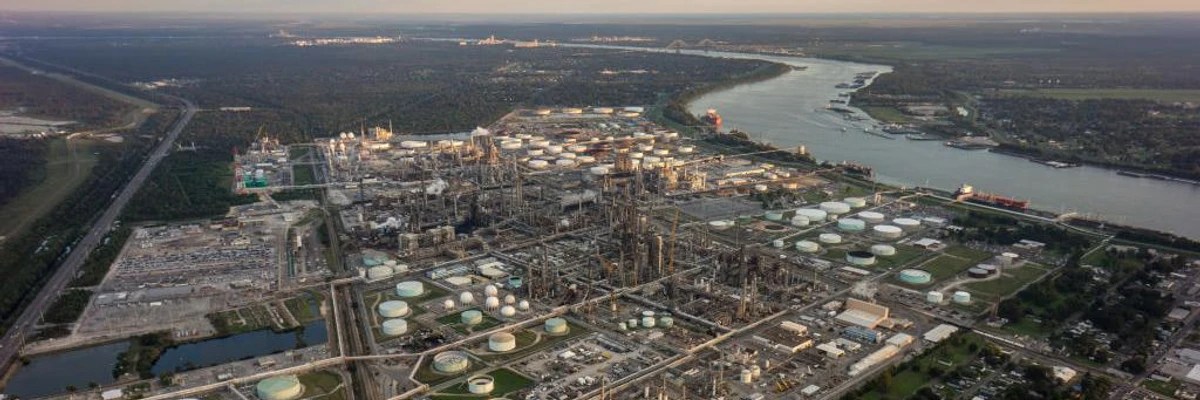
Most people don’t realize that part of gas extraction is a liquid condensate, the origin of plastics, which is being pumped, defying Climate Chaos, via the maze of fracking pipelines to the Gulf Coast, where the US is set on cornering the world plastics market, as well as shipping the LNG gas it has forced on its European vassals.
********
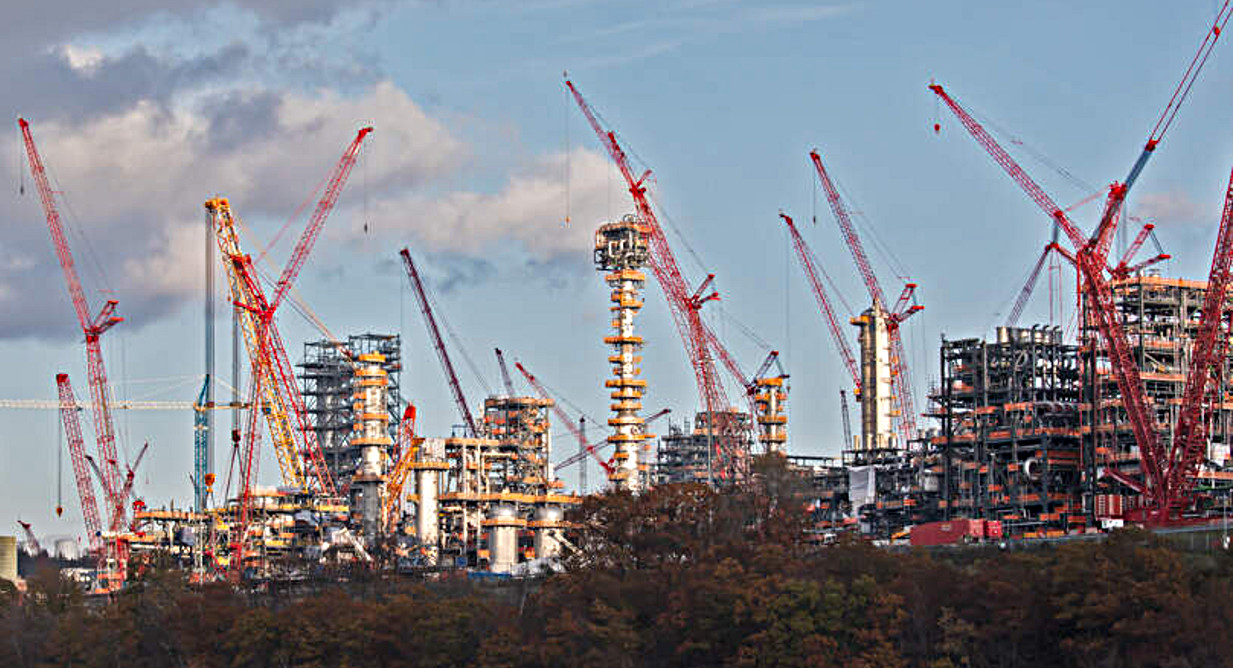
Exxon’s proposal for a new plastics factory on the Gulf Coast raises alarms for a community already dealing with pollution.
Diane Wilson had heard rumors for months that Exxon might be coming to Point Comfort, Texas, which sits on the Gulf Coast south of Galveston.
She recalls whispers about the global behemoth hiring local electricians and negotiating railroad access.
Two days before Christmas, the first confirmation quietly arrived: an application for tax subsidies to build an $8.6 billion plastics manufacturing plant.
Wilson found the news particularly alarming.
She has spent years fighting to clean up pollution from another petrochemical plant and won a $50 million settlement against its owners, Formosa, in 2019.
Exxon would build its proposed facility across from that factory and discharge waste into the same waterways Wilson has spent decades fighting to protect.
I’m X., with the French CNT AIT, I ‘d like to thank you dearly for taking some time to answer these questions.
First I hope you are safe. Rest assure you have all our support.
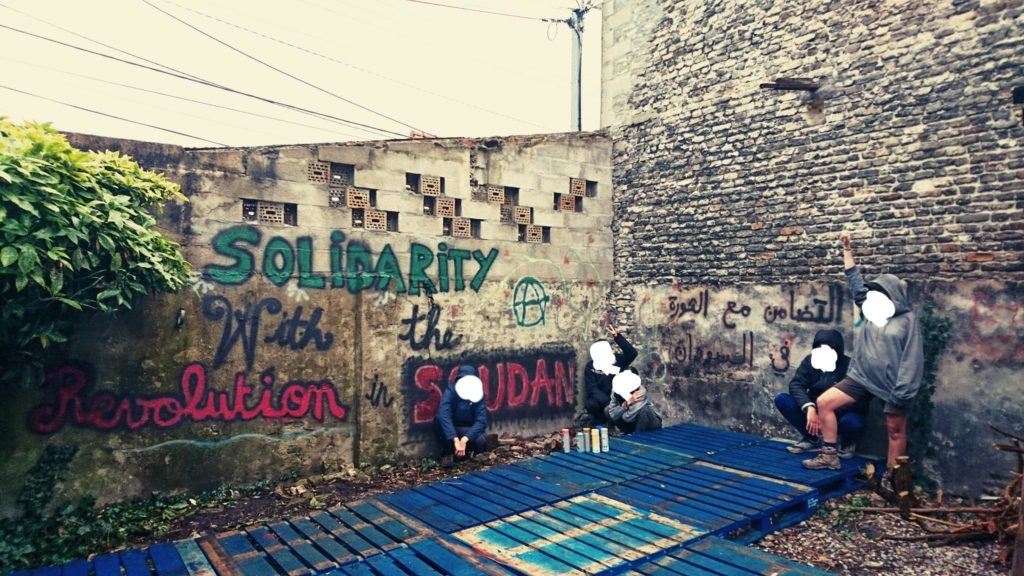
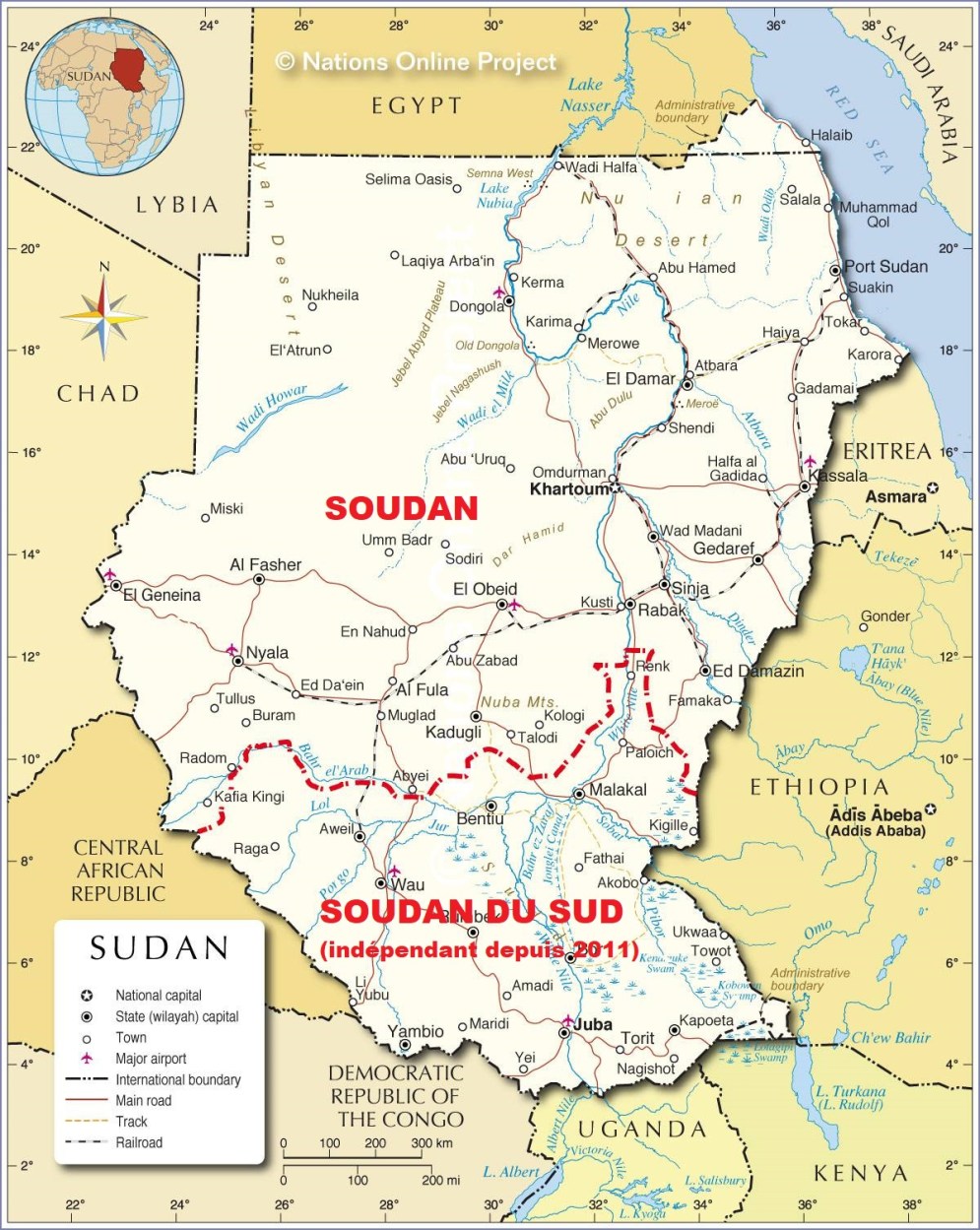
As you know, we’ve been relaying information about revolution and global situation in Sudan and about your anarchist group to the readers of our magazine « Anarchosyndicalisme! » (http://cntaittoulouse.lautre.net/spip.php?article1396). Following the articles published in the newspaper, many readers and also some groups expressed their solidarity with you. For example, the Ephémère library in Clermont Ferrand organized two debates, in the cities of Clermont and of Aubert, and a collective supporting migrants in the city of Calais organized a debate and a graffiti workshop in solidarity. We would be interested in knowing a little more from your personal experience, so we have prepared a list of questions, the first (1) comes from the CNT AIT, the second (2) from L’éphémère, and the third (3) from the Calais migrant support collective.
I hope you ‘ll find some time to answer.
REPLY: Hello companions!
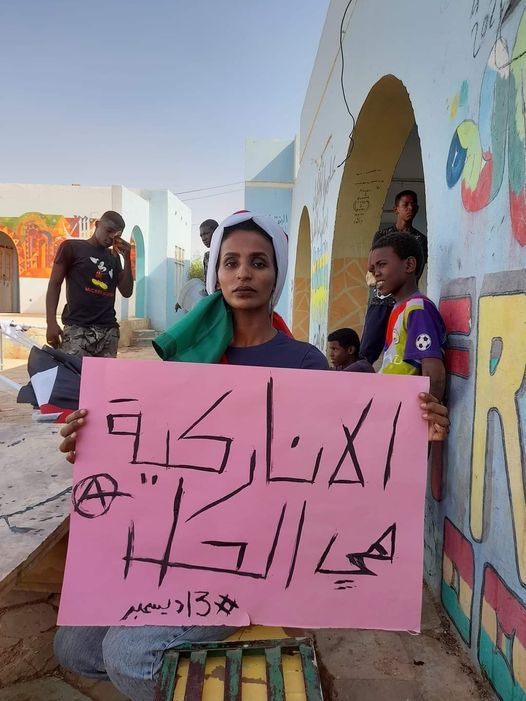
Revolutionary greetings from the comrades in Sudan to the CNT-AIT and to the AIT, and to all those who support us in France and elsewhere. We thank you for your support and interest in the issues of Sudan, the revolution, the war, and our anarchist activity. We are also happy to convey our experience to you, share our daily struggle with you, and exchange opinions
QUESTION (1): First I’d like to ask you a few questions about your anarchist group in Sudan.
For how long has your group been organised? Did your group start during the last revolution or before?
Did you personally participate in the creation of this group or did you join?
Do you have an official name for your group?
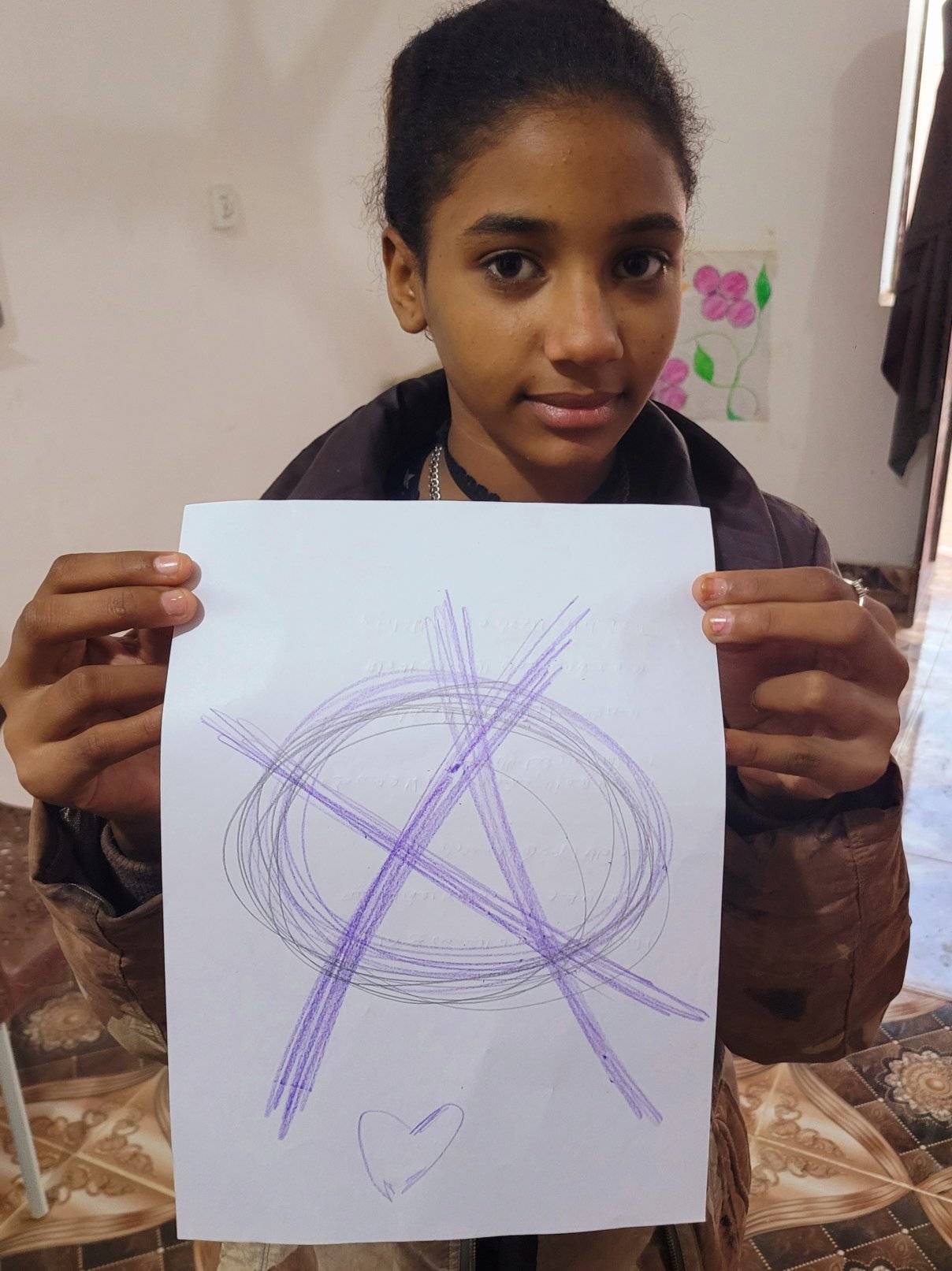
REPLY: The formation of our group began in April 2017, before the December [2018] Revolution, and I personally participated in its formation. It was a small group of 5 individuals. The name of the group is the Anarchist Federation.
QUESTION (1): There seem to have been very few examples of anarchist organisations in African countries, could you tell us how you and other members of your movement became familiar with the anarchist ideas?
Was anarchism rooted in prior social movements and revolutions in Sudan? What were the other forms of socialist ideas in the previous social movements?
REPLY: Yes, anarchist movements in Africa are not widespread. As for Sudan, there was no anarchist organization or group before. Most of Sudan may be self-administered in a complex manner, but authoritarian ideas control it in the state, the tribe, and the military and religious system. This is what makes the anti-regime social movement complex. We gained our revolutionary awareness and knowledge of anarchism through our exposure and self-education about social movements in the world, and the injustice inflicted upon us contributed mainly to the adoption of anarchist ideas. The socialist ideas present in Sudan contribute directly or indirectly to supporting and consolidating power, such as Marxist communist ideas and the ideas of neoliberal armed movements [guerrillas others than RSP and official army, Note of typist], and their continuous search for positions in the state and even their demolition of the social movement.
QUESTION (1): Could you tell us about the social composition of your group, were you mostly students or were there workers to?
I understand women took a great part in the revolutionary movement, were there many women among your group?
Were you mostly city based or did people also come from the rural areas?
REPLY: Our group was initially composed of students, as students represent the tip of the spear in the social change movement and the December Revolution. After the formation of our groups and their spread in several universities in various states of Sudan, we were able to participate and form groups through comrades in their areas of residence in cities and rural areas, and to form groups outside the student community in various areas in Sudan Women are an essential part of the formation of our groups in universities and even in rural areas and cities. Women constitute more than 60 percent of the composition of our groups.
QUESTION (1): If that’s possible could you tell us about how many members you had in your groups, after the movement spreads in several universities and various parts of the country?
REPLY: The number of group members was estimated at more than 60 comrades at the beginning, but now the number has increased, but there is no accurate count due to the loss of contact with many comrades.
QUESTION (1): Could you tell us about activities you were able to carry as an anarchist group during the past years? How did people react to the diffusion of your ideas?
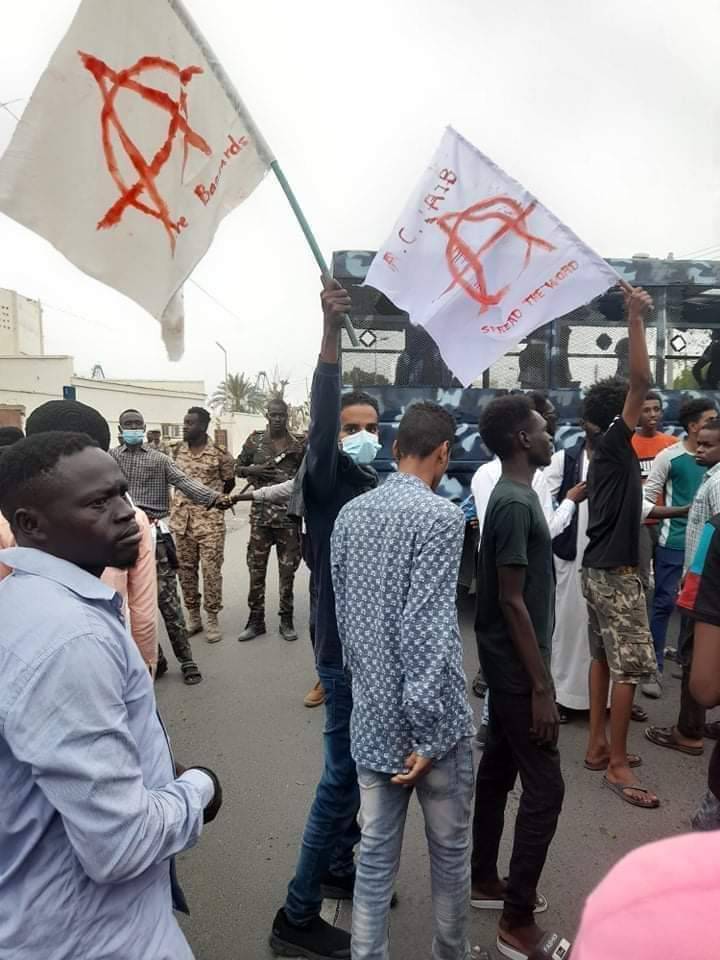
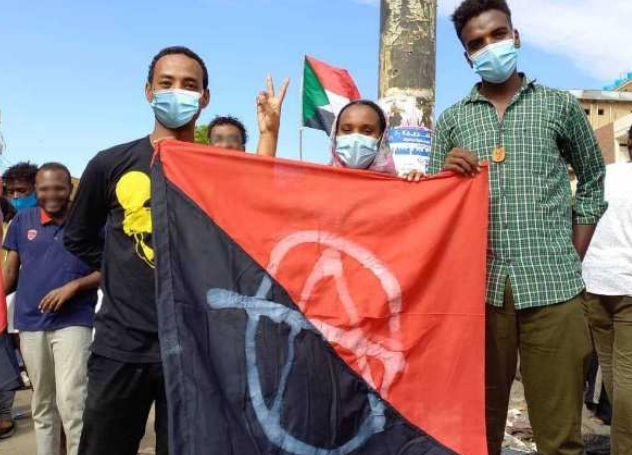
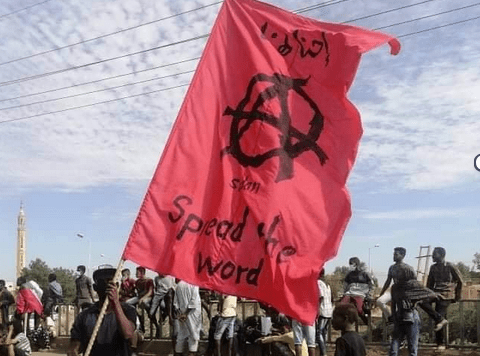
REPLY: One of the most important activities that we carried out in 2017 and 2018 was to call on young people and students to overthrow the regime, break the barrier of fear, and unite around overthrowing the dictatorial rule of Bashir. We held activities in universities and seminars against the regime and began organizing spontaneous processions that brought together all Sudanese. This cost us the loss of comrade (Abu Al-Rish), comrade (Qusay) and comrade (Mudawi). After the fall of the Omar Al-Bashir regime, we called for the continuation of the struggle to overthrow the military regime in Sudan, and the abdication of General Ibn Auf came quickly due to the terrible pressure of the people on power. Brutal repression was strong against us and we were subjected to arrest, flogging, abuse and death threats
But this did not make us give up our cause and our struggle against the authorities We called for a sit-in at the General Command, which represented a small self-administration community in which the greatness of anarchist ideas was evident. It was a living example of the self-administration of Sudan, as it included millions of Sudanese from all states. The dictatorial authority sensed the danger in this and carried out a massacre that dispersed the sit-in, to which the political force contributed greatly and facilitated this hideous massacre in which more than 700 unarmed civilian revolutionaries died and were drowned in the Nile. Many of the revolutionaries are still suffering from psychological problems due to the ugliness of the killing they saw. He was beaten and insulted horribly
This also did not break us, but rather made us more determined and convinced of the importance of the fall of this brutal, murderous regime So we began to form resistance committees in the neighbourhoods, gather the revolutionaries into organized groups, and unify the banner of struggle Brutality, killing, and violent suppression of processions were an inherent characteristic of every procession. We knew that we might pay a price for this with our lives, and we were also going out seeking a social revolution.
QUESTION (1): The resistance committees seemed to organise themselves in a very interesting -and quite close to anarchist-way, can you describe it for us? How did you and your group could participate in those committees?
REPLY: We participate continuously in resistance committees, which are groups of revolutionaries in the neighbourhoods and regions of Sudan.
Resistance committees make decisions collectively for each committee.
QUESTION (1): The general understanding I got of the last years social movement in Sudan, especially after the military coup d’etat in October 2021, is that people strongly rejected the authority army and militias, official political parties and unions, and elites both from Sudan and foreign countries, and wanted to build a society from bottom to top while developing on a daily basis a strong sense of social solidarity and self-organisation, which I found very encouraging and rooted in a perspective of struggle of class and direct democracy.
Nevertheless, the main political goal as described in the « charter for the power of people » is still the creation of a government and a state, even if democratic – which is without any doubt better than war and military or religious dictature – and so seemed a bit in contradiction with the achievements of day to day popular self-organisation as developed in the resistance committees, from my anarchosyndicalist point of view. Can you comment on that ?
REPLY: It is important to know that the liberation struggle involves a lot of persistent and patient work that is not achieved overnight. We see that what the awareness of the youth, revolutionaries and society in Sudan has reached is a turning point in the revolution What the Revolutionary Charter proposes to establish people’s authority is what the resistance committees agree upon, and they are not union bodies or professional bodies, but rather groups of revolutionaries who differ in their orientations to running the country or organizing. What we need now, and we are working on, is to preserve the unity of this force from the catastrophe of the civil war that is tearing apart the social fabric. Certainly, self-administration is the points that we can easily raise, and this is considered one of the gains of the revolution, but implementing it now in light of this catastrophic situation is very complicated.
QUESTION (1): War is going on for more than a year now, can you tell us how you managed to get through this last year, and were you and your group able to maintain some of your political activities during those hard times?
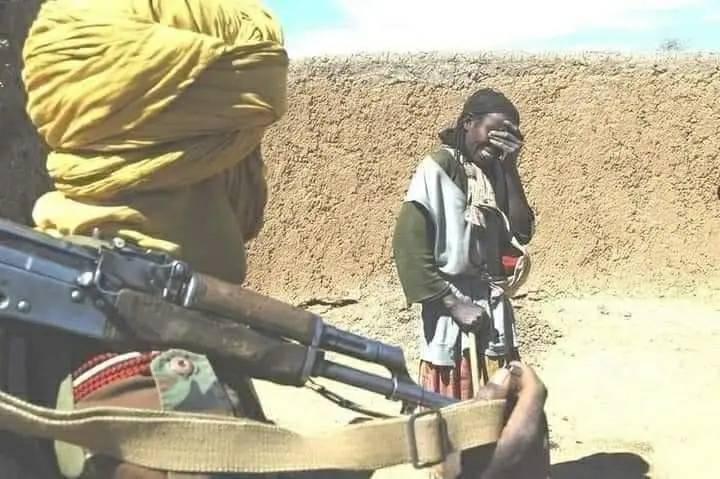
REPLY: The outbreak of war in Sudan directly affected our organization, as all the comrades in Khartoum, Madani, and El Fasher fled to different cities and outside Sudan, and the suspension of universities, damage to infrastructure, farmers, unions, and the Internet made it difficult to communicate and communicate with the comrades. We lost comrade Sarah and comrade Omar Habbash, and we lost an ambulance that we had allocated. In Zamzam camp for displaced people in El Fasher to transport patients. It has been a disastrous year, with terrorism everywhere, arbitrary arrests and liquidation by the army of revolutionaries and politicians, and killings on an ethnic basis on both sides.
QUESTION (1): Can you tell us about the situation today in Sudan?
REPLY : The situation in Sudan is catastrophic More than 25 million were displaced and education stopped for more than 15 million children More than 4,000 thousand civilians were killed, although the numbers are inaccurate Famine has begun in Sudan. There are no life-saving medicines, there is no work, and more than 70 percent of hospitals are not working in Sudan. The situation is horribly disastrous
QUESTION (1): I understand some of your comrades had to leave Sudan recently. Do you manage to keep in touch with them? Do you have some perspective of carrying on with your organization even in a distance?
REPLY: Yes, we are in contact with most of our comrades abroad. We have a plan to manage the organization remotely and manage its activities
QUESTION (2): To what extent is it possible to maintain anarchist positions under civil war?
REPLY: Maintaining the anarchist group in Sudan is possible, but it is not easy, and this is an additional burden now in light of the war and the displacement of most of the comrades outside Sudan.
QUESTION (2): During the insurrection in Egypt, anarchists had started a newspaper. Although they were all atheist, they didn’t criticize Islam in their writings, it was hardly possible. How is it in Sudan ?
REPLY: As for criticism of Islam in Sudan, it is very prevalent in revolutionary youth. The Revolution occurred against the Muslim Brotherhood regime and its extremist authoritarian reactionary ideas, it has been was a turning point in the youth’s awareness of religion itself.
QUESTION (3): Our collective in the city of Calais works with some exiles who have relatives in Sudan.
Concerning medicine distributions and activities for children, they’d like to know in which area, which town or even which neighbourhood do you conduct your humanitarian actions?
Does your anarchist group organise such actions or do you take part in other groups’ actions?
Do you take part as individuals or as an anarchist collective?
REPLY: At the beginning of the war, we distributed meals in shelter centres in Dongola, Atbara, and Khartoum in Karari locality. Regarding medicines, they are distributed according to the needs of the displaced people in shelter centres, in cooperation with the Al-Hawadith Street Initiative, medical supplies, and sometimes the Sudanese Red Crescent. Regarding infant formula and sanitary pads for women, we conducted inventory and distributed it to 8 centres in Al-Damer and Atbara, and 5 centres in Dongola, and now we are distributing in Al-Dabba locality, where it received thousands of displaced people fleeing from El-Fasher.
In our anarchist group, we have several comrades working in the health professions who were instrumental in providing health supplies. We distribute it through our group most of the time, and we also cooperate with anybody that contributes to solving the humanitarian crisis in Sudan, initiatives and sometimes organizations. At the beginning of the war in Sudan, I directed our group to volunteer in hospitals and emergency centres in the nearest locality to our comrades.
QUESTION (3): In the « Sudanese anarchist forum » some of the Sudanese exiles we help have seen that you shared in July 2022 a piece concerning the “Forces of Freedom and Change”.
Is the « Sudanese anarchist forum » the page of your group? How does it work: can anyone publish what he wants or do you moderate or sanction the articles that are released?
What do you think about the Forces of Freedom and Change?
In a more general way what do you think about the Rapid Support Forces and the army?
Is this possible to refuse to support one side or another, or are you forced to take side?
REPLY: As for our group, it does not have an official platform, as we avoid propaganda work in this critical political situation, and we do not have an online platform. The only way to contact us is via email
The “Forces of Freedom and Change” is a Sudanese political body that has its own conflicts and has no authority over the state. The war is now led by two army generals.
We do not support any party to the war; on the contrary we support its immediate cessation
We strongly condemn the massacres committed by the Rapid Support Forces and the army against innocent citizens, and we do not support any of them. What we want is an end to war and peace
QUESTION: Do you wish to tell us something more?
REPLY: Yes. We must be in constant communication. You are the only party that supports us and stands with us. You are saving the lives of revolutionaries and anarchists in Sudan. Do not stop spreading our cause and supporting our revolution. Tell revolutionaries and anarchists all over the world about us.
Long live peace, not wars!
[Interview realized via email, in June and July 2024]
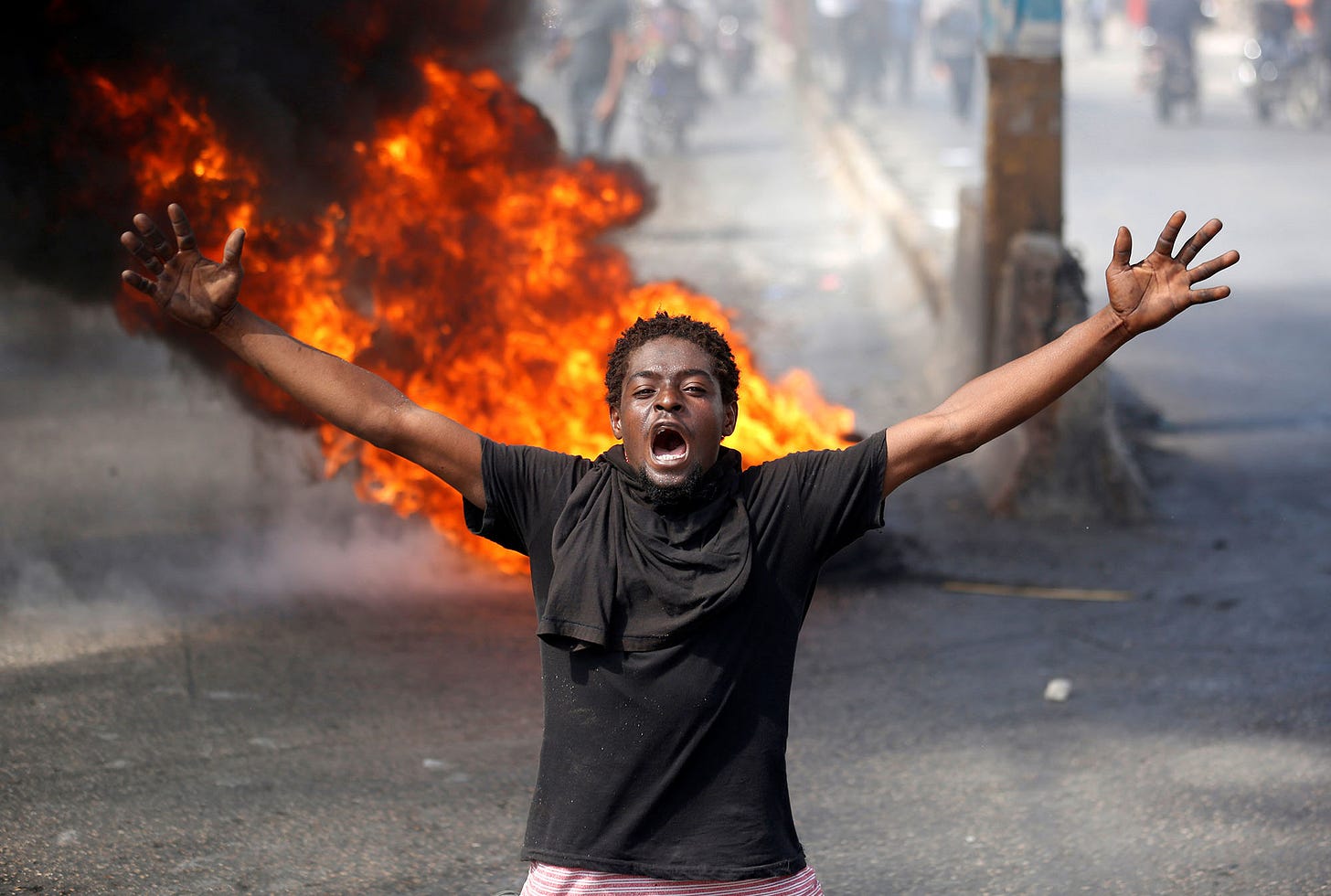
Massacres of innocent civilians are now a daily staple of life in Haiti, civil society is non-existent, and major powers exploit the chaos to road-test techniques of repression and pacification subsequently deployed elsewhere.
On December 19th, James Foley, US ambassador to Haiti 2003 – 2005, published an explosive op-ed in rabidly anti-Communist Miami Times.
He lamented how the country had become a “ticking time bomb”, with hundreds of thousands of refugees threatening to emigrate Stateside, “mounting gang violence”, withdrawal of “humanitarian relief organizations” due to “threats”, and “criminal” entities “on the verge” of capturing Port-au-Prince entirely.
His remedy was simple – direct US “intervention” to secure control locally, and reassert Washington’s “primacy in the hemisphere.”
As the CIA’s man in Port-au-Prince at the start of the millennium, Foley was on the frontlines of a brutal coup that displaced popular, legitimately-elected, anti-imperialist President Jean-Bertrand Aristide from power, and all the horrors that followed.
As this journalist and academic researcher on Haiti Jeb Sprague exposed in February, Aristide’s ouster was orchestrated by the Agency, in direct coordination with the most extreme, murderous local opposition elements.
This tragic event produced a neverending descent into nightmarish lawlessness, which endures to this day in the country.
Jean-Bertrand Aristide
Massacres of innocent civilians are now a daily staple of life in Haiti, civil society is non-existent, and major powers exploit the chaos to road-test techniques of repression and pacification subsequently deployed elsewhere. Yet, there is a fundamental component of this nationwide misery that has hitherto remained unexamined.
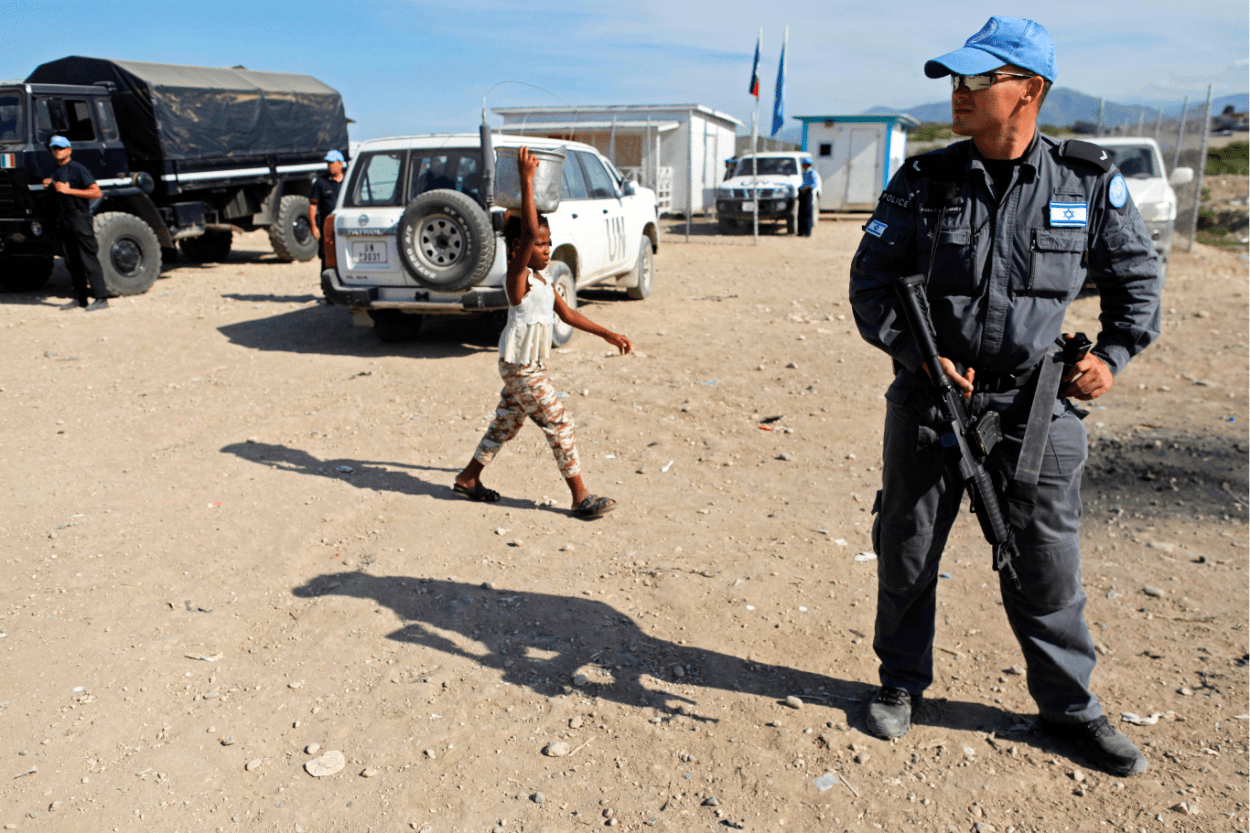
An Israeli guards a refugee camp for earthquake survivors in Port-au-Prince, Haiti, Nov. 27, 2010. Guillermo Arias | AP
In September 2004, USAID’s Office of Transition Initiatives, which avowedly “advances US foreign policy interests…by seizing emerging windows of opportunity ” – in other words, oversees regime change – deployed Kosovo Liberation Army veterans to Port-au-Prince:
“Training and management specialists of the Kosovo Protection Corps, a civilian response unit consisting primarily of former Kosovo Liberation Army members, have been brought to Haiti to assess how the Kosovo model might be applied there.”
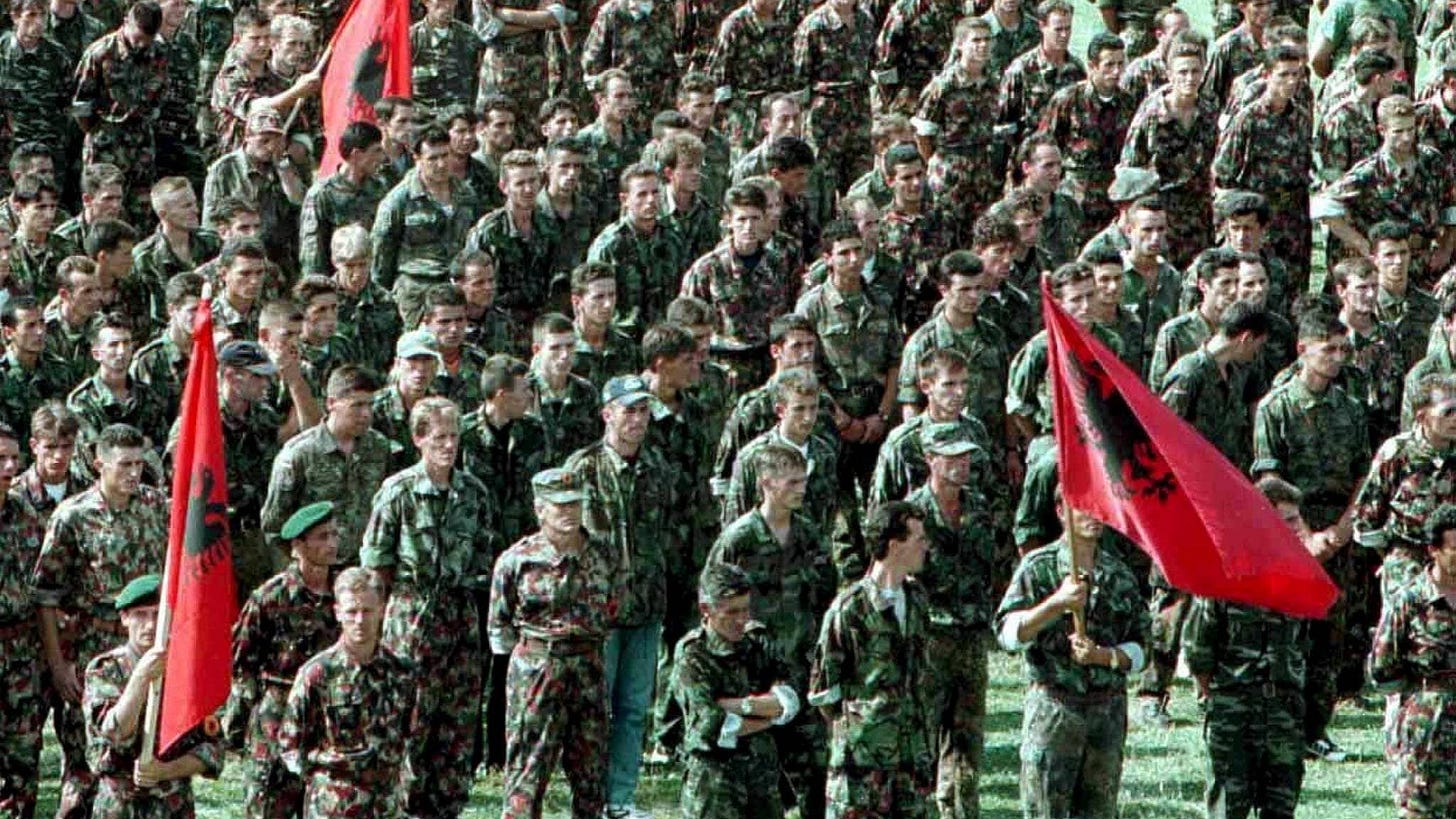
Once Yugoslav forces departed the province following a three-month-long NATO bombing campaign against Belgrade in June 1999, the KLA began carrying out a total genocide of local non-Albanian inhabitants, killing countless Bosniaks, Roma, Serbs, and other minorities, while sending survivors scurrying.
KLA militants fly Albanian flags in Kosovo, September 1999
Albanians were not infrequently in the KLA’s crosshairs too, whether they were criminal rivals, supported multiethnic Yugoslavia, or simply rejected the lethal faction’s excessive barbarity. The KLA was largely insulated from legal repercussions for its monstrous, villainous crusade, by direct US decree.
Through direct action, mutual aid, and solidarity, anarchists seek to build a world beyond inverted totalitarianism—one in which people can live freely, without the domination of corporations, the state, or any other form of hierarchy.
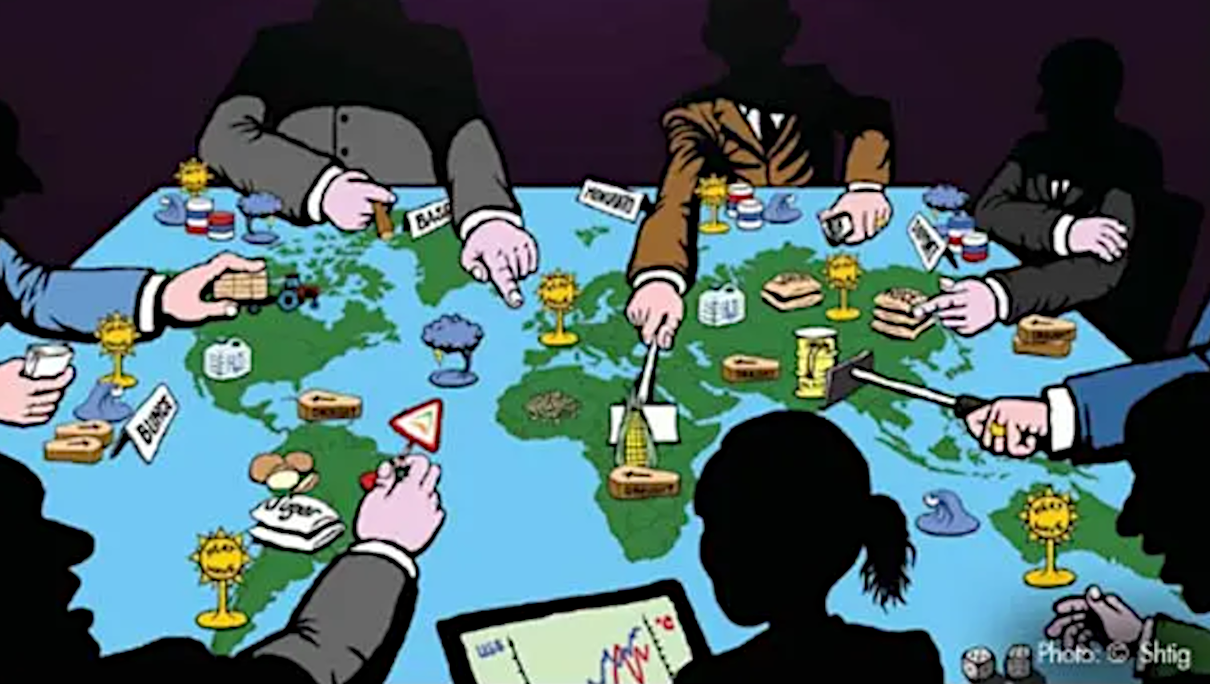
In his 2003 book Democracy in Chains, political theorist Sheldon Wolin coined the term “inverted totalitarianism” to describe a political system where the traditional institutions of democracy—elections, separation of powers, and civil liberties—remain in place, but their substance is hollowed out.
This inversion, Wolin argues, creates an environment where corporate interests dominate the political process, and the state serves as a tool to perpetuate the status quo of wealth and power.
From an anarchist perspective, the idea of inverted totalitarianism is not just an academic critique; it reveals the underlying mechanisms of control that maintain state power and corporate dominance.
Anarchism challenges the legitimacy of all forms of hierarchical authority, and inverted totalitarianism exposes the way in which democratic facades can obscure and legitimise systems of oppression.
In this article, we will explore the concept of inverted totalitarianism, its impact on modern societies, and how anarchist theory and practice provide a critical lens for understanding and resisting it.
What Is Inverted Totalitarianism?
Inverted totalitarianism is a term used to describe a system where democracy, in a formal sense, continues to function, but the true power in society resides in the hands of corporations and economic elites. Unlike classical totalitarian regimes, which directly control all aspects of life through a single party or dictatorship, inverted totalitarianism works through a more insidious form of governance.
Here, the state is not the central actor in dictating policy but instead operates as a facilitator for corporate interests, with elected officials serving as proxies for powerful business and financial entities.
Wolin distinguishes inverted totalitarianism from traditional totalitarianism by its subtlety. While regimes like Nazi Germany or Stalinist Russia sought to crush dissent and control all aspects of life through force, inverted totalitarianism creates a system in which control is achieved through corporate influence, the media, and the manipulation of public opinion.
Elections and other democratic processes still occur, but they are largely symbolic, serving to legitimise the authority of the corporate state rather than challenge it.
Historical Context: The Emergence of Inverted Totalitarianism
In order to understand the rise of inverted totalitarianism, it’s essential to look at the historical conditions that have fostered it. The mid-20th century saw the growth of transnational corporations and the rise of neoliberal economic policies. With the collapse of the Soviet Union and the end of the Cold War, global capitalism emerged as the dominant economic system.
This period saw the increasing concentration of wealth and power in the hands of a small elite, while traditional democratic institutions became more vulnerable to corporate influence.
Israel will not allow the new Syrian government’s military forces to operate in territory south of Syria’s capital Damascus, Israeli Prime Minister Benjamin Netanyahu has warned.
Addressing a military ceremony in Israel on Sunday, Netanyahu demanded the “full demilitarisation of southern Syria from troops of the new Syrian regime in the Quneitra, Daraa and Suweyda provinces”.
“We will not allow forces from the HTS organisation or the new Syrian army to enter the area south of Damascus,” Netanyahu said, referring to the Hayat Tahrir al-Sham group, which spearheaded the offensive that toppled longtime Syrian leader President Bashar al-Assad last December.
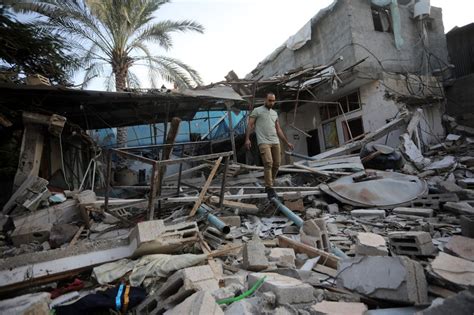
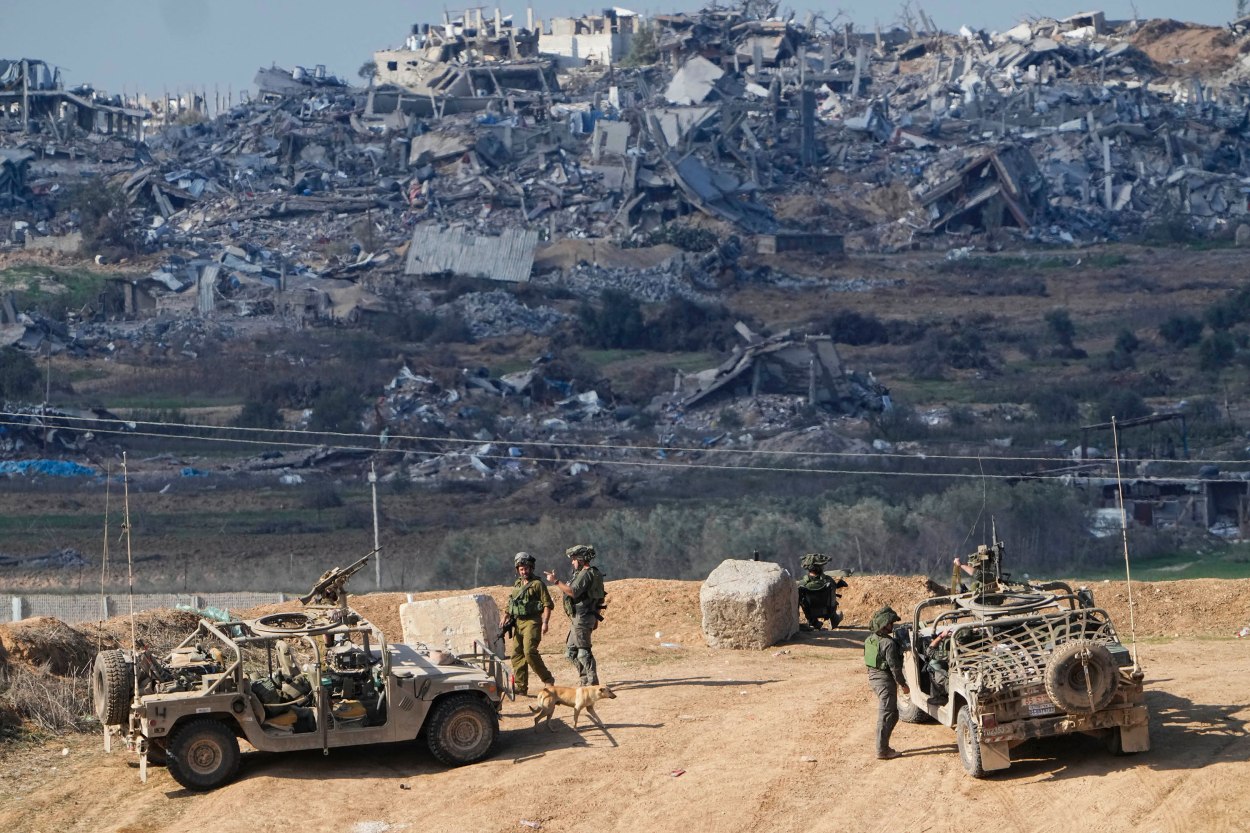
Israeli soldiers take up positions near the Gaza Strip border, in southern Israel, Friday, Dec. 29, 2023. The army is battling Palestinian militants across Gaza in the war ignited by Hamas’ Oct. 7 attack into Israel. (AP Photo/Ariel Schalit)
He also warned that Israel would not accept any threats to the Druze community in Syria, who live in the Golan Heights, a Syrian territory illegally occupied by Israel, and other parts of southwestern Syria.
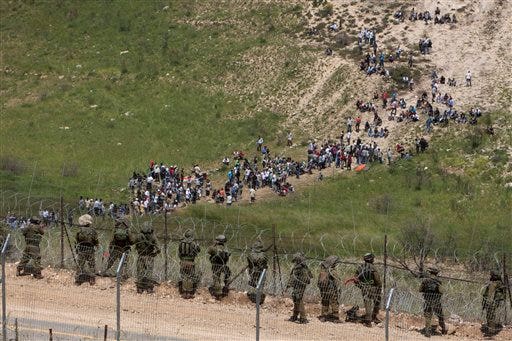
Israel has taken advantage of al-Assad’s fall to expand into a buffer zone between the Israeli-occupied Golan Heights and southern Syria, breaching a United Nations agreement brokered in 1974.
The Druze are a religious minority found across several countries in the region. In Syria, many have expressed their opposition to Israeli expansion into the southwest of the country, and thousands living in the occupied Golan Heights have refused to take Israeli citizenship.
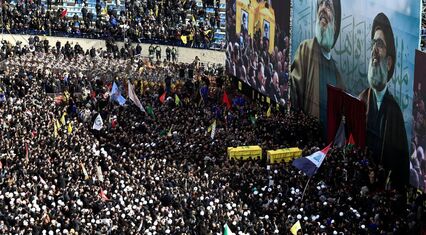
Thousands attend funeral for slain Hezbollah leader Hassan Nasrallah
Israel occupies approximately two-thirds of the Golan Heights, with the UN-administered buffer zone spanning a narrow, 400-square-kilometre (154-sq-mile) area. The rest has been controlled by Syria.
In 1974, Israel and Syria struck a ceasefire agreement that determined the Golan Heights would be a demilitarised buffer zone.
But shortly after the fall of al-Assad last December, the Israeli military moved within the buffer zone and has carried out hundreds of air strikes on Syrian military assets.
Israel has justified its attacks on Syria for years by claiming it is eliminating Iranian military targets. However, Iran has said none of its forces are currently in Syria, and the new Syrian government has indicated it has no desire to fight Israel.
Israeli forces have currently established two posts on Syria’s Mount Hermon and seven others in the buffer zone, Israeli Defence Minister Israel Katz said.
On Sunday, Netanyahu said that Israeli forces would remain on Mount Hermon and in a buffer zone in the occupied Golan Heights for “for an indefinite period to protect our communities and thwart any threat”.
Activists from International Ukraine Anti Fascist Solidarity received anextremely positive and friendly response from local people in theSouth London district of Brixton, a working class area with high levels of unemployment and poverty.
Many people showed their support and had discussions with the protesters.
These are some of the comments we had from the local people: […]




 The Free