
The completion of the Taklamakan project is not the end but rather a stepping stone toward a greener and more sustainable future for the region.
by True Activist on 7 Feb 2025 via thefreeonline at https://wp.me/pIJl9-FX3
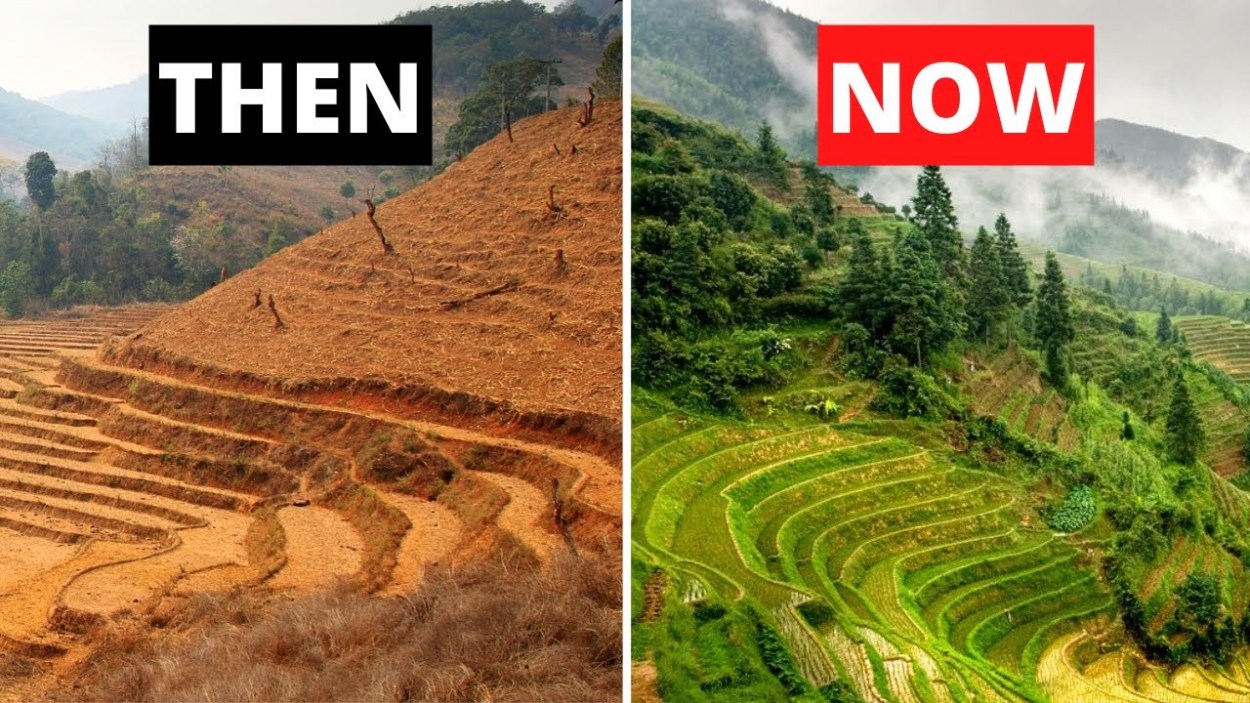
China’s largest desert fully encircled with green belt

For nearly five decades, China has undertaken a monumental ecological effort to combat desertification in one of the world’s most hostile environments—the Taklamakan Desert.
On Thursday, the People’s Daily reported that the ambitious project to encircle the desert with a green belt of trees has been completed, marking the end of a journey fraught with setbacks but full of determination.

A ‘Green’ Great Wall for the Taklamakan
Last week, workers planted the final 100 trees on the southern edge of the Taklamakan Desert, completing what is often referred to as China’s “Green Great Wall.”
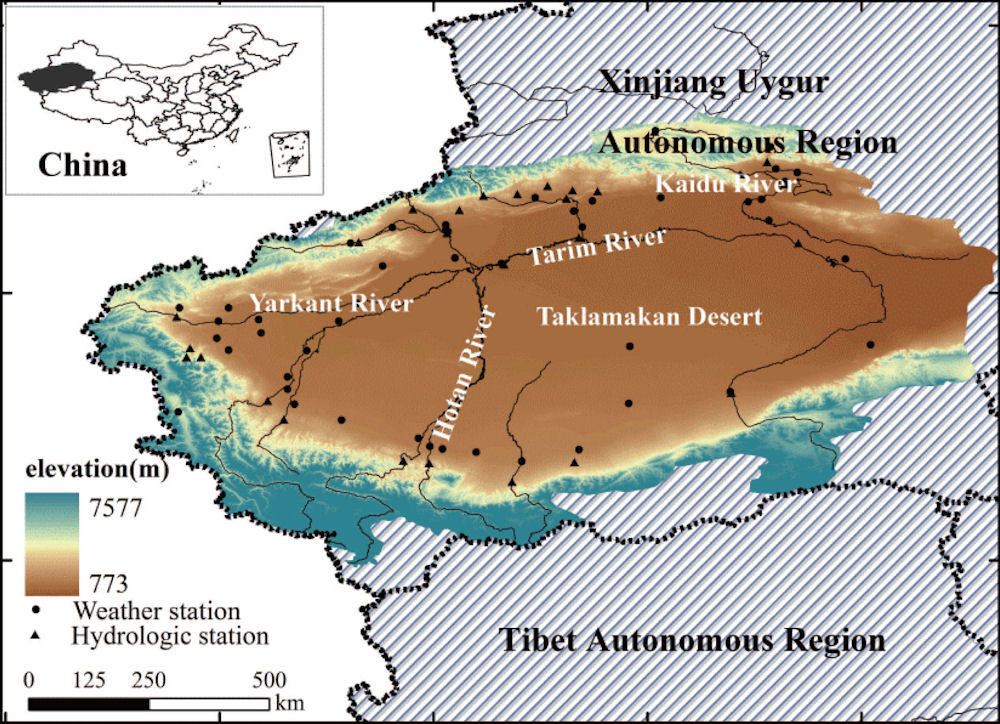
This initiative aims to mitigate the adverse effects of the Taklamakan, a vast sea of shifting sands located in northwestern China. Known as the second-largest shifting sand desert in the world, its name ominously translates to “Go in and don’t come out,” reflecting its inhospitable nature.
The desert is also the farthest point from any ocean, making its surrounding areas some of the most isolated and impoverished regions in China.

The Taklamakan Desert has long posed challenges for northern and western Chinese provinces, as strong winds carry dust and sand into these regions.
These storms degrade air quality, threaten agricultural productivity, and contribute to desertification.
In response, China initiated the “Three-North Shelterbelt” project in 1978 under the leadership of Deng Xiaoping, aiming to combat these environmental challenges by planting trees on a massive scale.
Transforming the Landscape
Since its inception, the project has led to the planting of over 30 million hectares (116,000 square miles) of trees.
This colossal effort has not been without obstacles. Poor planning, insufficient irrigation, and unsuitable species selection have resulted in large-scale tree die-offs in the past.
Pests such as beetle infestations have further compounded these challenges. However, despite these setbacks, the project has achieved notable successes.
According to reports, the project has helped reduce the size of the Gobi Desert by 2,000 square kilometers as of 2022. Additionally, the initiative has significantly increased China’s overall forest coverage to 25%.
In Xinjiang, the arid region home to much of the Taklamakan, forest coverage has risen from just 1% in 1949 to 5% today. While ecologists have raised concerns about the impact of such extensive planting on delicate groundwater resources, the environmental benefits have been undeniable, including offsetting substantial amounts of China’s carbon emissions.

Lessons Learned and Looking Ahead
Officials involved in the Three-North Shelterbelt project have learned valuable lessons over the decades. Zhu Lidong, a forestry official in Xinjiang, highlighted these improvements during a press briefing in Beijing.
“After four decades of planting, we are now better at pairing species to ensure their survival in this harsh climate,” Zhu explained. This growing expertise in species selection and ecological management has bolstered the project’s success and sustainability.

Zhu also emphasized that planting efforts will continue, as the government seeks to strengthen the green barrier and further curb desertification.
The next phase of the project may focus on planting blocks of orchards, which could provide economic benefits for the local population. “We hope to enhance the economic conditions of the people living near the Taklamakan by integrating ecological restoration with agricultural development,” Zhu added.
A Model for Global Action
The Green Great Wall serves as a testament to China’s commitment to combating desertification and addressing the challenges posed by climate change.
While the project has not been without criticism, its successes illustrate the potential of large-scale environmental initiatives to transform landscapes and improve livelihoods.
As global temperatures rise and desertification continues to threaten ecosystems worldwide, China’s efforts could serve as a valuable model for other nations seeking to address similar challenges.

The completion of the Taklamakan project is not the end but rather a stepping stone toward a greener and more sustainable future for the region. Through continuous innovation and community involvement, China hopes to maintain and expand its progress, demonstrating that even the most inhospitable environments can be tamed with perseverance and vision.
What are your thoughts? Please comment below and share this news!


 The Free