
On June 5, 6, and 7, the National University of Luján (main campus) will open its doors to welcome attendees to the 1st Congress on People’s Agroecology, promoted by the Meeting of ‘Peoples Fumigated’ by Agroecology and Good Living of the Province of Buenos Aires (EPFBA).
By Alberto Lezin at comunicación popular via agenciadenoticiascap on 24/5/25 via thefreeonline at https://wp.me/pIJl9-H03 (translated). Telegram https://t.me/thefreeonline/3221

Hundreds of people will gather there to exchange knowledge, experiences, sensations, and proposals related to environmentally friendly production practices and to strengthen the never-before-considered socio-community networks that agroecology intertwines.
This collective initiative, conceived by producers, consumers, researchers, teachers, professionals, members of Indigenous Peoples, social organizations, and others who directly or indirectly suffer the consequences of agribusiness, aims to highlight and debate a multitude of issues that affect those who undertake the task of contributing, through practice and theory, to a true transformation of the current production matrix based on extractivism.
Eight thematic axes will frame the presentations of the participants, who, through posters, workshops, book presentations, and artistic interventions, will address problems and develop solutions related to:
TRANSITION TOWARDS AGROECOLOGY OR COEXISTENCE WITH AGRIBUSINESS?
Quality of agroecological foods: flavors, aromas, textures. Crop varieties. Abundance. Solidarity and sharing. Practices and ways of consuming agroecological foods.
Transformations of individual and collective lives through agroecology. Let’s talk about agribusiness and extractivism.
HANDS IN THE EARTH. EXPERIENCES AND POSSIBILITIES
What does agroecological production entail?
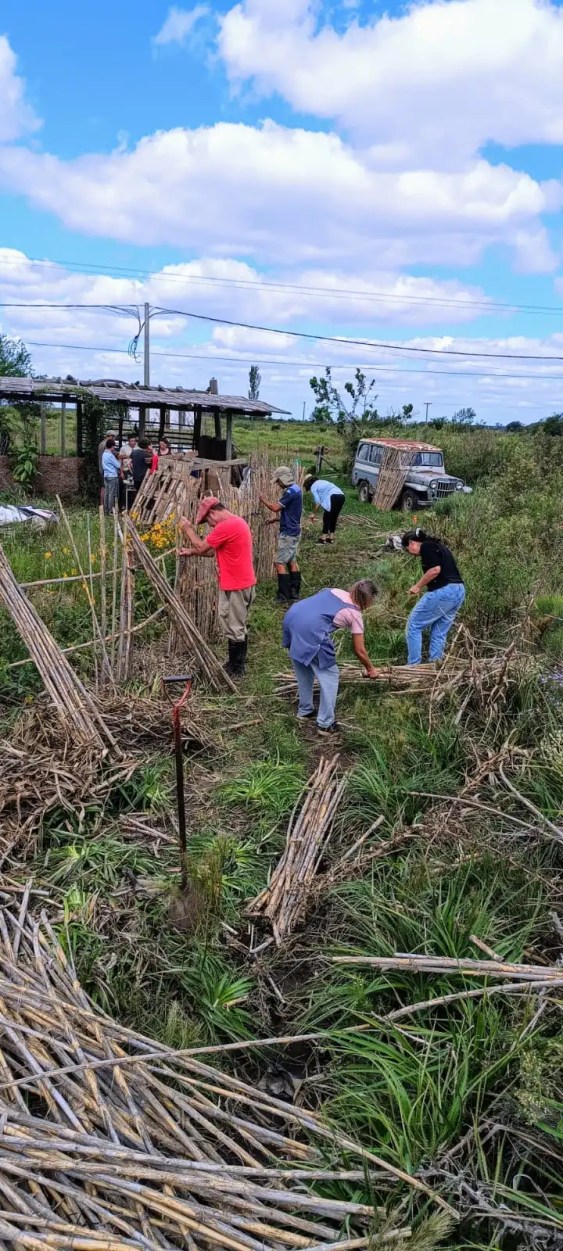
How to design such production? Healing degraded soil and the use of substrates and amendments: mulches, husks, pruning chipping, bokashi, compost and vermicompost, slurry, and broth.
Sustainable use of water: collection, storage, and distribution. Is extensive agroecological production possible within this framework?
Agroecological animal, mixed, and silvopastoral production. Confronting agroecology vs. production with agrotoxins based on:
sustainability; Gender and age issues; autonomy or dependence (inputs, financing, markets, seasonality, prices, etc.); position regarding climate change;
profitability and costs (is agroecological production “expensive”? Is it low-yielding?).
Contributions of each system to agrobiodiversity as a union between the biological and the cultural.
Resilience to change and/or disturbance. Regeneration. Use, creation, and appropriation of technologies.
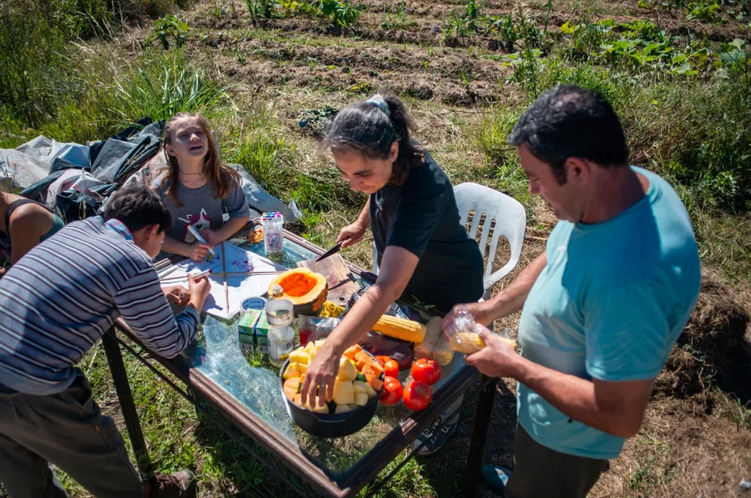
Participation of indigenous peoples and migrants. Systems that include or expel (rootedness/return to the countryside or search for it in the city).
Are there “new ruralities”? Different types of agroecological production (agroforestry, mushrooms, cannabis, etc.).
Role of native plants and pollinator hosts.
SELF-MANAGED AGROECOLOGY OR CO-MANAGEMENT WITH THE STATE? WHAT DO WE PROPOSE?
- Agroecology without subsidies.
- Agroecological experiences and social organizations.
- Agroecology on public lands, public spaces, and recovered territories. Grassroots organizational forms for agroecological practice.
- The role of the State in the development of agroecology.
- Regulatory frameworks and public agencies. Sustainability and long-term sustainability of agroecological proposals.
- Regulations related to reducing the use of pesticides and promoting agroecology.
- Municipal, provincial, and national levels.
- Legislation surrounding the issues of medicinal cannabis and hemp. Regulation of biofactories.
- Political processes for building regulatory frameworks through grassroots struggles (grassroots organization, mobilization, raising awareness of conflicts, judicial and legislative disputes).

WHERE IS OUR PRODUCTION GOING AND WHAT VARIANTS CAN WE OFFER?
What does it mean to add value to production? Debates on the commodification criteria of food. Social and solidarity economy. Community economy. Circular economy.
Short-term marketing networks for agroecological foods and local markets. Fair Trade and participatory guarantee systems.
Consumer networks. Peasant markets, value chains, and the economy of small-scale agriculture. Certification and differentiation systems for agroecological production.
INTEGRATIVE AGROECOLOGY
Family, peasant, and indigenous agriculture. Map of stakeholders, associativism, and cooperativism. Current and historical role of women in family and community transformation.
Social transformation through agroecology. Social empowerment, construction of agroecology and (eco)feminisms. Fundamental role of women and indigenous peoples as custodians of seeds and natural commons. Advocacy, network integration, and political training of agroecological youth. Role of youth in rural and community well-being. Rural roots.

CONSTRUCTION AND TRANSMISSION OF KNOWLEDGE. WE CAN ALL CONTRIBUTE
Ancestral, traditional, and local knowledge. Agroecological education. Incorporation of agroecology into formal and non-formal education: challenges, possibilities, and limitations. University experiences in the construction of agroecology.
Agroecology as a meeting point for the dialogue of knowledge. Participatory research and action experiences. Role of universities, tertiary institutes, and study centers in the territory.

ACCESS TO LAND, WATER, AND SEEDS
Land and territory. Land use planning. Territorial planning and development. Fair land redistribution and agroecology. Access to water: problems and conflicts. Seeds in the hands of producers. Experiences in agroecological seed production. Seed houses and seed fairs. Experiences of care.
PRODUCTION FOR A DIGNIFIED LIFE
Impacts on the environment and health of current production systems (use of pesticides and GMOs). Agroecology, the right to health, and the right to healthy food. Proposals for collective health work. Fumigated schools and villages. Care guidelines and protocols from the Meeting of Villages Fumigated for Agroecology and Good Living (EPFBA).
The Congress will also include an Agroecological Production Fair and a Seed Exchange Space, with the aim of highlighting and promoting the work that communities have been doing to improve their quality of life.

The high level of participation and healthy expectations this event has generated throughout the nascent Agroecological Movement promise a hopeful gathering for those striving to build better worlds.
Among the groups and organizations that support and will participate in the Congress are:
- Popular Initiative Campaign in Defense of Water for Life –
- Che Pibe Children and Adolescents Foundation –
- CaLiSA 9 de Julio –
- Agroecological Awareness of 9 de Julio –
- Tierra Viva Bolivar Collective –
- Reverdecer of Roque Pérez –
- Environmental Call of Gral. Belgrano –
- Tierra Fecuunda of Marcos Paz –
- Stop Fumigating Us MdP Assembly –
- El Paraíso Natural Refuge –
- Assembly for Navarro without Agrotoxins –
- Agroecological Production Cooperative and Land to Live –
- Marabunta –
- Ecos de Saladillo –
- Members of the Rankel Rüpu Antü Mapuche Community of Lincoln –
- KELU MULA Agroecology School –
- Multisectorial against agribusiness –
- La 41 –
- Socio-environmental Assembly of San Antonio de Areco –
- GruPAA (Group for the Promotion of Areco Agroecology) –
- Baguala Seed (Integrated Network of Community Gardens), to them all our recognition and admiration for being pioneers of the new society that is being forged.


 The Free