via thefreeonline. https://t.me/thefreeonline/4246 17 Sept 25
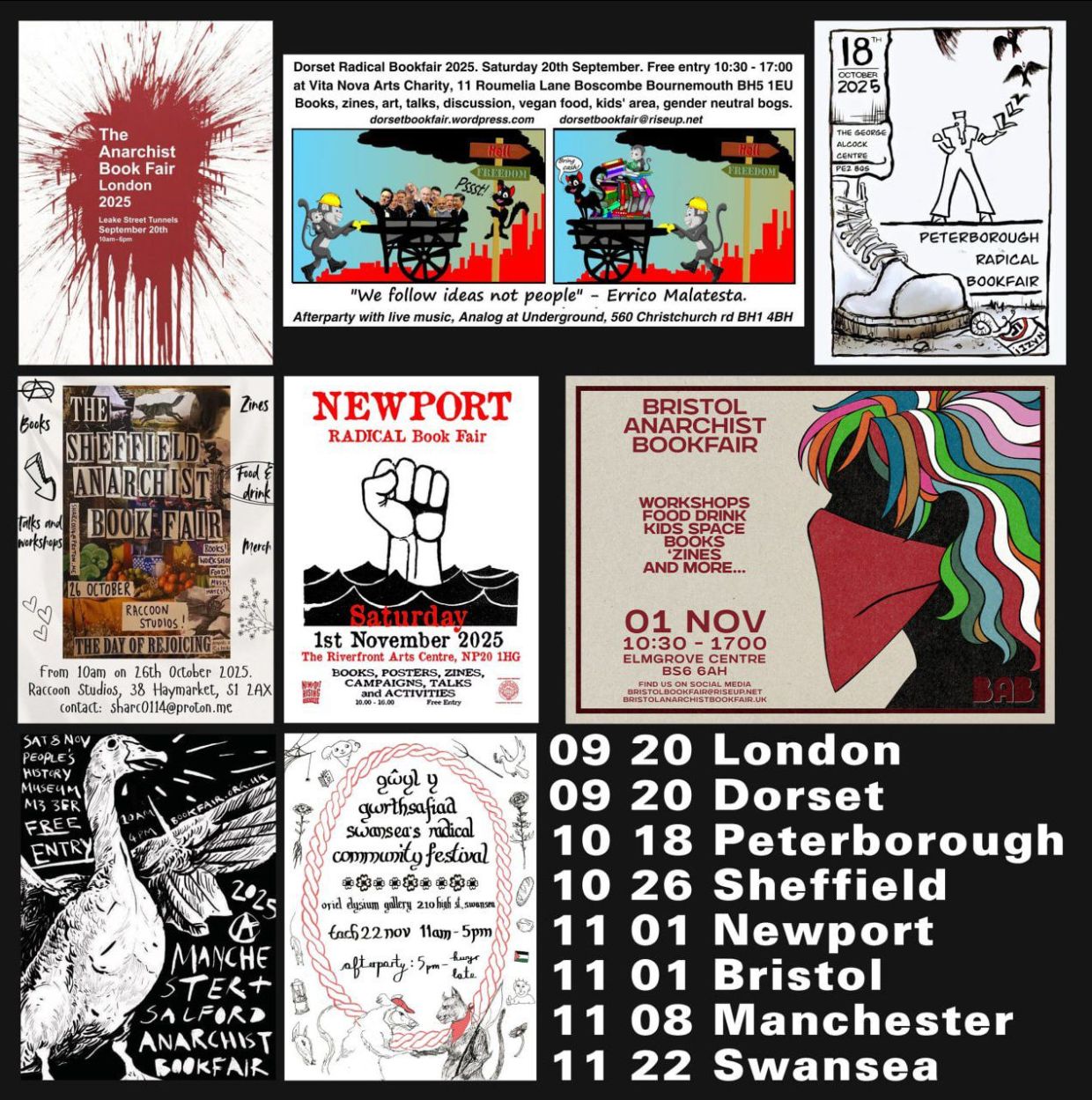
Bristol Anarchist Bookfair for 2025 will take place on Saturday, November 1st, at the Elmgrove Centre in Bristol, UK.
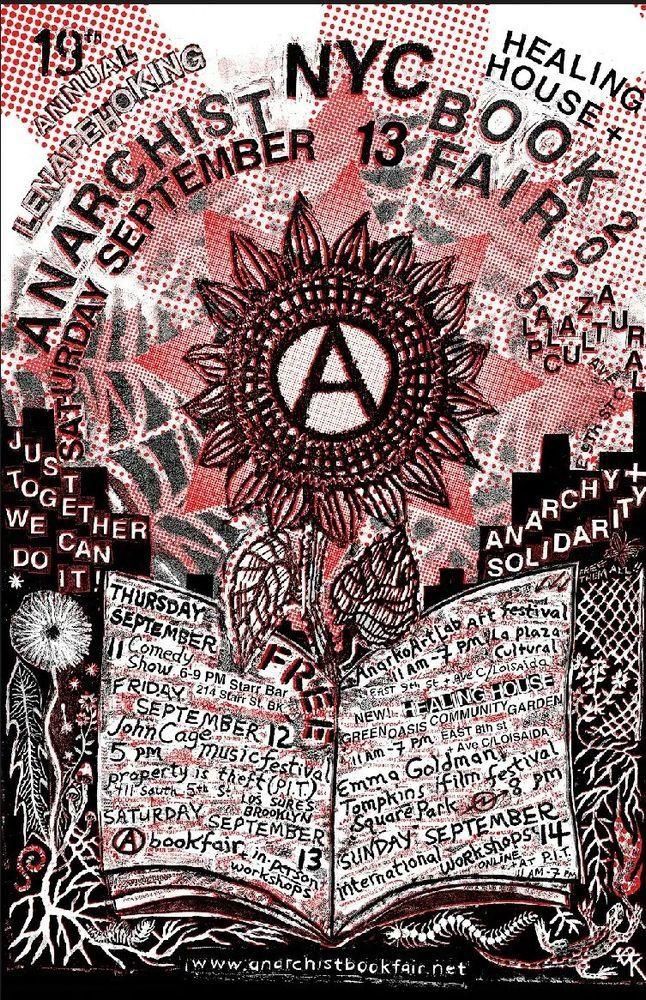
UK BOOK FAIRS
It is also known that details and flyers for the 2025 bookfair may be available at the Bristol Radical History Festival 2025. To find out more, you can: Check the Facebook page.
The Bristol Anarchist Bookfair has a Facebook page where they share updates and information about upcoming events.
Attend the Bristol Radical History Festival: Look for the bookfair flyer at the festival, which is happening on Saturday, November 1st at M Shed and Sunday, November 2nd at Cube Microplex.
The Israeli occupation has intensified its bombardment of Gaza City, attacking the Islamic University three times in succession, with the final attack using highly explosive bombs that left dozens of martyrs buried beneath the rubble.
“Israel’s” indiscriminate strikes extended to the Mhanna and Al-Taj Towers, entire residential blocks under so-called “evacuation orders”, and even five UNRWA schools.
In a further escalation, Israeli aircraft destroyed the historic Greek Orthodox School and its church, further highlighting the ethnic cleansing and genocidal nature of the Israeli occupation regime’s war on Gaza.
Buenaventura Durruti Domínguez, son of Santiago, a railroad worker, and Anastasia, was born on July 14, 1896, in León.
At the age of five, he attended primary school, and at nine, he attended secondary school on Misericordia Street, run by Professor Ricardo Fanjul.
The professor’s assessment of Durruti upon completing his studies was: “A gifted student, absent-minded, but with noble sentiments.”
At the age of fourteen, he was apprenticed in a mechanical workshop, which he left at eighteen, having received a good education, which he demonstrated in his first job in Matallana de Torio, building mine wash houses.
He later joined the Northern Railway as an assembly mechanic.
This was in 1914, when the First World War broke out. Manuel Buenacasa
Although León was a center of clerical and aristocratic domination, there was already a working-class core of the Spanish Socialist Party and the General Union of Workers.
Durruti belonged to the latter from the day he became a wage earner.
His rebellious nature, always willing to confront injustice, earned him a reputation among his colleagues and made him popular in the mining centers.
He participated in union meetings and spoke out in the workplace, where his militant and combative mentality was formed.
During this time, the revolutionary strike of August 1917 took place, which ended in León with the dismissal of workers and the repression of the leaders.
The León branch of the new trade union, the National Confederation of Labor the CNT, also participated in this strike.
Durruti was attracted by the fighting spirit of these men and joined this union, to which he would remain for the rest of his life.
Fired from the railway workshops and boycotted by the León employers, he had to go into exile and settle in Gijón, a center of revolutionary attraction in northern Spain and a hub of anarcho-syndicalist influence in the Asturian region.
There, he befriended Manuel Buenacasa, who introduced him to anarchist theories.
After spending two months in Gijón, he was forced to go into exile in France, unable to find work and having failed to register for military service, despite being 21 years old. Exile and Revolutionary Action
In Paris, three men influenced him: Sébastien Faure, Louis Lecoin, and Émile Cottin. These men would forever remain linked to his life.
In Spain, his friends sent him news. The revolutionary spirit sweeping Europe prompted him to return to Spain in early 1920.
In San Sebastián, he met Manuel Buenacasa, general secretary of the city’s CNT construction union. A few days after his arrival, he began working as a mechanic, which allowed him to make friends with other militant workers in Barcelona, Madrid, and Zaragoza.
The foundations of an anarchist group had been laid in San Sebastián, and it was the group called “Los Justicieros” that Durruti first joined.
But the people of San Sebastián were people to whom “nothing ever happened,” and Durruti decided to move.
Buenacasa gave him a letter of recommendation for Ángel Pestaña, then general secretary of the CNT National Committee, who was in Barcelona.
Francisco Ascaso
He stopped off in Zaragoza, where the atmosphere was charged with workers’ struggles.
Cardinal Soldevila and the governor of Zaragoza had brought a group of professional assassins from Barcelona to murder Confederate militants and destroy the CNT in Zaragoza.
The reaction was violent, and a group of CNT militants, including Francisco Ascaso, were imprisoned in the Predicadores prison awaiting harsh sentences.
The workers of Zaragoza declared a general strike to demand the release of the prisoners.
Barcelona / Madrid: the “Los Solidarios” group
The event coincided with the arrival of Durruti and his friends in Zaragoza. The prisoners were released, while the struggle took on new proportions.
In this climate, Durruti, a close friend of Ascaso and Torres Escartin, decided to move to Barcelona in January 1922.
Barcelona, like Zaragoza at that time, was at the extreme end of the struggle.
Gangsters attacked labor leaders and murdered them in the streets. Faced with this attack supported by employers and the police, the unionists could only respond using the same methods.
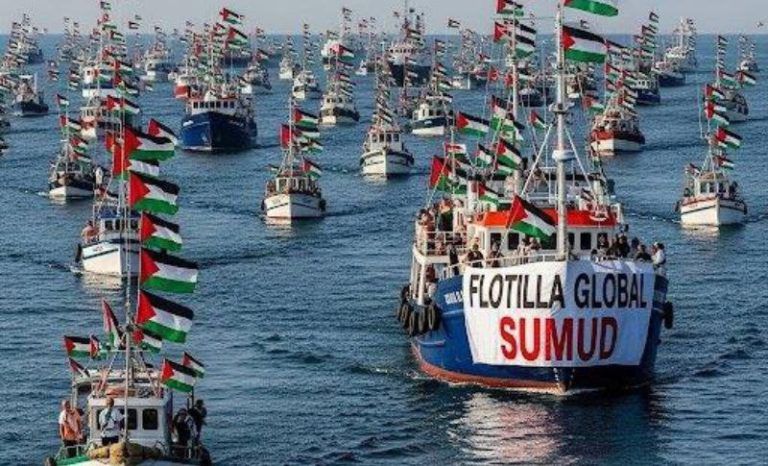
On Tuesday night, a flaming object fell on the Global Sumud Flotilla’s (GSF) “Alma” boat, docked in Tunisian waters and sailing under the British flag.
Video footage of the attack shows a large explosion, and the boat’s deck was set aflame.
The crew was able to quickly put out the fire, and nobody was hurt, the group said.
On Wednesday, September 10, the “Bloquons Tout” movement called for 360,000 people to participate in protests, at least 150 schools were blocked, and thousands of blockades and acts of sabotage occurred across the country, according to estimates from several participating organizations.
With more than 80,000 police officers and gendarmes mobilized during the day (see our article) and widespread use of drones, the repression was extremely brutal, with at least 473 detained and 339 people in custody, according to the Ministry of the Interior.
To demand their immediate release, numerous support demonstrations were organized in front of police stations during the night.
In Toulouse, hundreds of people gathered, but the police launched tear gas against those present and made at least one more arrest.
We include here Paul Cudenec’s detailed Report
SEE ORIGINAL FOR MANY LINKS AND PHOTOS ( can’t include as blogging from an old phone☹️☹️)
winter oak The natives are getting restless on September 11, 2025 by winter oak
by Paul Cudenec (who reads the article here)
It’s always an inconvenience for an occupying colonial force when “the natives are getting restless”.
They tut-tut with irritation as the less-than-human riff-raff come together to demand an end to their exploitation and debasement under the imperial jackboot.
The colonisers order their Imperial Propaganda Machine to smear and condemn the trouble-makers and to frighten the population away from joining them with threats of institutional violence.
And when, despite all that, the repressed people still venture out on to the streets to reclaim their freedom and their future, how do the colonisers respond?
Do they listen to these heart-felt grievances, promise to modify their policies, if only to see off the threat of a popular uprising?
No, of course not, because the whole purpose of their occupation is an never-ending dispossession of the colonised people and the expropriation of their natural resources.
The demo mushroomed into a multitude – demanding the survival of Occupied and Self-managed spaces.
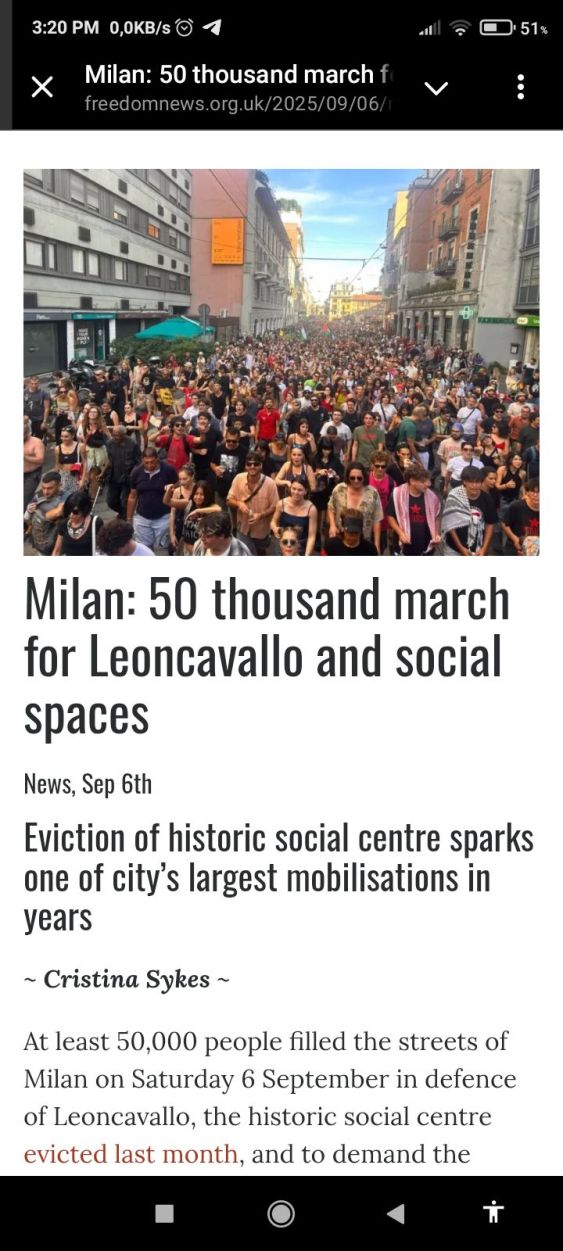
The mobilisation began at midday at Stazione Centrale, with several thousand moving towards Porta Venezia.
Early actions included a transfeminist bloc entering the “Pirellino” construction site owned by real estate giant Coima, denouncing luxury housing projects.
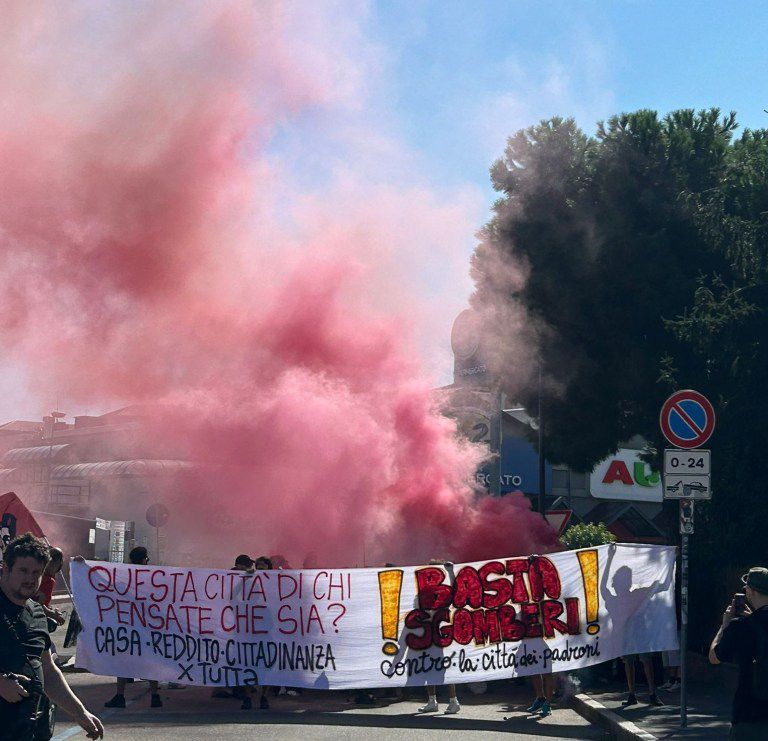
Activists unfurled a banner reading: “Whose city do you think this is? Against the bosses’ city.”
By afternoon, the march swelled to tens of thousands.
‘Against the Bosses City’
From the lead truck, banners proclaimed “Hands off the city” and “Leoncavallo: 50 more years.”
The “Antifascist Mothers of Leoncavallo” marched at the front, followed by collectives from Rome, Nápoles and the North-East.
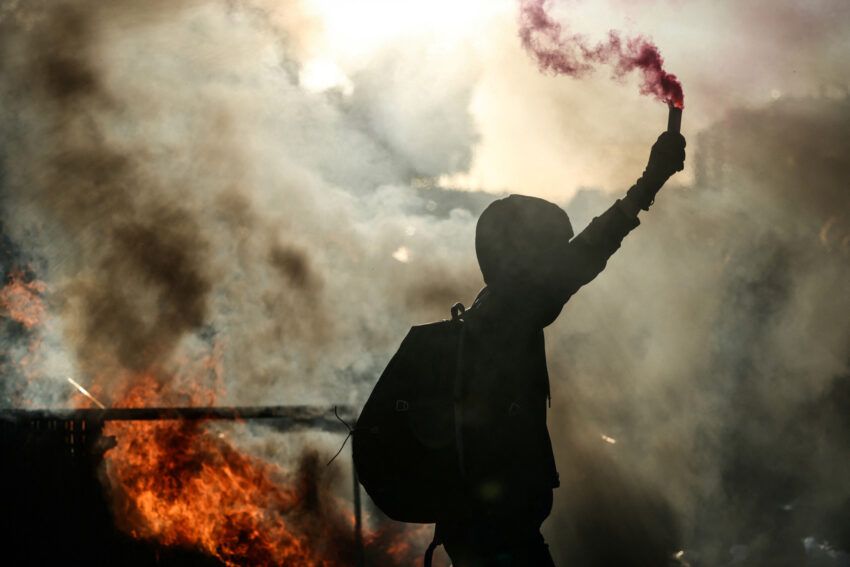
Chants echoed in the streets and smoke flares were seen as the march pressed on towards the city centre.
Police initially blocked access to Piazza Duomo in full riot gear.
But confronted with the sheer numbers, they retreated, and the crowd surged into the square.
“The Red League was born against speculation 50 years ago”, one speaker told Radio Onda d’Urto.
“Today we face the same enemies—greedy developers and a repressive state”.
The day was punctuated by interventions from trade unionists, Palestinian organisers and comrades from social centres nationwide.
A statement from the occupied social centre Lambretta declared:
“Leoncavallo is untouchable. We are the city against the bosses, against the politics of securitarian control, against speculation and evictions. Milan will not be sold—it will be defended”.



















 The Free