Extracto de las notas de la novela ‘The Free’ ya traducida en castellano, que será publicado en Barcelona, al menos en PDF, dentro de unas meses, con el titulo ‘Desde Acracia a Anarres‘
por thefreeonline a https://wp.me/pIJl9-I6F 18 de Julio 2026. Telegram https://t.me/thefreeonline/6217

🌪On July 19, 1936, organized workers defeated the fascist military in Barcelona who rose up against the Second Republic, beginning the social revolution.🪨 Yesterday as today we continue to face injustice and the ruling classes that destroy communities and crush social rights and life on the planet. All for the benefit of an economic system that gobbles up natural resources to convert them into private accumulation of wealth.Organized, we are capable of anything!
Long live the Confederation✊/https://t.me/thefreeonline/6223 / https://t.me/thefreeonline/6222
“Hace unos años conocí a un héroe de la Revolución Social llamado Diego Camacho (seudónimo: Abel Paz), que escribió la biografía clásica «Durruti: El pueblo armado», además de una docena más de libros y películas geniales en castellano (español).
Un anciano ágil y sonriente, con un Ducados en la boca, se quejaba en broma de que nunca le habían dado ni un céntimo por la versión inglesa del libro sobre Durruti (¡editado en 14 idiomas!). Yo le dije que intentaría traducirle algo de sus extensos libros, pero nunca pude hacerlo.

Diego sobrevivió a su exilio, a sus torturadores y a sus carceleros (pasó más de 10 años en prisiones fascistas) y volvió al final a vivir a Barcelona, donde de niño había asistido a la Escuela Libre «Natura», de Ferrer.
Se pasaba el tiempo contando lo que había visto, inspirando sin descanso a nuevas generaciones de jóvenes, e incluso haciendo giras para promocionar la película «Tierra y libertad».

“Pero ¿qué demonios pasó aquí, aquel caluroso y soleado día, el 19 de julio de 1936?
¿Qué pudo ser tan impactante como para que todas las partes colaboraran en el asesinato de decenas de miles de personas y en amordazar a la gente hasta ahora, con la intención de borrar de la faz de la tierra todo recuerdo de aquellos acontecimientos?.
Te dejo aquí algunos párrafos del libro de Diego «Viaje al pasado»(Viaje al Pasado, mi mala traducción). Por aquel entonces solo tenía 16 años;

Fiesta Revolucionaria
«Yo iba de grupo en grupo. Todos hablaban de la rápida victoria sobre el ejército (intento de golpe de Estado) en menos de 12 horas de enfrentamientos callejeros con las tropas… un incidente… En un abrir y cerrar de ojos, la multitud había levantado una barricada colosal a lo largo del Paralelo» (una calle principal).
«Las tropas tomaron posiciones, al mando de un teniente que no tenía mucha paciencia y ordenó a sus subordinados que atacaran la barricada sin protección. Justo cuando empezó a gritar las órdenes de ataque, un capitán le apuntó con su arma… y lo mató de un disparo.

Los soldados dejaron de disparar y empezaron a acercarse a nosotros, gritando con entusiasmo “Viva la República”… Todos empezamos a fraternizar como locos; se quitaban los uniformes y todos explicaban cómo les habían engañado sus superiores…»
pagina 439
«Barcelona se había convertido en un laberinto de barricadas, muchas de ellas estratégicamente inútiles, pero significativas, construidas por todos los vecinos, que con cada adoquín apilado ponían su anhelo de cambio social y político»…
(Mi nota: Era una gran ciudad moderna y un hervidero de actividad social y política. Otra toma del poder por parte del ejército, esta vez controlado por los fascistas, fue la gota que colmó el vaso. Cuando los activistas de la CNT hicieron sonar las sirenas de las fábricas como aviso, todo el mundo dijo por fin «No pasarán» y construyó las barricadas.)
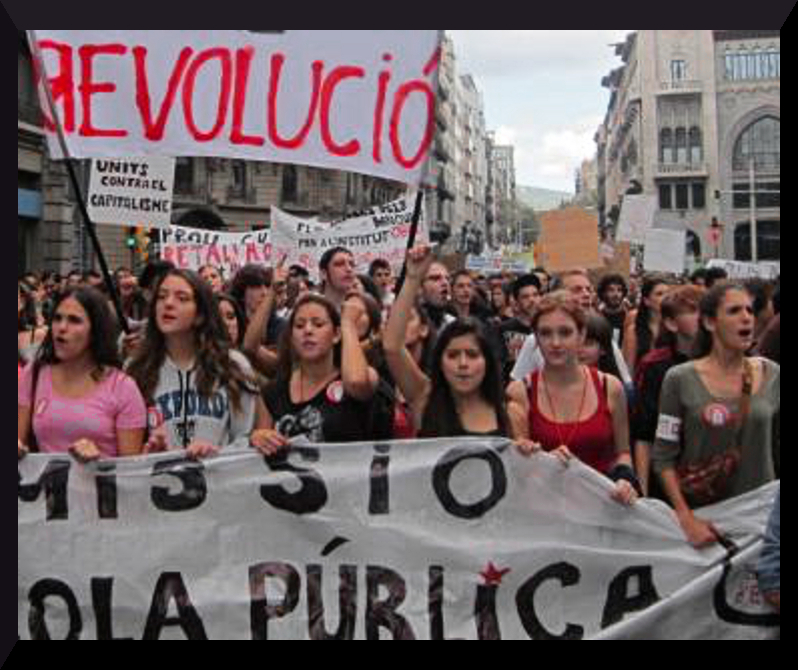
«Para mí, el tiempo que pasé en nuestra barricada del barrio del Clot… El bar Fornos convirtió su salón en un abrir y cerrar de ojos en un restaurante popular gratuito. Los trabajadores de la cervecería Damm habían dejado cientos de botellas, los de las tiendas apilaron jamones y salchichas, pan recién hecho…»
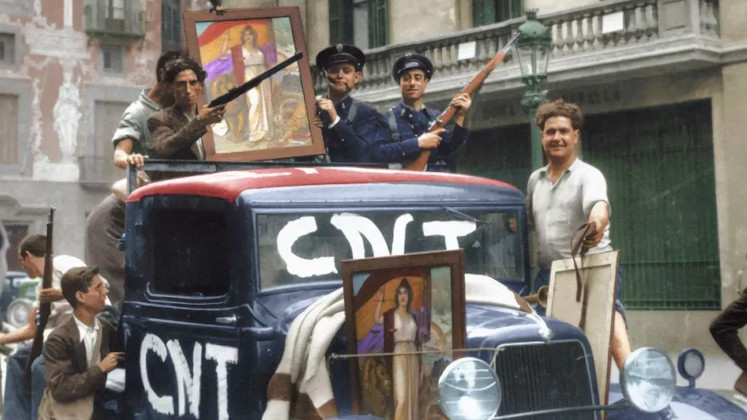
«Barcelona se estaba transformando, y también las relaciones sociales. Por ejemplo… en la barricada conocí a Lola, una amiga de la familia cuya pareja, Antonio, causaba problemas constantes por sus celos obsesivos. Ella iba de un lado a otro, echando una mano, rodeada de hombres.Más tarde Antonio llegó con un camión lleno de activistas.
No vi ni rastro de sus habituales celos; estaba encantado de verla allí, solo preocupado por su hija de cinco años. El camión pasó en medio de vítores desenfrenados a favor de la CNT y la FAI. ¿Cuánta gente más vivió cambios similares?»
«El 27 de julio, la federación local del sindicato CNT publicó un manifiesto en el que pedía el fin de la huelga general y animaba a la gente a volver al trabajo. Las expropiaciones generalizadas (tomas de empresas) fueron una respuesta al abandono que nos encontramos al llegar.
La mayoría de los propietarios se habían ido, tanto los grandes como los pequeños, por miedo a las represalias de los trabajadores (maltratados). Convocaron asambleas abiertas y colectivizaron la industria… En menos de 36 horas, la base económica pasó (sorprendentemente) de ser propiedad privada a colectiva. «-…
Eso es lo que pasó. En lugar de instaurar la dictadura nacional-católica, los fascistas militares provocaron sin querer un salto hacia el futuro, permitiendo una revolución social única y efímera, a años luz del comunismo de Estado o del capitalismo depredador.
Diego estuvo allí, vivió esa revolución que aterrorizó a todos los opresores. Ahora ya no está, pero a nosotros también nos inspiró, y le habría encantado que lo citaran en estas nuevas ediciones de The Free.

El libro es ante todo una novela, pero los escenarios y el trasfondo exploran versiones creativas de «La Idea», en el contexto del colapso de los recursos y del clima.
El truco está en vivirlo en directo, en asomarte más allá de las anteojeras cotidianas.
Otros mundos y sistemas sociales no solo son posibles, sino que están al caer, pronto, te guste o no.
ISBN-10: 1501006894 de la 5.ª edición impresa
******
Nota: La traducción al castellano de «The Free» tiene el título provisional «De Acracia a Anarres» y cuenta con tres capítulos nuevos. Todavía hay que hacer algunas correcciones lingüísticas. Tenemos pensado enviar copias en PDF por adelantado a algunos amigos para que nos den su opinión. ¡Deja un mensaje en los comentarios si te interesa! https://wp.me/pIJl9-I6F
******
original de The Free
Excerpt from the notes for the novel *The Free*, which has already been translated into Spanish and will be published in Barcelona, at least as a PDF, in a few months, under the title *From Acracia to Anarres*

“Some years ago I met a man called Diego Camacho (pen name Abel Paz) who wrote the classic biography ‘Durruti: The People Armed’, and a dozen more great books and films in Spanish.
An agile grinning old fellow, with a Ducados in his mouth, he complained jokingly that he never got a cent back from the English version of the Durruti book (now in 14 languages!). I said I would try and translate something for him, but I was never able.
Diego outlived his exile, torturers and jailors (he spent more than 10 years in fascist prisons) and came back again to live in Barcelona, where he had attended the ‘Ferrer’ Free School, Natura, as a child. He spent his time explaining what he’d seen, tirelessly inspiring new generations of youth, even touring to promote the film ‘Land and Liberty’.
But what the hell happened here, that hot sunny day, the 19th July 1936? What could be so shocking, that all sides collaborated, to murder tens of thousands and gag people till now, intent on wiping all memory of those events from the face of this earth?

We place here some paragraphs from Diego’s book ‘Trip to the Past’(Viaje al Pasado) . He was just 16 at the time.
Revolutionary Fiesta
“‘I wandered from group to group. All talk was of the rapid victory over the army (takeover attempt) in less than 12 hours of street fighting with the troops… one incident… In the blink of an eye the multitude had raised a colossal barricade across the Paralelo.’ (a main street).
‘The troops took up positions, commanded by a lieutenant, who showed little patience, and ordered his subordinates to attack the barricade without protection. Just when he began yelling the orders to attack a captain turned his weapon… and shot him dead. The soldiers stopped firing and began to approach us, shouting enthusiastically ‘Viva La República’… We all started fraternizing like crazy; they were stripping off uniforms and all explaining how they’d been misled by their superiors…’
Barcelona had been converted into a labyrinth of barricades, many strategically useless, yet meaningful, built by all the neighbours, who placed with every piled up paving stone, their longing for social and political change.’…
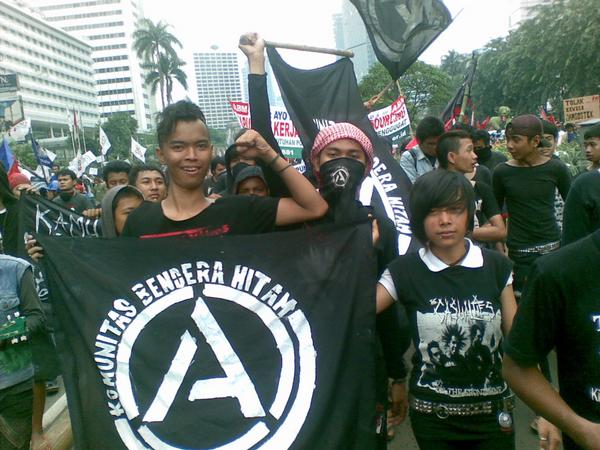
(My note: This was a big modern city and a beehive of social and political activity. Another takeover by the army, this time fascist controlled, was the last straw. When the CNT activists set off the factory sirens in warning, everyone finally said ‘They Shall Not Pass’, and built barricades.)
‘For me the time spent at our local barricade in the Clot neighborhBar Fornos had its bhall converted in a twinkling into a free Popular Restaurant. The Damm beer workers had left 100’s of bottles, store workers piled up hams and sausage, hot bread…’- ‘Barcelona was being transformed, and so were social relations.
For example… at the barricade I met Lola, a family friend who’s partner Antonio caused constant problems due to his obsessive jealousy. She was running about, being useful, surrounded by men. Later Antonio arrived with a lorry-load of activists. I saw no hint of his usual jealousy he was delighted to see her there, only worried about their 5 year old daughter.
The lorry went through amid wild cheering for the CNT and FAI. How many more people experienced similar changes?’
” ‘On the 27th July the local federation of the CNT union published a manifesto calling for the end of the General Strike, and asking people to go back to work. The generalized expropriations (workplace takeovers) were a response to the abandonment, which we found when we got there.
Most of the owners had gone, both big and small, for fear of reprisals by the workers. They called open Assemblies and collectivized industry… In less than 36 hours the economic base passed from private to collective property. ‘-…
That’s what happened. Instead of installing the National Catholic dictatorship the military fascists accidentally provoked a leap into future, allowing a unique, short-lived Social Revolution, light years ahead of State Communism or predator Capitalism.
Diego was there, he lived that revolution that terrified all oppressors. He’s dead now, but he inspired us too, and he’d have enjoyed being quoted in these new editions of The Free.

The book is a novel first, but the settings and background explore creative updates of ‘The Idea’, in the context of resource and climate collapse. The trick is to play it live, to peep around our daily blinkers.
Other worlds and social systems are not only possible, but are coming, pronto, like it or not. .
ISBN-10: 1501006894 5th Print Edition page 439
por thefreeonline a https://wp.me/pIJl9-I6F el 18 de Julio 2026


