Robert Graham’s Anarchism Weblog
Anarchism: A Documentary History of Libertarian Ideas
Here are excerpts from an interview between the Uruguayan Anarchist Federation (Federacion Anarquista Uruguaya – FAU) and member(s) of Têkosîna Anarsîst (Anarchist Struggle), a group of anarchists supporting the Kurdish resistance in Rojava. I included material from Kurdish anarchists and Democratic Confederalists in Volume Three of Anarchism: A Documentary History of Libertarian Ideas. The complete interview, including the English translation, can be found at the FAU website.

Explain the formation of the Battalion of libertarian comrades and their links with the Kurdish resistance?
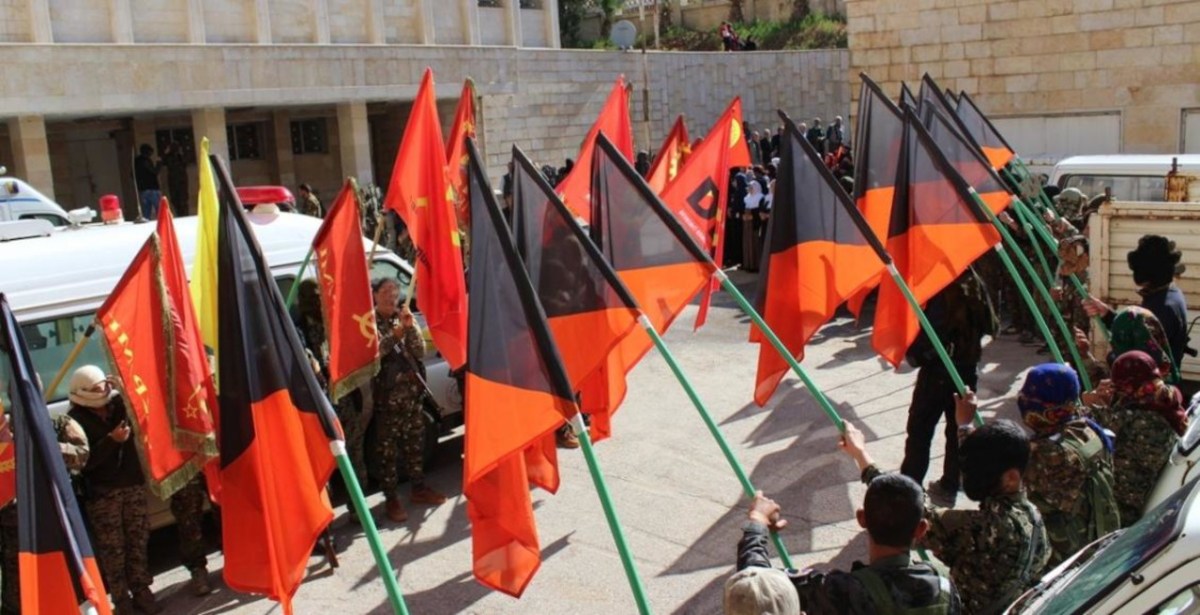
Since the beginning of the Rojava revolution, especially following the resistance in Kobanê in 2015, international volunteers have come to confront the Daesh (ISIS) and defend the revolution. In the early years most of the international volunteers came in coordination with YPG and YPJ, the Kurdish self-defense militias. Given the anti-state character of the political project of Rojava, anarchists from different continents joined the struggle in defense of the revolution, often arriving in a disparate and disorganized way.
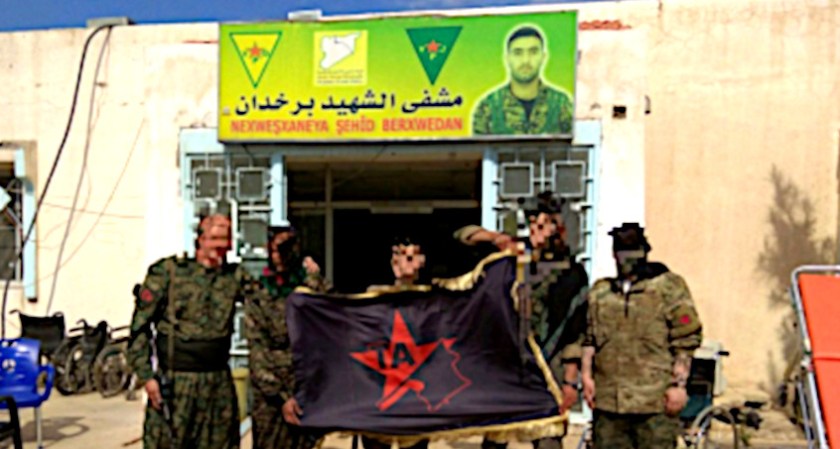
In 2015, in addition to internationalists in YPG and YPJ, the IFB (International Freedom Battalion) was organized, uniting international militants and Turkish revolutionary organizations in a common organization. Within the IFB the first anarchist brigade was formed under the name of IRPGF (International Revolutionary People’s Guerrilla Forces), which operated for approximately one year during the Tabqa and Raqqa operations.
Têkosîna Anarsîst (Anarchist Struggle) was created at the end of 2017 after the liberation of Raqqa. We seek to not only participate in the struggle against the Daesh, but to learn from the Kurdistan freedom movement while building bridges with libertarian movements around the world. As anarchists, we see the importance of taking up arms against the theocratic despotism of the Islamic State, but also against the fascistic oppression of the Turkish State, the Syrian State, the various imperialist powers and the myriad Islamic fundamentalist groups fighting in Syria.
The reality of the war is very complex, and sometimes it plunges us into a sea of contradictions about our role here. Inter-ethnic and inter-religious conflicts converge with a proxy war of regional and geopolitical powers, where imperialist and colonial influences set the pace of a Middle East bathed in blood and oil. But the Kurdish resistance is an emblematic example of revolutionary organization, and Rojava’s social and political project is certainly inspiring. After some years working here we saw good sides and also bad sides of the revolution, and our commitment with it is based in a frame of internationalism and critical solidarity.
The implementation of democratic confederalism, a stateless society based on women’s liberation, ecology and direct democracy, is an example for those of us who believe in a world free from capitalism and patriarchy. This is what led us to Rojava, but what now? A large number of internationalists who come to Rojava participate in defending the revolution for a few months and then return home to their previous lives. Is that what we want? Is this our idea of internationalist solidarity? No, we want something else.








 The Free