Mumia moved to new prison. Free Mumia!

Mumia Has Been Transferred to SCI Mahanoy!

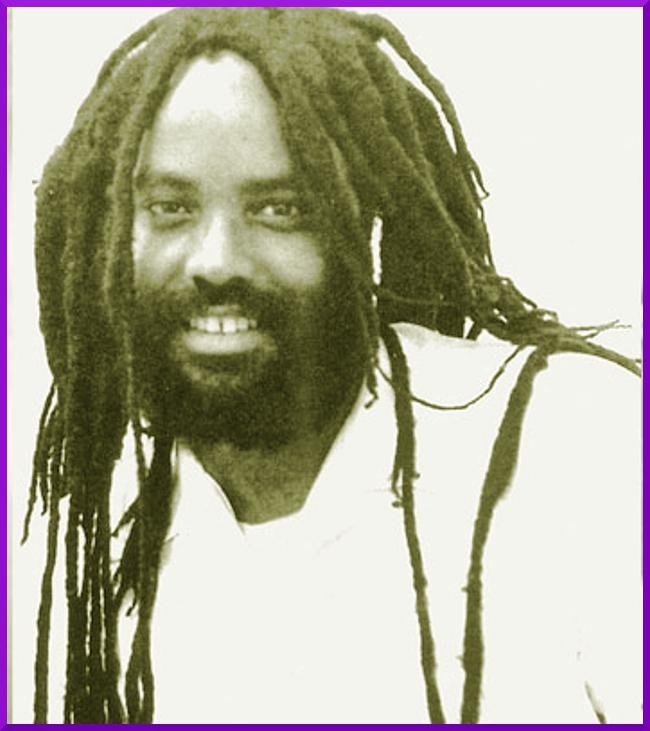
Mumia Abu-Jamal is being held in Administrative Custody at SCI Mahanoy, Frackville, PA until he is cleared to enter general population.  Mumia’s death sentence has been dropped and he will begin serving his life sentence (with no parole opportunity). 

We need phone calls to the institution to let them know that the WORLD is watching Mumia’s movements and ask general questions so that they know that nothing they are doing is happening under cover of darkness.

Please also send cards and letters to Mumia at the new address so that he begins receiving mail immediately and it is known to all of the people there that we are with him!

Prison Phone Number: 570-773-2158

MAILING ADDRESS:
Mumia Abu-Jamal, #AM8335
SCI Mahanoy
301 Morea Road
Frackville, PA 17932

Save the Amazon, veto the new Forest Code

GREENPEACE INTERNATIONAL

    Dear friends,
The Amazon rainforest is facing its biggest threat ever. Damaging changes to Brazil’s Forest Code – the main laws protecting the rainforest – were just approved by Brazil’s Senate. These changes open up the Amazon to rampant deforestation and we now stand to lose more of this amazing ecosystem to destruction. Soon the only thing standing between the Amazon and the chainsaws will be Brazilian President Dilma Rousseff, who can veto these changes. We all have a stake in protecting this irreplacable resource.

You can urge President Dilma to protect the Amazon and veto the new Forest Code. clic HERE http://www.greenpeace.org/international/en/campaigns/forests/amazon

We are edging closer to an “ecological calamity” in the Amazon rainforest and a vote in the Brazilian Senate has pushed us closer to the brink. It voted to approve destructive changes to the laws governing forest protection – called the Forest Code – that would open up the Amazon rainforest to rampant destruction. But it is not too late. Brazilian President Dilma Rousseff will have the opportunity to veto the changes – you can ask her to protect the Amazon and veto the new Forest Code.

Losing the Amazon rainforest to further deforestation would be an unimaginable loss for our planet and life on it, and the approval of this new Forest Code in Brazil would bring us one step closer to this terrible reality.

Not only is the Amazon home to one out of every ten species on the planet and important to the livelihoods of local communities, but it also functions as a carbon storage system, which can help us avoid some of the worst consequences of climate change. If deforestation and degradation of the Amazon continues increasing at the current pace the damage could actually transform the Amazon into part of the problem instead of part of the solution. The emissions from Amazon destruction contribute to a feedback cycle that will not only make climate change worse, by increasing warming trends, but cause further damage to the remaining forest, as forest fires in the region would intensify. The new Forest Code would bring us closer to this vicious cycle. Some scientists are already discussing the potential of losing the Amazon completely – imagine a world with no Amazon rainforest.

It won’t happen, because we will all keep demanding real protection for the rainforest until we get it. We know that a future free from destruction is possible, and we’ll condemn any attempts to destroy that future for the short-term profit of a few – the new Forest Code is one such attempt.

This past year the agricultural lobby pushed hard inside Brazil to weaken forest protection, many of the people pushing for these changes have been fined themselves for illegal deforestation. The result is the new Forest Code – it reduces the size of areas under protection, pardons people who deforested illegally and weakens enforcement of protection laws.

The text that has now been approved by the Senate is really bad; after the vote, Greenpeace Amazon campaign director Paulo Adario reemphasized that it opens up the rainforest to further deforestation. He also pointed out that scientists and the public prosecutors office have already said that the new Forest Code is not good for the environment and will be challenged.

There is still time to turn this situation around. You can send President Dilma an email right now and make it clear that she has a duty to protect the Amazon rainforest and veto the new Forest Code. All of us, including President Dilma, have a stake in the survival of this amazing ecosystem.

We’d like to keep you updated on this situation as it develops, so please keep in touch and make sure you are following us on Facebook and Twitter.

Politicos hide as US `occupy` jobless get Wild

image David Sachs with thanks

After visiting 94 offices on Capitol Hill Tuesday, unemployed demonstrators targeted a Newt Gingrich fundraising event on Wednesday night. The hotel, like many of the representatives’ offices, locked its doors to the demonstrators, who are in D.C. with a group called “Take Back the Capitol.” Wednesday night the demonstrators called for Gingrich to discuss his jobs plans with the “99% outside” protesting, rather than the “1% who are contributing thousands to his campaign,” according to a press release sent out by organizers. Gingrich never came out.

“Take Back the Capitol” is made up of “unemployed and underemployed people from every state, students, community activists, union members, healthcare advocates, and travelers from Occupy sites from coast to coast,” according to the group’s website. Organized labor has helped coordinate three days’ worth of Capitol Hill protests under that banner.

The protesters are in D.C. as Congress is expected to vote on extending unemployment insurance to 2.2 million unemployed workers who face losing their benefits if the legislation is not passed.

Today, Senate Republicans blocked a vote on President Obama’s nomination to lead the new Consumer Financial Protection Bureau. Congress created the bureau, which was the brain child of Massachussets Senate candidate Elizabeth Warren, during last year’s financial reforms. But Republicans have worked to strip its authority ever since, and have vowed not to confirm a director for it. Obama is weighing a recess appointment, which would circumvent the Senate vote.

Meanwhile, many of the demonstrators are using cameras on their mobile phones to upload images of members of Congress ignoring them. In the video below, Congressman Joe Walsh, who represents Illinois’ 8th District, was caught on video fleeing from his constituents. “We’ve been waiting a few hours to speak with you congressman,” a woman is heard saying as Walsh races down a set of stair. “You can at least acknowledge us,” the woman says once she realizes the congressman is fleeing.

California Rep. Elton Gallegly, a Republican who represents most of Ventura County and inland Santa Barbara Couny, at least acknowledged the demonstrators with a “Merry Christmas,” but he then ran quickly behind locked doors.

“Even when one of his constituents presented herself and tried to talk to him, he just kept saying ‘Merry Christmas,’” Esperanza Arrizon, a youth leader with Good Jobs LA, wrote about the event. According to her, before the congressman ran behind closed doors he did have one question for demonstrators, “I just donated 750 gifts to needy children, how many of you can say you did that?”

The event is being organized by several community groups by the American Dream Movement, a partnership between several groups including MoveOn.org, SEIU and other progressive, labor, and faith-based organizations.

Read more HERE  with thanks  http://colorlines.com/archives/2011/12/elected_officials_

Release Mumia Abu-Jamal NOW NOW NOW

“Because Mumia has for thirty years been subjected to torture on death row and because he is innocent, justice for Mumia will not be served by life imprisonment, but by his release from prison.”

Philadelphia District Attorney Seth Williams announced Wednesday this office has called off their 30-year battle to execute former Black Panther Mumia Abu-Jamal for allegedly murdering a white police officer, the Associated Press reports. The decision comes just two days short of the 30th anniversary of the killing.

Supporters and advocates who argue Abu-Jamal is not guilty say Williams’ decision shouldn’t be a surprise.

“Now that it is clear that Mumia should never have been on death row in the first place, justice will not be served by relegating him to prison for the rest of his life—yet another form of death sentence. Based on even a minimal following of international human rights standards, Mumia must now be released,” South African activist Archbishop Desmond Tutu said in a statement sent out by FreeMumia.com.

“I therefore join the call, and ask others to follow, asking District Attorney Seth Williams to rise to the challenge of reconciliation, human rights, and justice: drop this case now, and allow Mumia Abu-Jamal to be immediately released, with full time served,” Tutu continued.

“The news that the DA’s Office of Philadelphia is no longer seeking the death penalty for Mumia is no news to supporters of the nearly 30 year Pennsylvania Death Row prisoner,” Dr. Johanna Fernandez wrote in a statement to the Loop21.com. Fernandez is a U.S. History professor at Baruch College and an advocate who’s been working on Abu-Jamal’s case for several years.

“Because Mumia has for thirty years been subjected to torture on death row and because he is innocent, justice for Mumia will not be served by life imprisonment, but by his release from prison.”

Fernandez, who produced a documentary on Abu-Jamal, explains the conditions today of the Pennsylvania courts that found Abu-Jamal guilty and describes his prison cell. From Loop21.com:

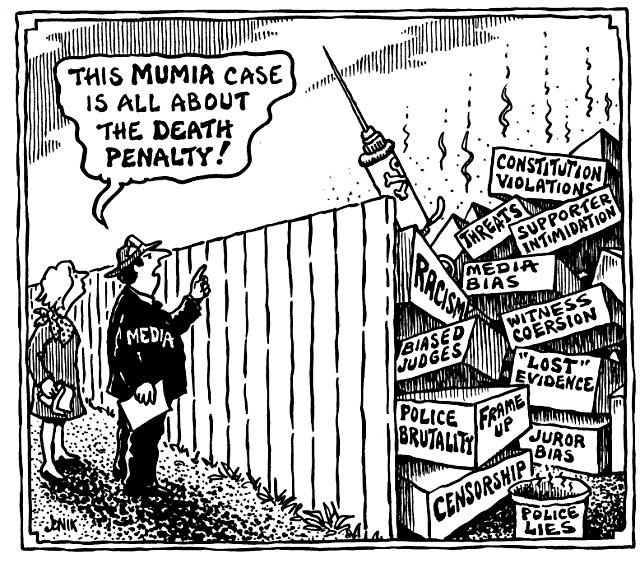
We must remember that the same Pennsylvania courts that are being denounced today for the mass incarceration of juveniles are the same courts that framed Mumia. Pennsylvania has more juveniles serving life than any other state in the nation. The backdrop of constitutional violations in Mumia’s case include: routine corruption, evidence tampering, prosecutorial misconduct, judicial racism, discrimination in jury selection, and the disproportionate incarceration of African Americans and Latinos. The issue of mass incarceration of black and Latino males is one of the gravest civil rights crises of our time.

We’re sobered by the realization that for 30 years an international movement kept Abu-Jamal alive long enough for the appeals process to run its course. But what if the movement hadn’t kept him alive? For 30 years Abu-Jamal has been forced to withstand tortured isolation in a windowless cell the size of a small bathroom. For thirty years the threat of execution has hung over his head, and he’s not been allowed to touch his children or his grandchildren, or his wife and siblings, or his friends.

Supporters of Abu-Jamal, including Princeton professor Cornel West and Archbishop Desmond Tutu, have a symposium planned for Friday at the National Constitution Center for the man they call an “innocent revolutionary and celebrated journalist.”

OCCUPYing evicted homes in 20 Cities

‘Occupy’ protesters reclaiming foreclosed homes in 20 cities

#OccupyOurHomes, By David Edwards. The 99 percent movement, which has been evicted from many of their encampments across the country, is finding common cause with thousands of homeowners who are also being evicted from their homes.

Even though the movement has often been criticized for a lack of defined goals, Tuesday’s “Occupy Our Homes” action in at least 20 cities makes it clear that they are standing up to banks to reverse foreclosures.

“We’re in the neighborhood in New York City that had the highest number of foreclosure filings in 2010 to send a message that the economy is failing the 99 percent,” Vocal New York organizer Sean Barry told Raw Story from a Brooklyn neighborhood as about 200 protesters chanted in the background.

“We’re here because [there are] a lot of empty buildings owned by Wall Street banks and we’re going to liberate them.”

Tasha Glasgow, the single mother of a 9-year-old daughter and a 5-year-old son, was expected to be one of the first occupants of a reclaimed home. Barry said that Glasgow, who had been in and out of the shelter system in New York City, had been slated to get a Section 8 voucher before budget cuts by Mayor Michael Bloomberg put an end to that promise.

“We’ve gained access to the home, and we’ve got the support of the neighbors,” Barry explained. “They’re going to start occupying it. … And then, there’s going to be 24/7 eviction defense by Occupy Wall Street.”

There were over 40 events planned in more than 20 cities Tuesday, but that is just the beginning.

“When it comes to Wall Street’s control over our economy, our democracy and our lives, there’s few better examples than the housing crisis,” Barry noted. “Occupy Wall Street is going to continue to support this national Occupy Our Homes campaign, and both defend homeowners who are being threatened with eviction due to foreclosure, and to move families that need homes into vacant buildings that banks are just sitting on.”

David Edwards has served as an editor at Raw Story since 2006.  Follow him on Twitter at @DavidEdwards.

Related: Occupy protesters take over foreclosed homes

http://incorporealcommittee.wordpress.com/2011/12/07/occupy-protesters-reclaiming-foreclosed-homes-in-20-cities/

Repsol se enriquece Matando

¡ Encontraron el Dorado!

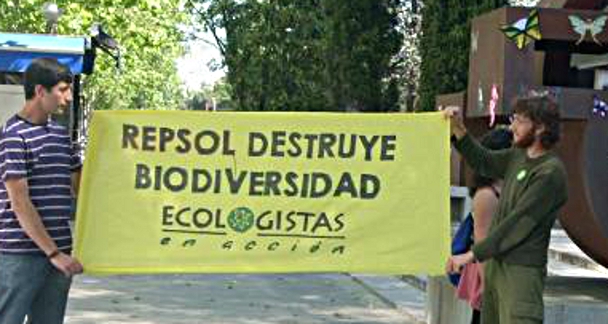
Repsol se enriquece con los lotes y mercados cautivos de América Latina

Domingo 4 de diciembre de 2011, por repsolmemata

Las pasadas semanas Repsol sorprendió a los accionistas con la noticia del descubrimiento histórico de 927 millones de barriles equivalentes de petróleo en el yacimiento de Vaca Muerta, Neuquén, Argentina. La noticia coló y los inversores premiaron a la compañía con un aumento del 6% de la cotización bursátil a las pocas horas de su difusión. Aunque exagerada por su contenido (pues según los analistas, ni son reservas probadas, ni el shale oil es todavía petróleo ya que necesita de costosos procesos de refinación)[1] pareciera que la crisis mundial no afecta a la compañía petrolera, que sigue amasando altísimos beneficios. Pero si ellos ganan, quién pierde?

En el último lustro la estampa de Antoni Brufau, presidente de Repsol-YPF, abrazado a presidentes de diferentes países de América Latina se ha hecho familiar . No en vano, la compañía petrolera ha apostado millonarias inversiones en la exploración de nuevas áreas y el desarrollo de campos productivos que han engrosado unas reservas muy cotizadas en los mercados bursátiles. Otra estrategia ha sido formar sociedades mixtas con las empresas nacionales, para conseguir áreas prioritarias y superar las resistencias gubernamentales. De este modo, los países productores, que a la vez son consumidores, abren sus puertas a la compañía, entregando unos combustibles para que la compañía los exporte, o los venda al propio país con un gran margen de ganancias.

Mientras la compañía anuncia en las bolsas sus fabulosos hallazgos en zonas no tradicionales, los habitantes de estas regiones sufren los pasivos ambientales del avance de la frontera extractiva. Y los conflictos afloran con el petróleo.

Petróleo bajo el mar

En Brasil, Repsol materializó a finales del pasado año un acuerdo con la empresa china Sinopec para desarrollar conjuntamente los proyectos de exploración y producción que posee en las Cuencas de Santos, Campos y Espírito Santo, donde participa en 14 bloques, de los cuales opera siete.

En las últimas semanas, el consorcio Repsol Sinopec Brasil anunció descubrimientos de importantes reservas en varios pozos en la costa de Vitoria y Sao Paolo a profundidades entre 2 y 5 kilómetros. Estos hallazgos se añaden a otros mega-yacimientos que Repsol ya contabilizó en los pasados años y que le posicionaron en una de las empresas líderes en descubrimientos en aguas profundas.

Pero entre la detección de reservas ubicadas a kilómetros bajo la superficie y su posterior extracción, existen riesgos e impedimentos tecnológicos que – sirva el desastre del golfo de México de 2010 como precedente- conviene no subestimar.
En aguas colombianas, Repsol se propone realizar exploración y explotación petrolera en las Cayos del Norte, parte del archipiólago de San Andrés, Providencia y Santa Catalina. El proyecto ha levantado la oposición del pueblo indígena raizal y de organizaciones ambientalistas por poner en peligro los sistemas coralinos del conocido Mar de los Siete Colores.

Gas guaraní para la exportación

En Bolivia, Repsol se asoció a YPFB para formar la empresa PetroAndina SAM y conseguir nuevas áreas de exploración en la Amazonía.

Más al sur, en el Chaco, la compañía sigue perforando pozos exitosos en el interior de territorios indígenas. El Bloque Caipipendi, de 123.000 hectáreas que se superponen a los Territorios Comunitarios de Orígen Itika Guasu, Tentayapi, y al Parque Nacional Aguaragüe, ya se han puesto en marcha 5 pozos a profundidades de hasta 6.000 metros. En 2010 Cristina Fernandez y Evo Morales inauguraron un nuevo gasoducto de 40 kilómetros para unir este bloque con la red de gasoductos argentinos y asegurar mayores flujos de exportación hacia el mercado argentino, deficitario de este combustible – a pesar de que este país permite a las empresas exportar el gas a chile y otros países.

El pasado octubre, Repsol anunció la inversión, junto a su socia Pan American Energy de 1.400 millones de dólares para seguir perforando nuevos pozos con el horizonte de aumentar la producción de 3 a 14 millones de metros cúbicos diarios de gas en los próximos tres años. Con este repunte productivo “se garantizará los contratos de exportación a Argentina y por supuesto satisfacer el mercado interno”, el cual, valga decirlo, todavía es mínimo por no contar con una red de suministro domiciliario.

Amenazada por el bloque Caipipendi, la comunidad guaraní de Tentayape, declarada como Patrimonio Historico Cultural de los Guaranís en 2006, ha defendido a ultranza una posición de determinante rechazo a cualquier entrada de la compañía en su territorio. La empresa, a sabiendas de las reservas gasíferas que aguardan bajo el suelo de la comunidad, acorrala su territorio implantando cada vez más infraestructuras en la zona.

Amenazas a los pueblos amazónicos
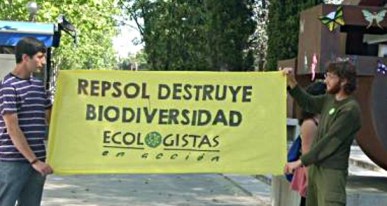
Repsol opera en varios lotes en la Amazonía del Perú. Al norte, en el controvertido Lote 39, se discute la existencia o invención de pueblos en aislamiento voluntario. Mientras las organizaciones indígenas piden la creación de una reserva territorial que los proteja, Repsol niega su existencia en base a la colocación de trampas fotográficas. Mientrastanto, la francesa Perenco, ha obtenido la licencia para la construcción de un oleoducto en el vecino Lote 67, también en territorios de posible presencia de pueblos aislados.

Al sur del país, Repsol es socia del consorcio Camisea, que opera al interior de la Reserva Territorial Nahua Kugakapori Nantis. Pluspetrol, la operadora del Lote 88, ha iniciado hace unos meses cuestionados movimientos no previstos al interior de la reserva, contratando a comunarios del pueblo Nahua, en situación de contacto inicial, para actividades de vigía ante posibles encuentros con grupos aislados.

A parte, el descubrimiento de enormes bolsas de gas en el vecino Lote 57 ha empujado a Repsol a iniciar un ambicioso proyecto de industrialización de la selva. Para este año, peinará sus bosques con un proyecto de sísmica 3D que afectará 2.360 Km de la Reserva Comunitaria Machiguenga, así como su área de amortiguamiento y la del Parque Nacional Otuqui. También proyecta la contrucción de 22 pozos más que se añadirán al pozo ya perforado Kinteroni I y una conexión de gasoductos entre los pozos de los lotes 57, 56 y 88.[2]

En la región del Madre de Dios, el lote 76 operado por Repsol y Hunt, genera conflictos por la invasión con la Reserva Comunal Amarakaeri, pues se superpone a casi todo el territorio de la reserva y sin que se les haya efectuado la consulta previa a sus habitantes.

Repsol obtuvo un beneficio neto de 1.901 millones de euros en los nueve primeros meses de 2011, un 6,4% superior al año anterior. Buenas noticias para la bolsa, malas para los pueblos que cobijan el filón hidrocarburífero.

[1] Aleardo F. Laría , El misterio de Loma de la Lata, Diario Río Negro, Neuquen, 24/11/2011

[2] Agunos artículos sobre el tema: “ El desembarco de la modernidad, la sobmra de Repsol en Nuevo Mundo” http://servindi.org/actualidad/50232, “Repsol barrerá 5.000 km2 en reservas comunales” http://servindi.org/actualidad/48268, “La historia se repite para los pueblos aislados de la Reserva del Estado Nahua Kugakapori” http://www.kaosenlared.net/noticia/…

por  repsolmemata

Occupy our Homes Action..latest news

  • National Day of Action to Stop and Reverse Foreclosures

  • December, 06 2011 1 Comment

    Today is the Occupy Our Homes National Day of Action to Stop and Reverse Foreclosures. Actions are taking place in over twenty-five cities around America, as the Occupy movement joins with homeowners and people fighting for a place to live. Our system has been serving Wall Street, big banks, and the one percent. Clearly this has not worked. We are the 99% and we are reclaiming our homes.

    Follow this post for updates from around the country today. Go below to see videos from the day of action.

    4:49 PM: Report on Twitter says Occupy action in Alameda shut down a foreclosure auction at the court. Picture from the action.

    4:17 PM: Dozens of Portlanders vow not to leave foreclosed neighbors’ homes.

    4:00 PM: VIDEO: Debbie Henry talks about why she and her husband are occupying their home.

    3:58 PM: Picture of Robert and Debbie Henry of Southgate, MI as they took action today.

    3:43 PM: Volunteer cleaning crew from Occupy Wall Street arrives at reclaimed and reoccupied home in East New York Brooklyn to begin cleaning and renovating the home for Tasha Glasgow and her two children.

    » Read More