City Permaculture..how to Get Stuck In..

adopt a chicken

Ten of the best…ways to get stuck into urban gardening

Growing your own fruit and vegetables doesn’t have to involve huge amounts of space. As Hannah Corr explains, there are plenty of short cuts for city dwellers who want to get

The recession and the resulting squeeze on living standards have little to recommend them except in one respect. Thanks to a combination of rising food prices and greater environmental awareness, the last few years have seen interest in DIY food production skyrocket. According to the Department of the Environment, Food and Rural Affairs [DEFRA], one in three of us now grows fruit and vegetables at home. And why not? Not only can you ensure that what you grow is totally organic, you also avoid the human rights issues surrounding commercial vegetable production and slash food miles to almost zero. In short, DIY vegetables are not only good for you; they’re excellent for the planet to boot. What’s more, say DEFRA, DIY veg production is winning new converts every day with many of the new recruits coming from urban – and even inner city – backgrounds.

Sebastian Mayfield, co-founder of London based grower’s network, Food Up Front, was forced to think creatively after spending four years on an allotment waiting list and never making it higher than 22nd. ‘I began looking for an alternative closer to home’ he says. ‘And then it dawned on me while lying in the bath one day: why don’t we make better use of the space we already have?’ And he’s not alone. People are looking to their balconies, windowsills and lawns as potential places to produce food, which means that even the residents of inner city areas can try their hand at grow your own. Here’s how to get started.

Make the most of your windowsill
According to the National Trust, there are over 600 acres of growing space on windowsills across the UK, which makes them the perfect place to start for the space starved urban dweller. The easiest ’ledge veg’ to grow are spinach, rocket, lettuce and herbs, all of which thrive in small tubs and can be grown from seed….

Try a grow bag
Container gardening is the commonest – and most practical – way to grow food in the city. Pots can be placed almost anywhere, are easily moved, simple to reach when you want to start picking and excellent value for money – you can get even the pots for free by recycling catering tubs….

Use your walls
Finding extra space for veg means looking at wall space as well as what you can squeeze onto your balcony. There are plenty of varieties that are happy to twine around a trellis and still produce an abundant crop….

Grow your own fruit
Approximately 60 per of orchards have been lost since the 1950s, according to the Orchard Network, All you need is an underused corner of the garden and you could be producing apples, pears, plums, quinces, cherries, apricots or peaches within a year….

Invest in raised beds
Swap your clematis for carrots by converting your garden borders into vegetable plots….

Adopt a chicken
If you’re blessed with a reasonable sized garden, adopting a couple of hens not only means a daily supply of fresh eggs but also free help with your garden….

only NATIVE seeds please

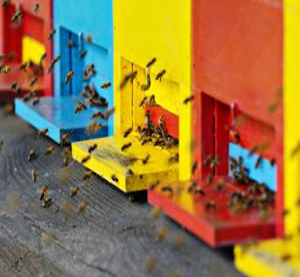
Put a Hive on your Roof   Although relatively simple, there are many intricacies to keeping bees so get some advice from the British Bee Keeping Association before getting started. Oh, and you get delicious honey too. …

Get a Greenhouse   Vegetables that thrive in a greenhouse include tender crops such as aubergines, cucumbers, chillies, tomatoes or more exotic plants like melons and sweet potatoes….

Convert urban wasteland
While inner city land is scarce and at a premium, you might be lucky enough to come across a pocket of derelict land that can be converted into an organic paradise. Along with the fun to be had during an hour or two of seed bombing, community gardening provides security against volatile food prices and gives you truly local produce. The Cuban ‘Organoponico’ model has inspired many organisations…

Get on the waiting list for an allotment
Thanks to increased interest in home vegetable production, allotments have become like gold dust. The average waiting list is three years (or 40 for an unlucky few in central London)….

 READ MUCH MORE HERE   (with thanks!)  http://www.theecologist.org/green_green_living/gardening/1110208/ten_of_the_bestways_to_get_stuck_into_urban_gardening.html
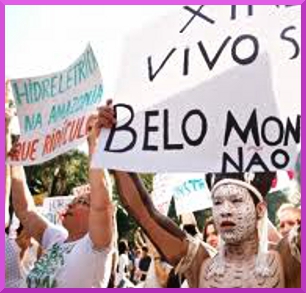

Belo Monte site OCCUPIED. Work still stopped..

Altamira, Brazil – Hundreds of indigenous leaders, fishermen and riverine people from the Xingu River basin have gathered to occupy the Belo Monte Dam construction site in a peaceful protest to stop its construction in Altamira, located in the state of Pará in the heart of the Brazilian Amazon. They

Poor barrio of Altimira to be permanently flooded by Belo Monte

have vowed to permanently occupy the site and are calling on allied organizations and movements to join them.

Work has been stopped while various legal cases are got rid of, with the politicians bought off by the ‘progress’ business and landlord nationalist lobby, while most people oppose the dam , as well as the amnesty for forest crimes and opening up of the Amazon with the new ‘Forest Code’.

Help support the peaceful protest: http://www.causes.com/campaigns/158177

Below: a report on the protest from Amazon Watch; and a declaration from the Xingu Alliance.

The Trans-Amazon Highway (BR-230) has been blocked around the Santo Antônio village, where it passes the proposed construction site. Groups are demanding the presence of a Brazilian government high-level official at the site to initiate a new round of negotiations that are transparent, inclusive and respectful of the rights of local people affected by the dam.

On Apr. 1, the Inter-American Commission on Human Rights IACHR recommended that the Brazilian government “immediately suspend the licensing process for the Belo Monte hydroelectric project” and “any material works” to protect the rights of local indigenous people.
This “abrupt change, without precedent in the democratic history of Brazil, indicates a breakdown of dialogue within the multilateral (Organisation of American States) system,” Caldas said at the news briefing.


Mapuche OCCUPY traditional lands

Mapuche Community Peacefully Occupies Traditional Lands and Plans to Stay Indefinitely

October 21, 2011 at 4:20 pm (Indigenous, Land Occupations) (, )


Mapuche Community Peacefully Occupies Traditional Lands and Plans to Stay Indefinitely

October 21, 2011 at 4:20 pm (Indigenous, Land Occupations) (, )

On the morning of Thursday, October 20th, approximately 30 families from the Mapuche-Huilliche community of Huichan Mapu walked onto a 250 hectare (approximately 615 acre) parcel of land in Frutillar, Chile and began a peaceful occupation of the land. The community was removed from the land in 1991 and has been trying, unsuccessfully, to use the processes of the state to gain its return. According to their spokesperson, the families are prepared to stay on the land indefinitely until the land is returned to the community.


Prior to 1991, the Hulliche community members lived on and farmed the land that they now peacefully occupy.  But in 1991, according to the lonko (leader) Florinda Martínez Gáez, the land was taken from the community when other individuals “misrepresented” the land’s status. At that point in time, men, women and children were removed from the land. Since then, the community has sought the return of their lands by going to authorities at the regional, provincial and national levels. With those efforts leading nowhere, the decision was made to take peaceful action to recover their traditional lands.

Read more HERE   (with thanks)  IndigenousNews.org:


Resistance takes root: Preparing for Capitalist Collapse

Resistance takes root in Barcelona

Hilary Wainwright explores the deepening organization of the Indignados movement

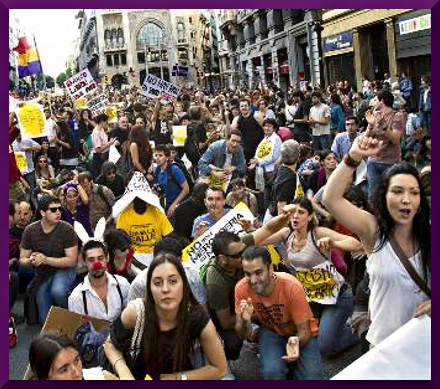
The Catalans have a phrase: ’em planto’. It has a double meaning: ‘I plant’, or ‘I’ve had enough’. At end of the huge 15 October demonstration of Indignados (‘outraged’) in Barcelona – the papers put it at around 250,000 – we were  greeted with an impromptu garden under the Arc de Triomf, the end point of the march. Campaigners for food sovereignty had planted vegetables in well-spaced rows, ready for long term cultivation.

The point was partly an ecological one. But the surrounding placards indicated that the gardeners also intended it to make a symbolic point about the broader significance of the march. ‘Plantemos’ declared a large cardboard placard, meaning: ‘we plant ourselves’ – ‘we stand firm’. Mariel, who was dressed as a bee – essential to flourishing horticulture and now facing pesticidal destruction – explained that the activists who organised the garden were part of the agro-ecology bloc on the march. The march as a whole had several layers of self-organisation that became apparent at certain moments. There were three main focal themes – all issues on which active alliances had come together over recent months: education (yellow flags), health (green flags) and housing (red flags).

As we approached the Arc de Triomf, someone on a loud hailer announced that the different directions in which those following each of the themes should go, guided by an open lorry carrying the appropriate flag. The idea was that the demonstration would end not with speeches to the assembled masses, on the traditional model. Instead, the plan was to hold assemblies to discuss action and alternatives to cuts and privatisation.

News came through later in the evening that two of these assemblies had taken action, leading an occupation of a third hospital – two that were making redundancies had already been occupied the day before the demonstration. They had also squatted a large unoccupied building to turn it into housing for ten families. Evictions have become a focus of intense conflict in Barcelona as the numbers grow every day.

As well as clusters around themes, it was the regular neighbourhood assemblies, feeding into an occasional assembly of assemblies, that were the organism that gave the demonstration its impressive life.

The neighbourhood assemblies emerged in early summer this year, following the birth of the Indignados movement in the occupations of the squares of Spain and Greece. As the occupation of Barcelona’s Plaça de Catalunya reached its peak towards the end of May and the general assembly in the square began to plan its future, the locus of organised indignation spread to the neighbourhoods – sometimes reviving or connecting with pre-existing neighbourhood associations, sometimes building on quite dense social bonds. For example, the assembly from Sant Andreu, a predominantly working-class neighbourhood in the north of the city, marched for over an hour to reach the demonstration, proudly announcing their assembly on their yellow T-shirts.

Like many on the demonstration, they brought handmade placards. Some of their slogans were specific: ‘education is not for sale’, ‘for high quality education; against the cuts’. Others were more general: ‘nothing to lose; all to gain’, ‘the system is dead, the people are alive’. A lot of these homemade banners highlighted the exhaustion and corruption of the political system, one offering a reward: ‘2,000 euro for an honest politician’. Abstentions could be high in November’s elections.

There is disillusionment too with trade unions. In the occupation of the square earlier this year, it was not only parties that were not wanted, but also the unions. They had been part of a social contract with the government that had let workers down, leading to a fall in wages and weak protection. Most significantly, they showed no concern – and often hostility – to the growing numbers of people, especially among the young, who had no chance of a long term job. Yesterday only the CNT (Confederación Nacional del Trabajo), the union founded by the anarchists and still less bureaucratised than other trade unions, dared show its face.

Interestingly, though, there are signs of workers recovering the confidence to organise in their workplaces as a direct result of the collective action taking place on the streets, and waking up the unions in the process.

Bea recently worked in a call centre. She remembers the fear that made her fellow workers timid and passive. She was impressed that after the occupations of the squares, the call centre workers went on strike over injustices they had previously suffered in silence. ‘It was as if the strength of the example of collective action on the square gave them the confidence, broke through the fear,’ she said.

Where this kind of awakening will lead is unclear. General goals are clearly expressed: real democracy based on popular assemblies in the neighbourhoods, reform of the electoral system for different levels of government, the right of referendums including on the European level, an end to cuts and privatisation of public services, banks and finance under public control, economic development based on co-operation, self-management and a social economy – the list is long and elaborate (see here, for example).

The important, distinguishing feature of this vision of change is that it is not centred on what governments should do. Rather it is a guide to action at many levels, starting with what the people can do collaboratively, through spaces they occupy, resources they reclaim, new sources of power they create. There is a self-consciousness that the creation of far-reaching alternatives will take time. In conversation, the slogans are put in context: ‘we’re going slowly, because we are going far’ is a common saying.

One thing is certain: the energy, creativity and will comes from outside the existing institutions. Bargaining, pressure, people and organisations that bridge the outside and the inside will no doubt be part of the process of change, but the established institutions have lost the initiative. There is no bravado about this. Among those I talked to on our way home from the Arc de Triomf and the improvised garden, there was anxiety as well as elation at the size and success of the demonstration. ‘I feel some people are looking for leaders,’ said Nuria, a translator and free culture activist. But in the many levels of organisation producing this impressive show not only of anger but of serious engagement in creating alternatives, it becomes clear that this is not a ‘leaderless’ movement. It is emerging, experimentally perhaps, as movement where leadership is shared and is learnt – a movement that can grow and flourish as well as stand firm.

Oscar Reyes says

Hilary’s really captured the spirit of yesterday’s march well, but I think her post also goes some way to correcting a lot of the US/anglocentric/major financial centres bias written in round-ups of the global protests. Inspiring as the Wall Street protests are, it is not really accurate to claim (as the Guardian, New York Times and even activist sites like ZNet have it) that these were the spur to rallies that swept the globe.

An initial call was made several months ago: http://15o.democraciarealya.es/ and the most successful of these have been based on concerted organising, not simply the fact that (as Jon Stewart of the Daily Show recently put it, the media dial has turned from blackout to circus).

It’s easy to over-state the “new model of protest” line too (eg. http://www.redpepper.org.uk/birth-of-a-new-movement/ ). There are many novel elements in this, enabled by the internet as well as the re-organisation of global labour– as Paul Mason has pointed out a while ago
http://www.bbc.co.uk/blogs/newsnight/paulmason/2011/02/twenty_reasons_why_its_kicking.html
But in other ways it is all decidedly old-school: unemployment, job insecurity and the defence of a welfare state under threat from a massive austerity programme are spurring protests, coupled with a revolt against a banking system that’s totally out of control.

The Barcelona protest was one of the numerous protests in cities across the state of Spain, from 60,000 in Sevilla in the south to over 10,000 reported in Vigo in the north-west, and 500,000 in the capital Madrid. There are reports and videos (in Spanish) at
http://www.kaosenlared.net/noticia/estado-espanol-recopilacion-cronicas-videos-manifestaciones-15-o
and
http://madrid.tomalaplaza.net/2011/10/15/la-indignacion-sale-a-las-calles-de-todo-el-mundo-el-15-de-octubre/

The story of the three strands of the march that Hilary describes is also worth following. In Nou Barris, a working class suburb in the north of Barcelona, the march was followed by the occupation of an empty block of flats, with the aim of housing families that had faced home repossessions:
http://acampada9barris.wordpress.com/2011/10/16/okupat-un-bloc-de-pisos-buits-a-nou-barris/

A 6,000-strong march continued to the Hospital del Mar, in support of a revolt against health cuts that had already seen the occupation of two hospitals on the night before the main demonstration. The symbolic end point saw a huge die-in, with activists playing dead to symbolise “the deaths of many citizens” as a result of savage health sector cuts.
http://www.setmanaridirecta.info/noticia/la-columna-de-sanitat-la-mes-concorreguda-de-totes

Thousands more formed an education block that met up with an occupation at the Geography and History Faculties of the University of Barcelona, located close to the centre of the city. Once there, convened an assembly to discussed the demands of the recently formed Platform for a Public University (Plataforma Unitària per la Universitat Pública), which has called for a strike on 17 November.
http://www.setmanaridirecta.info/noticia/2000-persones-una-assemblea-la-facultat-del-raval-reocupada-la-columna-vermella

Lesley Wood says:

Terrific article! Thanks for filling in the gaps. I was there, but the crowd was way too big to get a sense of what was going on!

Oscar says:

really insightful article….makes great sense to those who weren’t there…this huge demo…and all the rivers of resistances it symbolises…is trully inspiring …it looks like the ‘indignados’ movement is here to stay and hopefully irreversible.

NOTE . This blogger is preparing a series of cool posts,  on Squat Centers,  Free Universities,  Circus Squats, Anarchist roots, Food and consumption  CoOps,  Mutual Aid Networks, Alternative Banking, etc.  in the Catalunya area.. watch this space for updates….

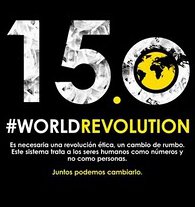
15 Oct. Occupy to kill Capitalism, .. now 955 demos +..

They say Capitalism is about to collapse. Lets give it a push!  Time to jump in! Only if we all jump together can we change the lunatic system we live under.

For an end to debt and money… No leaders , No parties, just us.. For a co-op world!

The map now marks 648 Occupations and demos, with 4 days to go!

Destroying the Banks in favour of a phased in Money-Free system.  Banning Hierarchical, sexist and homophobic organizations.  A minimum world wage, or free rations of basic goods. Abolishing armies and war. Community Co-operatives instead of companies. Phasing out of the Oil Economy in favour of renewables and NH3 fuel.  Banning GMO’s.  Collectivising excess private property.  Abolition of the Prisons and police system…. 

El 15 de Octubre del 2011 va a ser una fecha inolvidable para la raza humana. Este sera el primer encuentro UNIVERSAL de ciudadanos por un mundo mejor.
NO es un tema de ideas políticas, religión o filosofía.
El asunto es sobre cuanto nos importa nuestro futuro y el futuro de la Tierra

15 Oct. Occupy to kill Capitalism, .. now 955 demos +..

They say Capitalism is about to collapse. Lets give it a push!  Time to jump in! Only if we all jump together can we change the lunatic system we live under.

For an end to debt and money… No leaders , No parties, just us.. For a co-op world!

The map now marks 648 Occupations and demos, with 4 days to go!

Destroying the Banks in favour of a phased in Money-Free system.  Banning Hierarchical, sexist and homophobic organizations.  A minimum world wage, or free rations of basic goods. Abolishing armies and war. Community Co-operatives instead of companies. Phasing out of the Oil Economy in favour of renewables and NH3 fuel.  Banning GMO’s.  Collectivising excess private property.  Abolition of the Prisons and police system…. 

El 15 de Octubre del 2011 va a ser una fecha inolvidable para la raza humana. Este sera el primer encuentro UNIVERSAL de ciudadanos por un mundo mejor.
NO es un tema de ideas políticas, religión o filosofía.
El asunto es sobre cuanto nos importa nuestro futuro y el futuro de la Tierra

#OWS 99% Movement “We Will NOT Be Co-Opted”

 Both mainstream Democratic and Republican parties are working furiously behind the scenes to co-opt the Wall Street protests. But as the Associated Press notes, the protesters are fed up with both mainstream parties, as are most of the American people.

This is not an official statement from the #OWS 99% Movement. As a decentralized leaderless movement, in our opinion, there is no one group, organization, website or individual who can speak for the movement as a whole.

We, a working group of people currently occupying Liberty Park and many other locations throughout the US, are growing increasingly concerned about divide and conquer attempts being made to co-opt the movement. In the following message, we are issuing our first proposed statement. If you agree with the statement, please post it to your website and/or spread it throughout your social networks, both online and offline at occupations throughout the country. If you would like to read this statement at your local GA meetings and vote or edit it, feel free. If you disagree with the statement, please air your disagreements – this is what democracy looks like.

We appreciate, respect and encourage endorsements from individuals and organizations. We invite them. However, just because an individual or organization endorses our movement, does not mean that they in any way have a leadership role in deciding the future direction of this movement. We will not be co-opted by hierarchical organizations. No matter how wonderful their cause may be…….

…We the People, We the 99%, are not the pawns of either wing of the two-party oligarchy.

We emphatically reject the attempted leadership of any political party, organization or individual. If there are elected officials or organizations who endorse our movement, we welcome them….

However, they must do so knowing this: Your voice will be just as loud as any other voice. We are led by no one. You cannot co-opt We The People.

Respect Us.

Washington’s Blog
Sunday, October 9, 2011