In the last few days, Water Protectors across the so-called US have taken action against a variety of pipeline projects. This includes both Embridge’s Line 3 pipeline, which saw action and construction stoppages on the Fond Du Lac Ojibwe Reservation, in so-called Manitoba, and outside of a Wells Fargo in Minneapolis, a bank which is helping to finance Line 3.
Actions in the ‘Hell Bender Autonomous Zone’ in the Appalachian territory also continue against the Atlantic Coast and Mountain Valley Pipelines, and the L’eau Est La Vie camp continues to throw down against the Bayou Bridge Pipeline in so-called Louisiana.
Here’s a roundup of actions that have kicked off the last several days.
Today Anti-colonial Land Defense and many other individuals from different groups united as a gathering of Indigenous and non-indigenous Water Protectors to stop Enbridge pipeline Line 3 construction on the Fond Du Lac Ojibwe Reservation; we shut down work all day yesterday! Continue reading “Water Protectors Resistance Actions Shut Down Pipelines”
by moorbey Speaking to the Chicago Alliance Against Racist and Political Repression recently, Angela Davis renewed her call to release black prisoners she says were convicted for their political beliefs, not because they were guilty. The event was a rally to
Davis spoke about the need for international solidarity opposing institutionalized police violence against those engaged in political conduct around the world. Davis said, “Anti-Muslim racism, Islamophobia has to be understood as intersecting with and reinvigorating anti-Black, anti-Asian, anti-Latinos racism.”
How do we contend with the mood that is spreading, molded by the mixture of fear and false hopes instilled by the verbal incontinence and theater of the candidates and political parties?
The oppressive repetition of the horror seems to be accustoming us to it. Each day we learn of a new aggression in Myanmar, Palestine, Syria…. Daily we add data to the obscene accounting of our assassinated, kidnapped, tortured, and disappeared which makes Mexico one of the most violent countries in the world.
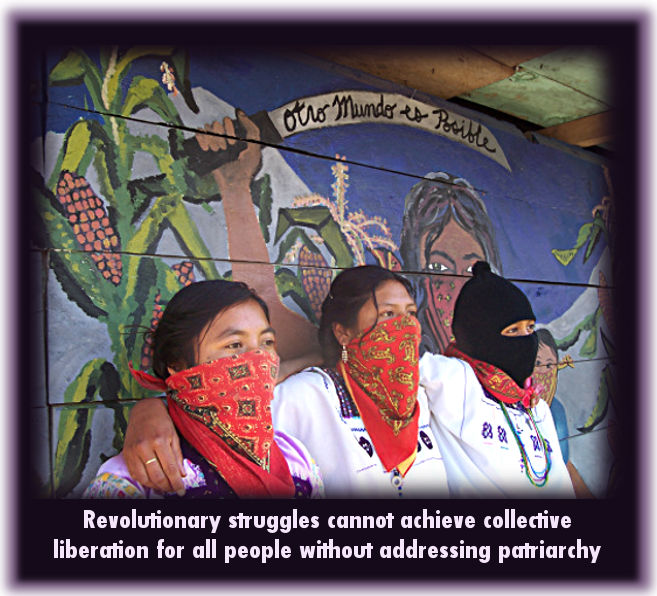
Zapatista rebels participate in a protest against violence in San Cristobal de las Casas, Chiapas state, Mexico
Each day we learn of new pains of our countrymen in the face of ethnic cleansing now practiced with migrants across the world: millions of those who are on the del otro lado [U.S. side of the border] no longer dare to complete daily activities for fear of deportation;
Hundreds of thousands that do not know the country they were born in discover they no longer belong to the society where they have spent all of their lives.
This month horrific information was added to the daily news of climate change. A very respectable group of scientists warned, with very solid foundation, that the increase in ultraviolent radiation is seriously impacting all life on the planet, and of course, human beings. Continue reading “Give Me Hope, Zapata ..”
Sub.Media.Tv’s monthly documentary series Trouble returns to take on the system of patriarchy and how it affects all of our lives, and how people have resisted it throughout history.
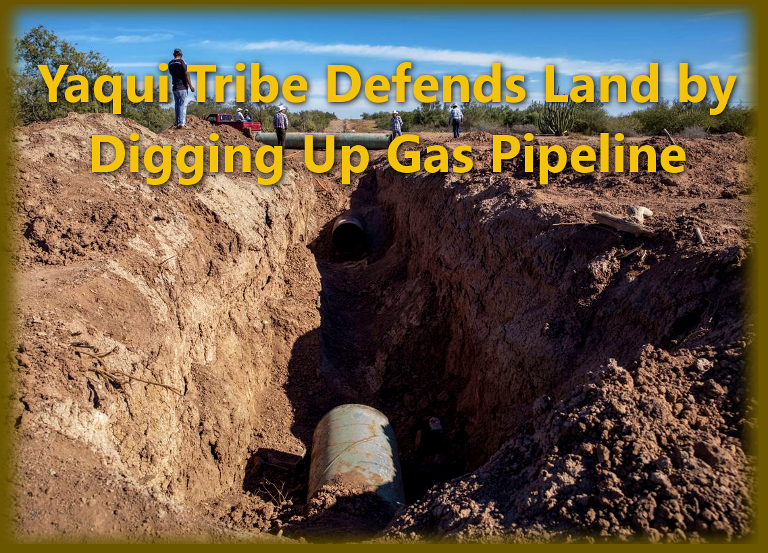
A chunk of Sempra Energy’s natural gas pipeline sits in the dirt behind a community center in the village of Loma de Bacum in northwest Mexico. Guadalupe Flores thinks it would make a great barbecue pit.“Cut it here, lift the top,’’ he says, pointing to the 30-inch diameter steel tube. “Perfect for a cook-out.’’Photo: Yael Martinez/Bloomberg
It would be an expensive meal. The pipeline cost $400 million, part of a network that’s supposed to carry gas from Arizona more than 500 miles to Mexico’s Pacific coast. It hasn’t done that since August, when members of the indigenous Yaqui tribe – enraged by what they viewed as an unauthorized trespass their land – used a backhoe truck to puncture and extract a 25-foot segment. They left the main chunk about a mile from the community center, perpendicular to the rest of the pipeline, like a lower-case t.
The impact extends far beyond Loma de Bacum and its 4,500 residents. Arizona’s gas exports to Mexico have plunged 37 percent since the shutdown, hitting an eight-month low in December. Mexico’s state utility is having to burn fuel oil instead to generate power, raising costs.
It’s not an isolated case. Mexico’s opening of its energy industry has succeeded in attracting capital, but it’s also been beset by territorial or environmental disputes, often involving the country’s myriad indigenous groups. When protest turns into sabotage, there’s a risk that investors will be put off from future phases, like an extensive shale development. It’s also grist to the mill of the leftist frontrunner for next year’s presidential election, who’s vowing to reverse some of the reforms.
‘Refused Consent’
The Yaquis of Loma de Bacum say they were asked by community authorities in 2015 if they wanted a 9-mile tract of the pipeline running through their farmland — and said no. Construction went ahead anyway.
The Energy Ministry acknowledged that account is true, in a statement that highlights the difficulties its officials confront. Consultation of the eight Yaqui communities along the route was carried out, as required by law. Seven of them gave a green light, the ministry said by e-mail, “while the town of Loma de Bacum refused consent.’’A piece of the gas pipeline extracted by the Yaquis of Loma de Bacum. Photo: Yael Martinez/Bloomberg
The project is now in a legal limbo. Ienova, the Sempra unit that operates the pipeline, is awaiting a judicial ruling that could allow them to go in and repair it — or require a costlier re-route. “If they want to build a pipeline, that’s fine,’’ said Flores, the would-be barbecue designer who’s a local community leader. “But it won’t pass through here.’’
To the National Indigenous Congress
To the Indigenous Governing Council and our Spokeswoman Marichuy
To the Indigenous Clandestine Revolutionary Committee–General Command of the EZLN
To the Network Against Repression and for Solidarity
To the National and International Sixth
To the Compañeras and Compañeros that Struggle in This World
To the Compañeros of the Free, Autonomous and Alternative Media
The Movement for the Freedom of the Defenders of Water and Life of San Pedro Tlanixco, Tenango del Valle, Mexico State, denounces the sentences given to our indigenous Nahua brothers and sister, Lorenzo Sánchez Berriozábal, Marco Antonio Pérez González and Dominga González Martinez.As you remember, since 1989, San Pedro Tlanixco has been defending the water that is born from our forests. We are defending this water against the capitalist hydra, taking shape here as national and transnational flower-growing corporations in Villa Guerrero that have been protected by the bad governments. We have been defending our territory because they have imposed a private highway that goes from Tenando del Valle to Ixtapan de la Sal, causing our town to be split in half.
On April 1st, 2003, the president of the Texcaltenco river system and representative of flower-growing corporations of Villa Guerrero died due to a fall. Since this day, our community has lived through constant attacks on the part of the bad governments and the paid media that have spread the false headline that we had lynched this man. The truth is that he and his people were in our territory because they wanted to take our water. It was there when, due to not knowing the trails, he fell and lost his life.Continue reading “Mexico: Indigenous Water Defenders Sentenced to 50 Years in Prison”
Tiny Houses Being Built to Block Pipeline in Unceded Secwepemc Territory
from Living Big In a Tiny HouseTen tiny houses are currently being built by the Secwepemc Nation in order to block the proposed expansion of Kinder Morgan’s Trans Mountain Pipeline in what some are calling the next ‘Standing Rock’.
These ten tiny homes will be strategically placed along the path of the pipeline in order to occupy the land and halt progression. Lead by Kanahus Manuel and other activists from the Secwepemc tribes, volunteer builders from all over North America have began showing up to help with the construction of the tiny homes, which are being constructed on wheels so they can easily be moved along the proposed pipeline route according to where they are needed.
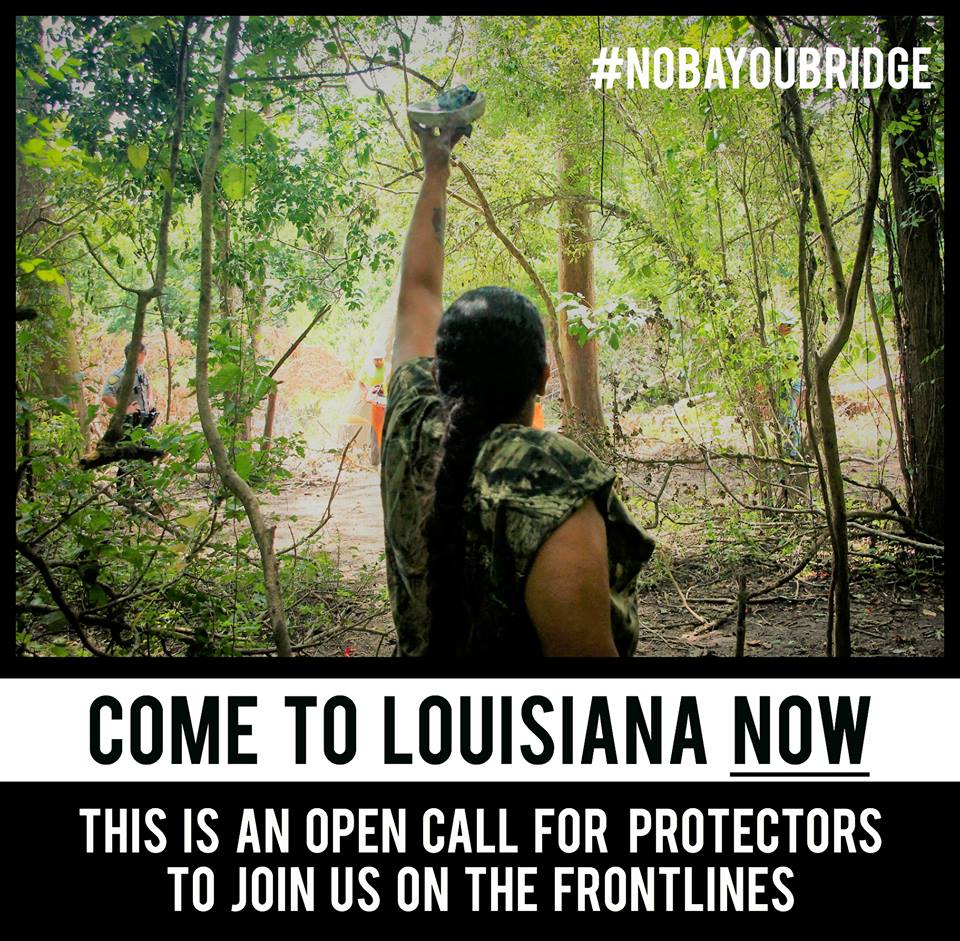


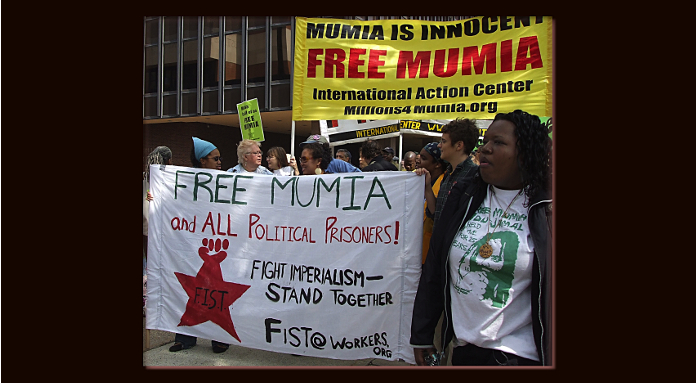
 Photo from the EZLN Roundtable April 5-15.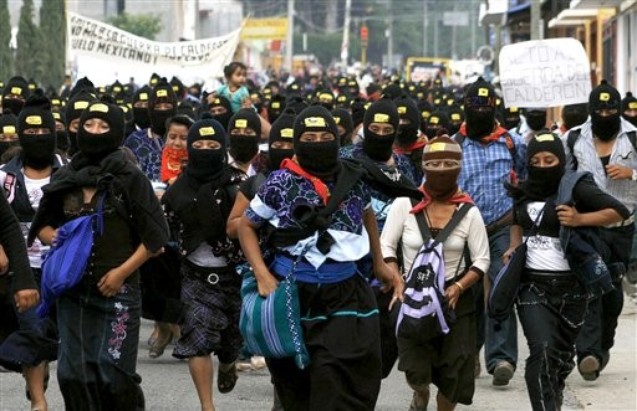



 The Free