Erdogan is the real terrorist!..Nudem got 19 years jail for singing in Kurdish
Imprisoned Kurdish singer Nudem Durak has called on Turkish authorities to release her from prison, saying she suffers from multiple illnesses and wants to sing as a free woman once again, the Bianet news website reported.
Turkish authorities have increasingly restricted the use of Kurdish in recent years. Hate crimes against Kurds for speaking their language have also increased.
Durak suffers from osteoporosis and Graves’ disease, an immune system disorder that attacks the thyroid glands. The disease can also affect the quality of the voice. Speaking to her family on the phone, Durak said she was afraid of losing her voice and wanted to sing to the public one last time.
The Pantanal, the world’s largest tropical wetland, has been battered in recent years by agricultural development, drought, and fire. Dredging the rivers will destroy the water levels and everything will burn.
Now, a push to turn the region’s key river into a waterway for soybean-laden barges threatens to alter the natural flows of this iconic ecosystem.
It takes 14 hours for Lourenço Pereira Leite to reach his fishing spot.
He and his brother-in-law chug along in a simple one-engine motorboat, towing their traditional fishing canoe behind them.
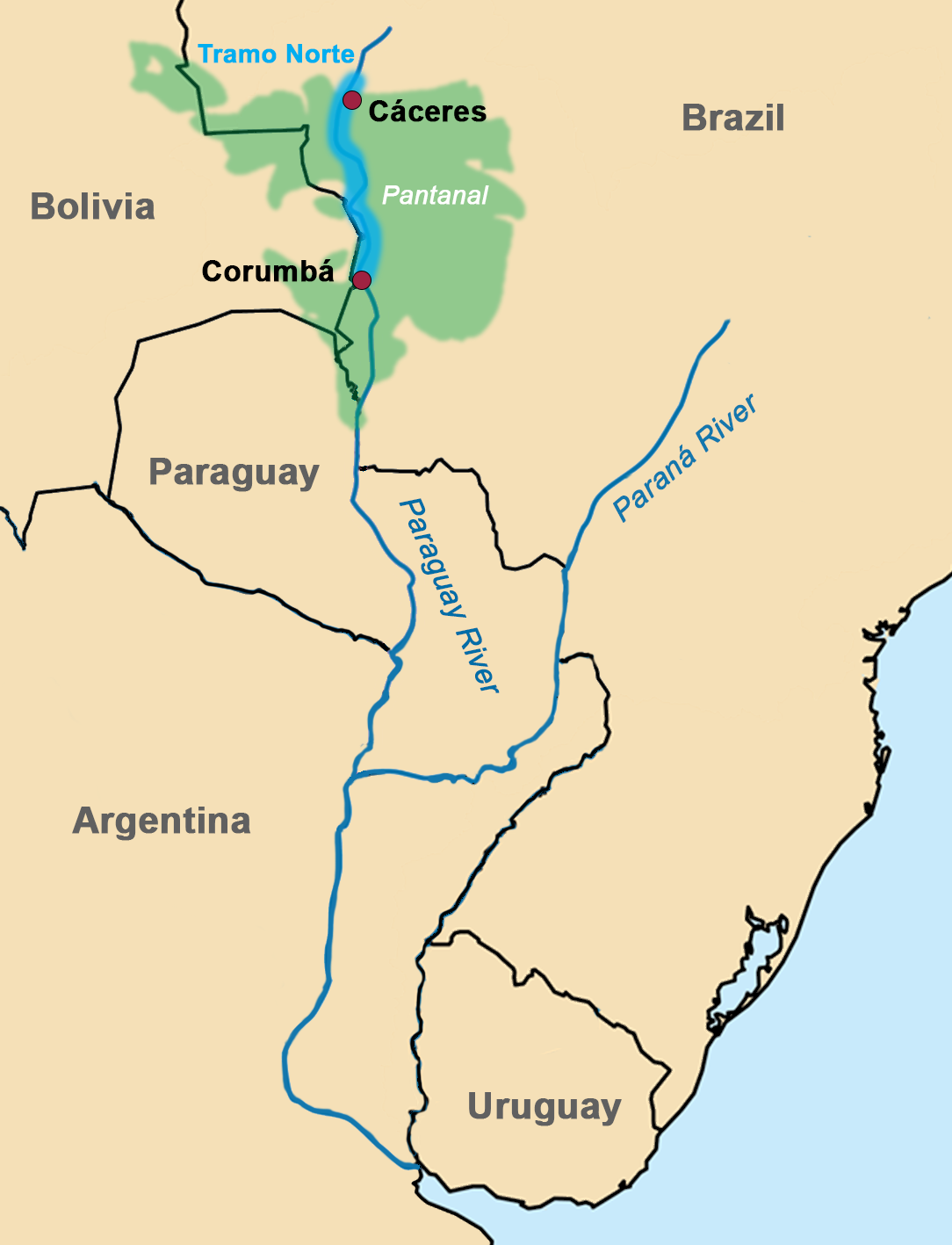
They’re in the Pantanal, the world’s largest tropical wetland, traveling on its main body of water, the Paraguay River. At almost 47 million acres, the Pantanal is 10 times the size of Florida’s Everglades and flows across Bolivia, Paraguay, and Brazil.
The vast wetland, a UNESCO World Heritage Site, is made up of more than 1,200 rivers and streams rushing into the region from the eastern Andes.
After winding along 150 miles of the Paraguay River’s deep curves, Pereira Leite and his brother-in-law arrive at Pacu Gordo, a campsite in Brazil among the lush green trees along the river’s edge. They tie up their boat and set up a makeshift cage around the area where they plan to sleep — protection from the Pantanal’s abundant jaguar population. The fishermen will spend two weeks along the river, targeting the prime species — pacu and pintado — that will fetch the highest price.
A third-generation fisherman, Pereira Leite is part of a group known as ribeirinhos, traditional people who live on a river’s edge and support themselves with sustainable fishing and small-scale farming.
When he was younger, Pereira Leite, now 52, was able to reach his quota of 275 pounds of fish per week in a fraction of the time and much closer to his home on the periphery of Cáceres, a city of almost 95,000 in the heart of the Pantanal.
But the arrival of large-scale ranching and farming, infrastructure development, drought, and severe fires in 2020 are steadily taking bites out of the Pantanal, threatening the ribeirinhos and their way of life. He fears his three children will be unable to carry on his traditional fishing lifestyle.
Yale Environment 360
Now a new threat is on the horizon. With the rapid growth of industrial soybean farming in the Pantanal, a proposal to build a commercial waterway has been revived, with three ports — coupled with major dredging and course-alteration projects — planned for the Paraguay River.
One of those planned ports, known as Barranco Vermelho and located in Cáceres, has already received a preliminary license from the Environmental Council of Mato Grosso state, the first step in the permitting process that would allow the port to be built.
The construction of a second port in Cáceres is also planned, as well as another in the nearby city of Corumbá. All three are being privately funded.
Crimes without criminals was not a subject for study when I was in law school. The two were seen as part of the same illegal package.
That was before notorious corporate lawyers and a cash register Congress combined to separate economic, health and safety crimes from corporate accountability, incarceration and deterrence.
Lawlessness is now so rampant that a group of realistic law professors, led by Professor Mihailis E. Diamantis of the University of Iowa Law School, claim there is no corporate criminal law.
I say “realistic” because their assertion that corporate criminal law, does not in fact, exist is not widely acknowledged by their peers.
Most North Americans know that none of the executives on Wall Street who are responsible for the lies, deception, and phony investments they sold to millions of trusting investors were prosecuted and sent to jail.
“They got away with it,” was the common refrain during the 2008-2009 meltdown of Wall Street that took their economy down and into a deep recession that resulted in massive job loss and the looting of savings of tens of millions.
Klaus Schwab, passionate for Ukraine, essentially configured the World Economic Forum (WEF) to showcase Zelensky and to leverage the argument that Russia should be kicked out of the civilised world.
Schwab’s target was the assembled crème de la crème of the world’s business leaders assembled there.
Zelensky pitched big: “We want more sanctions and more weapons”; “All trade with the aggressor should be stopped”; “All foreign business should leave Russia so that your brands are not associated with war crimes”, he said.
Sanctions must be all encompassing; values must matter.
Disquiet ran through the Davos set: The WEF is high-octane globalist, right? Yet this Schwab line suggests a de-coupling ‘on stilts’. It precisely reverses interconnectedness.
Plus, the western generals in charge are saying that this conflict may last not just years, but decades.
What will this signify for their markets in parts of the world that refuse action against Russia, the moneymen were wondering?
It is unlikely that this whiff of disorientation is what Schwab had intended.
Perhaps the latter was more aligned with Soros’ later intervention that a quick victory over Russia was needed to save the ‘Open Society’ and civilisation itself – and that this was intended as the WEF 2022 message.
The Davos ‘greater disquiet’ emerged however, from an unexpected quarter. Just before the WEF began, the NY Times had run a piece from the editorial team urging Zelensky to negotiate with Russia.
It argued that such engagement implied making painful territorial sacrifices.
The piece attracted indignant and angry push-back in Europe and the West, possibly because – albeit couched as advice to Kiev – its target was evidently Washington and London (the arch belligerents).
Eric Cantor, a former whip in the U.S. House of Representatives (a legislator well versed on Iran sanctions), also at Davos, questioned whether the West would be able to maintain a united front in pursuit of such maximalist aims as Zelensky and his Military Intelligence Chief have demanded.
“We may not get the next vote”, Cantor opined (in wake of the $40 bn vote ostensibly earmarked for Ukraine).
Cantor said excluding Russia entirely would require secondary sanctions against other countries.
The Russian offensive continues, now almost exclusively in Donbass, and without increasing its 140,ooo strength (only ‘about 15% of the over 1 million Russian military’).
Russian-led forces are surrounding the city of Svyatogorsk. There are battles in the Bogorodichne area.
A battery of FH-70 howitzers transferred to the AFU by Italy was destroyed:
After the town of Krasny Liman came under the DPR control, Russian-led forces continued their advance towards Slavyansk from the east. The AFU positions in the village of Rayhorodok located 10 kilometers from Slavyansk are already shelled by Russian artillery.
The Russian advance threatens the military supplies to the AFU units deployed in the Severodonetsk-Lisichansk metropolitan area from Slavyansk and Seversk…..
Unas 300 personas se manifestaron la tarde de este sábado por las principales calles del este de Caracas, capital de Venezuela, para protestar contra la homofobia y la discriminación.
El grupo, conformado casi en su mayoría por jóvenes, recorrió unos tres kilómetros con banderas de la comunidad y mensajes que pedían respeto y políticas públicas que garanticen sus derechos, explicó a Efe el activista y defensor de los derechos humanos Yendri Velásquez.
“Además de dar este mensaje en contra de la homofobia, en contra de la discriminación, también fue un espacio para encontrarnos, para celebrarnos en la diversidad, para celebrar quiénes somos, a quienes amamos a pesar de la violencia, a pesar de la discriminación”, agregó.
En la manifestación, participaron organizaciones de la sociedad civil venezolana como Unión afirmativa, Uquira, Amnistía Internacional, País Narrado, País Plural o Movimiento Somos, entre otras.
Despite the intense media campaign and also in other areas that is deployed against Cuba seeking to discredit it, numerous voices were heard last weekend in twenty countries calling for the elimination of the blockade, for respect for this Island and its sovereignty. .
From Miami, encouraged by #PuentesDeAmor, demands were heard in Coral Gables urging President Biden to expedite the announcements about the policy towards Cuba that the White House recently made.
“We want this to be the first step of many so that the sanctions that weigh on the Cuban people are lifted, once and for all,” specifies the permanent call that #PuentesDeAmor has launched, both on social networks and on various cities in the United States.
And if it is about the northern empire -because its government is one thing, its people is another- with an active presence in social networks, the reports also spoke of marches in Washington DC.
Voices in favor of Cuba were also heard loud and clear in other geographies: from Santa Cruz, in Bolivia; Milan, in Italy; Mexico City, Panama City, Bahamas, United Kingdom, Spain and Canada, among others.
From the Dominican Republic, social networks reported messages of solidarity towards Cuba generated from the capital of that country and in eight more cities of that nation.