Show your support for the Indigenous Peoples of TIPNIS!Avaaz.orghas sponsored a petition in support of the ongoing march to defend the Isiboro Sécure Indigenous Territory and
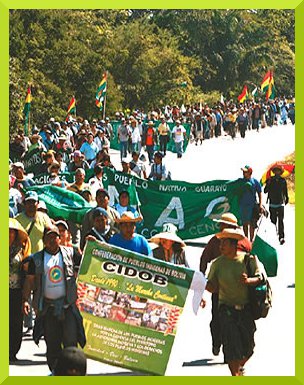
Since August 15, 2011, Indigenous Peoples from the TIPNIS have been marching against a new highway that the government of Bolivia wants to build through the protected territory.
So far, more than 1,500 people have joined the 375-mile journey from the eastern lowlands of Bolivia to La Paz–a number that’s growing by the day.
Sadly, President Evo Morales has responded to the march by labeling the protesters “enemies of the nation.” He is also trying to discredit the protesters by portraying them as being confused by NGOs. He even tried to denounce the march as another strategy of US imperialism.
As of late, this misleading rhetoric has turned into action. According to NACLA,
urgent 24 sept.police block march. No water...
“The government has sent in 450 federal police for the stated purpose of avoiding a confrontation. Rather than guarantee the marchers’ safe passage, the police have prevented them from advancing and, according to news reports, have impeded their access to water, while the colonists have blocked delivery of other supplies. The colonists contend, and the government agrees, that some of the indigenous groups’ demands ‘violate their rights,’ and should be dropped before the march is allowed to proceed.”
At this point, there’s no telling what will happen next. Sufficed to say, the international community should be on alert for the worst possible outcome.
#OCCUPYWALLSTREET is a week old and roaring strong. We, the people, are finding our voice, realizing that, yes we can revive our democracy. It is beautiful. It is an achievement. And it has the potential to grow into something even more wild and wonderful over the next few weeks and months. This Saturday at noon at the people’s assembly in Liberty Plaza there will be a celebration of our incredible first week. Last Saturday, 5,000 people flocked nonviolently to Wall Street … this Saturday there will be 10,000. And then in the weeks that follow, we will swell to 50,000 … and maybe even to 100,000+ by mid-October. Wouldn’t that be something!
Dia 38 de la marcha por el Tipnis. 1000 marchistas por el Tipnis están ‘sequestrados’ por el bloqueo masivo de policias sin sombra y con poca agua, bajo un sol tropical peligroso.
El cordón de policías instalado en el puente del arroyo Chaparina permite el paso de las movilidades, que dejan una estela de polvo a los marchistas sentados o parados al lado del camino, donde sea que hubiere una mancha de sombra. “Aquí estamos totalmente incómodos, directamente al calor del sol. Desde que partió la marcha (de la ciudad de Trinidad el 15 de agosto pasado) siempre hemos enviado una comisión de avanzada que buscaba lugares con arboleadas para poder realizar nuestro campamento. Pero aquí estamos detenidos a la fuerza, estamos a la intemperie, porque la Policía está aquí enfrente y no deja avanzar a la marcha. Además, no permiten que pasen vehículos con donaciones para los marchistas. Incluso los bloqueadores retienen a los vehículos que nos traen alimentos, agua y medicamentos. Esto tiene que saberlo el mundo entero: el gobierno nacional está frenando el derecho de reclamar por el cumplimiento de nuestros derechos. Como pueblos indígenas clamamos justicia, porque en nuestro país pareciera que viviéramos en una dictadura”, sostuvo Vargas.
Ha habido manifestaciones de apoyo en todo Bolivia y en muchas lugares del mundo (incluso en Barcelona) además que una petición gigante hecho por Avaaz
COB iniciarán marchas si no solucionan conflicto de TIPNIS
Última Actualización Viernes, 23 de Septiembre de 2011. 06:57h.
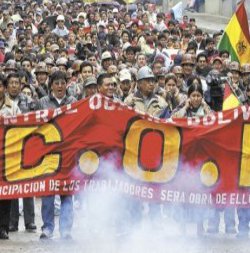
El Comité Ejecutivo Nacional de Central Obrera Boliviana (COB) determinó ayer respaldar la marcha indígena del Territorio Indígena y Parque Nacional Isiboro Sécure (TIPNIS) y advirtieron con movilizaciones si el Gobierno no soluciona hasta fin de semana el conflicto indígena.
HUELGA PARA EL MIERCOLES….COB !
ultima noticia..La Paz, 23 Sep. (ANF).- La dirigencia Central Obrera Boliviana (COB) determinó, este viernes en su ampliado nacional, ejecutar un paro de 24 horas el miércoles próximo, en respaldo a los indígenas que marchan en defensa del TIPNIS. Los trabajadores exigen al gobierno que se instale el diálogo a brevedad posible.
Agencias.- El alcalde Luis Revilla anunció que se realizará una campaña de recolección de alimentos y vituallas en favor de los indígenas del Parque Nacional Isiboro Sécure (TIPNIS) que el 15 de agosto iniciaron una marcha en rechazo a la construcción de la carretera Villa Tunari – San Ignacio de Moxos y que pasaría por medio de este parque nacional. Asimismo, reiteró el apoyo que brindó la Asamblea de la Paceñidad a la marcha de los indígenas, a su derecho a manifestarse y a transitar libremente por el territorio nacional para hacer conocer su legítimo reclamo para la preservación del Parque Isiboro
”El presidente dijo en Estados Unidos que en Bolivia los pueblos indígenas quieren enfrentar a este gobierno, que queremos que este gobierno sea destruido, que estamos impulsados por la derecha, por las ONG y que estamos cometiendo el delito de conspiración –dijo Vargas-. Creemos que el Presidente debería hacer al revés, más bien debería decir que el gobierno nacional está en una franca conspiración para deshacer a los pueblos indígenas de la Amazonía, que conspira para deshacer a la Madre Tierra, para destruir al medio ambiente. Creemos que ese debería ser su discurso, para dejar de estar mintiendo al mundo entero y al pueblo boliviano”.
16:00 Viernes 23 | Sociedad
Medios radiales, televisivos y escritos registraron lo sucedido con los policías en Chaparina, que además de cerrarles el paso se opusieron a que los indígenas acceden a las aguas del arroyo existente en el lugar, para que se aseen y refresquen, ante las elevadas temperaturas que se registran en el lugar.
A deep change of attitudes to Gays and Lesbians is slowly percolating through the Indian subcontinent. Now helped on by the new UN gay rights declaration.
In 2009, British colonial law dating back more than 150 years ago that held same-sex relationships as ‘unnatural’, was overturned by the Delhi High Court, responding to a clamour for change from gay rights activists and members of civil society.
“A level of dialogue around sexuality began after the Delhi High Court ruling,” Magdalene Jeyarathnam, founder-director of the Centre For Counselling in southern Chennai city, told IPS. “There has been a surge in the number of young people who have come out over the past couple of years.”
“I see this movement gaining power, strength and momentum with each passing day,” she added. Pawan Dhall, director of the Kolkata-based NGO ‘Solidarity and Action Against the HIV Infection in India’ which pioneered a sensitisation movement on gay rights in the late 1990s, said the country’s top campuses are in fact leading gay rights activism.
In Kolkata, a group called ‘Students against Campus Homophobia’ is active in the city’s Jadavpur University (JU), well known for its liberal ambience as well as academic excellence. JU already offers ‘Queer Studies’ as an optional subject at the post-graduate level in its English department.
Kolkata also hosted the first Gay parade in India in 2003. The ‘Rainbow Walk’ is now an annual feature and other metros like New Delhi and Mumbai have followed.
Gay rights activism and awareness followed the AIDS awareness campaigns that were launched in the country in the 1990s and quickly caught the imagination of the country’s vibrant media.
“We have been fighting for a rights-based approach and inclusiveness from the 1990s. Today, it is heartening to see some change coming our way,” says Malobika, founder-member of ‘Sappho’, a forum for lesbians in Kolkata. She had to flee the town with her partner in the 90s under family pressure.
GENEVA – The United Nations endorsed the rights of gay, lesbian and transgender people for the first time ever Friday, passing a resolution hailed as historic by the U.S. and other backers and decried by African and Islamic countries.
The declaration was cautiously worded, expressing “grave concern” about abuses suffered by people because of their sexual orientation, and commissioning a global report on discrimination of gays. But activists called it a remarkable shift on an issue that has divided the global body for decades, and credited the Obama administration’s push for gay rights at home and abroad with helping win support for the resolution.
Gay rights percolating through Indian sub-continent
“This represents a historic moment to highlight the human rights abuses and violations that lesbian, gay, bisexual, and transgender people face around the world based solely on who they are and whom they love,” U.S. Secretary of State Hillary Rodham Clinton said in a statement.
Following tense negotiations, members of the Geneva-based U.N. Human Rights Council narrowly voted in favor of the declaration put forward by South Africa, with 23 votes in favor and 19 against.
Backers included the United States, the European Union, Brazil and other Latin American countries.
Those against included Russia, Saudi Arabia, Nigeria and Pakistan.
China, Burkina Faso and Zambia abstained, Kyrgyzstan didn’t vote
Entre cincuenta y setenta personas permanecen a las puertas de la Bolsa de Barcelona tras haber pasado allí la noche para protestar contra lo que denominan “golpe de Estado” de los mercados financieros, sumándose a una iniciativa mundial.
Tras participar en una manifestación mltitudinaria convocada en el centro de la ciudad en defensa de los servicios públicos, decidirán si siguen concentrados, explicó a Efe un portavoz de los concentrados.
A lo largo del día de hoy, los jóvenes organizaron diferentes actividades y charlas, relacionadas con la crisis económica, el sistema político y las posibles medidas que se pueden adoptar.
A media tarde partirán hacia la céntrica plaza de Cataluña para participar en una manifestación convocada por el movimiento 15-M de los “indignados” y otros colectivos en defensa de los servicios públicos y de la sanidad, y en contra de los recortes decididos por la administración.
#OCCUPYWALLSTREET started last Saturday, when 5,000 people descended on to the financial district of Lower Manhattan, held a people’s assembly and set up an encampment in Zuccotti Park on Liberty Street, a stone’s throw from Wall Street and a block from the Federal Reserve Bank of NewThree hundred spent the night, several hundred reinforcements arrived the next day and dug in for a long-term stay. Call in sick, invite your friends, hop on a bus or plane to New York City … join us! We’re now in DAY 4.
Early this morning at least five protesters were arrested by NYPD.
The first arrest was a protester who objected to the police removing a tarp that was protecting our media equipment from the rain. The police said that the tarp constituted a tent, in spite of it not being a habitat in any way. Police continued pressuring protesters with extralegal tactics, saying that a protester on a bullhorn was breaking a law. The protester refused to cease exercising his first amendment rights and was also arrested. Then the police began to indiscriminately attempt to arrest protesters, many of them unsheathed their batons, in spite of the fact that the protest remained peaceful.
The new residents of Liberty Square continued to serve as shining examples of law abiding behavior in spite of police harassment and the loose interpretation and selective enforcement of New York’s laws by the NYPD.
We’re still here. We intend to stay until we see movements toward real change in our country and the world. This is the third communiqué from the 99 percent.
Today, we occupied Wall Street from the heart of the Financial District. Starting at 8:00 AM, we began a march through the Wall Street area, rolling through the blocks around the New York Stock Exchange. At 9:30 AM, we rang our own “morning bell” to start a “people’s exchange,” which we brought back to Liberty Plaza. Two more marches occurred during the day around the Wall Street district, each drawing more supporters to us.
Hundreds of us have been occupying One Liberty Plaza, a park in the heart of the Wall Street district, since Saturday afternoon. We have marched on the Financial District, held a candlelight vigil to honor the fallen victims of Wall Street, and filled the plaza with song, dance, and spontaneous acts of liberation.
Food has been donated to the plaza from supporters all over the world. Online donations for pizza, falafels, and other food are coming in from supporters in Omaha, Madrid, Montreal, and other cities, and have exceeded $8,660 [admin: now $10,000]. (Link to donate: www.wepay.com/donate/99275)
On Saturday we held a general assembly, two thousand strong, based on a consensus-driven decision-making process. Decisions were made for the group to occupy Liberty Plaza in the Wall Street corridor, bedding down in sleeping bags and donated blankets. By 8:00 PM on Monday we still held the plaza, despite constant police presence.
The IMF and World Bank blackmail countries into privatizing Pension Schemes, to create juicy short term profits in the Stock Market CASINO.
World Bank admits 85 percent of world’s population has no retirement income
..''sorry no more pensions. Just die okay''
By Jean Shaoul..Less than 15 percent of the world’s population over 65 years of age now receive any income in retirement, according to New Ideas about Old Age Security, a book published by the World Bank. The worldwide assault on social insurance and publicly funded pension systems has left millions of working people without any prospect of receiving support when they retire.
The worst affected countries are in Latin America and the former Soviet Union. But the impact is also beginning to be felt in the advanced countries. It has created a social catastrophe for elderly people, who face appalling poverty and isolation in the last years of their life.
Just under 20 percent of the population aged 65 years and older and just under 30 percent in the 15-64 year old age bracket would have some formal pension coverage, and the figure is FALLING.
The authors also acknowledge that the so-called pensions revolution has failed to deliver even the World Bank’s own economic and financial objectives of increasing individual savings. The much-vaunted efficiency of the market has proved to be a chimera. The cost of administering private pension schemes ranged from 6 percent of total contributions in the case of Bolivia, to a massive 23 percent in the case of Argentina, and contrasted starkly with the lower running costs of public schemes.
No Pension? Just die quickly please.
In the UK, the selling of completely inappropriate private pension products and the inability of the regulators to prevent scams and swindles has also brought the private pension industry into disrepute. There is widespread recognition that it would require governments making some element of private pensions mandatory if they were to supplant public pensions. But the authors go on to insist that this is a short-term phenomenon that should not deflect anyone.
Following proposals by the International Monetary Fund (IMF) in 1985 and the Organisation for Economic Development (OECD) in 1988, the two organisations insisted any loans made were conditional upon pension reform. By this the World Bank meant the type of “reforms” pioneered by Chile in 1981 under Pinochet. International finance capital was determined to get its hands on the social security funds that formed the basis of retirement income in industrialised and some East Asian countries, and channel it into the capital markets.
The World Bank also believes people must also be encouraged to extend their working life. To meet the cost of pensions and medical care for the elderly, estimated at $64 trillion worldwide, “industrial countries need to create an institutional framework that minimises the threat of inadequate savings by ensuring that social security schemes are fully funded and by discouraging early retirement”, it said. (In official terminology, pension schemes where the benefits paid to retirees are met from the contributions made by the existing workforce are misleadingly known as “unfunded schemes,” and those based on the dividends invested on the stock market, whether public or private, are known as “funded” schemes.)
The World Bank demanded a shift away from publicly funded pensions based on general taxation and/or contributory social insurance levied from both workers and employers, to private pension schemes invested on the stock market. Where pensions remained public, they were to be converted to “defined contribution” schemes whereby entitlement to retirement income depends upon the level of contributions made by the individual.
Pensions are abolished. Just die, okay!
Its goal was a two-tier mandatory scheme with declining levels of pension provision by the state and an increasing component funded directly through individual contributions to either a private or publicly administered scheme. In effect, everyone would have his or her own individual “retirement account”, which could then be collectively invested on the stock exchange.
Many countries such as the US, Germany and Britain have embraced some aspects of the World Bank’s policies. Pensions are often the state’s largest single item of budgetary expenditure. According to the most recent World Bank Indicators report, publicly funded pensions paid for by workforce and employer contributions in Austria, Poland and Italy account for 15 percent of GDP, although the average in the West is about 10 percent. In the countries that made up the former Soviet Union, they account for only 5 percent of GDP, and in many of the world’s poorer nations pension provision is non-existent, apart from a wealthy elite and a few top government officials.
In Latin America and the former Soviet Union, the World Bank has expressly linked the provision of credit under its Public Sector Adjustment Loan scheme to implementing the privatisation of public enterprises and pension reforms.
we invested your pension and, er, um...
The lack of a decent pension means that when workers retire, they will have to supplement their meagre pension by taking what work they can. Thus the pension “reforms” create an additional pool of cheap and experienced labour. The OECD’s book Maintaining Prosperity in an Ageing Society, states openly, “An important part of the strategy for maintaining prosperity will involve encouraging people to work longer by making it financially more attractive for them to do so.”
Private pensions also offer a vast new source of profiteering for big business and the financial institutions, as the OECD acknowledges: “Consequently financial market infrastructures will need to be strengthened to cope with large increases in private pension fund assets”. The huge scale of the transfer of funds to the stock market has added to its volatility and served to intensify speculation. More than 50 percent of corporate shares are held by pension funds and insurance companies in the UK. Whereas in the mid 1960s, UK pension funds held such shares for 23 years on average, now they only hold them for 18 months, in their search for ever higher returns.
Thus not only does the turn to private pensions make the income of retired workers dependent upon the uncertainties of the stock market, as Chilean and Malaysian pensioners found to their cost when the economies of these countries crashed in 1997; it is also leading to a huge increase in the rate of exploitation of the workforce.
PART 2 The Great Pension Revolt..Coming Soon on this Blog

 If you haven’t already signed the petition, please do so now! Visit: http://www.avaaz.org/en/save_tipnis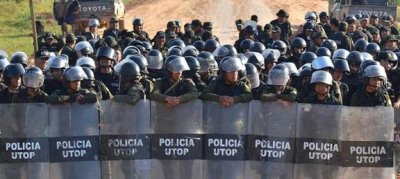










 The Free