El 6 de Octubre de 1936, una cuadrilla de maleantes rebeldes “sacaron” de la cárcel convento de San Gregorio en el Albaicín de Granada a un grupo de 12 mujeres, y las trasladaron y entregaron a golpistas franquistas en Víznar.
No fue el primero ni el último grupo de mujeres asesinadas en estos parajes. La […]
Turkey was gripped by uncertainty Wednesday ahead of an imminent statement by jailed Kurdish militant leader Abdullah Öcalan, founder of the outlawed Kurdistan Workers’ Party (PKK)
Funeral of Kurdish civilians killed in cold blood by Turkey while acting as Human Shields against SNA/ISIS/AlQaeda Turkish sponsored mercenaries. Feb 2025.
Serving life without parole on a prison island near İstanbul since 1999, Öcalan is imminently expected to address Ankara’s call for the PKK to lay down its arms.
Ocalan previously negotiated two long ceasefires with Turkey, both finally broken by the State. The second ceasefire resulted in a ‘Kurdish Spring’ in Turkey whose 20 million Kurds blossomed in cultural, linguistic and political rights after many decades of repression.
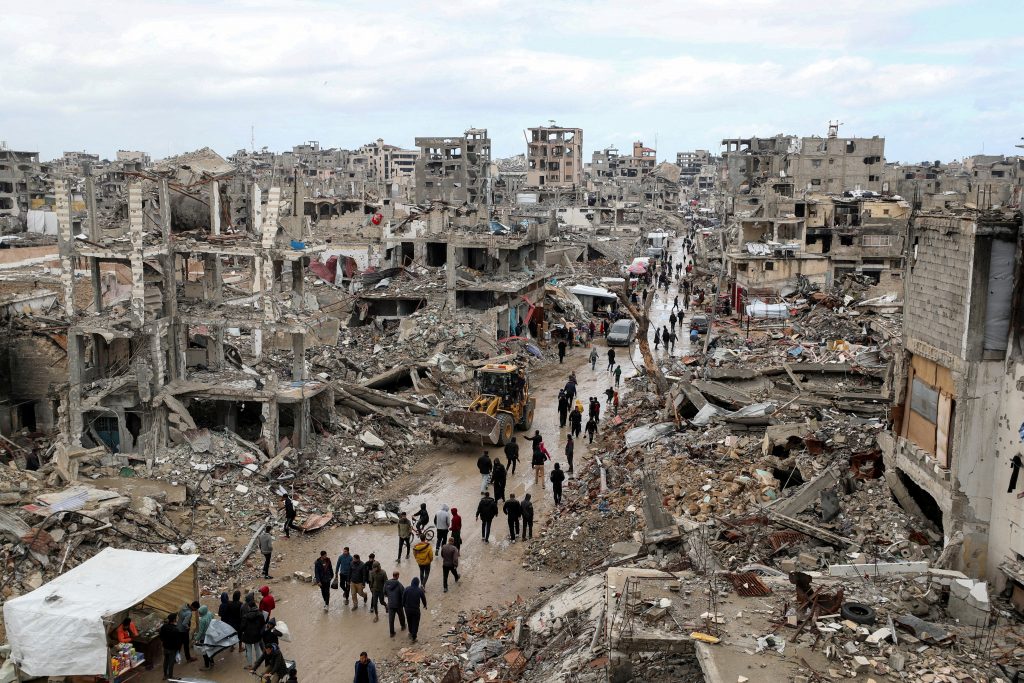
City of Nusaybin in Turkey after Erdogan’s ‘Peace Police’ operation. Zehra Dogan was jailed for painting a picture based on this photo
In 2015 when Kurdish parties threatened to unseat his ultra-nationalists via the balance of power Erdogan drowned the ceasefire in blood – bombing majority Kurdish cities like Nusaybin and parts of Cizre to rubble amid deafening silence in the West.
Turkish authorities’ crackdown on Kurds, including political figures and journalists, is continuing amid ongoing peace talks between Ankara and the Kurdistan Workers’ Party (PKK), aimed at ending the 40-year conflict between the state and the outlawed group
DEM Party politician Birsen Orhan
Police conducted early-morning raids on several homes in southeastern Mardin province, detaining Ziynet Algan, the pro-Kurdish Democratic Regions Party’s (DBP) former Nusaybin district chair, along with Mithat Yılmaz, Lokman Aslan and others, according to a report by the pro-Kurdish Mezopotamya news agency on Friday.
The Media and Law Studies Association (MLSA) also reported on Friday that Birsen Orhan, the former co-mayor of the eastern city of Tunceli from the pro-Kurdish Peoples’ Equality and Democracy Party (DEM Party), who was removed from office in November on terrorism charges, was given a suspended sentence of five months.
Orhan was detained on the same day she was removed from office after participating in protests over the mayors’ dismissal and was under house arrest. A Tunceli court had ruled to lift Orhan’s house arrest and travel ban on January 15.
Thousands protest daily in Rojava(AANES) for SDF and Tishreen, blocking the Turkish sponsored jihadi mercenary offensive from crossing the Euphrates.
The court on Friday sentenced the former co-mayor for “publicly provoking the commission of an offense,” considering the prosecutor’s argument that her use of the words “occupation” and “struggle” during her speeches at the protests posed “a threat.”
Meanwhile, Kurdish journalists Ali Barış Kurt and Öznur Değer were also detained on Friday, according to Mezopotamya.
Kurt’s detention followed the upholding of his prison sentence of more than two years by the Supreme Court of Appeals for social media posts and journalistic activities, while JINNEWS reporter Değer, who was beaten, handcuffed behind her back and forcibly removed from her home by the police, was referred to court with a request for arrest.
The authorities’ continued arrests and efforts to silence those advocating for Kurdish rights raise questions about the sincerity of the Justice and Development Party (AKP) government in addressing the longstanding Kurdish conflict and deepen concerns about the future of the negotiations.
Critics of the peace talks say the public is given little information about the discussions’ content.
They question what concessions Turkey will offer to persuade the PKK to lay down its arms and what steps the government will take to improve the cultural, political and linguistic rights of the Kurds, who have been fighting for these rights for many years.
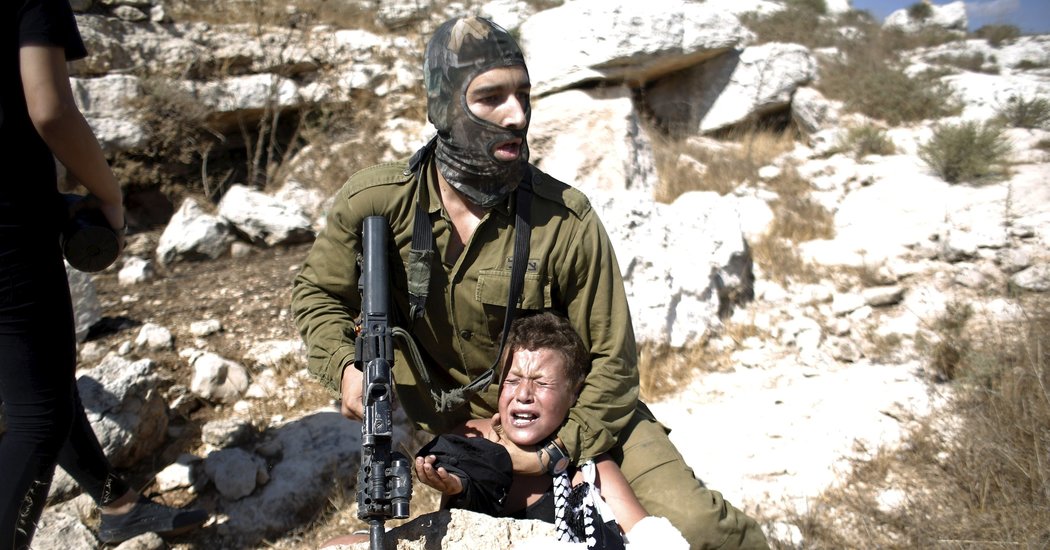
In 2015 a peace attempt initiated by Ankara broke down, unleashing a wave of State war crimes in the country’s predominantly Kurdish southeast.
Öcalan, 75, has said he was “determined” to be involved in a process that would turn the page on a conflict since 1984.
Should Öcalan make the call, it remains far from clear what he stands to gain from the unprecedented olive branch that was extended with the blessing of President Recep Tayyip Erdoğan.
“What did Erdoğan propose? We don’t know anything, is he ready for concessions?” wondered Hamit Bozarslan, a Paris-based specialist on Kurdish issues.
“Öcalan calling on his followers to lay down their arms does not mean a capitulation nor a renunciation of the right to defend the legitimacy of the Kurdish cause,” he argued.
Speaking on Wednesday, Tuncer Bakırhan, co-chair of the pro-Kurdish People’s Equality and Democracy Party (DEM Party) said Öcalan was “preparing the formula for an honorable solution to the Kurdish question.”
“We don’t know its exact content, but we know it will include a message regarding a democratic response to the Kurdish question,” he said in Diyarbakır, a Kurdish-majority city in the southeast.
What of PKK in Syria, Iraq?
Another unknown is how any such call would resonate among PKK militants in the mountains of northern Iraq or in northeastern Syria, where the Kurdish-led Syrian Democratic Forces (SDF) are resisting attacks and ethnic cleansing of tens of thousands by the Ankara-backed mercenary jihadi militias with Turkish troops, airforce, drone and heavy artillery support.
Ankara views the US-backed AANES multi-ethnic social administration’s SDF defense coalition with hostility, alleging one of its elements, the People’s Protection Units (YPG), is an extension of the PKK.
The hugely popular AANES endorses Ocalan’s philosophy with radical horizontal democracy and Women’s Liberation, unheard of in the Middle East, and a key reason for Turkish, HTS, and Irani hostility.
One of 100’s of wounded by the Turkish attacks on the ongoing Human Shields mass picket blocking the crossing of the illegal and criminal Jihadi /Turkish offensive into the Kobani area via the Tishreen Euphrates Dam
Daily support demonstrations continue around Rojava with large convoys of citizens traveling to the Euphrates frontline to act as Human Shields, attacked by Turkish drones, jets and artillery with 28 civilian deaths and 100s of injured so far (8th Feb 25).
The SDF defends a huge semi-autonomous Kurdish-led administration in largely desert northeastern Syria that flanks the Turkish border, in another vital element which will play into the mix.
Turkey is relying on Syria’s new rulers to address its always touted “security concerns”. Although attacks on Turkey across the border are nonexistant (and attacks from Turkey a daily crime) Erdogan remains obsessed about contagion of the AANES social system to the repressed Kurdish omajority on the Turkish side of the closed Border Wall..
Speaking on Wednesday, Turkish Foreign Minister Hakan Fidan said the stance of Syria’s new interim president Ahmed al-Sharaa (Jolani) “on the fate of the PKK/YPG is perfectly clear,” expressing confidence he would “address Turkey’s security needs.”
His remarks came a day after al-Sharaa’s first official visit to Turkey.
US stance key
Although al-Sharaa has rejected any form of Kurdish self-rule and urged the SDF to hand over its weapons, regional actors know much will depend on US President Donald Trump and his new administration.
Banner shows 11 of the civilian ‘human shield’ protestors murdered in cold blood by Turkey at Tishreen Dam
Such a move could weaken the SDF to the point of collapse and we hope the reports are mere rumors.
However,the AANES/SDF revolutionaries, although sponsored by the International Coalition against ISIS, are totally against US policies. The US has only supported them in resisting ISIS, indeed in 2019 Trump betrayed them to allow a Turkish invasion which seized and ethnically cleansed a border zone leaving thousands still in internal refugee camps.
The 100,000+ strong SDF coalition of multi-ethnic and women’s militias does NOT get paid by the USA (chatGPT sources) but by their AANES coordination and vows to resist the promised major offensive by Turkey, the 2nd biggest army in NATO, alongside the new Damascus Regime, formerly HTS, formerly Al Qaeda jihadi ‘headchoppers’.
The revolutionary AANES constitution reflects the democratic principles, communal work, human rights, ethnic and religious tolerance, Woman-Life-Freedom, gender equality, and the decentralization of power already being implemented with great enthusiasm in their liberated area..
The revolution, unique in the middle east if not the world, follows the teachings of Abdullah Öcalan, imprisoned forever on a Turkish island.
It began in Turkey in where there are over 20 million repressed Kurds, when Ocalan organised the PKK defenders to make a 2nd successful truce with Turkey, until the Erdogan regime forced the collapse of the agreement in 2015 and drowned the civil revolution in blood, even bombing Kurdish cities in Turkey like Nusaybin to rubble to stamp out Kurdish horizontal democratic practices . see photo.
The revolution survived however in NE Syria. e Assad regime had to abandon the area due to almost losing the civil war.
The Turkish armed jihadi ISIS Caliphate had been sweeping north Syria, but the Kurdish defenders defeated them in the epic Siege of Kobanî (Sept 2014 to Feb 2915) despite the destruction of the city, with the International Coalition (mainly the USA) finally intervening with some air support.
After the Kobani victory the Kurdish defenders (YPG men and YPJ women) went on to organize the SDF (Syrian Democratic Forces, now over 100k strong) as a host of other militia groupings joined them, Arabs of all sorts, Yazides, Womens militias, Christians, Syriacs, Turkmen, Armenians, etc
The rest is history, the SDF defeated ISIS in Manbij and set up a vibrant unique multi cultural multi religious city following the communal liberation agenda and continued east.
For nearly five decades, China has undertaken a monumental ecological effort to combat desertification in one of the world’s most hostile environments—the Taklamakan Desert.
On Thursday, the People’s Daily reported that the ambitious project to encircle the desert with a green belt of trees has been completed, marking the end of a journey fraught with setbacks but full of determination.
A ‘Green’ Great Wall for the Taklamakan
Last week, workers planted the final 100 trees on the southern edge of the Taklamakan Desert, completing what is often referred to as China’s “Green Great Wall.”
This initiative aims to mitigate the adverse effects of the Taklamakan, a vast sea of shifting sands located in northwestern China. Known as the second-largest shifting sand desert in the world, its name ominously translates to “Go in and don’t come out,”reflecting its inhospitable nature.
The desert is also the farthest point from any ocean, making its surrounding areas some of the most isolated and impoverished regions in China.
The Taklamakan Desert has long posed challenges for northern and western Chinese provinces, as strong winds carry dust and sand into these regions.
These storms degrade air quality, threaten agricultural productivity, and contribute to desertification.
In response, China initiated the “Three-North Shelterbelt”project in 1978 under the leadership of Deng Xiaoping, aiming to combat these environmental challenges by planting trees on a massive scale.
Transforming the Landscape
Since its inception, the project has led to the planting of over 30 million hectares (116,000 square miles) of trees.
Thanks to the 24/7 surveillance being carried out by the government’s sprawling spy network of fusion centers, we are all just sitting ducks, waiting to be tagged, flagged, targeted, monitored, manipulated, investigated, interrogated, heckled and generally harassed by agents of the US American police state.
Without having ever knowingly committed a crime or been convicted of one, you and your fellow citizens have likely been assessed for behaviors the government might consider devious, dangerous or concerning; assigned a threat score based on your associations, activities and viewpoints; and catalogued in a government database according to how you should be approached by police and other government agencies based on your particular threat level.
Digital authoritarianism, as the Center for Strategic and International Studies cautions, involves the use of information technology to surveil, repress, and manipulate the populace, endangering human rights and civil liberties, and co-opting and corrupting the foundational principles of democratic and open societies, “including freedom of movement, the right to speak freely and express political dissent, and the right to personal privacy, online and off.”
“Life itself is anarchist, which explains why anarchistic forms of sociality surface again and again, throughout history, even in the teeth of the most oppressive social conditions imaginable”.
Occasionally you hear people complain about being ‘politically homeless’. What they tend to mean is either that there is no longer a traditional left-wing, which sought to manage people and nature in the name of a global ‘society’, or that there is no longer a traditional right-wing, which sought to subjugate people and nature in the name of a national ‘tradition’.
The reason they’ve departed from political life is that in our neoliberal, postmodern, online unworld, society no longer exists, the Western working class has been either weakened or subsumed into the [decaying] middle-class and nations are now irrelevant, as are institutions, so there is no place left for either the ideology of the traditional management class (socialism) or for the traditional owner class (capitalism), and this has left those who still adhere to them, ‘homeless’.
While such people remain blind to the true nature of the postmodern condition — a consequence of technocratic capitalism and technocratic socialism — they will be unable to even consider the only home that can ever welcome them; Anarchism…
I say ‘perennial’ because, as I have argued in an introductory article, nature is anarchist, friendship is anarchist, work is anarchist (when the boss is absent), romantic love is anarchist, scientific endeavour is anarchist, all primal (pre-agricultural, pre-conquest) societies were anarchist and artistic creation is anarchist. Life itself is anarchist, which explains why anarchistic forms of sociality surface again and again, throughout history, even in the teeth of the most oppressive social conditions imaginable. Anarchism springs up in prisons, in shanty towns, in peasant communes and even occasionally, and most amazingly, in the modern workplace. Anarchism sprouts through the cracks of the system as weeds do between its paving stones, because it represents the root and spring of our social nature.
You would think then that anarchism would be a popular way of life today. You would think that a movement which in essence includes all great artists and scientists [1] would be extremely attractive. You’d think that a genuine alternative to the system-friendly managerialism of the left and the system-friendly capitalism of the right would be an easy pitch. You’d think that an approach to politics which, like the majority of populations everywhere, pushes leftwards economically (redistributing wealth) and rightwards socially (enforcing organic cultural borders), would find a great deal of popular support. You’d think! But I’m afraid you’d be wrong, for two basic reasons.
Firstly, most people do not want the spiritual and intellectual freedom that anarchism represents. It terrifies them. They want to avoid the crushing oppression of worldly life, but they cling to the institutions, the money, the capital, the comfort, the routine, the technology and the mindless work that are all preconditions of that life.
You can download a PDF of this publication from here
Half-a-century since the workers of Lucas Aerospace proposed to shift from military to socially useful production, the idea of converting arms industries is increasingly touted.
Steven Schofield argues that both the nature of military industries and the challenge of climate breakdown have changed dramatically since the 1970s and calls for a more radical, decentralised and sustainable approach to industrial and economic strategy.