Ecological collapse is likely to start sooner than previously believed, according to a new study that models how tipping points can amplify and accelerate one another.
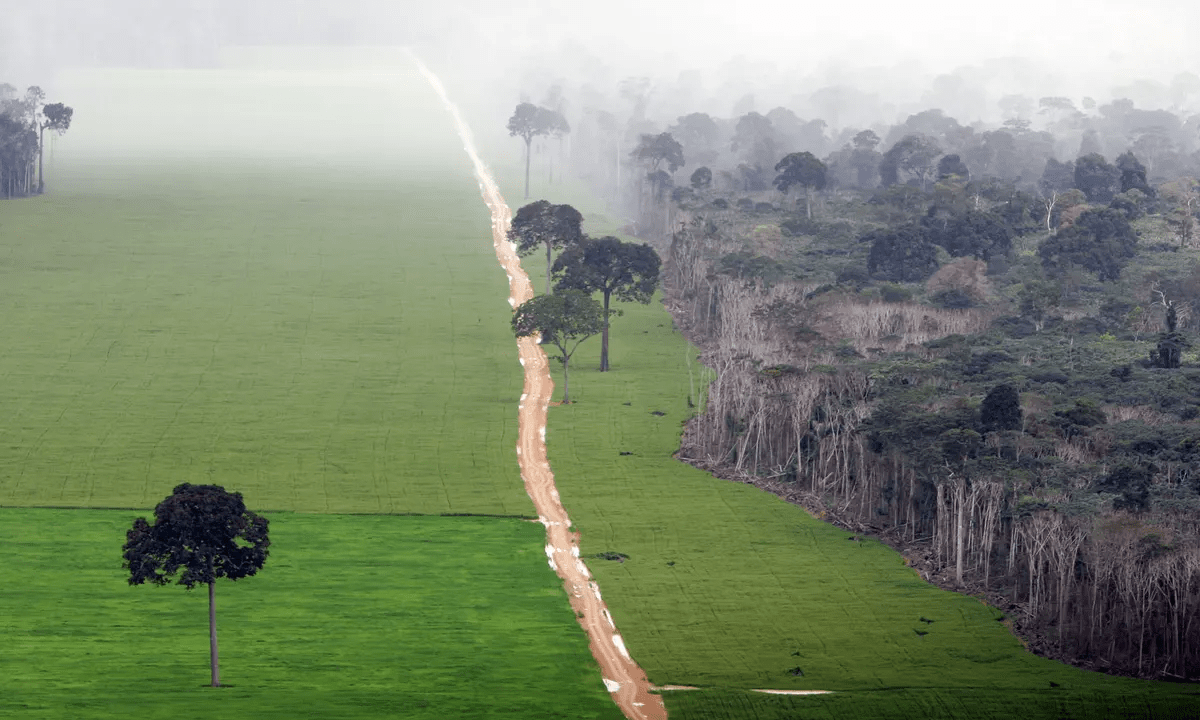
Deforestation of the Amazon, near Santarém, Brazil. Photograph: Brazil Photos/LightRocket/Getty Images
Based on these findings, the authors warn that more than a fifth of ecosystems worldwide, including the Amazon rainforest, are at risk of a catastrophic breakdown within a human lifetime.
“It could happen very soon,” said Prof Simon Willcock of Rothamsted Research, who co-led the study. “We could realistically be the last generation to see the Amazon.”
The research, which was published on Thursday in Nature Sustainability,is likely to generate a heated debate. Compared with the long-established and conclusively proven link between fossil fuels and global heating, the science of tipping points and their interactions…
Here’s how NATO trainers knowingly sent Ukrainian troops to their deaths in this month’s counteroffensive against Russia
Scott Ritter is a former US Marine Corps intelligence officer and author of ‘Disarmament in the Time of Perestroika: Arms Control and the End of the Soviet Union.’ He served in the Soviet Union as an inspector implementing the INF Treaty, in General Schwarzkopf’s staff during the Gulf War, and from 1991-1998 as a UN weapons inspector. … @RealScottRitter
Latest estimates: 13,500 fallen Ukrainians, mostly conscripts, in botched offensive
Ukraine sent one of its best brigades into combat earlier this month as part of its long-awaited counteroffensive aimed at retaking areas controlled by Russian forces.
Leading the charge near the town of Orekhov, in Zaporozhye Region, was the 47th Mechanized Brigade, armed with NATO equipment and – most importantly – employing it using the US-led bloc’s combined arms doctrine and tactics. Prior to the operation, this brigade spent months at a base in Germany learning “Western know-how” in combined-arms warfare.
Helping them prepare for the fighting to come was KORA, the German-made NATO computer simulation system, designed to allow officers and non-commissioned officers to closely replicate battlefield conditions and, in doing so, better develop ideal courses of action against a designated enemy – in this case, Russia.
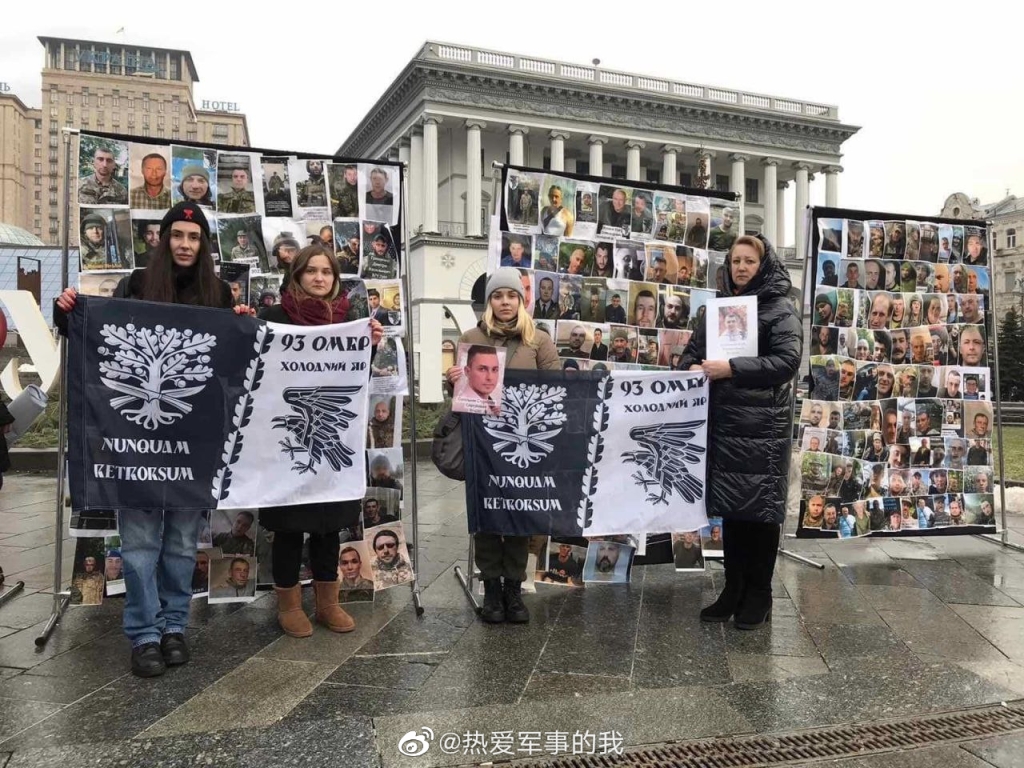
Ukrainian servicemen complain on line about lack of equipment, flight of officers and terrible casualties. These thirty men, one platoon, are the last able-bodied fighters, maybe 25%, within a whole company of the 25th airborne brigade (screenshot on December 12, 2022)As often in Ukraine, here in Kiev on December 30, 2022, women are demonstrating and demanding news or the corpses of their missing relatives, who are likely dead but nobody has informed the families. For propaganda reason, the authorities are hiding the reality of severe military losses. Moreover, no pension is paid for a missing service member
If there was ever an example of how a purpose-built Ukrainian NATO proxy force would perform against a Russian enemy, the 47th Brigade was the ideal case study.
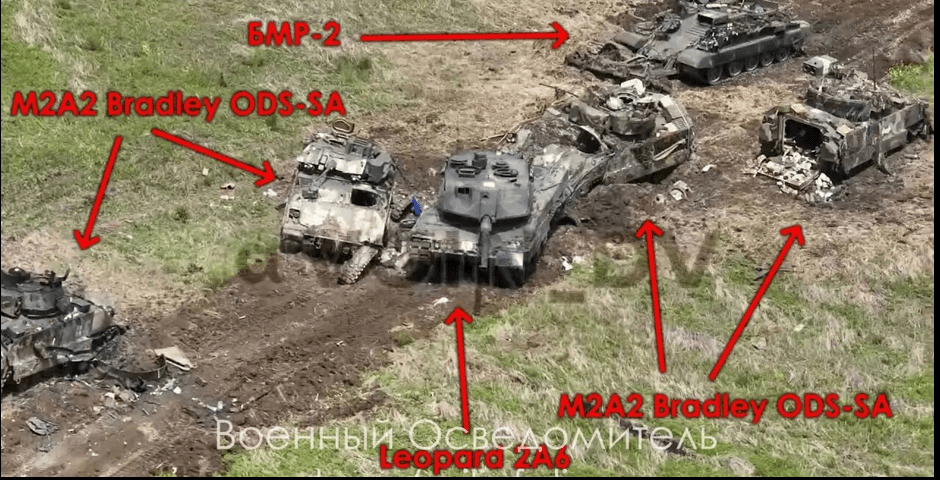
However, within days of initiating its attack, the group was close to literally decimated, with more than 10% of the over 100 US-made M-2 Bradley infantry fighting vehicles destroyed or abandoned on the field of battle, and hundreds of the brigade’s 2,000-strong complement dead or wounded.
German-made Leopard 2 tanks and mine-clearing vehicles joined the Bradleys as wrecks in the fields west of Orekhov, having failed to breach the first line of Russian defenses.
The reasons for this defeat can be boiled down to the role played by KORA in creating a false sense of confidence on the part of the officers and men of the 47th Brigade. Unfortunately, as the Ukrainians and their NATO masters found out, what works in a computer simulation does not automatically equate to battlefield success.
‘TELEGRAM CLAIMS RUSSIA HAS WON ? Prestigious Telegram channels are pointing to new US and German statements that Ukraine may never be let join NATO, and an admission by resigning NATO head Stoltenberg that ‘The West has run out of arms to gift’. They claim we are being prepared for the worst, as Western “journalists” squirm to invent positive ‘narratives’ and their great wall of lies begins to crumble”. They also claim that Ukraine is preparing a big new False Flag.
KORA is a computer-based advanced synthetic wargaming system developed by the German army to support course-of-action analysis and scenario-based experiments for staff officers up to the brigade level.
It has been incorporated into NATO computer wargame simulations in support of live training done at the US Army’s Grafenwoehr training facility. Grafenwoehr hosted the 47th Brigade from January-May 2023.
Dogs trained to attack poachers in South Africa (Photo: Twitter @business) Originally published in Black Republic Media ; Reprinted in Black Agenda Report on June 21, 2023 “This episode of Black Republic Media is the second in a series entitled, Murder Inc: The White Settler Republic as Homicidal Maniac. In this episode, Violence is Their Religion: How […]
By Chris Hedges / Original to ScheerPost Julian Assange’s legal options have nearly run out. He could be extradited to the U.S. this week. Should he be convicted in the U.S., any reporting on the inner workings of power will become a crime. High Court Judge Jonathan Swift — who previously worked for a variety […]
Muchas especies ven reducidas sus poblaciones por la escasez de agua y alimento, sobre todo, insectos, peces y anfibios.
Las aves de humedales sufren especialmente el deterioro de sus hábitats y, al migrar, trasladan la presión a otros ecosistemas.
Las aves son migrantes climáticas por antonomasia. Algunos peces, como la sarda, se adaptaron para vivir en ríos que menguan en el verano. Pero mientras la sequía prolongada ya se extiende por el 35% de la península, la escasez de lluvias golpea de forma silenciosa en la vida silvestre.
“Tiene efecto, sobre todo, en las especies que dependen directamente del agua, como los insectos, los peces y otras especies acuáticas, pero también en los anfibios, que necesitan agua para desarrollar la fase larvaria.
Si no hay agua en las charcas y zonas húmedas, este año directamente no van a criar”, explica a RTVE.es Rafael Seiz, coordinador del Programa de Agua de WWF España, que menciona también el impacto en las especies terrestres.
En años como este, los ciervos y corzos ven cómo el agua para beber y los pastos para comer escasean.
Con todo, algunos animales están mejor adaptados que otros. “En la cornisa cantábrica, donde el clima atlántico es más característico, las especies resisten peor los periodos de falta de recursos, con lo cual puede haber episodios puntuales en los que algunos ejemplares no consigan sobrevivir”, ejemplifica.
El estado de los ecosistemas antes de llegar la emergencia puede, en cualquier caso, marcar la diferencia.
Seis de cada diez aves amenazadas sufren más las sequías
Las aves sufren especialmente los años secos y esto manifiesta en diferentes planos: “Hay uno más inmediato, que es la necesidad de agua para beber o, incluso, para cosas que a lo mejor son menos intuitivas, como la falta de barro para que las golondrinas y aviones puedan hacer sus nidos”.
El experto que habla es Mario Giménez, delegado de SEO Birdlife en Valencia, quien enlaza con los comentarios de WWF. “Menos insectos y menos producción de semillas es, en definitiva, menos comida y eso viene a significar que las aves estén en peor estado físico.
Ponen menos huevos, sacan adelante menos pollos y esto afecta al tamaño de las poblaciones”, enumera.
Pero Giménez destaca los problemas que surgen para las aves por el cambio en sus hábitats.
La sequía es un ciclo habitual dentro del clima mediterráneo, pero estas últimas vienen montadas sobre un proceso de cambio climático que ya está influyendo en los patrones de algunas especies migratorias: bandadas que paran cada vez más al norte porque en el sur encuentran demasiado calor y poco alimento o porque los ríos ya no se hielan todo el año como antes, otras que directamente han dejado de migrar.
“Las cigüeñas son un ejemplo clásico de especie que ya no cruza el estrecho, muchas veces se quedan en España”, apunta el experto.
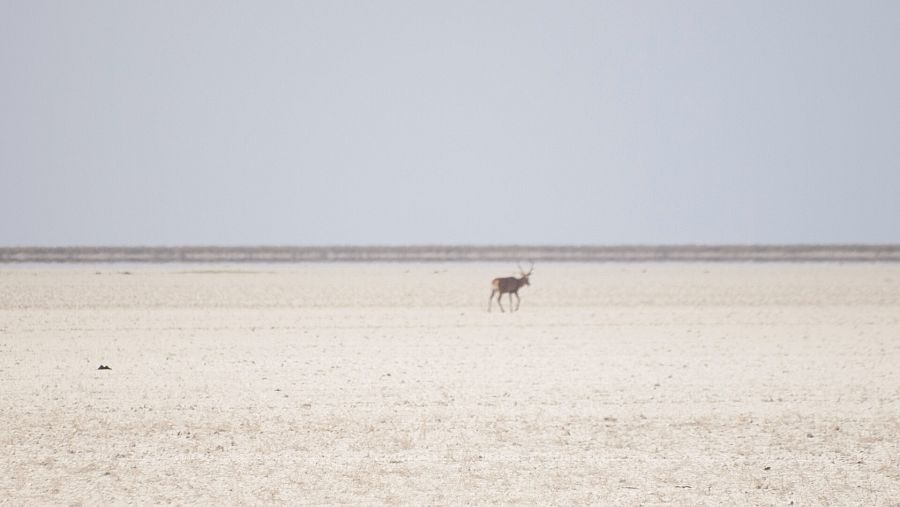
Un ciervo solitario camina por el humedal seco del Parque Nacional de Doñana. CARLOS CIUDAD / GETTY
En lo que respecta solo a las sequías, el impacto es más evidente para dos grupos de aves, las ligadas a ecosistemas agrícolas y a los humedales. Con la mala cosecha de secano este año, las primeras han quedado muy expuestas: “Como no tienen sitio donde hacer nidos, porque no han salido los cereales por la sequía, se tienen que ir a sitios peores, donde seguramente tendrán más depredación, tendrán que poner los nidos en el suelo y volvemos al inicio: habrá menos pollos”, afirma Giménez, de Seo BirdLife, sobre especies como el aguilucho cenizo.
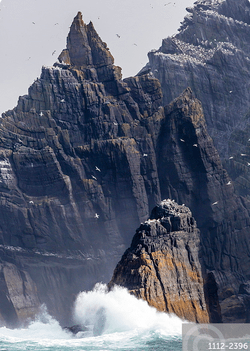
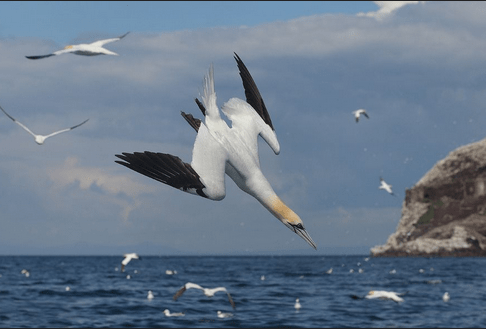
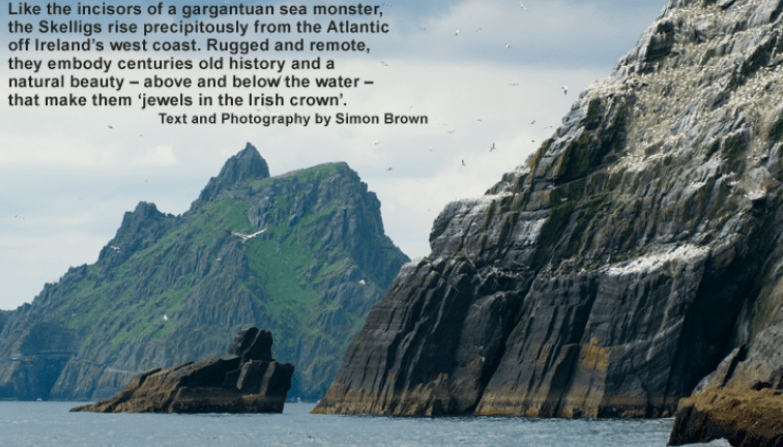
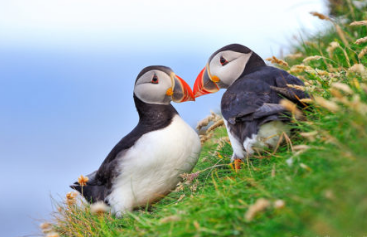
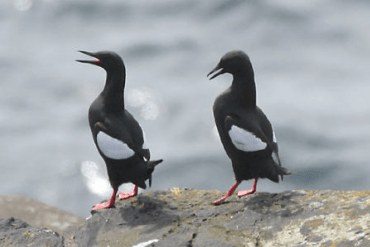
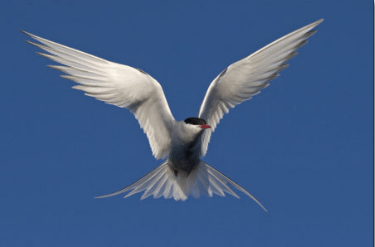
Ireland is home to a newly designated ‘Hope Spot’ off the Greater Skellig Coast in an area noted to have high conservation value for biodiversity.
Led by oceanographer and author Dr. Sylvia Earl, Mission Blue now has listed 148 Hope Spots globally. Through designations of special places for conservation it seeks to inspire public awareness and support for a worldwide network of Marine Protected Areas (MPAs).
Hope Spots are scientifically identified as critical to the health of the ocean and designated by the global marine conservation movement Mission Blue. The Greater Skellig Coast stretches from Kenmare Bay in Co Kerry to Loop Head in Co Clare and covers an area of roughly 7,000km2 of Irish coastal waters.
“This Hope Spot is being announced at a crucial time for Ireland because in 2023, new national Marine Protected Area legislation will be introduced for the first time. 81% of Irish people believe that we need to protect, conserve and restore the ocean. This legislation will help achieve this very desirable protection”, said Dr. Sylvia Earle, Founder of Mission Blue.
The Greater Skellig Coast is one of 16 ‘Areas of Interest’ identified for possible Marine Protected Area designation by Fair Seas, a coalition of environmental non-governmental organisations and networks in Ireland, with the support of Sea Synergy, a marine awareness and activity centre based in Kerry.
“The Hope Spot designation confirms what we already knew in Co Kerry and Co Clare, that the ocean is critically important. It’s my wish that this designation will help inspire people to take a closer look at what the ocean offers and that we will see more Hope Spots and action to live in harmony with Ireland’s ocean”, said Lucy Hunt, Founder of Sea Synergy.
“This global recognition is even more critical now as we finalise our own national MPA legislation in Ireland. We have one chance to do this right and we owe it to the next generation to do this well,” said Aoife O’ Mahony, Campaign Manager for Fair Seas.
Fair Seas has been campaigning for Ireland to protect at least 30% of Irish waters as Marine Protected Areas by 2030, in line with a worldwide 30×30 initiative calling for governments to protect 30% of Earth’s land and ocean by 2030.
The General Scheme of Ireland’s new Marine Protected Area (MPA) legislation was published in December 2022 and will head next to committee pre-legislative scrutiny in the Oireachtas.







 The Free