by Sonia Muñoz Llort and Nerd Teacher from Morethanthisandthat on January 10, 2025 via thefreeonline at https://wp.me/pIJl9-Fwt .

Introduction – A little bit of context–
Rationale: Persistent frustrations
Organizing within our movements: Building mutual care, accountability, and collective responsibility
Collaboration in diversity: The strength of heterogeneity
Resisting the triple supremacy of globalized capitalism: intergovernmental organizations, corporations, and international alliances
Conclusion
*********
It goes without saying, but it seems like almost every individual and collective we interact with has trouble with self-organization and mutual support.
Almost every conversation we have with the people we interact with brings up the same problems. We hear complaints from groups who prefer to focus on “increasing numbers” even as they dedicate themselves to supporting and defending abusers and bigots within their ranks, further ousting people.
We hear complaints of exclusionary behavior from groups or organizers who completely ignore almost any degree of accessibility and often refuse to do what is necessary to maintain a healthy environment.
We continue to see people trying to create hierarchies of inclusion that they claim are the result of “not having enough resources” to do it all and having to focus only on the “most important” actions.
Especifismo: The Anarchist Praxis of Building Popular Movements
This isn’t to say that everyone is struggling in exactly the same way, because there are quite a few nuances and contexts in our various regionalities, but there certainly seems to be an immense amount of overlap.
So when we talk to people, we often realize how exhausted they seem to be and how unbearably tired everyone is.
It’s also really hard not to notice, in our own experiences, how many people seem to think they have no responsibility to others, especially when most people’s complaints seem to be very similar and are treated as nothing more than a broken record when they keep pointing out problems that haven’t been addressed.
We don’t understand this attitude. If there are problems, why is there such a desire to sweep them under the rug or ignore them until something changes for the better?
We say this now because, as we’ve listened to so many others and engaged or reflected on our own collectives and groups, we’ve noticed another common theme: Many people have really lost faith in those around them, and often feel that those people and groups who claim to support them would never actually do so when the need arises.
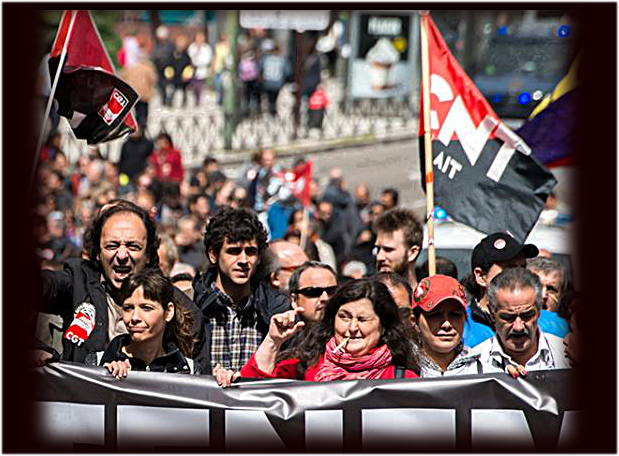
It also seems that many are tired of the lack of community and constantly feel like there’s nowhere they truly belong. Not only have they had to struggle to find a place to belong, but they have found that the few organisations and collectives they have been able to find are either completely unequipped or unwilling to support them and everyone else.
This can be seen in the sudden dissolution of many of the online communities that sprang up during the COVID lockdown, which fell apart almost as quickly as they were created.
Very little was done to ensure these connections were maintained once everything returned to ‘normal’, especially in regards to those who have been unable to be physically present for whatever reason.
Perhaps – although this is said with a glimmer of hope for a better explanation for the dissipation of our organisational and community spaces – most of the people who had previously collaborated with others online are now busy participating in local movements offline.
Perhaps, we hope, collectives are doing more to build and support their local communities.
Because if we look at online spaces, almost all of the spaces we had created have crumbled and refocused on offline spaces and activities, leaving many of the most vulnerable in even more lonely, alienated, and precarious positions.
We have been left scrambling to find remnants of the communities we had before the pandemic began, but we have also been left watching our online communities gradually deteriorate in favor of things that feel “more real,” because many of us have never truly shifted our understanding that online spaces are not a substitute for offline ones, but are in fact part of the same realities and should support each other.
So we still have to ask ourselves if they are doing what they can to to meet the needs of everyone, rather than just offering empty platitudes and half-baked excuses..
It’s hard to know. We can only really speak from our own experiences in the spaces we inhabit, seeing how they have seen their participation dwindle due to their unwillingness to ensure the safety of the people they claim to support.
We’ve seen people proudly proclaim that they are part of a particular collective and trumpet their position within it, knowing full well that they have done very little within it – or in some cases supported causes antithetical to the aims of their collective – and are only using the name to try to bolster themselves and their reputation among others.
They want to build their own version of some kind of “anarchist” credentials, adding every interaction to their activist resume.
We also feel that the spaces we have are totally atomized and often alienated, both from the place around us and from broader movements.
Sometimes it is because others refuse to engage with certain ideas because some element of them would upset the status quo they enjoy. For us, this has been clearest in regards to marginalized anarchisms, especially anarcha-feminism and queer and trans anarchisms.
It has also been brutally obvious whenever we have mentioned anything related to the abolition of school and academia or when we have clearly stated that we should support and encourage youth liberation.
We have seen the co-optation of non-white anarchisms (by people who refuse to reflect on their own whiteness) and non-Western anarchisms (by people who think it is logically consistent to support certain imperialist states over others).
The many anarchisms of the marginalized are continually used as tools and weapons by those who, even if they deny it, maintain support for the very hierarchies we seek to dismantle. It is clear that there are problems that we desperately need to address.

Anarchist Agitation & Community Building | The Anarchist Library
To top it off, we see groups who are virtually paralyzed by fear in this highly-surveilled world where we are in the crosshairs of the increasingly fascist and authoritarian governments that thrive around us.
Continue reading “The Power of Having Diverse Anarchisms – Building Alternatives Outside Neoliberal Globalization (2025) –”