
On June 5, 6, and 7, the National University of Luján (main campus) will open its doors to welcome attendees to the 1st Congress on People’s Agroecology, promoted by the Meeting of ‘Peoples Fumigated’ by Agroecology and Good Living of the Province of Buenos Aires (EPFBA).
By Alberto Lezin at comunicación popular via agenciadenoticiascap on 24/5/25 via thefreeonline at https://wp.me/pIJl9-H03 (translated). Telegram https://t.me/thefreeonline/3221

Hundreds of people will gather there to exchange knowledge, experiences, sensations, and proposals related to environmentally friendly production practices and to strengthen the never-before-considered socio-community networks that agroecology intertwines.
This collective initiative, conceived by producers, consumers, researchers, teachers, professionals, members of Indigenous Peoples, social organizations, and others who directly or indirectly suffer the consequences of agribusiness, aims to highlight and debate a multitude of issues that affect those who undertake the task of contributing, through practice and theory, to a true transformation of the current production matrix based on extractivism.
Eight thematic axes will frame the presentations of the participants, who, through posters, workshops, book presentations, and artistic interventions, will address problems and develop solutions related to:
TRANSITION TOWARDS AGROECOLOGY OR COEXISTENCE WITH AGRIBUSINESS?
Quality of agroecological foods: flavors, aromas, textures. Crop varieties. Abundance. Solidarity and sharing. Practices and ways of consuming agroecological foods.
Transformations of individual and collective lives through agroecology. Let’s talk about agribusiness and extractivism.
HANDS IN THE EARTH. EXPERIENCES AND POSSIBILITIES
What does agroecological production entail?
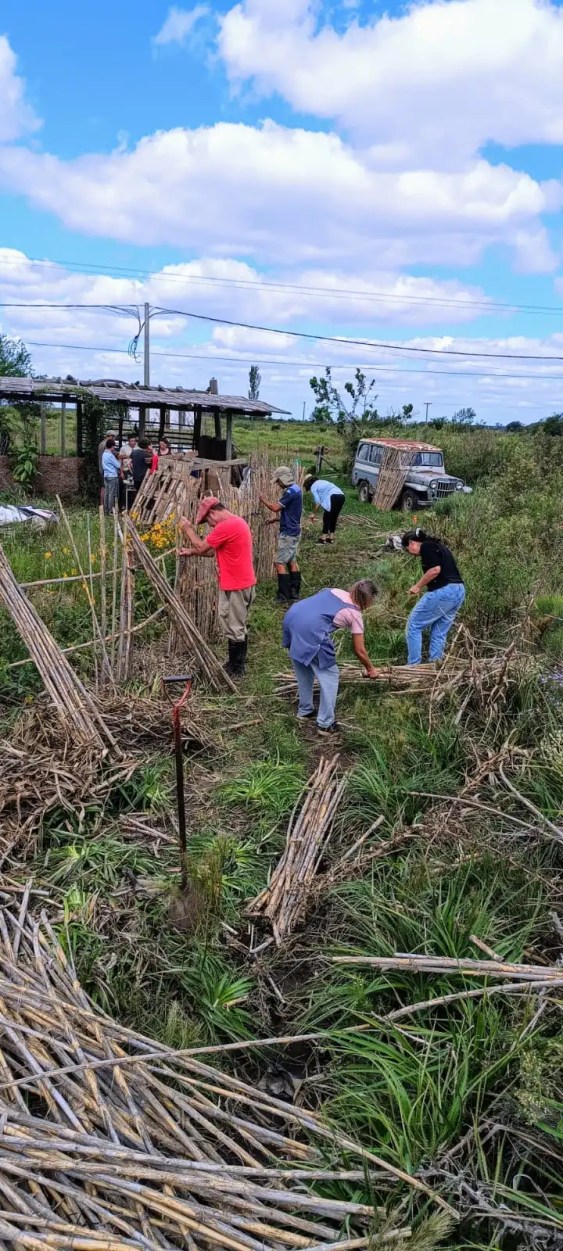
How to design such production? Healing degraded soil and the use of substrates and amendments: mulches, husks, pruning chipping, bokashi, compost and vermicompost, slurry, and broth.
Sustainable use of water: collection, storage, and distribution. Is extensive agroecological production possible within this framework?
Agroecological animal, mixed, and silvopastoral production. Confronting agroecology vs. production with agrotoxins based on:
sustainability; Gender and age issues; autonomy or dependence (inputs, financing, markets, seasonality, prices, etc.); position regarding climate change;
profitability and costs (is agroecological production “expensive”? Is it low-yielding?).
Contributions of each system to agrobiodiversity as a union between the biological and the cultural.
Resilience to change and/or disturbance. Regeneration. Use, creation, and appropriation of technologies.
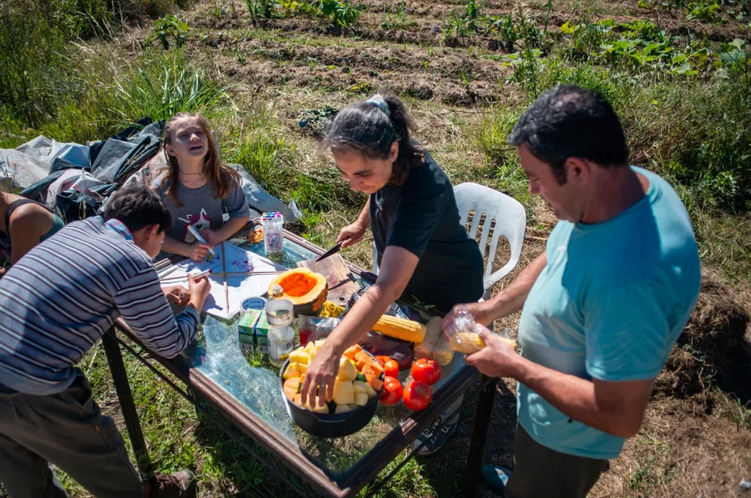
Participation of indigenous peoples and migrants. Systems that include or expel (rootedness/return to the countryside or search for it in the city).
Continue reading “PEOPLE’S AGROECOLOGY CONGRESS (BY AND FOR THE PEOPLE )” The Free