¡Deep Geothermal offers Green Energy to last a Billion Years!

Energy Transition by Jennifer L. Schenker 15 min read via thefreeonline at https://wp.me/pIJl9-HKX shared with thanks

Here we share optimistic predictions of unlimited green energy from the earth. But the development is controlled by the worst evil corporations and billionaires now destroying the climate and biosphere and sponsoring mass poverty and genocide to boost private profit.

¡Geothermal Is Suddenly Hot! + Quaise deep Geo

Written by Jennifer L. SchenkerGeothermal Is Suddenly Hot

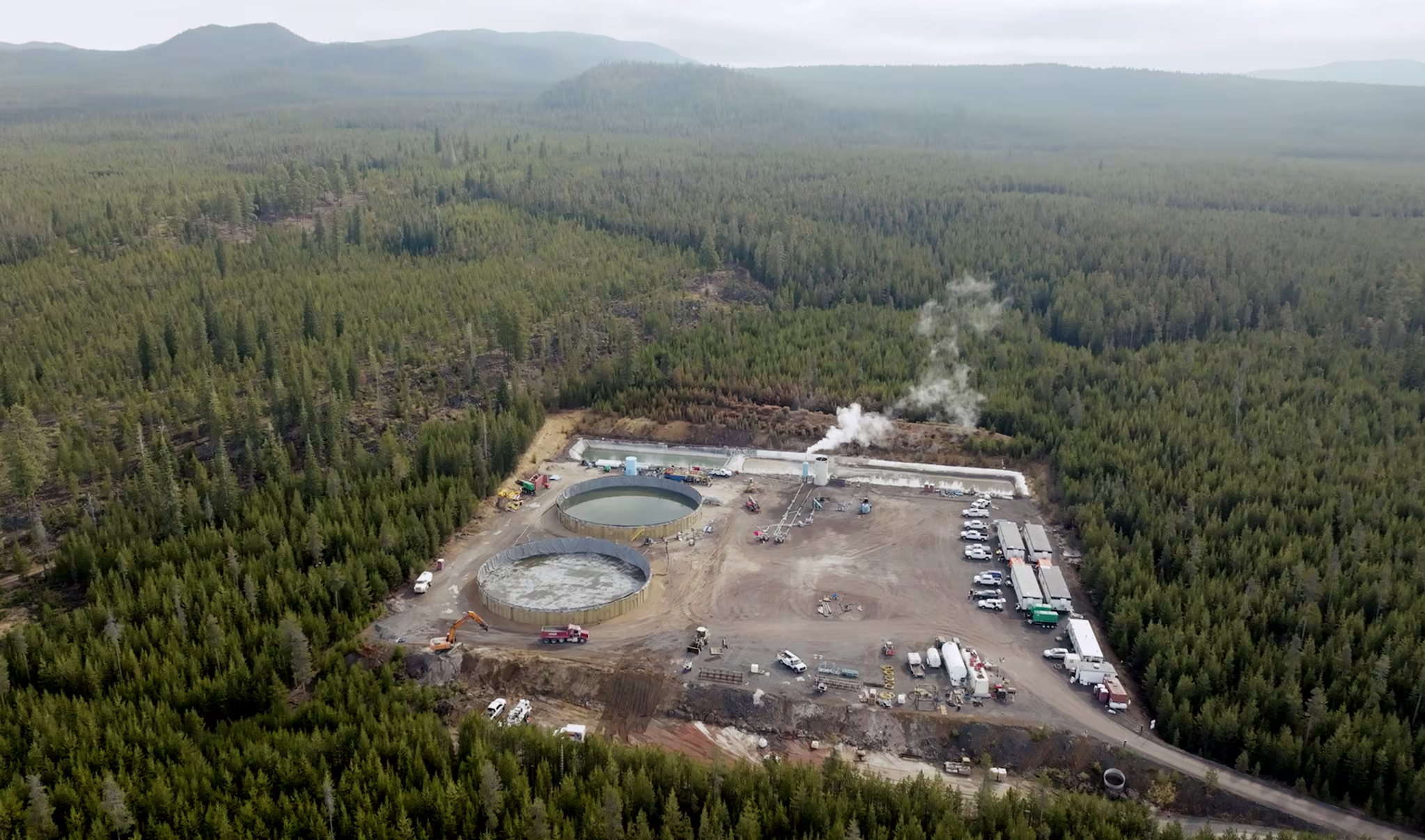
On October 28 Mazama Energy, a venture capital-backed U.S. company announced a technologically significant leap for clean energy: the creation of the world’s hottest Enhanced Geothermal System (EGS) at its pilot site in Newberry, Oregon at an unprecedented 629 °F (331 °C) bottomhole temperature. This breakthrough sets a new global benchmark for geothermal technology and marks a critical step towards delivering low-cost, carbon-free baseload power at terawatt-scale.

Harnessing super-hot rock resources will allow Mazama to extract 10x more power density, use 75% less water and drill 80% fewer wells than current approaches, according to the company.
“With geothermal, you get global, round-the-clock energy that is carbon-free, cost-stable, and grid-independent,” Sriram Vasantharajan, CEO of Mazama Energy, said in a statement.  The Newberry pilot provides a blueprint for unlocking baseload, utility-scale, carbon-free energy from the Earth’s crust worldwide, which is what the next generation of AI and cloud infrastructure requires.”

Although it uses the same technology as the oil and gas industry, geothermal is different from fracking in key ways. To extract oil and gas, a company drills into the ground and injects water and chemicals into the earth to create new fractures that pull fossil fuels to the surface. In conventional geothermal, the drills are used to locate natural water flows underground, which transfer the heat back up. For enhanced geothermal systems like Super Hot Rocks, only water is injected to create pathways in the hot rocks to transfer heat back up to the surface.

Mazama Energy, along with its partners, are trying to prove something that’s never been done in this way before — harnessing heat two miles deep beneath the earth’s surface to generate enough electricity to power homes.
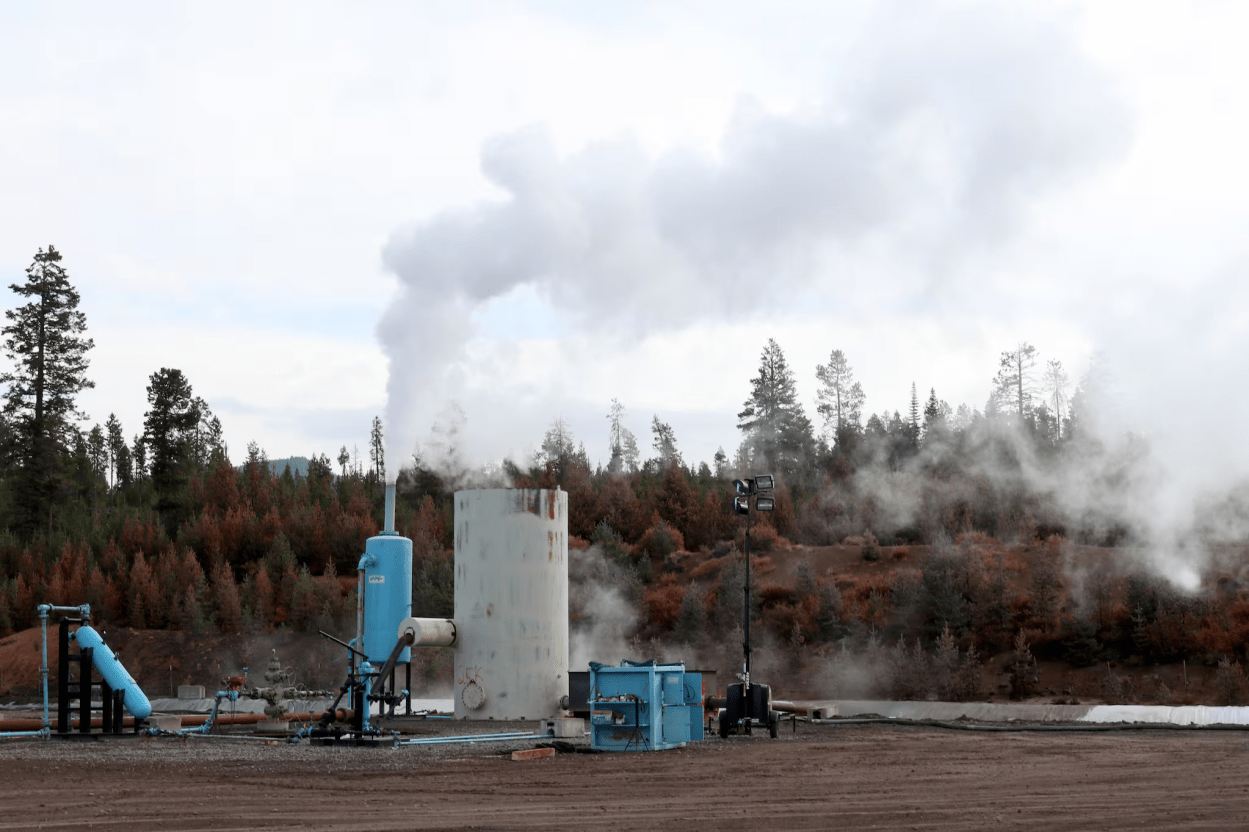
A blue cylinder billows steam indicating success for Mazama Energy’s pilot project on Super Hot Rocks on Sept. 9, 2025.Monica Samayoa / OPB

Under Trump’s new law, Oregon could lose big on solar and wind energy projects.. President Donald Trump, however, has advanced policies that are often counter to Oregon’s renewable goals. The administration’s attacks on wind and solar production are making it harder to add these renewable energy resources to the grid. But the development of geothermal as a renewable energy source is something his administration does support, and it has provided millions in funding.

Continue reading “¡Deep Geothermal offers Green Energy to last a Billion Years!”

Snow Deficits in the Himalayas Signal a Water Crisis for Nearly 2 Billion People

by C.A.R.E. climateawarenessreport on 24 April 25 via thefreeonline at https://wp.me/pIJl9-GJG Telegram t.me/thefreeonline/2962

Snow Deficits in the Himalayas Signal a Water Crisis for Nearly 2 Billion People – ↗.wo

The 2025 Snow Update Report has delivered a stark warning: for the third consecutive year, the Hindu Kush Himalaya (HKH) region has experienced below-normal snow cover.

Download the HKH Snow Update 2025

With snow persistence—a measure of how long snow remains on the ground after falling—reaching a record low of -23.6%, the findings highlight a troubling trend for the 12 major river basins that depend on this vital seasonal snow.

This significant drop in snow persistence is more than a weather anomaly. It’s a clear indicator of how climate change is disrupting natural systems, putting at risk the water security of nearly two billion people who live downstream of these rivers, including the Indus, Ganges, and Brahmaputra.

ALLAHABAD, UTTAR PRADESH, INDIA A child lies down on a dry bed of parched mud that is the dried up River Varuna at Phoolpur

India’s parched rivers: At least 13 without water, … Apr 1, 2024

A Third Year of Alarming Decline

The HKH region, often referred to as the “Third Pole” due to its vast snow and ice reserves, is crucial for seasonal water storage. These snowpacks melt gradually during spring and early summer, feeding rivers that support agriculture, hydropower, and daily life across South and Southeast Asia.

However, the report shows that all twelve major river basins in the region faced below-average snow cover in 2025. The Mekong and Salween basins were particularly hard-hit, losing over 50% of their typical snow persistence.

Continue reading “Snow Deficits in the Himalayas Signal a Water Crisis for Nearly 2 Billion People”

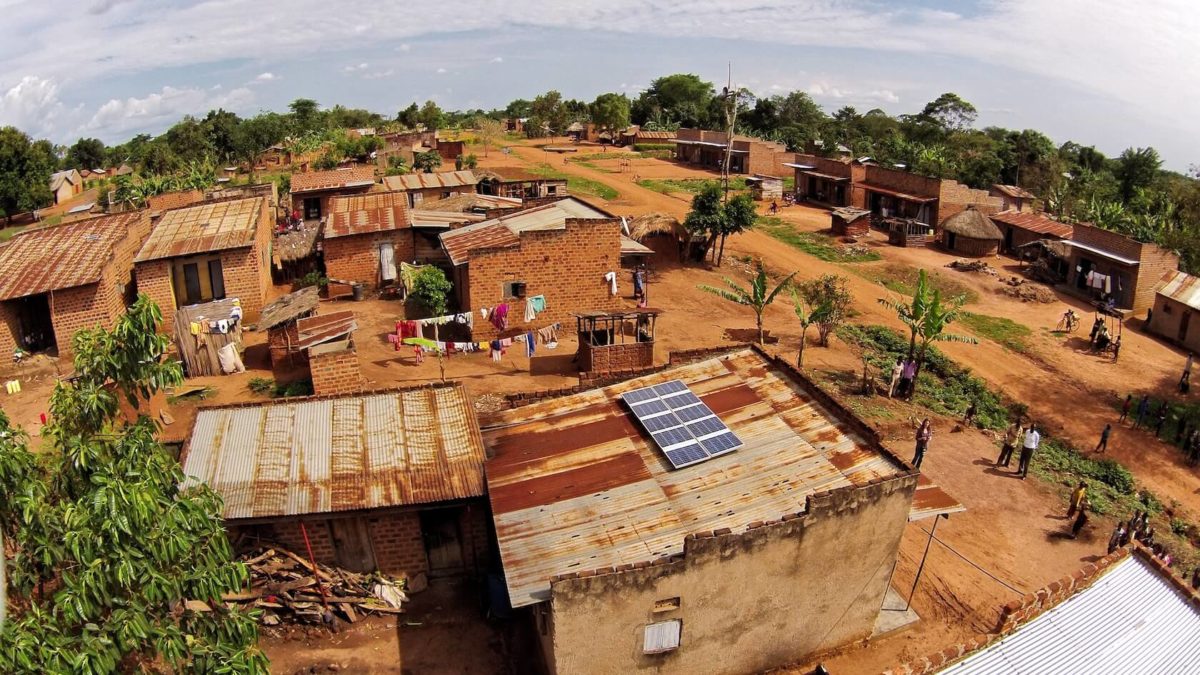
Cheap Solar Panels Spark a Renewable Boom sweeping the Global South

via thefreeonline at https://wp.me/pIJl9-GDT on 15 April 25 Telegram.. https://t.me/thefreeonline/2894

Rural women light up villages in Liberia

Facing trade barriers in the U.S. and other wealthy nations, Chinese solar firms are still exporting cheap panels to poorer countries, fueling a surge in solar installations in parts of the world.

Trump’s tariffs on China will likely make them even cheaper as export destined for to US may stop completely with over 140% tax and a billionaire owned media feeding anti Chinese hysteria and war fever.

China finally stopped promoting new Coal plants in Africa and is beginning to back local solar projects. However the boom there and worldwide is fired not by geopolitics but by low price and easy installation, followed by free electricity.

Data from energy think tank Ember details the rise of Chinese solar exports as poorer countries are taking advantage of cheap solar to shift away from costlier or less reliable sources of power.

Last year, Pakistan imported enough Chinese solar panels to expand its total power capacity by a third.

In Pakistan, farms and factories are rapidly installing rooftop panels to cope with rising energy costs.

This school in Pakistan uses solar power to run night classes // How Pakistan quietly became world’s biggest solar importer.

China's monthly solar exports, in gigawatts.
China’s monthly solar exports, in gigawatts. Ember

A similar shift is underway in southern Africa, where locals are turning to solar as drought saps hydropower. Last year, the region suffered its worst mid-season dry spell in more than a century.

When hydropower began to stutter, Zambia’s government called for a “solar explosion,” moving ahead on a slate of new projects that, if completed, would raise its power capacity by a third.

A report from Ember last year detailed how China is building solar panels faster than they can be deployed domestically. For manufacturers, the solution lies in broadening their market overseas, particularly in the developing world.

Sekhukhune’s Socially Owned Renewable Energy Campaign A Community’s Fight For Energy Download here.

The glut of cheap solar means poorer countries can speed their shift away from fossil fuels while shoring up their supply of energy, said Ember analyst Richard Black. He added, “It’s one of those rare times when there’s a win for just about everyone.”

Distribution of Solar Lights to the Rural Poor

African Lights: Solar Microgrids Bring Power to Kenyan Villages Small-scale microgrids are increasingly seen as the most promising way to bring electricity to the 1.3 billion people worldwide who currently lack it.

China’s Role in Financing the Energy Transition in the Global South Feb 13, 2025 As the world inches closer to the critical 1.5°C warming threshold, the demand for decisive climate leadership has never been more pressing. The US withdrawal from the Paris Agreement on January 20, 2025 has left a leadership void.

Top 5 solar energy inventions from Africa

China Endorses ‘Small and Beautiful’ Projects in Africa Despite Challenges

Floating solar power booms in South-East Asia as land becomes scarce …

Solar Village Project to bring solar power to seven villages

From Struggle to Sustainability: Lighting Up Lives in Uganda In the heart of Western Uganda, nestled among the lush landscapes of Hoima, communities once thriving on agriculture are now grappling with displacement and the…

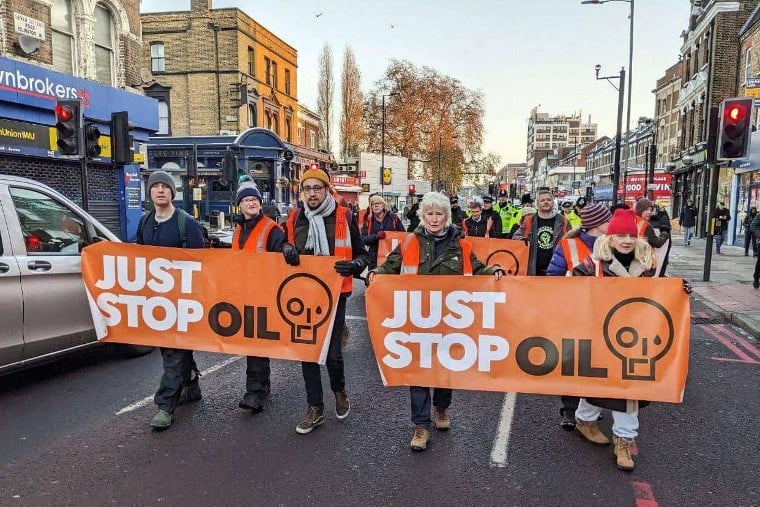
5 Ways Big Oil is Trying to Stop Us – 350.org

by 350.org (Join Us) on 3rd April 2025 via thefreeonlineat https://wp.me/pIJl9-GyV,

Activists from several climate movement associations, including 350org, Greenpeace, and Alternatiba, mobilized in France to halt all fossil fuel exploitation projects. Photograph by Claire JAILLARD.

The rise of the right has emboldened Big Oil like never before. Governments are rolling back environmental protections, greenlighting new drilling projects for coal, oil and gas, despite knowing that these polluting fossil fuels are behind the climate crisis we are all facing now. 

Meanwhile Big Oil is doubling down. Backed by powerful allies in the government and media, it’s using its might against activists, and employing every trick in the book to silence dissent. For instance, the fossil fuel industry is pouring billions into lobbying, lawsuits, and misinformation campaigns to maintain control of their false narrative. 

What is their goal, you may ask? To protect their sickeningly huge profits while destroying our communities and nature.

But we aren’t going anywhere. We are resisting and fighting back. Here’s five ways this battle is playing out – and what we can do about it: 

1. Weaponising the Law: Greenpeace vs. SLAPPs

Greenpeace is facing a devastating legal attack. A North Dakota jury in the United States has ruled against the organization in a defamation lawsuit brought by Energy Transfer, the company behind the destructive Dakota Access Pipeline (DAPL). The verdict: Greenpeace must pay more than $660 million – a move that could bankrupt one of the most influential environmental organizations in the world.

This is a classic lawsuit, known as a SLAPP (Strategic Lawsuit Against Public Participation), designed to intimidate, drain resources, and stop organizations like Greenpeace from engaging in peaceful protests for our people and the planet. You’ll see that the game is further rigged as most jurors in this case against Greenpeace have fossil fuel industry ties

Continue reading “5 Ways Big Oil is Trying to Stop Us – 350.org”

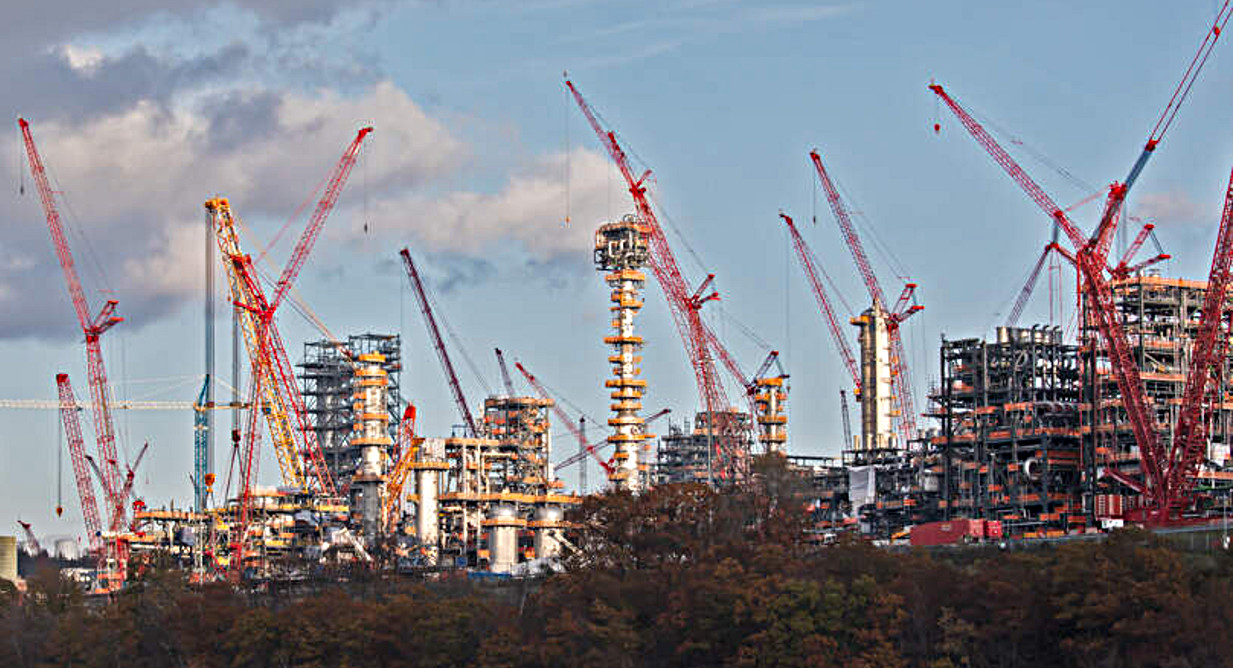
‘Toxic Texas Cowboys’ Erect World Plastics Monopoly – Exxon quietly plans new $8.6billion plastics plant

by Tik Root & Joseph Winters at GRIST via thefreeonline at https://wp.me/pIJl9-FX6

See also Fracking Gas and Oil to Supply Giant US Chemical Belt and Lock-in cheap Plastics Monopoly)

Most people don’t realize that part of gas extraction is a liquid condensate, the origin of plastics, which is being pumped, defying Climate Chaos, via the maze of fracking pipelines to the Gulf Coast, where the US is set on cornering the world plastics market, as well as shipping the LNG gas it has forced on its European vassals.

********

Exxon’s proposal for a new plastics factory on the Gulf Coast raises alarms for a community already dealing with pollution.

Diane Wilson had heard rumors for months that Exxon might be coming to Point Comfort, Texas, which sits on the Gulf Coast south of Galveston.

She recalls whispers about the global behemoth hiring local electricians and negotiating railroad access.

Two days before Christmas, the first confirmation quietly arrived: an application for tax subsidies to build an $8.6 billion plastics manufacturing plant.

Wilson found the news particularly alarming.

She has spent years fighting to clean up pollution from another petrochemical plant and won a $50 million settlement against its owners, Formosa, in 2019.

Exxon would build its proposed facility across from that factory and discharge waste into the same waterways Wilson has spent decades fighting to protect.

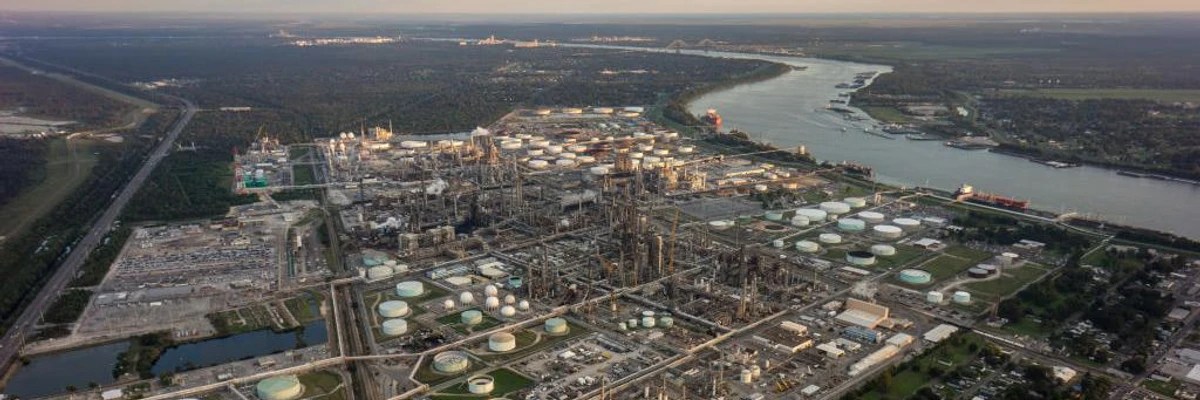
Green Light given for Texas mega frack-gas pipeline via poor areas despite LNG expansion «pause». – The Free 2024 –An aerial shot of the chemical plants and factories that line the roads and suburbs of the area known as «Cancer Alley»

Continue reading “‘Toxic Texas Cowboys’ Erect World Plastics Monopoly – Exxon quietly plans new $8.6billion plastics plant”

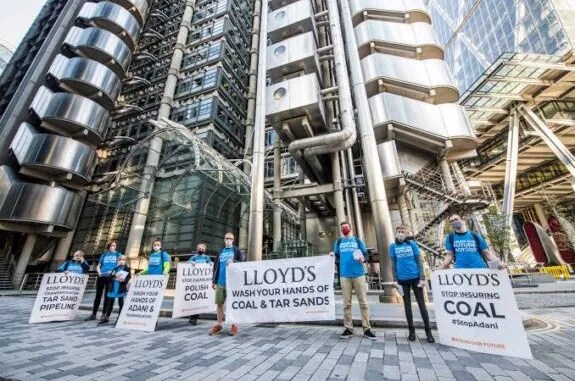
Dangerous climate radical, Lloyds of London, threatens the world economy

Look – the world authorities have got everything in hand. There should be no need to worry about that global heating nonsense.

by Antinuclear.net 3rd Feb 25 via thefreeonline at https://wp.me/pIJl9-FV4

We learned at Climate Summits Cop 28 and Cop 29 that our shares in oil, gas, coal are going to continue OK. And now, the world’s leader, the USA is going  to again withdraw from the landmark Paris climate agreement, so we can forget all that silly reductions emissions nonsense. And no more of our money to be grabbed by the United Nations Framework Convention on Climate Change.

Gee, America has just been saved from a “national energy emergency,” by President Trump’s foresight, with an executive order with its promise to “drill, baby, drill.” Saved in several other ways, such as removing incentives for electric cars.

Continue reading “Dangerous climate radical, Lloyds of London, threatens the world economy”

Pressure against Amazon soy moratorium threatens progress against deforestation

Dec 30, 2024 by Actualidad.R via thefreeonline at https://wp.me/pIJl9-Fkc Telegram https://t.me/thefreeonline

Pressure on Amazon soy moratorium threatens progress against deforestation
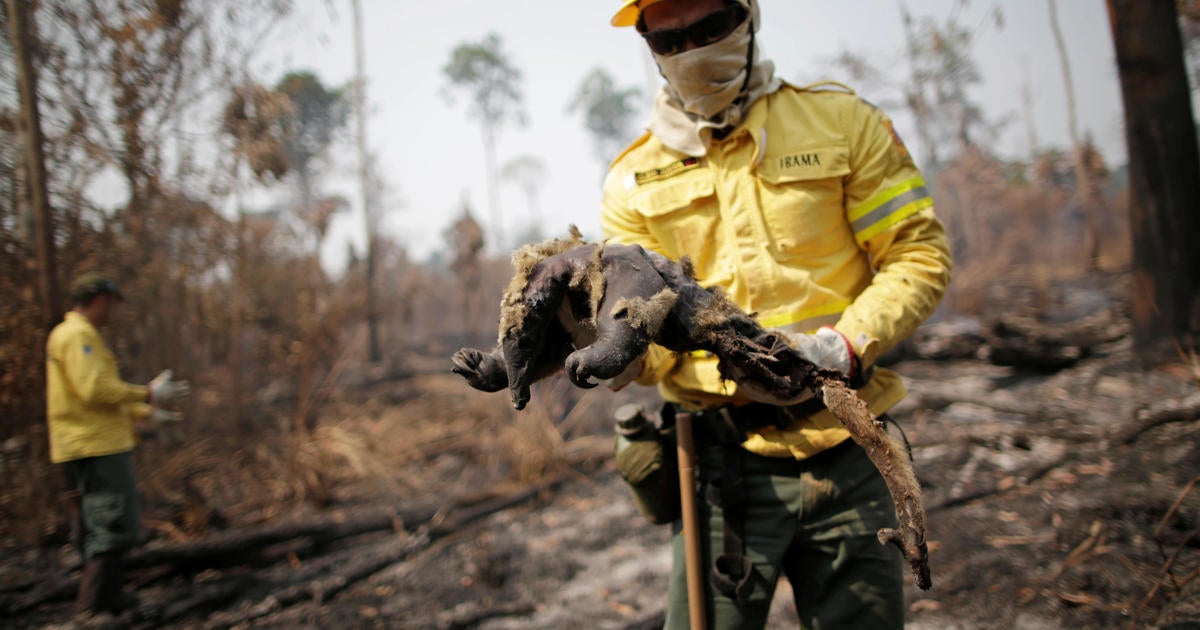
Fires in the National Forest of Brasilia, Brazil. September 3, 2024.Eraldo Peres / AP

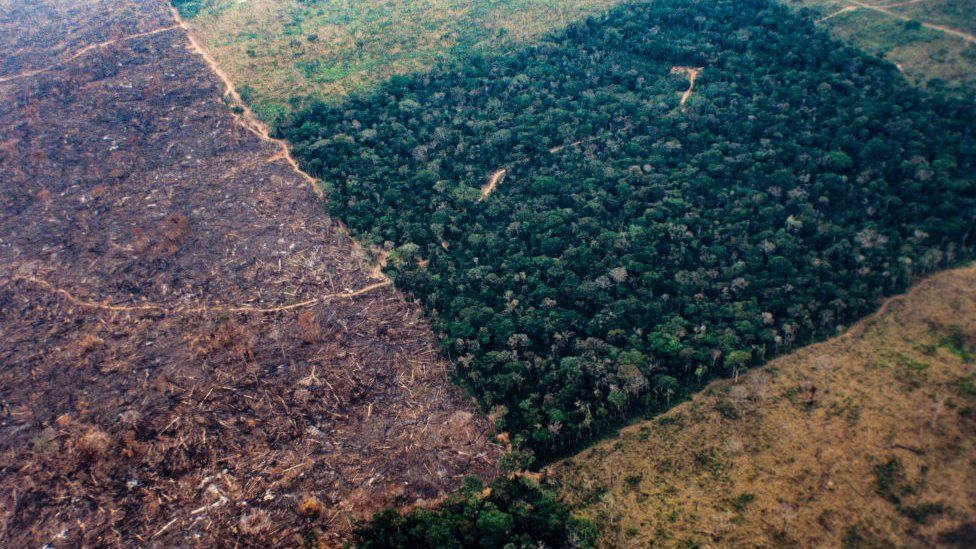
The historic soy moratorium, a voluntary agreement that since 2006 has been essential in Brazil to reduce deforestation in the Amazon, faces serious threats, as parliamentarians and agricultural producers seek to weaken or eliminate the restrictions imposed by the pact.

More than 60 organizations have published a manifiesto in defense of this moratorium, considered an example of how large-scale agricultural production can be combined with environmental responsibility.
Forest fires near Porto Velho, Brazil. August 23, 2019.Victor R. Caivano / AP

This pact prohibits soybean trading companies from purchasing grains that come from deforested areas, which has contributed to slowing agricultural expansion on forest lands.

Deforestation in Brazil: Soya farming

However, organizations such as Greenpeace Brazil, WWF-Brazil and the Socio-Environmental Institute (ISA) warn that the elimination of this agreement could trigger a significant increase in forest clearing.
Significant setbacks

According to the manifesto, if the pact is eliminated, this could bring with it significant setbacks in environmental protection policies, affecting both the Amazon and preservation initiatives throughout the country.

Among the risks mentioned, those associated with bills under discussion in the National Congress that seek to eliminate tax incentives for companies that implement environmental criteria, indirectly promoting deforestation, stand out.

Brazil’s Jair Bolsanaro calls new Amazon fires a “lie”

The document also describes attempts to end the moratorium as “irresponsible and ignorant”, especially in the context of the climate and biodiversity crises.

“There is strong pressure from the most conservative sectors of agribusiness to eliminate each and every restriction on predatory agriculture. The soy moratorium is the hot topic and the attack will not stop,” said Cristiane Mazzetti, coordinator of the Greenpeace Brazil Forests campaign.

Mazzetti urged participating companies not to give in to these pressures and not to spoil “the results of 18 years of the moratorium” that they helped to build.

“Zero deforestation is a growing market demand and the moratorium is a fundamental measure in this regard, which adds to the global effort to keep global warming at 1.5 ºC,” she added.

If you liked it, share it with your friends!