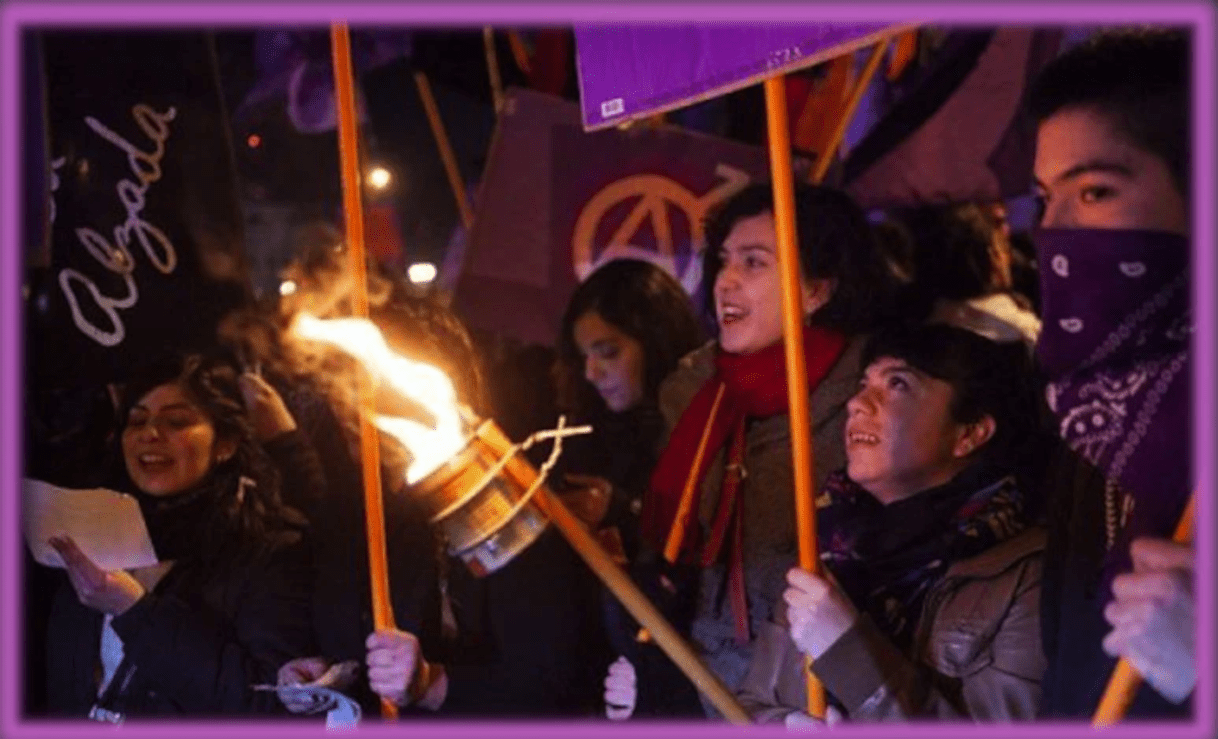
“Anarchafeminist Manifesto” by Chiara Bottici (from Laura Vicente: my personal reading).. Eng/Esp. * REPOST 25N-2024*

by Laura Vicente at https://pensarenelmargen and http://acracia.org/anarchism today 5 April, 2022 translation thefreeonline Telegram t.me/thefreeonline illustrations added

Not to underestimate, far from it, all the efforts that are made to build a feminist proposal from anarchism, everything is useful and, especially, in these times.

However, we have to recognize how difficult and slow it is to start it: sometimes due to a lack of ideas, also because activism in other fields leaves little time for the creation of solid anarcho(a)feminist groups with continuity over time. and, finally, often because confrontations dominate the feminist and anarchist space and time and energy are wasted on them.

In addition to reading the Manifesto, I attended the conference in Barcelona (March 7, 2022) in which the author synthesized her ideas, which she explains in a book [2] that has just come out and which I am immersed in reading these days. .

At least 11 women were murdered every day in Latin America and the Caribbean in 2023: ECLAC Al menos 11 mujeres fueron asesinadas cada día en América Latina y el Caribe en 2023: CEPAL

Why a Manifesto? The need for a Manifesto here and now is given by the existence of gendered bodies that are exploited and dominated throughout the world, not because it is presented as a plan that can be given once and for all and applied in all contexts.

The latter would be in flagrant contradiction to the anarchism that impregnates this Manifesto that must be open and in constant development, as the author proposes.

Why Anarchafeminist? Anarchism means that there is no arché (that there is no law, that there is no single principle that explains the oppression of women) and the anarcho concept is feminized to give visibility to the specifically feminist facet within anarchist theory and practice.

Content of the Manifesto (following the idea that the Manifesto is open and in constant development, it should be clear that this is not a summary of the Manifesto, I have made it my own and have chopped it up to my liking).

The author starts from the existence of a global androcracy (political and social supremacy of men). Although patriarchy, which means the law of the male head of the family, has been overthrown in many contexts, the power of men over the “second sex” (a term borrowed from Simone de Beauvoir’s ‘The Second Sex’) [3]) continues through death, the state, capital and the imaginal. Bottici dedicates seven of the nine chapters that make up her Manifesto to these four instruments of androcracy.

Death, the State, Capital and the Imaginal.

Regarding death (chapter 1), the author points out the existence of an authentic global gendercide against people perceived as women.
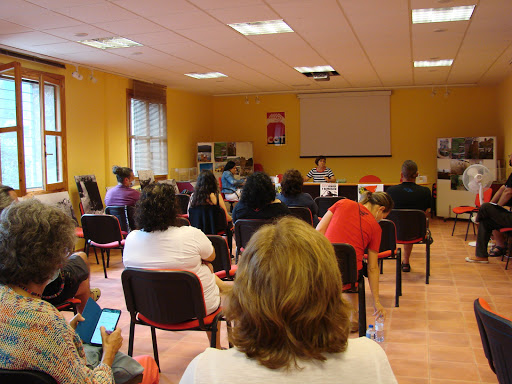
“Lucha y represión a las mujeres libertarias” – “Struggle and repression of anarchist women”

The second instrument of androcracy is the State (chapters 2 and 3) and its gender dimension. The State has always been a tool of a minority (where there are hardly any women) that governs the majority.

El Estado Opresor Es un Macho Violador/The Oppressive State is a macho rapist…-Chile Uprising

Capital (chapter 4) is the third instrument of androcracy, it needs the gender division of labor, in this way it can achieve the extraction of surplus value from productive salaried work and also from unpaid reproductive work.

The author points out that “women” is not an eternal essence or a pre-given object. Women are not objects but processes (the place of a becoming); they are not things but social relations.

Continue reading ““Anarchafeminist Manifesto” by Chiara Bottici (from Laura Vicente: my personal reading).. Eng/Esp. * REPOST 25N-2024*”
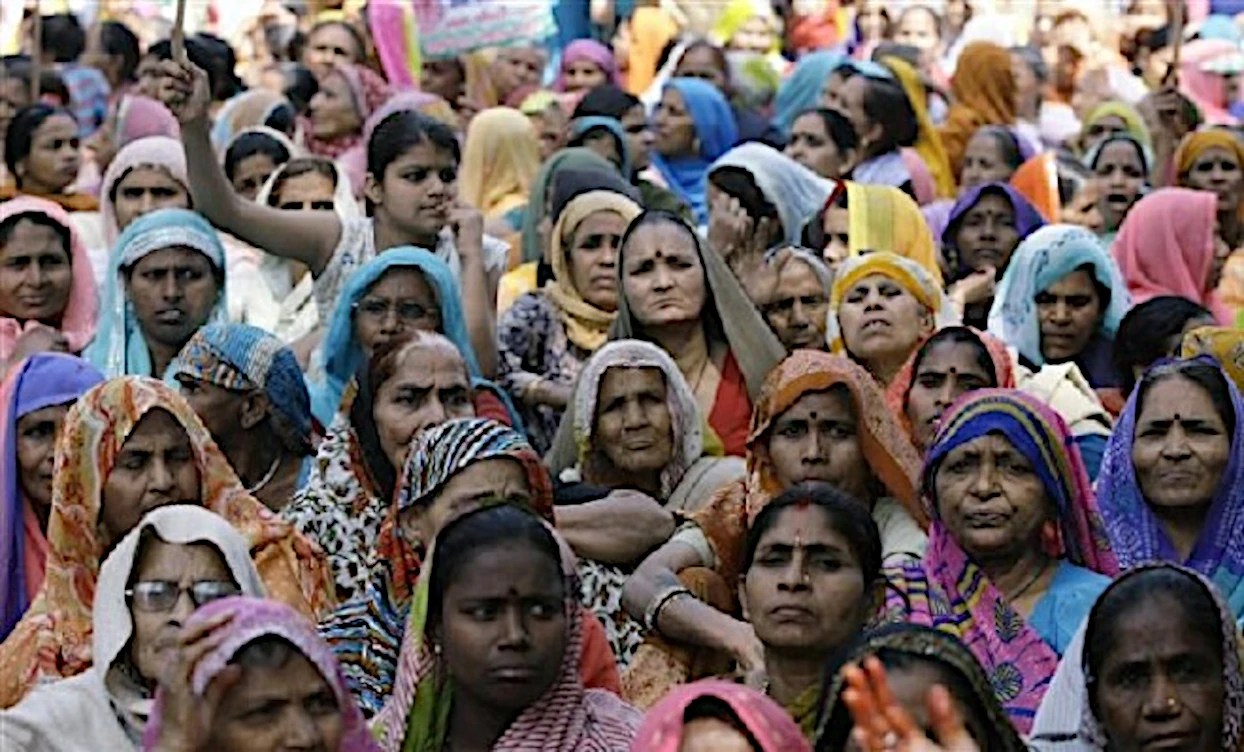
Dos mil millones de mujeres y niñas de todo el mundo no tienen ninguna #ProtecciónSocial

de almacubanita via thefreeonlinehttps://wp.me/pIJl9-Es2

Dos mil millones de mujeres y niñas carecen de acceso a cualquier forma de protección social, una brecha de género que cada vez se hace mayor en la mayoría de las regiones del mundo, de acuerdo con un informe de ONU Mujeres publicado hoy en vísperas de conmemorarse el Día Internacional para la Erradicación de la Pobreza.

De acuerdo con el informe «Aprovechar la protección social para la igualdad de género, la resiliencia y la transformación» aunque los niveles de protección social, -el conjunto de políticas que incluyen dinero en efectivo, protección contra el desempleo, pensiones y atención médica- han aumentado desde el 2015, los avances recientes han beneficiado más a los hombres que a las mujeres.

El informe desglosa las diversas protecciones necesarias para el desarrollo y bienestar de niñas y mujeres y los problemas que enfrentan para tener acceso a ellas como beneficios por maternidad.

A pesar de los avances, más del 63% de las mujeres en todo el mundo todavía dan a luz sin tener acceso a las prestaciones de maternidad. 

13 mapas sobre la situación de la mujer en el Mundo

Apunta que casi el 10 % de las mujeres y niñas vive en hogares en extrema pobreza, en comparación con poco más del 9 % de los hombres y los niños. Eso significa que hay 22 millones más de mujeres pobres que de hombres, específicamente en África subsahariana y Asia central y meridional.

Destaca que como resultado de la pandemia y otras situaciones en los últimos años, el progreso en materia de igualdad de género y erradicación de la pobreza se ha estancado, y el logro de la Agenda 2030 para el Desarrollo Sostenible «parece cada vez más improbable», detalla.

Los conflictos y el cambio climático empeoran el panorama. Las mujeres y las niñas en contextos extremadamente frágiles tienen 7,7 veces más probabilidades de vivir en hogares con ingresos inferiores a la línea de pobreza de 2,15 dólares.

En 2022, el número de mujeres y niñas que vivían en países afectados por conflictos alcanzó los 614 millones, un aumento del 50 % respecto de 2017.

Pero los problemas no son exclusivos de países pobres, ya que incluso en el ‘primer mundo’ se dan situaciones de estigma contra la mujer: así, en EEUU abundan las narrativas sobre los pobres como «perezosos” o “dependientes”, en los que se califica a mujeres, en particular las negras y migrantes, como “reinas de la asistencia social».

Casos específicos de Latinoamérica

En países como Perú y de Bolivia, se apuntan otros problemas como los centros de salud distantes y los largos tiempos de espera y el maltrato por parte del personal, lo que empuja a las mujeres a renunciar a los servicios de salud materna.

La discriminación histórica y actual amenaza la supervivencia….

En Ecuador algunas indígenas no cobraron los beneficios de transferencias de efectivo porque los guardias privados de la institución financiera que distribuía los fondos las maltrataban, de acuerdo con el informe, que también destaca avances que se han puesto en marcha en materia de prestaciones sociales.

Países como Mongolia han ampliado los beneficios de la licencia de maternidad al tiempo que ha reforzado la licencia de paternidad y en México y Túnez se han tomado medidas para incluir a los trabajadores domésticos en los sistemas de seguridad social.

El informe destaca algunas iniciativas positivas: de la República Dominicana destaca el programa de transferencia monetaria contra la pobreza

Callout to prevent a Massacre against the Liberation Process of Mother Earth in Cauca, Colombia

de Colombia, el Sistema Distrital de Cuidados de Bogotá, que tiene como objetivo reconocer, redistribuir y reducir el trabajo de cuidado no remunerado, principalmente realizado por mujeres;

de Uruguay, el Monotribut, creado como parte de una reforma tributaria destinada a unificar las contribuciones a la seguridad social, entre otros.