
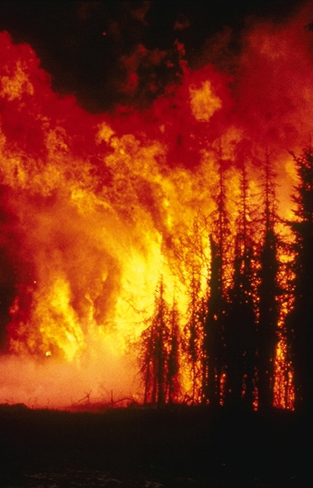
 “If developed countries don’t increase their reduction targets to 40 percent by 2020 without offsets, they are risking five [degrees] C of warming and a planetary emergency,” said Asad Rehman, head of the International Climate programme at Friends of the Earth.
representatives of civil society reminded delegates time and again. And it is likely even worse than that. Human civilisation has arisen and thrived during a time of little change in global temperature. The current temperature increase of 0.8 degrees C is only about half of what is now guaranteed even if all emissions ended today.
Even a 1.5 to 2.0 C temperature rise puts humanity effectively on a new planet, with a different climate than we have prospered in. Additional warming not only further threatens that prosperity it bring us far too close to the nightmare scenario of runaway climate change that will threaten our very survival, experts warn.
No developed country is close to the 40-percent cut that the science says is needed by 2020 to stay below two degrees C. ………………….READ here
African Agriculture and Food Supply at Risk
By Julio Godoy

BONN, Jun 18, 2011 (IPS) – Climate change and global warming are likely to have dramatically negative effects on African agriculture and food supply by reducing river runoffs and water recharge, especially in semi-arid zones such as Southern Africa, two new reports say.
READ here
CLIMATE CHANGE
Putting Children in Harm’s Way
By Miriam Gathigah
 Extreme weather has exposed thousands of children to potentially dangerous situations. Credit:Miriam Gathigah/IPS |
RIFT VALLEY, Jun 17, 2011 (IPS) – It is late afternoon and the lone figure of nine-year-old Nancy Chepkemboi trudges home. She is soaked to the bone and this now happens on a regular basis because of the unusually frequent and high rains, placing her at risk of contracting pneumonia. And possibly even malaria. Puddles of standing water are a common feature in these regions, and are responsible for the highest malaria infection rates.
According to the ministry of health, malaria is the number one killer of children under the age of five. Almost 34,000 Kenyan children die from malaria annually. And they are at higher risk for contracting malaria during the rainy seasons.
Climatically Kenya is experiencing two extremes. Due to climate change, there has been no rain in most parts of the country. The drought in the northeastern region has been labeled a national disaster. But in the Rift Valley and in Western Kenya the rains have been heavier than expected. And there is more to come. Read here

 The Free