
-
 ivan illichThe operation of a peer-matching network would be simple. The user would identify himself by name and address and describe the activity for which he sought a peer. A computer would send him back the names and addresses of all those who had inserted the same description. It is amazing that such a simple utility has never been used on a broad scale for publicly valued activity.
, i want the kids to learn what they want to learn
teacher – find out if people want to listen to you
hop around..
he’s totally saying.. school per choice
learning to read is a side productwould much rather people develop along the lines of which they have particular gifts
chapter 6 of deschooling society
learning websMany teachers and pupils, taxpayers and employers, economists and policemen would prefer not to depend any longer on schools. What prevents their frustration from shaping new institutions is a lack not only of imagination but frequently also of appropriate language and of enlightened self-interest. They cannot visualize either a deschooled society or educational institutions in a society which has disestablished school
we can depend on self-motivated learning instead of employing teachers to bribe or compel the student to find the time and the will to learn; that we can provide the learner with new links to the world instead of continuing to funnel all educational programs through the teacher.
http://www.infed.org/thinkers/et-illic.htm
It can be persuasively argued that Ivan Illich ‘transgressed a cardinal rule’ about what discourses are acceptable within education (Gabbard 1993). He questioned the ‘messianic principle’ that schools as institutions can educate.
________________
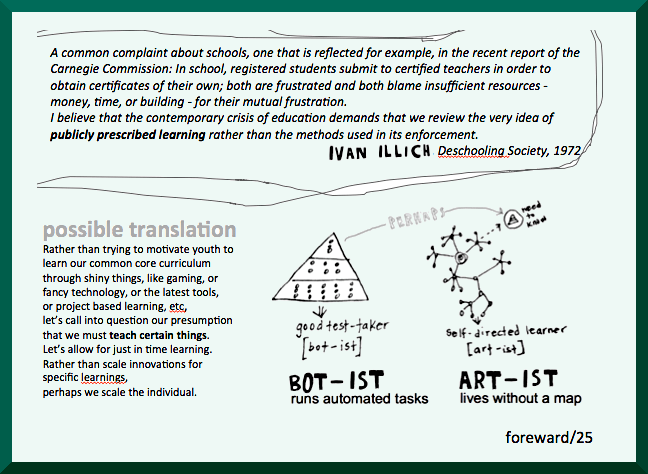
Defining children as full-time pupils permits the teacher to exercise a kind of power over their persons which is much less limited by constitutional restrictions than ever wielded by the guardians of other social enclaves. Their chronological age disqualifies children from safeguards which are routine for adults in a modern asylum – madhouse monastery or jail.
Classroom attendance removes children (teachers/admin) from the everyday world of Western culture and plunges them into an environment far more primitive, magical, and deadly serious. School could not create such and enclave within which the rules of ordinary reality are suspended, unless it physically incarcerated the young during many successive years on sacred territory. The attendance rule makes it possible for the schoolroom to serve as a magic womb, from which the child is delivered periodically at the school day’s and school year’s completion until he is finally expelled into adult life.
We are rather concerned to call attention to the fact that the ceremonial or ritual of schooling itself constitutes such a hidden curriculum. Even the best of teachers cannot entirely protect his pupils from it. Inevitably, this hidden curriculum of schooling adds prejudice and guilt to the discrimination which a society practices against some for its members and compounds the privilege of others with a new title to condescend to the majority. Just as inevitably, this hidden curriculum serves as a ritual of initiation into a growth-oriented consumer society for rich and poor alike.
– Ivan Illich, Deschooling Society
f

page from a be you book:________________
(via Matt Hern‘s Everywhere All the Time: A New Deschooling Reader):
Aaron Falbel – who knew both Holt and Illich – has a great write up (in Matt’s book) at the request of Illich to try to explain the difference between learning and education. bits of it: (p. 62-64)
I realize that education is a difficult word to pin down – some people may use it in the way that i use the world learning. But I believe that John Holt is right in saying that most people use education to refer to some kind of treatment. (Even self-education can reflect this: a self-administered treatment.) It is this usage that I am contrasting with learning, and this idea of people needing treatment, whether carried out in schools or homes or wherever, that I wish to call into question.
Learning is like breathing. It is a natural, human activity: it is part of being alive A person who is active, curious, who explores the world using all his or her sense, who meets life with energy and enthusiasm – as all babies do – is learning. Our ability to learn, like our ability to breathe, does not need to be improved or tampered with. It is utter nonsense, not to mention deeply insulting, to say that people need to be taught how to learn or how to think. We are born knowing how to do these things. All that is needed is an interesting, accessible, intelligible world, and a change to play a meaningful part in it.
If the air is polluted, then it can become difficult to breathe. ..Today our social environment is thoroughly polluted by education – a designed process in which one group of people (educators, social engineers, people shapers) tries to make another group (those who are to be educated) learn something, usually without their consent, because they (the educators) think it will be good for them. In other words, education is forced, seduced or coerced learning – except that you can’t really make another person learn something that he or she doesn’t want to learn, which is why education doesn’t work and has never worked.
(never worked for authentic learning, it’s worked to gain efficiency, it has an A+ for what it set out to do, contolling,cowing, dumbing down and preparing us to serve)
It is ironic that education, carried out by well-meaning people hoping to produce or enhance learning, ends up attacking learning. But this is precisely what happens, despite all the good intentions. In the climate of education, learning is cut off and disembedded from active life. It is
divorced from personal curiosity
and is thus profoundly
denatured.
Learning shrivels as it becomes the result of a process controlled, manipulated, and governed by others.

_______________________
- thinking i might start sharing my detox videos on youtube. (thank you to Venessa. emergent by design. i’m emerging. take it in if you like.) i think i need to share more. i think i think i’m being humble by not sharing. i think others might think i’m ridiculous for sharing. that it’s a show. maybe it is. i don’t think so. but i guess i don’t care about that so much as i care about freeing people up. so i’m doing all i can. today.to me… using our heads (and hearts) is a vital way to free us up. we have to start taking charge, choosing.so – to me detox is huge .this is the first one i did on my own laptop, (not in our little detox booth):and this is the last one to date. as in i did it today, .. after the whole illich audio revisit suggested by thomas:

The Thought of Ivan Illich Today
Wed, 08/07/2013 – 11:52 David Bollier news and perspectives on the commons
I had always admired Ivan Illich for his penetrating insights into the pathologies of modern life and the human condition. Like dormant seeds, they sprouted at just the right time in my life and helped me develop a vocabulary for better understanding the commons.
The recent conference in Oakland – “After the Crisis: The Thought of Ivan Illich Today,” on August 1-3 — gave me an enlarged, fresher understanding of Illich’s life and writings. Below I’d like to share some of the highlights of the conference, which can help us recover and rejuvenate Illich’s thought for our time. (Illich wrote his most famous works in the 1960s and 1970s, and died in 2002.).(…)
Illich “saw in modern life and its pervasive dependence on commodities and services of professionals a threat to what it is to be human. He cut through the illusions and allurements to better ground us in what it means to be alive. He was joyful but he didn’t turn his gaze from human suffering.”The Oakland conference consisted of ten speakers, most of whom had known Illich as collaborators and sparring partners. I can’t summarize all of the presentations or capture all of their subtle complexities, but let me excerpt a handful of thoughtful comments.
Institutional Dispossession of Self
Richard Westheimer, a former public school teacher and schools consultant, noted a theme that Illich often focused on – the ways in which “we define ourselves by what we lack, and therefore our dependencies.” Medicalized childbirth is one such example – “our inaugural ritual inducting us into our church of neediness,” said Westheimer, an advocate for home birth. He described the ways in which hospitals use machines and medical charts to “establish and verify their institutional and professional relationship to us.” This process is how “medical institutions constitute the patient apart from their consciousness” and human agency – the beginning of institutional dependence.
This dynamic plays out in many areas of life, particularly education, where the empty rituals of “education” and the quest for marketable credentials eclipse real learning. Westheimer blames this reflexive dependence on institutions as a key factor in the student loan/indebtedness crisis. Some 45% of US college graduates are now working in jobs that don’t require degrees, and another third are working in jobs that require degrees purely as a credential (but are otherwise irrelevant to the specific job). Formal schooling has become a marketable ritual. Learning occurs accidentally or elsewhere.
Other speakers echoed this theme. Jean Robert, an activist and architect from Cuernavaca, Mexico, focused on how economics today amounts to “a painfully acquired form of blindness” that ignores the “moral sentiments” that Adam Smith had once celebrated as central to humanity. But in the hands of economists, the sympathies that we feel for other human beings were turned into a formal economic theory about the “envy of riches.”
Robert pointed out that there used to be a clear distinction between “the economy” and subsistence, the latter being a form of household provisioning that lay outside of the marketplace. But economics aggressively annexed the idea of subsistence. This destroyed the distinction that once recognized self-provisioning as a separate endeavor that connected us to each other and to nature. Illich’s contribution was to re-establish and re-articulate this distinction. In so doing, he brought a focus back to the human body and human sensibilities in economic life. He often called this the vernacular domain.
Robert pointed out the consequences of internalizing the categories of mainstream economic thought: It warps our self-perception. “To be enmeshed in a system is to charge your perception of yourself,” Robert said. Our sense of “autoception” – how we form our identities and relationships to others – becomes skewed. This is why we need to “reclaim the vernacular,” he said…. (….)
The Dangers of Totalizing Systems
Trent Schroyer, who has been active in exploring alternative economic cultures — most notably as the former president of “The Other Economic Summit” and the author of Beyond Western Economics — emphasized this theme as well. Citing Illich’s criticisms of “development” as material, economic progress, Schroyer described development as “a form of secular messianism” that is profoundly “autistic.” That is, it is incapable of integrating emotions and consciousness into the larger institutional system. He sees four ways to try to combat this trend: the regeneration of publics, the cultivation of non-consumer perspectives, a focus on livelihoods and the relocalization of economics. Notably, all of these are commons-based approaches.
Gustavo Esteva, the founder of Universidad de la Tierra and the author of The Oaxaca Commune and Mexico’s Autonomous Movements, elaborated on this theme. He noted Illich’s conviction that “systemic thought is terribly dis-incarnating,” meaning that it elevates abstract universals at the expense of our individuality and humanity. Illich pointed out that the Spanish royalty tried to eliminate the great diversity of local and regional languages in 15th century Spain by establishing a formal, state-sanctioned system of grammar and syntax. The goal, quite literally, was to override and eliminate locally based ways of seeing, thinking and communicating. It was a standardized language of power: a pattern that has recurred countless times since.
“Systemic being is disincarnated being,” said Esteva. The most powerful antidote, according to Illich, was friendship. “Real friendship is heretical and political,” said Esteva, explaining that its subversive qualities lie in its ability to help us see ourselves truly: “Now I know who I am because I can see myself in my friends.”
So, too, with the commons: “A commons is not a relationship to the land, but a relationship with each other, said Esteva. “That is the way to challenge the system: You are the relationship itself” – an embodied, personal relationship that cannot be corrupted by systems of power. To the extent that systematic thought misrepresents and corrupts how we feel and interpret lived experience, said Esteva, “in the end, there is only poetry.”
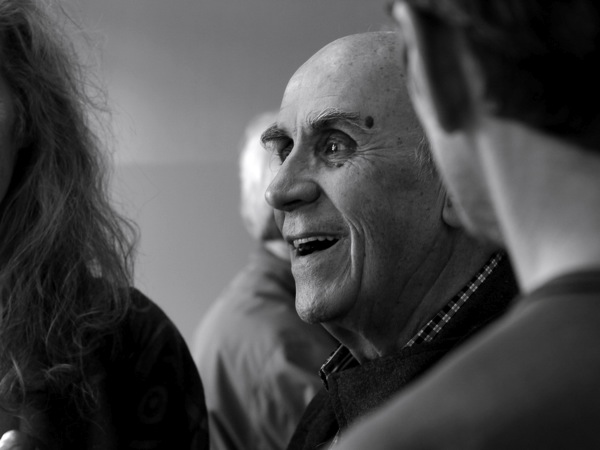
Recovering our sense of social relationship is a key challenge to Illich, said many speakers, because it is the only way that we can recover our humanity and our sense of ecological limits. “The systematized ‘we’ is a corruption of the carnalized communion of people,” said Jean Robert. “Only within limits can the ‘we’ be made carnate.” Or as Gustavo Esteva put it, citing Illich, we need to recover “a disciplined renunciation that is defined by the community.”
Esteva noted that in oral cultures, there is no “I” and “you” in the modern sense; there are, however, a variety of terms with different shadings to describe “we.” There are terms for “a few of us,” and for “all of us,” and for “the community as a whole,” for example. The term comida in Spanish does not just refer to “eating a meal,” but to the many activities associated with growing, preparing, serving the food and eating it socially, so that comida amounts to a symbol of a place where a given community of people lives. “Comida reinforces people’s relationship to the food, to the place and to each other,” said Esteva.
Illich and Marx
In his formal talk, “Commonism: Enclosing the Enclosers,” Esteva observed that Marxists don’t read Illich because they see him as a reactionary priest with a narrow agenda, and Illicians don’t read Marx because they often see no clear connection between him and Illich. But Esteva argued that “the combination of their ideas offers the best clues to understanding the current conditions of the world and particularly to react to the horror falling on us.”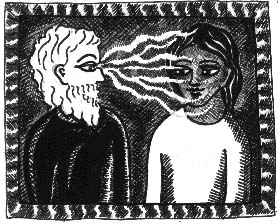
Marx was not the only major influence on Illich, Esteva conceded, agreeing that Gandhi, St. Thomas and others were also important models for him. But Esteva believes that “Illich “started when Marx ended and followed the direction of Marx’s thinking.” For the speakers of this conference, however, it remained an open question just how influential was Marx on Illich’s thought.
However one interprets Marx’s influence, however, it was pointed out that Illich’s perspective is valuable today precisely because he provides a way out for people caught between Marx’s Promethean frame of thought and the perception that alternative systems of production are impossible. Illich functions as a corrective to over-reliance on Marx while still recognizing that Marx’s theories about human alienation are powerful.
I hope that Esteva’s talk is put online at some point because it is a rich, scholarly account of his interpretation of Illich, especially from a Latin American perspective. Esteva, who is half-Zapotec, an indigenous culture in the Valley of Oaxaca, Mexico, had a lot to say about the Zapatistas, their resistance to modern capitalism and their ingenuity and courage in creating a new way of living.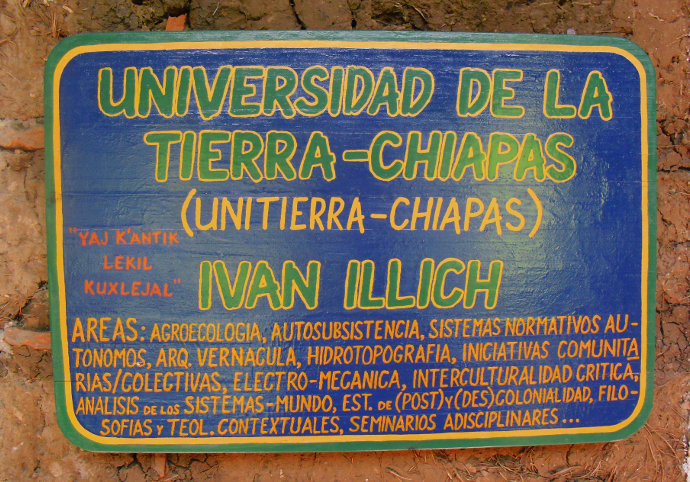
Illich on Religion and Aliveness
There was much else said at this exciting, vigorous conference, including a series of talks on Illich’s views about politics and religion by Carl Mitcham, author of “After Illich: The Politics of Energy”; Wolfgang Palaver, an Austrian theologian at the University of Innsbruck, Vienna; and David Cayley, formerly of the Canadian Broadcasting Corporation who produced a series of interviews with Illich, The Rivers North of the Future.
From that day, let me recount only the stories about Illich’s revulsion against the “idolatry of life.” This refers to the tendency of people to make pious commitments to universal, abstract ideas of “life” – which is something very different from lived experience and human presence. “Life” often serves as a bloodless substitute for the sense of “aliveness” that Illich always sought to cultivate. He wanted to honor the sense of immediacy and recognition of the Other that is the essence of aliveness. He wanted us to recognize our identities as biological creatures living in particular circumstances and within ecological constraints.
The possibility of grace can only emerge through aliveness, Illich said, because that is the only place in which the artificial boundaries (social, political, intellectual) that separate us can be overcome. This is the lesson of the parable of the Good Samaritan: universal benevolence is less important than authentic caring and connection at an existential level. The “idolatry of life” is often used to prevent such human communion and mask pain and tragedy. Illich believed that the only way to open ourselves to grace is by honoring aliveness.
I found myself wondering throughout the conference how Illich’s thought applies to contemporary politics. Perhaps Governor Brown said it best when he said that Illich’s thought is not reducible to politics, but it is highly illuminating of contemporary politics.
For more on Illich’s writings, you might want to visit David Tinapple’s website, and a collection of Illich writings posted at the Preservation Institute website. You may also want to check out John Verity’s New Scare City blog which also has a great collection of Illich materials as well as some photos from the Illich conference in Oakland.
Related articles
- Energy & Equity by Ivan Illich (henrycitiescyclescars.wordpress.com)
- Modern Medicine by Itself is an Epidemic (wariscrime.com)
- Ivan Illich and the contemporary commons movement (resilience.org)
- Summer Reading: Deschooling Society (tomselt.wordpress.com)
- Disestablish Public Education (joseywales1965.wordpress.com)

 The Free
Reblogged this on The Free.
LikeLike