If we accept that our predator capitalism is rushing into financial and environmental disaster we need an equally vigorous and attractive alternative that people can turn to as things get worse. One possibility is local ‘stamp-scrip’ (freemoney), which gradually loses its value if not spent, so people spend it immediately and the local economy booms. There’s no use hoarding capital in this scheme.
Stamp-scrip money was used with amazing success in Austria during the great depression, where, for example, the bankrupt town of Worgl was transformed in just 14 months (before the system was banned by the state and banks), but less well in the US, where it was tried in a different way.
Now many alternative money schemes are searching desperately for a way to ‘take off’ and become widely accepted. One of the most interesting is FairCoin, from the FairCoop, a version of Bitcoin adapted to financing cooperative projects. FairCoin has now been joined by the biggest Catalan integral Coop, CIC, who use the Ecu, one of many local currencies now growing in Iberia.
The idea is to short circuit the ‘fiat’ debt currencies and interest regimes controlled by the banks We look here at the possibility of trying a modern stamp-scrip currency. And reprint a brilliant article by George Monbiot in The Guardian.
What is lacking now is a study of how stamp-scrip could be used digitally, perhaps adapted to a Faircoin scheme, and how it could be applied to the dozens of local money coops , in Greece, Spain and across Europe.
here first is an imaginary example of how a modern stamp-scrip (freemoney)scheme could work:
Lets say we have a Cooperative of with 1000 members which uses its own local currency, the CuCu. which you can exchange for euros. We produce and distribute eco food, have a Lets scheme, recycling workshops and all sorts of cultural activities.
We also control 5 hectares of occupied waste land, now with permission of the owner. We’d like to cultivate it and pay wages, there is 40% youth unemployment. but we have no cash.
First we need to scrape together whatever cash we can to guarantee our freemoney (stamp-scrip), just in case it doesn’t work out. Say we get 2000 euros. Then we digitally issue our freemoney, say in 200 units of 10, calling them, say, Freecus, and recruit some market gardeners willing to be paid all or partly with this money.
The freemoney (stamp-scrip) loses its value, say 2% a month if you don`t spend it (in our local economy) or pay the 2% ‘stamp’. At the end of the year you can change it back to euros.
We adapt a program similar to Google Wallet where you store your digital freecus, and which automatically pays the 2% ‘stamp’ (which is bought from the Coop) from your separate Paypal account every month, if you haven’t spent it.
To simplify this we can forget about the stamps, our program just pays the Coop 2% of the face value of our freecus every month to keep them valid, it’s an ‘anti-hoarding’ charge. This ‘stamp money’ was used in the Worgl experiment for a free food kitchen for 220 people. (In this case the scheme would go on for 50 months).
This is what they did in Worgl and other towns, (till the system was made a criminal offense), causing a local boom with money circulating 12 times faster and all sorts of municipal projects being completed in record time and hundreds of other towns interested in following suit. (see details below).
By this tricky method we avoid the catch 22 of fiat money and bank control. Would it work out? Surely it’s worth a try!! If it were done by a semi bankrupt sovereign state, like Greece or Spain, it could be hard to make illegal.
Freemoney (stamp-scrip) schemes could be a useful tool on the road to real money-free gift economies, which need a real social revolution to be accepted. Many indigenous societies still practice, at least partially, the gift economy, and under capitalism we still revert to it whenever possible (eg. when you invite the neighbours over for drinks you never think of charging them at a profit and renting out the glasses!)
On this blog we have a literary example of an advanced money-free system in ‘The Free’, where free credit cards are issued in the coop and a personal levels system replaces status based on money, the book is a free download. (See glossary entries on Wurts, Personal Levels and Free Credit Cards here: glossary/ and extracts here: The Free.. visiting a money-free Social Revolution ).
by thefreeonline 19/02/15

we begin with a quote from the George Monbiot article:
from: ‘Hope Among the Ruins. An astonishing money creation scheme from the 1930s that could help to save the Greek economy’.
published in the Guardian 18th February 2015
………………..”But perhaps the biggest transformation could happen at the local level. Greece already has some local currencies(6), that have kept money circulating in several towns and cities, as it cannot be siphoned away. (There are similar systems in Britain, such as the Bristol and Totnes Pounds(7)). But strangely they do not make use of the thrilling, transformative system that almost saved Europe from fascism; the currency developed by the economist Silvio Gesell called stamp scrip. It is explained in Bernard Lietaer’s magnificent book The Future of Money (you can read it embedded here below)(8). In its original form, stamp scrip was a piece of paper on which a number of boxes were printed. The note would lose its validity unless a stamp costing 1% of its value was stuck in one of the boxes every month. In other words, the currency lost value over time, so there was no incentive to hoard it. Stamp scrip projects took off across Germany and Austria after national currencies collapsed in the early 1930s. In 1932, for example, the Austrian town of Wörgl was almost broke, unable to finance public works or to support its destitute population, until the mayor heard of Gesell’s proposal.
He put up the town’s tiny remaining fund as collateral against the same value of stamp scrip, and used it to pay for a building project. The workers then passed on the currency as quickly as they could.
Like the magic pudding, this little pot of money kept circulating, enabling Wörgl to repave the streets, rebuild the water system, construct new houses, a bridge and even a ski jump. In the 13 months of the experiment, the 5,500 scrip schillings in circulation were spent 416 times, creating between 12 and 14 times as much employment as the standard currency would have done(9). Unemployment vanished, and the stamp fees paid for a soup kitchen feeding 220 families.
The governments of Germany and Austria, profoundly threatened by the success of these projects, shut them down. Employment collapsed once more, and a twisted but charismatic Austrian painter found the opening he had been waiting for. When the great American economist Irving Fisher examined these experiments, he concluded that “the correct application of stamp scrip would solve the depression crisis in the US in three weeks!”(10). Roosevelt’s government, aware that such currencies could invoke a massive loss of federal power, promptly banned it.
Could these ideas be useful to Greece? Could they be of relevance in other parts of Europe? Even perhaps in Scotland, where the currency issue was unimaginatively fudged before the referendum? I don’t know. But if Greece leaves the eurozone, it could open up a world of possibility to which other nations have closed their minds.
References:
- http://www.theguardian.com/world/2015/feb/16/brussels-blunt-bargaining-presents-austerity-as-greeces-only-option
- http://www.nytimes.com/2013/08/10/business/global/in-germany-little-appetite-to-change-troubled-banking-system.html?pagewanted=all&_r=0
- http://www.ft.com/cms/s/0/7f000b18-ca44-11e3-bb92-00144feabdc0.html#ixzz2zsutuZis
- http://www.primeeconomics.org/products/just-money-paperback
- http://www.theguardian.com/world/2013/jan/02/euro-greece-barter-poverty-crisis
- http://bristolpound.org/
- http://www.lietaer.com/writings/books/the-future-of-money/
- Cited in http://www.lietaer.com/writings/books/the-future-of-money/
“I love not man the less, but Nature more.”

Stamp Scrip (freemoney)– The Threat of a Good Example?
by Martin Oliver
On July 5th 1932, in the middle of the Great Depression, the Austrian town of Wörgl made economic history by introducing a remarkable complimentary currency. Wörgl was in trouble, and was prepared to try anything. Of its population of 4,500, a total of 1,500 people were without a job, and 200 families were penniless.
The mayor, Michael Unterguggenberger, had a long list of projects he wanted to accomplish, but there was hardly any money with which to carry them out. These included repaving the roads, streetlighting, extending water distribution across the whole town, and planting trees along the streets.
Rather than spending the 40,000 Austrian schillings in the town’s coffers to start these projects off, he deposited them in a local savings bank as a guarantee to back the issue of a type of complimentary currency known as ‘stamp scrip’. This requires a monthly stamp to be stuck on all the circulating notes for them to remain valid, and in Wörgl, the stamp amounted 1% of each note’s value. The money raised was used to run a soup kitchen that fed 220 families.
Because nobody wanted to pay what was effectively a hoarding fee, everyone receiving the notes would spend them as fast as possible. The 40,000 schilling deposit allowed anyone to exchange scrip for 98 per cent of its value in schillings. This offer was rarely taken up though.
Of all the business in town, only the railway station and the post office refused to accept the local money. When people ran out of spending ideas, they would pay their taxes early using scrip, resulting in a huge increase in town revenues. Over the 13-month period the project ran, the council not only carried out all the intended works projects, but also built new houses, a reservoir, a ski jump, and a bridge. The people also used scrip to replant forests, in anticipation of the future cashflow they would receive from the trees.
The key to its success was the fast circulation of scrip within the local economy, 14 times higher than the schilling. This in turn increased trade, creating extra employment. At the time of the project, Wörgl was the only Austrian town to achieve full employment.
Six neighbouring villages copied the system successfully. The French Prime Minister, Eduoard Dalladier, made a special visit to see the ‘miracle of Wörgl’. In January 1933, the project was replicated in the neighbouring city of Kirchbuhl, and in June 1933, Unterguggenburger addressed a meeting with representatives from 170 different towns and villages. Two hundred Austrian townships were interested in adopting the idea.
At this point, the central bank panicked, and decided to assert its monopoly rights by banning complimentary currencies. The people unsuccessfully sued the bank, and later lost in the Austrian Supreme Court. It then became a criminal offence to issue ’emergency currency’.
Unterguggenberger was opposed to both communism and fascism, championing instead what he referred to as ‘economic freedom’. Therefore, it was deeply ironic that the Wörgl experiment was first branded ‘craziness’ by the monetary authorities, then a Communist idea, and some years later as a fascist one.
The town went back to 30% unemployment. In 1934, social unrest exploded across Austria. In 1938, when Hitler annexed Austria, he was welcomed by many people as their economic and political saviour. http://www.newciv.org/nl/newslog.php/_v105/__show_article/_a000105-000002.htm
The Wörgl Experiment.. Wikipedia
Wörgl was the site of the “Miracle of Wörgl” during the Great Depression. It was started on July 31, 1932, with the issuing of “Certified Compensation Bills”, a form of currency commonly known as Stamp Scrip, or Freigeld (FreeMoney). This was an application of the monetary theories of the economist Silvio Gesell by the town’s then-mayor, Michael Unterguggenberger. The experiment resulted in a growth in employment and meant that local government projects such as new houses, a reservoir, a ski jump and a bridge could all be completed, seeming to defy the depression in the rest of the country. Inflation and deflation are also reputed to have been non-existent for the duration of the experiment.[citation needed]
Despite attracting great interest at the time, including from French Premier Edouard Daladier and the economist Irving Fisher,[3] the “experiment” was terminated by the Austrian National Bank on the September 1, 1933.[4][5]
In 2006 milestones were placed, beginning from the railroad station through the downtown, to show this history.[6]
Microfinance without the finance: self-liquidating currency
by Prof. Jonathan Warner
In what follows, I shall assume, for the purposes of illustration, that the currency of the country is the dollar, that the certificates are of one dollar value, and that a 2c stamp is used, which must be affixed for each transaction, or every seven days if the scrip has not been used in the interim. The community decides on the project, and the cost. Scrip for that amount is printed and used by the local council to pay those working on the project. Stamps are also printed, and sold at face value to anyone who wants them. (For the sake of convenience, businesses would be encouraged to keep a stock of stamps to make things easier for their customers.) The workers receiving the scrip use it to purchase things they need in the local community, taking a small discount on the face value (2c on the dollar, or 2%) which is used to pay for the stamp.
Thirdly, the issue of scrip needs to be limited to the capacity of the community to absorb it. In 1930’s Iowa, when wages were around 20c per hour for manual work, Zylstra thought that $1 per person per year would be a sustainable amount. Experience suggested, though, that this was too high – perhaps 25c per person per year was nearer the mark. At the time, this would translate into something like 1-1¼ hours’ wages per head of population, which might therefore be an appropriate limit. Thus if a town of 5,000 people with average wages for manual labour were 40c per hour, the maximum scrip issue should not exceed $2500. If $1000 were necessary for the purchase of raw materials, and workers paid at the average rate, the scrip issue could provide 3750 hours of employment, or a month’s work for around 20 people[ix]. Fourthly, there needs to be a clearing-house arrangement to cope with the problem of “congestion” – where some businesses end up with more scrip than they can use. Zylstra originally thought the banks could play that role: they were allowed to buy scrip from businesses with too much at 96c per dollar, then sell it to the public at 97c without the need to attach a stamp. This encouraged banks and their customers to use the scrip (they both made 1c on the deal), but left the merchants covering these costs.
Perhaps a better alternative is to have the issuer accept the scrip back at 98c per dollar, and then use it (affixing the stamp) in its own transactions, or (as often happened in the 1930’s) as payment of its workers[x]. It is, of course, very helpful if the issuer will accept the scrip in payments made to it (for local taxes or other bills, for example).
Conclusion
To the best of my knowledge, the idea of stamp scrip-based microfinance for development has yet to be tried. The only way to see whether it has possibilities is to try a pilot project, to see if it works. The necessary preconditions for success have been sketched above:
- · The local economy must be significantly money -based
- · The project financed by the scrip issue must require few external inputs
- · The community must be willing to accept the scrip for transactions
- · The scrip issuer is seen as being trustworthy
- · The scrip issuer should provide a way for the scrip to be used in its own transactions
Whether these conditions are jointly sufficient for success can probably only be determined by giving it a try. Stamp scrip (freemoney) is certainly not a panacea, and, as the experience of the 1930’s demonstrates, is likely to work only if certain restrictive conditions apply. Nevertheless, it could potentially be a useful addition to the microfinancing toolkit. What is needed is a pilot project to test the idea more fully…”
The Future of Money
 The Future of Money: Creating New Wealth, Work and a Wiser World (London: Random House, January 2001), also translated in eighteen other languages. This book is out of print, but a few copies are still available on Amazon UK. A digital version of this book can be read here and is downloadable free from Scribd
Random House Press Release (27/10/1999): A brilliantly clear-sighted analysis of how on-going money innovations in dozens of countries around the world are proving that they can resolve key societal problems such as: jobless growth, community breakdown, the economic consequences of an aging society, the conflict between short-term financial thinking and long-term sustainability, and monetary instability itself. This book provides pragmatic solutions to each one of these issues.
Reviews and more info on book here http://www.lietaer.com/writings/books/the-future-of-money/
Related to Stamp Scrip (freemoney)
- Comment on the Woergl Experiment with Community Currency and Demurrage by Thomas H. Greco, Jr. May 2002
- Microfinance without the finance: self-liquidating currency
- The Woergl Experiment With Depreciating Money
by Alex. Von Muralt - A French View of The Woergl Experiment: A New Economic Mecca
by M. Claude Bourdet - The End Results of the Woergl Experiment
by Michael Unterguggenberger, Burgomaster of Woergl - Stamp Scrip in the Great Depression: Lessons for Community Currency for Today?/
- we reblog the FairCoin..FairCoop article here
-
‘Robin Hood’ fugitive to Kick-start Post Capitalism?
Last week saw two major internet stories from ‘Robin Hood’ (aka, Enric Duran) and his plans to short circuit Capitalism.
 ‘Robin’ is a Catalan activist who took out bank loans of 500,000 euros and gave the cash to occupiers, anarchists and Coops. Then he helped found the fast growing CIC (Integral Coop), a group of leaderless assembly-run, coops with their own ‘anti-money’, the ECU, which aims to evade the inbuilt exploitative control of the world money system.
At his trial the State banned his witnesses who aimed to expose the multi billion frauds of the banks themselves, So Robin (Enric) ‘did a runner’, and he’s still free.
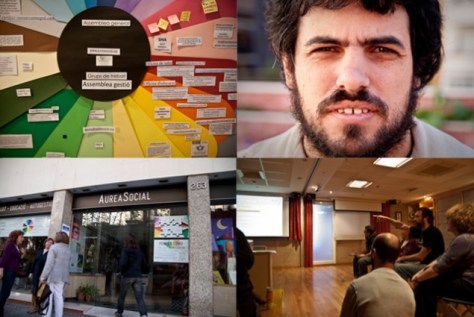
‘He presently lives as a fugitive outside Spain, and is currently busy organizing the FairCoop – Open Cooperative, a community-built effort to alleviate global economic inequalities through the use of mutual credit, reputation systems and cryptocurrencies’. (here’s lots more about Fair Coop http://commonstransition.org/portfolio/faircoop/)
FairCoop Introduction from Radi.ms on Vimeo.
The key to going global is the Commons Transition (new website here http://commonstransition.org/), linking up commons projects like CIC, the P2P Foundation, Ubuntu, Wikipedia, the makers movement, occupy, etc.
Read all the dirty details and join in here: Fairness and the Commons, an Interview with Enric Duran.
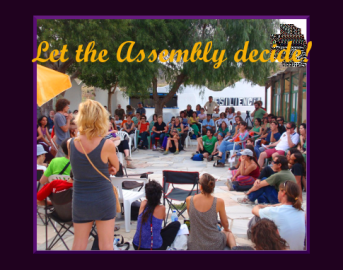
FairCoop: virus of cooperation infects a new economy
Coops have failed in the past, being shriveled or swallowed by capitalism, like fruit trees in a desert. ‘Robin Hood”s answer is Faircoin, a socialised bitcoin project which is currently taking off.
‘……..A new economy begins with a new kind of money. If you’ve managed to live in something close to a gift economy: congratulations, you’ve made it! This only works for some of us, though, living in relatively small communities, and not on a global scale. You have to realize that you’re not really changing your neighbors’ world by trading Ubuntu installs for massage; you’re not overthrowing the hyperarchist system of human domination by paying for your tofu in rainbowcoins, now, are you?

While complementary currencies do a great job at local level, they’re just that: they complement other parts which together make up a whole. And what we really need is to build up a whole new way to live in this world.
FairCoin and a fair economic system from Radi.ms on Vimeo.
Here we go! So, we need money, we need decentralized international markets, financial tools, solid trade networks… a financial system, after all. Money, or food for that matter, aren’t harmful: bulimia or capitalism are. Money can and should be used for the common good — and by money we don’t mean fiat currencies, of course. Fiat currencies are created and controlled by an evil structure, and used for tyranny and planetary destruction (also, we don’t see a way we are ever getting any of that pie).
We need to create our own monetary system — a better one, one that will suddenly make theirs obsolete and their banks worthless, just like the electric car would do with the gas distribution network. And we need the transition to be fast enough so they don’t have time to react and use it for their benefit. What you’ve just read is the definition of the term disruptive technology……”’
extract .From Cryptocurrencies to FairCredit by Enric Duran 2015
The economic system promoted by faircoin, explained!! first published on ROAR and GNUnionSo that’s the latest on the mushrooming ‘Robin Hood’ saga, a series of practical initiatives to find real ways to bypass the economic stranglehold of the banks and the 1% who are fast destroying our planet. Well worth checking out I think, via the links in this post.
….”We do not destroy the system by attacking it with our wooden spears. We are creating a valid alternative, and have started developing it. FairCoop aims to provide new, free, collaborative economic, social and technological tools for everyone, and will try to make sure they are used in a cooperative way for the creation and expansion of the commons worldwide. An Earth cooperative to build the fair world of the future.
We can all help to make this happen. You can learn about the different ways to get involved here.
Pablo Prieto is a scientist working on the science of a post-capitalist world. He is a member of FairCoop…”
Enric Duran is a post-capitalist activist and co-founder of the Catalan Integral Cooperative and FairCoop. He is widely known as the “Robin Hood of the Banks” for his legendary anti-capitalist bank swindles.

Related
Commons Transition new site http://commonstransition.org/portfolio/faircoop/
Fair Coop https://fair.coop/
- January 13th marks the launch Getfaircoin.net
- Estoy totalmente implicado: http://enricduran.cat/es/Cooperativa Integral Catalana(Integral Catalan Coop) www.cooperativa.cat
Aureasocial www.aureasocial.org
Fem-lo Comú (Lets do it In Common)femlocomu.aureasocial.org (Campanya per la col·lectivització d’aureasocial)
Amalurci Cooperativa Integral Valenciana
Older ‘Robin Hood’ posts on ‘the free’
- Anarchist Robin Hood skips trial, Declared an Outlaw. (thefreeonline.wordpress.com)
- The Free.. visiting a money-free Social Revolution
- The Robin Hood Of The Debt Crisis (fastcodesign.com)
- Integral CoOps,15M and Occupy.. an embryo for Post Capitalism?
- anonymous: Robin Hoods steal and give Millions!
- La Cooperativa Integral y el Caído del Capitalismo
- HUELGA DE CONSUMO DEL 29 DE MAYO
- anarchism in Occupied Social Centers.. anarkismo el los CSO
- Because there’s no other solution .. recipe for Social Revolution!
-
-
- Living Without Money Post 1 Gratiferias: The Markets Where Everything Is Free
Living Without Money Post 2 REVIEWS: ‘Life Without Money’ and ‘Sacred Economics’
- Living Without Money Post 1 Gratiferias: The Markets Where Everything Is Free
4 thoughts on “‘Robin Hood’ fugitive to Kick-start Post Capitalism?”
-
So, it seems we need to start developing Post Anarchism now.
-
this is a new and fresh idea.
I just got a membership and will try it -
Reblogged this on The Free.
-
Reblogged this on Social Network Unionism.
-






 The Free
Reblogged this on The Free.
LikeLike