

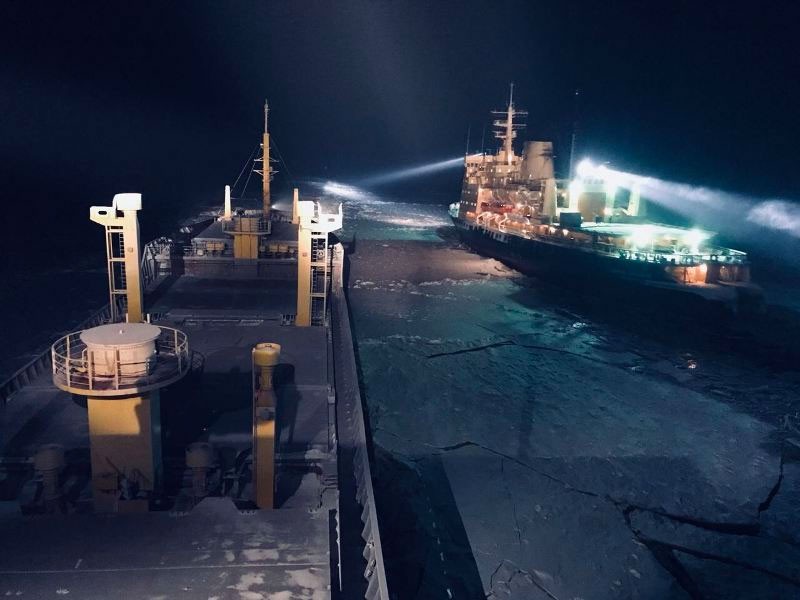
Emergency in Arctic waters as oil tanker gets stuck in ice, drifts ashore, attempting Northern Sea Route
Little is known about the incident which probably could have triggered a serious accident along Russia’s icy northern coast, and could be one of many future ecological disasters as the Northern Sea Route is opened up. .
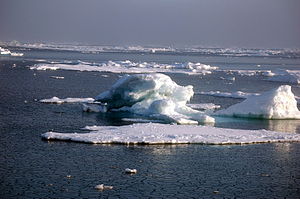 Due to the Climate Emergency, caused ironically in large part by the fossil fuel industry, oil tankers , as well as prospecting, drilling, military bases and a rush to exploit fishing and wildlife which have proliferated in the arctic as the ice rapidly retreats.
The summer opening of the Northern Sea Route makes possible big savings in Asia/Europe trade, especially in oil and Liquid Natural Gas. The Chukotka+ was bought in 2016, to be used precisely for this expansion by the company, also named Chukotka which has long experience in the area. .Russia has declared its intent to make the Arctic a Russian Sea, while the US has just abolished protection north of Alaska to begin drilling. Accidents and spillages are common and inevitable in the extreme conditions and the arctic is uniquely vulnerable as the contamination can linger for generations
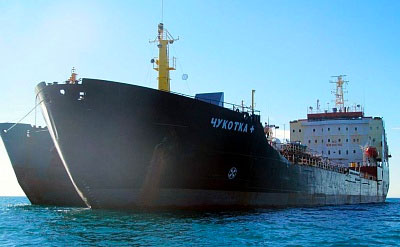
According to Rostom, the state company operating the fleet of nuclear-powered icebreakers, the «Chukotka+» on the 30th October entered the waters of the Northern Sea Route. The ship sailed alone and aimed for a voyage across the Arctic route without icebreaker assistance.
It was not successful.
In the Sannikov Strait, the area between the New Siberian Islands and the mainland, the ship got stuck in ice. It subsequently drifted with the ice onto a sand bank.
On 22nd November, the nuclear icebreaker «Yamal» arrived on site in a rescue operation. The tanker was pulled off the ground and to a safe place, Rosatom representative Vladimir Artyunin says in a press release. The «Chukotka+» subsequently proceeded it voyage eastwards with support from icebreakers.
Rosatom does not report about any damage to the ship, nor leak of oil. The ship owner, the Chukotka Trading Company, has not released any information about the incident on its website.
If the ship had started to leak oil, it could have had potential devastating consequences for the vulnerable waters along the Arctic East-Siberian coast.
According to Marine Traffic on 8th Dec the ship was in the Laptev Sea, on route to arrive in Korf in Kamchatka on 8th Dec. But Korf is in the Pacific more than 3000 miles from the Laptev Sea.. The Laptev Sea is a marginal sea of the Arctic Ocean, located between the northern coast of Siberia, the Taimyr Peninsula, Severnaya Zemlya and the New Siberian Islands. Wikipedia Area: .. 662,000 km². ”The Laptev Sea has a severe climate with temperatures below 0 °C over more than 9 months per year, low water salinity, scarcity of flora, fauna and human population, and low depths. It is frozen most of the time, though clear in August. The sea shores were inhabited for thousands of years by tribes of Yukaghirs and then Evens and Evenks. They were then settled by Yakuts and later by Russians…”
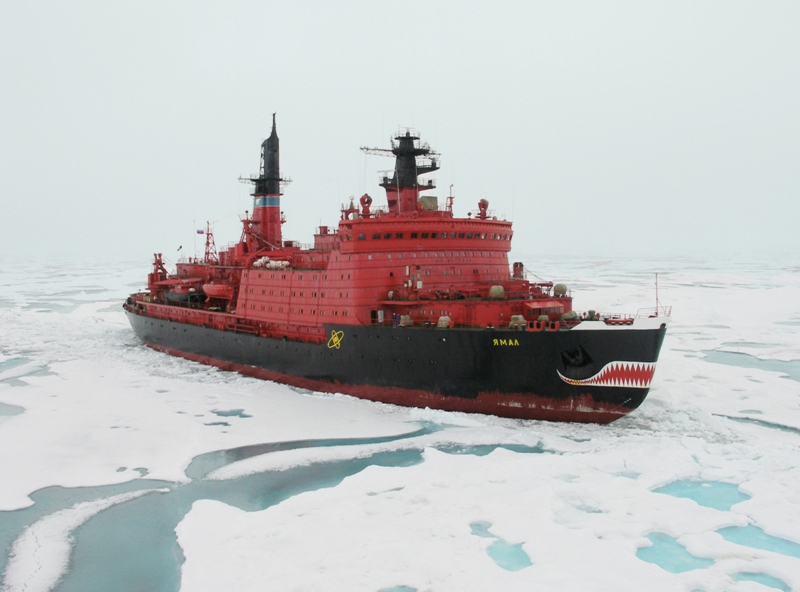
Icebreaker «Yamal» is back in ice waters near Sabetta, information from the NSR Administration shows.
Ice data from the Russian Arctic and Antarctic Research Institute shows that the waters east of Wrangel Island still are ice-free. However, in the Laptev Sea the ice thickness is up to 200 cm.
The exact time and place of the rescue operation is not clear. According to information from ship tracking service MarineTraffic, the «Chukotka+» was located near Kotelny in the New Siberian Islands already on 28th October. That is far earlier than described by Rosatom. The ship proceeded from Murmansk.
The Chukotka Trading Company acquired the «Chukotka+» in 2016. The ship, which today has the port of Egvekinok as its home base, was built in year 1982 and has ice classification and capacity to carry up to 11,000 tons of oil. It was originally built in Valmet Vuosaari Shipyard in Helsinki for oil company Shell. Chukotka+, formerly Vega Desgagnes
It is not the first time that ships have become trapped along the Russian Arctic coast. In early 2017, three ship including icebreaker «Kapitan Dranitsyn» remained ice-locked in Pevek for several months.

 The Free