

For anarcha-feminists, the struggle against patriarchy is an inherent part of the struggle to abolish the state and abolish capitalism, since the state itself is a patriarchal structure.
Although there is a rich, global history of people of color and/or feminist anarchist movements, within the U.S., it’s not uncommon for anarchist spaces to suffer major blind spots when it comes to race and gender.
Given that anarchism, even more than socialism and communism, explicitly denounces any form of hierarchy in political organizing, it is especially ironic when white male anarchists fail to recognize the ways in which they replicate hierarchy by participating in racist and patriarchal forms of domination against their comrades.

So here is a brief introduction to anarcha-feminism—loosely defined as a political philosophy and movement whose goal is not only to abolish the capitalist state, but also all forms of patriarchal domination as well.
Anarcha-feminists do not see the goals of feminism as distinct from anarchism—rather, they see feminism (in its true form) as a kind of anarchism, and vice versa. For anarcha-feminists, the struggle against patriarchy is an inherent part of the struggle to abolish the state and abolish capitalism, since the state itself is a patriarchal structure.

In a manifesto titled “Anarcho-Feminism: Two Statements,” the authors note: “We believe that a Woman’s Revolutionary Movement must not mimic, but destroy, all vestiges of the male-dominated power structure, the State itself — with its whole ancient and dismal apparatus of jails, armies, and armed robbery (taxation); with all its murder; with all of its grotesque and repressive legislation and military attempts, internal and external, to interfere with people’s private lives and freely-chosen co-operative ventures.”
Below are a list of some anarcha-feminists and anarcha-feminist groups, both historic and present, to get you started:
Emma Goldman (1869-1940):
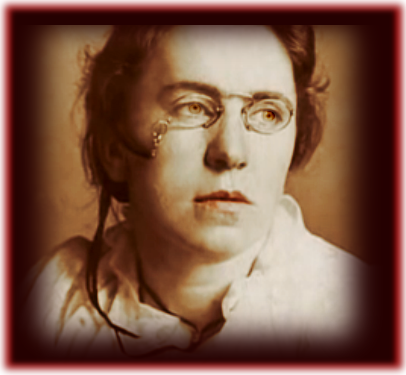
Often referred to as the mother of the modern anarchist movement, Emma Goldman was born into a Jewish family in contemporary Lithuania (then part of the Russian empire) in 1869, and subsequently emigrated to the United States. Continue reading “Our Inspiration – Anarcha-Feminists of the Past and Present”
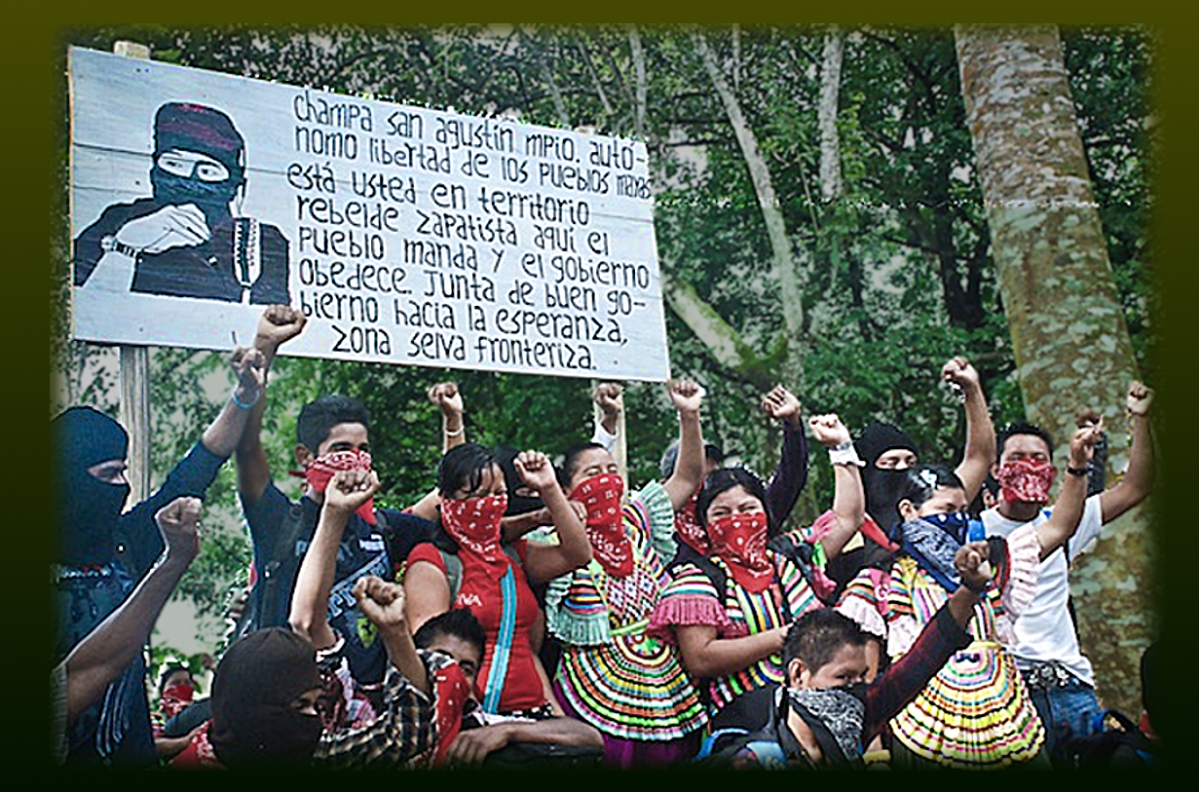
 Agua Azul Cascades. [1]The San Cristóbal-Palenque highway and the Palenque Integral Center are part of a regional development plan for Mesoamerica, originally known as the Plan Puebla-Panamá (PPP). [2]The PPP included numerous infrastructure projects that prompted strong opposition from social, environmental and human rights organizations, as well as academics and organized indigenous communities.


 The Free