- From> The Big Feature at Mother Jones.. shared with thanks.. by Julia Lurie
The short life and sudden death of the Share-a-Ton.
The Saturday after George Floyd was killed, Abu Bakr Bryant, a 29-year-old from Minneapolis, found himself walking dazedly among the charred remains of Chicago Avenue, the street where Floyd took his last breaths. Shops and restaurants smoldered. Windows had been boarded up.
A melted stoplight hung midair like a piece of abstract art. He had on his person the entirety of his worldly possessions: a change of clothes, his cellphone, and his wallet. Bryant had been living out of his car until the previous evening, when he went to protest. The protests turned into firestorms, and when he got back to his car, he found that it was on fire, too.

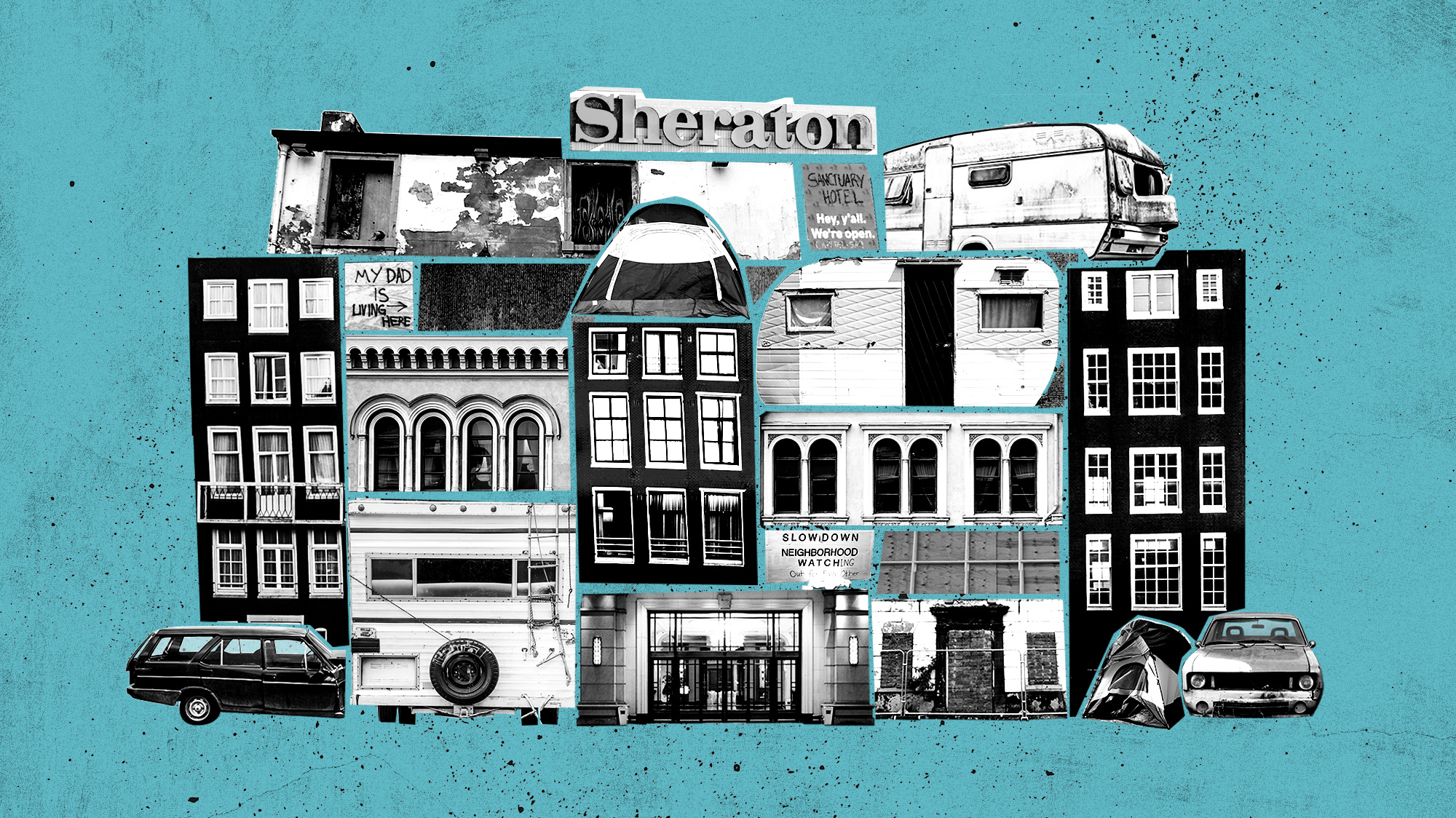
Nine blocks north of the intersection that had turned into a memorial to Floyd, Bryant passed by a former Sheraton hotel with handwritten signs saying “sanctuary” taped on the windows. With the exception of a couple holes from rocks thrown at the double-paned windows, the building was miraculously unscathed. He walked in and asked to use the bathroom. The people inside offered him food and a hotel room—for free. “I thought it was a joke,” he told me.
The 136-room hotel had been transformed into a pop-up homeless shelter of sorts, with no staff and virtually no rules. The hotel’s typical guests had been ordered to evacuate when the protests in Minneapolis heated up. In their place now were between 200 and 300 previously unhoused people—no one knew exactly how many—with more arriving each day to be put on a waitlist.
When I visited for the first time, in early June, residents napped on leather sofas in the lobby using hotel sheets and pillows. Behind the bar, volunteers handed out chicken fajitas. Food donations filled the kitchen and the walk-in fridge.
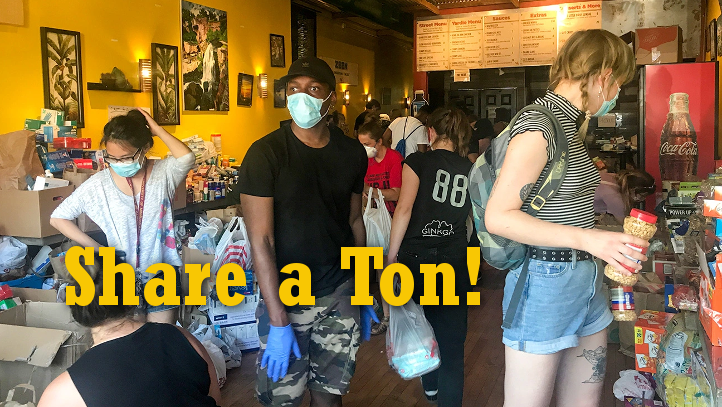
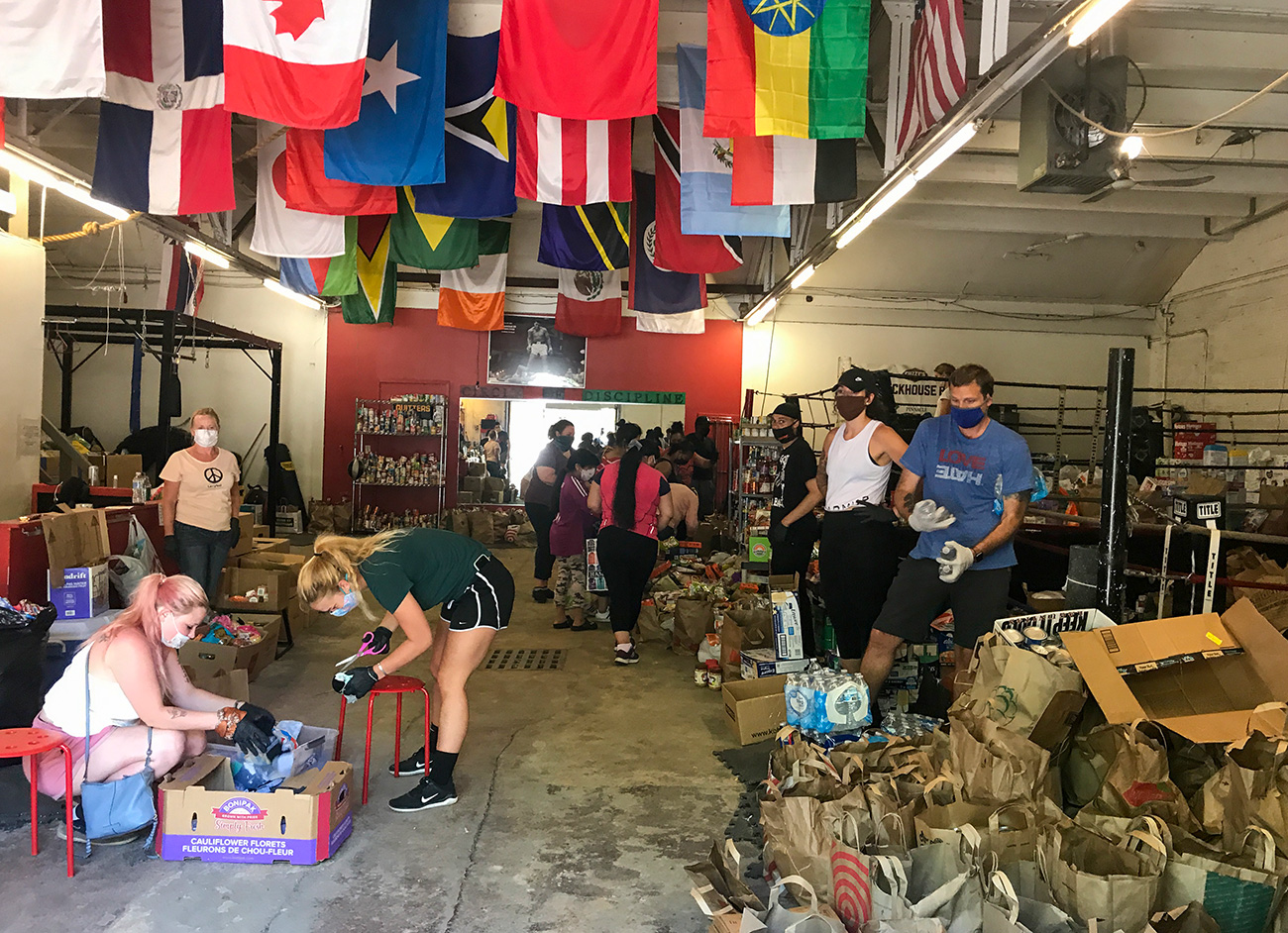
The hotel teemed with volunteers, part of an ever-shifting collection of 120 servers, artists, medics, librarians, social workers, and others. From the start, the operation was democratic and decentralized—there was no hierarchy, no fund for donations, no spokesperson, not even a name (one suggestion was the “Share-a-Ton”).
Many were wary, one volunteer said, of “nonprofitizing.” A variety of people-centered belief systems informed the volunteers’ work. Some were Democratic Socialists. Some were students of the radical Catholic Worker Movement. Many of the volunteers were veterans of the protests at Standing Rock; the leather chairs and wall-to-wall carpet evoked the Prairie Knights Casino, where organizers charged phones and washed up.
The whole thing had a dreamlike quality, and indeed, the details of the operation are still hazy. The owner of the Sheraton, a hotelier named Jay Patel, was a mystery. When I first visited, I saw him chatting with a volunteer, but he declined to comment, as he would continue to do in the days to come. There seemed to be as many interpretations of what was happening at the hotel as there were people in it.
“This is not an occupation,” one volunteer told me. A few days later, another described it as “somewhat of a commandeering of a hotel.” At a press conference, yet another said: “This is a means of land repatriation. This is a means of addressing historic deep disparities.” “We are the petri dish. We’re the experiment.”
While no one seemed to be in charge, somehow, overnight, the operation provided not just the services of a hotel—complete with volunteers pushing carts of linens down the halls for housekeeping—but a health clinic and a donation drop-off site. What had been a conference room now bore hand-drawn signs saying “HARM REDUCTION,” with condoms for the taking and Narcan at the ready. Residents were encouraged to participate in tasks and decision making, and, together with the volunteers, they had nightly meetings to discuss things like the name and security of the sanctuary.
Sign up for our newsletters Subscribe and we’ll send Mother Jones straight to your inbox. Email For indispensable reporting on the coronavirus crisis and more, subscribe to Mother Jones’ newsletters.
“It’s okay that you and I don’t understand it, because that’s what’s happening here,” said Alondra Cano, the council member overseeing the neighborhood, when I asked her about the hotel ownership and funding structures. “Systems are bending and adjusting to the new reality and a moment of crisis and that’s good. That’s the kind of radical mutual aid example that is being given birth to in this moment of crisis.”
She’s right: In communities across the country, there’s an air of wanting to scrap the system and start over, of the impossible suddenly becoming possible, of a door opening—as the writer Rebecca Solnit wrote in a 2009 book about altruism in the wake of disaster—“back into paradise, the paradise at least in which we are who we hope to be, do the work we desire, and are each our sister’s and brother’s keeper.”
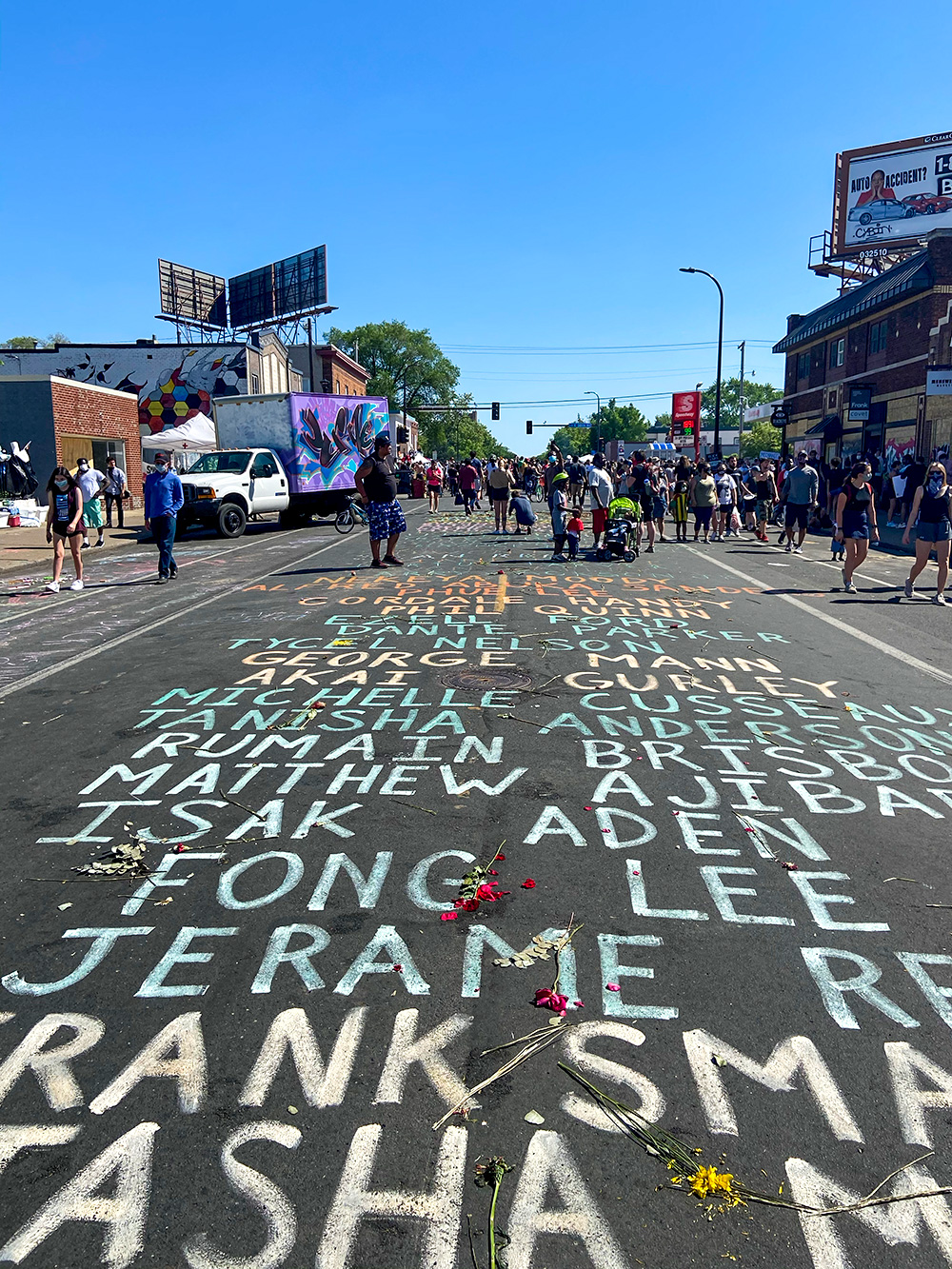
In Seattle, protesters claimed a handful of blocks near a recently vacated police precinct, naming the area the Capitol Hill Autonomous Zone. In the Phillips neighborhood of Minneapolis, named for the abolitionist Wendell Phillips, people began building a different sort of civic infrastructure on the ashes of an old one that had failed so much of the population—pop-up food pantries replaced grocery stores that had been boarded up and torched; neighborhood security teams stood guard against the reported white supremacists and arsonists in their midst; and of course there was the Share-a-Ton, providing respite to whoever wandered in.
It was a city within a city, provisional and fragile but constructed in what Zach Johnson, one of the key organizers of the Sheraton operation, calls a “radical moment of possibility.”
“We are the petri dish,” a shelter volunteer, whom we’ll call Angela to protect her privacy, said soon after the hotel’s transformation into a sanctuary. “We’re the experiment.”
Some of these early rebuilding efforts have flourished. Some have found themselves menaced by the same forces that made the old order unlivable: cops, racists, decades of structural inequity, even their own internal havoc. The stakes feel higher than ever:
“The city stands in a place to set a precedent that could ripple out,” said organizer Thorne LaPointe at a recent community meeting, just before Minneapolis City Council members vowed to defund the Minneapolis Police Department. “This city has the world’s attention.”

 The Free