note to US readers> Assange is not an anarcho-capitalist! In Europe the term ‘libertarian’ just means anti-hierarchy or anarchist.
The political motive of the process against Julian Assange
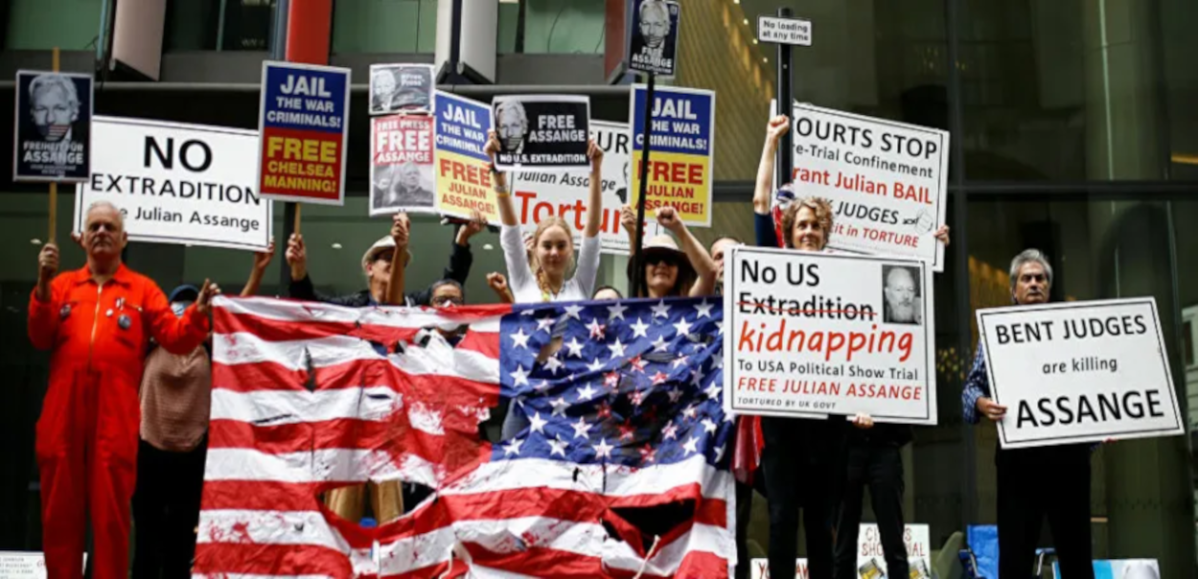
The libertarian ideology of Julian Assange was analyzed on the third day of the trial against his extradition to the United States based on the testimonies of two experts, who consider that it is a politically motivated process and an escalation of the “war against journalism” by part of the US Republican administration.
By Lourdes Gómez *
“The decision to indict Julian Assange is a massive and unprecedented escalation of President (Donald) Trump’s war on journalism,” said Trevor Timm, director and co-founder of the Freedom of the Press Foundation (FPF), a foundation established eight years ago in San Francisco to protect press freedom.
JOURNALISM ON TRIAL
The Californian foundation has contributed $ 100,000 to the defense costs of Assange against the surrender order to be tried in the United States for obtaining, possessing and disclosing secret military and diplomatic reports, as confirmed by the also lawyer when giving a video statement. conference.
“The indictment is clearly unconstitutional,” he said, referring to the First Amendment to the US Constitution that protects the right to freedom of expression.
Timm downplayed the profession of the founder and former director of WikiLeaks – the indictment alleges that he is not a journalist, as stressed by the legal representative of the US Government – and asserted that Assange is accused under the espionage law for “exercising the functions of an editor and journalist ».
«If the cause progresses, the media are in danger. It is no exaggeration to say that it will lead to the criminalization of journalism on national security issues, “he added.
The director of the FFP testified on the third day of the second phase of the extradition trial, which is being held, in the presence of the defendant, in the Central Criminal Court, the renowned Old Bailey.
Earlier, British academic Paul Rogers took the floor, exposing the “broad political dimension” hidden in the extradition order ratified by the US Department of Justice.

THREAT TO US
Rogers, a professor emeritus at the University of Bradford and an expert on the war on terror, argued that the WikiLeaks revelations about the wars in Iraq and Afghanistan are a “danger to the United States.”
“From the perspective of the Trump administration they pose a considerable risk to them. At the root is the belief that Assange and his ideas represent some kind of threat to ordinary political endeavor, ”declared the renowned historian.
If Timm highlighted the “hostility” of the US president towards a sector of the media that he claims to spread ‘fake news’, Professor Rogers argued that the Trump government perceives the Australian journalist and computer scientist as a’ political adversary ».
“He is an individual with quite strong political ideas, which the Trump administration perceives as a threat to the United States,” the academic added.
POLITICAL LIBERTARIAN
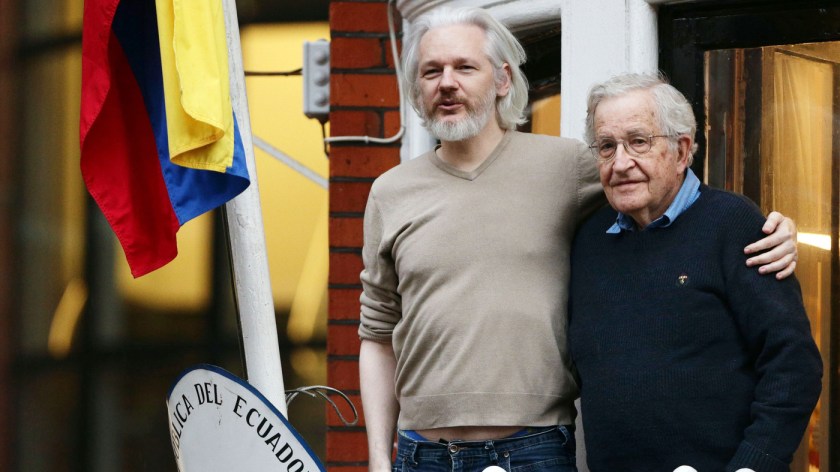
For the academic, the WikiLeaks founder is a conscientious “libertarian” who fights to uphold human rights and ensure “transparency and accountability” in all spheres of power.
“Assange starts from a libertarian political position, based on respect for human rights and the prevalence of transparency and accountability as tools to strengthen the democratic system,” he explained.
Thus, Assange does not fit into the main political currents, be it Marxism or capitalism, and seeks to transfer his vision not only to government entities, but to corporations, unions and the organization in general, according to the academic.
“He is perceived as anti-American because of his leaks on Iraq and Afghanistan, but really his political vision is broader,” he added.
PRESSURE FROM THE HIGHEST
Rogers reiterated in his testimony, both in writing and in his responses when questioned by the lawyers of both parties, his vision of the political motive of the process for alleged crimes committed by Assange a decade ago.
«It is motivated by the political change in the US. Obama did not make the decision to impute him in the eight years of his presidency. The change came under Trump and there is evidence of influence at the highest political level. Pressure was exerted from the president to lower levels in favor of prosecuting him, “he defended.
The professor did not dispute the assumed impartiality or good faith of the officials of the Department of Justice and the US Attorney’s Office who are processing the case.
*translated from Sputnik español
El móvil político del proceso contra Julian Assange
La ideología libertaria de Julian Assange fue analizada en la tercera jornada del juicio contra su extradición a Estados Unidos a partir de testimonios de dos expertos, que consideran que se trata de un proceso políticamente motivado y una escalada de la «guerra contra el periodismo» por parte de la administración republicana de EEUU.
Por Lourdes Gómez*
«La decisión de imputar a Julian Assange es una escalada masiva y sin precedentes de la guerra del presidente (Donald) Trump contra el periodismo», declaró Trevor Timm, director y cofundador de Freedom of the Press Fundation (FPF), fundación establecida hace ocho años en San Francisco para proteger la libertad de prensa en la era de las nuevas tecnologías de comunicación y del florecer de filtradores de información confidencial.

PERIODISMO EN EL BANQUILLO
La fundación californiana ha contribuido con 100.000 dólares a los gastos de la defensa de Assange contra la orden de entrega para ser juzgado en EEUU por la obtención, posesión y divulgación de informes secretos militares y diplomáticos, según confirmó el también abogado al prestar declaración por vídeo conferencia.
«El auto de procesamiento es claramente inconstitucional», señaló en referencia a la Primera Enmienda de la Constitución estadounidense que ampara el derecho a la libertad de expresión.
Timm restó importancia a la profesión del fundador y exdirector de WikiLeaks –el auto de cargos alega que no es periodista, según le recalcó el representante legal del Gobierno estadounidense– y aseveró que se acusa a Assange con la ley del espionaje por «ejercer las funciones de un editor y periodista».
«Si la causa progresa, los medios están en peligro. No es ninguna exageración decir que conducirá a la penalización del periodismo sobre cuestiones de seguridad nacional», añadió.
El director de la FFP testificó en la tercera jornada de la segunda fase del juicio de extradición, que se está celebrando, en presencia del reclamado, en la Corte Criminal Central, el renombrado Old Bailey.
Antes, tomó la palabra el académico británico Paul Rogers, quien expuso la «amplia dimensión política» encubierta en la orden de extradición ratificada por el departamento de Justicia de EEUU.
AMENAZA A EEUU
Rogers, profesor emérito de la Universidad de Bradford, experto en la guerra contra el terrorismo, argumentó que las revelaciones de WikiLeaks sobre las guerras de Irak y Afganistán son un «peligro para Estados Unidos».
«Desde la perspectiva de la administración de Trump suponen un riesgo considerable para ellos. En la raíz está la creencia de que Assange y sus ideas representan algún tipo de amenaza al esfuerzo político ordinario», declaró el reputado historiador.
Si Timm destacó la «hostilidad» del presidente norteamericano respecto a un sector de los medios que tacha de difundir ‘fake news’ (noticias faltas), el profesor Rogers argumentó que el Gobierno de Trump percibe al periodista e informático australiano como un «adversario político».
«Es un individuo con ideas políticas bastante fuertes, que la administración Trump percibe como una amenaza para EEUU», añadió el académico.

LIBERTARIO POLÍTICO
Para el académico, el fundador de WikiLeaks es un «libertario» concienciado que lucha por hacer valer los derechos humanos y asegurar la «transparencia y responsabilidad» en todas las esferas de poder.
«Assange parte de una posición política libertaria, basada en el respeto de los derechos humanos y la prevalencia de la transparencia y el rendimiento de cuentas como herramientas para fortalecer el sistema democrático», explicó.
Así, Assange no encaja en las grandes corrientes políticas, ya sea marxismo o capitalismo, y busca trasladar su visión no sólo a los entes de gobierno, sino a corporaciones, sindicatos y organización en general, de acuerdo con el académico.
«Se le percibe como antiamericano debido a sus filtraciones sobre Irak y Afganistán, pero realmente su visión política es más amplia», añadió.
PRESIÓN DESDE LO MÁS ALTO
Rogers reiteró en su testimonio, tanto escrito como en sus respuestas al ser interrogado por los abogados de ambas partes, su visión del móvil político del proceso por presuntos delitos cometidos por Assange hace una década.
«Está motivado por el cambio político en EEUU. Obama no tomó la decisión de imputarlo en los ocho años de su presidencia. El cambio se produjo con Trump y hay pruebas de influencia al más alto nivel político. Se ejerció presión desde el presidente hasta niveles más bajos en favor de procesarlo», defendió.
El profesor no disputó la asumida imparcialidad ni la buena fe de los funcionarios del departamento de Justicia y la Fiscalía estadounidenses que están tramitando el caso.

*Sputnik
Search in results
Charges Against Julian Assange Are ‘Unconstitutional’ And Threaten Press Freedom, Expert Tells Court
‘He Did Nothing Wrong’: Commentator Says Full Acquittal is Most Morally Correct Outcome For Assange
There’s Strong Evidence that Assange’s Prosecution is ‘Politically Motivated’, Defence Expert Says

 The Free
Reblogged this on Wake Up To The Truth.
LikeLike