
by The Walrus shared with thanks
By tracking amphibian songs, citizen scientists are helping us understand what’s happening to our environment by Caitlin Stall-Paquet
Photography by Jeremie Stall-Paquet Updated 16:32, Sep. 17, 2020 | Published 15:19, Sep. 16, 2020
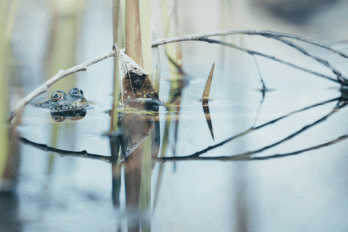
It’s an hour after sunset, one night in early April, and I’m standing on the side of a dirt road in my hometown of Frelighsburg, Quebec, with my hands cupped around my ears. I’m listening for the calls of anurans—amphibians without a tail, so frogs and toads. I am here, more specifically, to hear the croaks of wood frogs, which are one of the first species to peek their little brown heads out after a long winter of hibernation.
🎧 TURN ON YOUR SOUND TO HEAR THE FROG SONGS: 🎧
Jeremie Stall-Paquet Photographer / Videographer instagram.com/jeremiestall | https://vimeo.com/jeremiestall
This isn’t just recreational listening, mind you—this is also for science. I am a volunteer observer, one of several who are gathering data about dwindling amphibian populations in this region.
For the parcours d’écoute (“listening pathways”) project I am on, participants each choose a quiet eight-kilometre stretch of road and go out listening along it, noting the frog and toad species they hear and the volume of their calls, returning to record these observations in the same spots once more, later in the season, ideally year after year.

It’s called the Amphibian Population Monitoring Program, a long-term citizen-research project created in the 1990s by the Saint Lawrence Valley Natural History Society—part of a provincial-government push that came about when the International Union for Conservation of Nature highlighted worldwide declines of amphibian populations.
Continue reading “What Frogs Can Teach Us about the State of the World”











 The Free