India’s marginalised girls fighting child marriage

News|Child Rights

More than 1,200 girls in Rajasthan start a movement against child marriages, which saw a spike during the COVID pandemic.

Priyanka Berwa convinced her parents to put off her marriage and started a movement [Devendra Kumar Sharma/Al Jazeera]

By Parth MN9 Jun 2021

Rajasthan, India – “I want to study at least up to 12th standard (grade)” was Saira Bano’s heartfelt cry when her parents started looking for a groom for her in October 2020.

It had been a tough year for her parents in their remote northwestern Indian village. Since a nationwide lockdown to check coronavirus was imposed in March 2020, Saira’s father has not been able to find much work. Keep reading‘Black fungus’ new scare in India as second COVID wave ebbsIndia’s Sunil Chhetri passes Lionel Messi in international goalsMuslims near India’s Hindu temple allege pressure to vacate homesPoverty, stigma behind bodies floating in India’s Ganges River

He earned about 1,200 rupees ($17) a week as a labourer in pre-COVID times, which barely kept the family afloat. And when that stopped too, he thought it was better to marry Saira off instead of spending the family’s limited resources on her education.

Saira is 17.

“We are six brothers and sisters,” she said over the phone from her village of Kudgaon in Rajasthan state’s Karauli district.

“We have always lived in poverty. After COVID, it has become even more difficult to sustain the household.”

Around the world, about 12 million girls a year are married off before they turn 18, according to the United Nations. Nearly 30 percent of South Asian women aged 20 to 24 were married before 18.

The coronavirus pandemic has only exacerbated the crisis.

While the Indian government has not maintained comprehensive data, international organisations say child marriages could be a major fallout of the pandemic.

By June last year, merely three months into lockdown, about 92,203 interventions had been made by ChildLine, an agency that protects children in distress and is part of the Ministry of Women and Child Development. Thirty-five percent of those interventions were about child marriages.

While Saira understood her father’s helplessness, she did not give in.

“I was really upset,” she said. “I want to be a teacher when I grow up. I want to help young girls become independent women. But I did not know how to convince my father.”
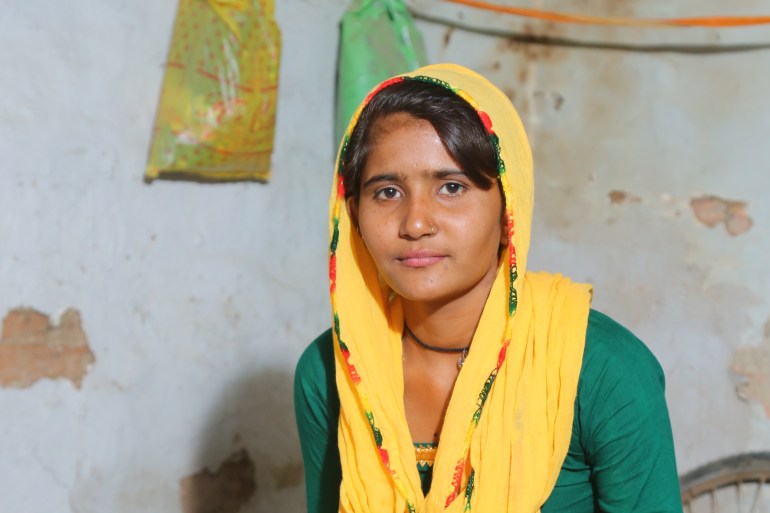
She soon became aware of a group of girls from marginalised communities who were starting a campaign to create awareness around child marriage in Karauli.

“That got my hopes up,” said Saira. “I attended their meeting, and learned that the state government has a scholarship scheme in place to ensure girls like me don’t drop out of school.”

She got the group and the activists supporting them to talk to her father.

“They explained the drawbacks of child marriages,” said Saira. “It took me two months to convince him. But he finally agreed. It has been six months now, and he has not talked about marriage to me.”

Were it not for that intervention, Saira’s father would not have come around. That group has saved more than one girl from child marriage in Karauli.

A brave step in a notorious state

In October 2020, after convincing her parents to put off her marriage, Priyanka Berwa, 18, a Scheduled Caste girl from Ramthara village in Karauli, decided to keep going. Nine girls joined her and they started a campaign against child marriage called the Dalit Adivasi Pichhada Varg Kishori Shiksha Abhiyan (Movement for Education of Dalit Tribal Backward Groups’ Girls).

Dalits, formerly referred to as “the untouchables”, fall at the bottom of India’s complex caste hierarchy, while tribes and other so-called “backward groups” have been provided special protection by India’s constitution.

“We realised that almost every girl our age was facing the same challenge that we did,” said Priyanka.

“Nobody wants to educate girls after 10th grade (high school) here in any case. The pandemic made it worse. The schools are shut, not many here have smartphones for online education, and people are out of work. I was lucky to have convinced my parents.”

It was a brave step, for the state of Rajasthan is particularly notorious when it comes to the outlawed practice of child marriages.

According to the 2015-2016 National Family Health Survey, 35.4 percent of women between 20 and 24 in the state were married before they turned 18. The national average stood at 27 percent at that time.

Rajasthan’s initiative to provide free college education to girls aims to curb the practice.

Priyanka used to visit her mother, Urmila, 34, where she worked, cleaning the premises of a local NGO called Alwar Mewat Institute of Education and Development (AMIED).

“They always treated me with love and care,” said Priyanka. “They didn’t discriminate between boys and girls. I thought I could ask for their help.”

AMIED activists stepped in and explained to Urmila how early marriage and early pregnancy are related to malnutrition among young mothers, and contribute to premature deliveries and maternal death.

Urmila then convinced her husband, who is often ill, meaning Urmila supports the household.

“That probably made it easier to convince him,” she said. “My parents married me off at 14. I remember how scared and clueless I felt. I have spent more than half my life looking after my daughter. I don’t want her to live the kind of life that I have led. I want her to live for herself. I want her to follow her dreams.”

Priyanka also wants to be a teacher and ensure that girls in her area are able to study.

“I was fortunate to have had access to the activists at AMIED. What about those that didn’t?” she said.

“Therefore, slowly the 10 of us brought in two to three girls from each village, and they, in turn, convinced more girls from their villages to join us. When we had enough people, we started going from village to village, plastering slogans against child marriage and creating awareness through street plays.”

Priyanka is currently pursuing her bachelor’s degree in arts. Like her mother, she cleans homes to earn extra money. “I have managed my education while working,” she said. “But I want every girl in the state to study at least up to 12th standard.”

The movement that started with 10 girls has now become a force of 1,250 in Karauli – all aged between 13 and 18 and belonging to Scheduled Caste, Scheduled Tribe and Other Backward Class communities, which are among the most disadvantaged in India.

They managed to convince their parents and are now going door-to-door to convince more elders and community leaders in the villages.

“There are challenges,” said Noor Mohammad, founder of AMIED. “But the girls have started a conversation around child marriage, and we are seeing a serious pushback.”

Mohammad said the girls even set up email accounts and wrote personal stories to the state’s chief minister.

“So they are also creating pressure politically. They have reached out to people outside their district and are determined to make it a pan-Rajasthan movement. They are the leaders, we are just helping them out,” he said.

The growth of the movement has made the girls more confident, said Neelam Mahavar, 17, a Scheduled Caste girl who lives in Naroldam village in Karauli.

When the parents of her potential groom had come to see her, she told them she was not interested in getting married.

“I told them I want to study. The boy’s parents said: ‘She’s an arrogant girl,’ and walked off,” Neelam giggles.

“My parents thought if something happened to them, who would look after me and my sister. My father lost work as a tailor after the lockdown.”

However, Neelam and her 13-year-old sister Khushi have told their parents that marriage is the last thing on their mind and that they are more than capable of looking after themselves.

“My sister wants to become a collector (top bureaucrat in a district). She is hardworking and has faith in herself,” she says.

“And I want to be a teacher. Nobody thinks of boys as a burden. Even today, elders in the community believe that girls become wayward if they study more. I want to change that mindset. I want to tell the girls in Rajasthan that they are in no way inferior to boys.” Source: Al Jazeera


FDA Ethically Obligated to Pull COVID Injections Off the Market, or Risk Becoming Complicit in Crimes Against Humanity.

Jaime C.'s avatarCounter Information

By Lance Johnson

Global Research, June 08, 2021Vaccine Injury News 24 May 2021

First posted by GR on May 25, 2001

All Global Research articlescan be read in 51 languages by activating the “Translate Website”drop down menu on the top banner of our home page (Desktop version).

Visit and follow us on Instagram at @crg_globalresearch.

***

The Food and Drug Administration (FDA) was under intense political pressure to give emergency use authorization (EUA) to three experimental injections manufactured by Pfizer, Moderna, and Johnson & Johnson. Now that these experiments have been carried out on roughly one third of the US population, serious issues have emerged.

A well-cited petition has been filed by Children’s Health Defense and Millions Against Medical Mandates, calling on the FDA torevoke EUAs for all experimental covid vaccines. After a careful review of the evidence, the FDA is ethically obligated to pull covid injections…

View original post 722 more words

La Democracia Cotidiana de Rojava

from redpepper.org.uk/rojavas-everyday-democracy/ translation TheFreeOnline

Basándose en la experiencia de primera mano en Rojava, Ramazan Mendanlioglu explora cómo se ven en la práctica la descentralización radical y la autoadministración. 4 de junio de 2021 · 6 min de lectura

read in ENGLISH HERE

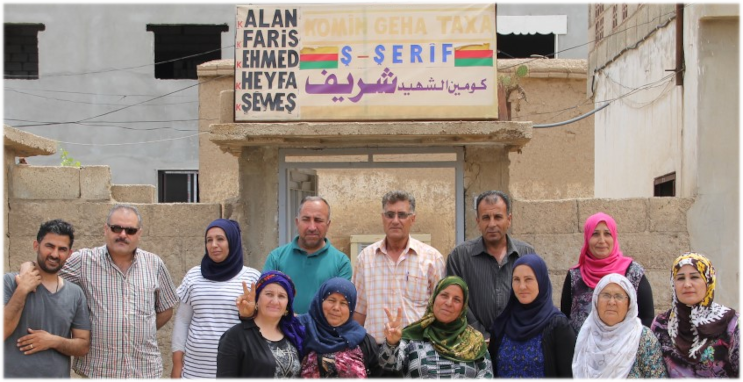
Fuera de un Komîngeh (credit: Ramazan Mendanlioglu)

En los pueblos, ciudades y regiones de Rojava, en el noreste predominantemente kurdo de Siria, la agitación política ha resultado en la autoadministración en gran parte descentralizada de muchas áreas, incluida la salud, la economía, el derecho, la educación y la seguridad interna.

Continue reading “La Democracia Cotidiana de Rojava”

Rojava’s everyday democracy

In the villages, cities and regions of Rojava, in the predominantly Kurdish north east of Syria, political upheaval has resulted in the largely decentralised self-administration of many areas, including health, economy, law, education and internal security.

LEER EN ESPAÑOL AQUÏ

Outside of a Komîngeh (credit: Ramazan Mendanlioglu)

Drawing on first-hand experience in Rojava, Ramazan Mendanlioglu explores how radical decentralisation and self-administration look in practice

Continue reading “Rojava’s everyday democracy”

Covid vaccines: Worse Than the Disease? Scientists Review Possible Consequences

Covid vaccines: Concerns that make more research essential.. Vaccines have become such a holy cow that critical studies have little chance of being accepted in the mainstream journals.

By Neville Hodgkinson | at The Conservative Woman | June 8, 2021 shared with thanks

DOCTORS and scientists can behave at times like religious zealots, despite the noble aims of their professions. Heretics are not burned at the stake these days, but professionals marginalise and deride those who challenge their beliefs when these become a matter of faith (and self-interest) rather than science.

An apparent persistent attempt, at the highest level, to hide the Covid virus’s genetically engineered laboratory origins, and to persuade us that it simply jumped from an animal host into humans, is a case in point.

Vaccines are another. Taxpayers provide billions for products which in some cases have done wonders, such as eliminating smallpox, but whose value, in the opinion of some experts, became grossly over-estimated when their introduction coincided with social, political and economic advances in wellbeing.

Best coronavirus memes amid the COVID-19 pandemic madness | The Mercury

Just as we tend to react strongly to criticism when living a lie as individuals, vaccines have become such a holy cow that critical studies have little chance of being accepted in the mainstream journals.

All this is by way of introducing the International Journal of Vaccine Theory, Practice and Research, founded last year ‘to enable independent theoreticians, practitioners and researchers’ to publish ‘critical uncensored peer-reviewed theory and research about every aspect of vaccines’.

The latest issue of the journal contains a scholarly, highly referenced 42-page study called Worse Than the Disease? Reviewing Some Possible Unintended Consequences of the mRNA Vaccines Against Covid-19

As with findings described here at TCW yesterday, it makes worrying reading. Most of the long-term hazards described are speculative, but the paper argues that the evidence cited makes it vital for regulators to do much more to track adverse events in people who have received the experimental Covid vaccines.

The main author is Dr Stephanie Seneff, a senior research scientist at the Massachusetts Institute of Technology, working with Dr Greg Nigh, a naturopath pioneering alternative approaches to cancer.

Seneff has spent much of her career developing human-computer communication through spoken language. She has a degree in biology as well as degrees in engineering and computer science, and since 2010 has shifted her research focus toward the effects of drugs, toxic chemicals, and diet on human health and disease.

The study claims that many aspects of the widespread use of RNA vaccines merit safety concerns, some of which ‘might not be evident for years or even transgenerationally’.

A toxin known as the spike protein makes the Covid virus uniquely dangerous compared with its predecessors in the coronavirus family. The vaccines, including those produced by Pfizer, Moderna, and Oxford AstraZeneca, deliver a genetic code into our body cells instructing them to manufacture this protein, to train the immune system to minimise the impact of exposure to the actual virus.

‘While the promises of this technology have been widely heralded, the objectively assessed risks and safety concerns have received far less detailed attention,’ the study authors say.

Reviewing the various components of the new vaccines, they conclude that there is potential for ‘a wide range of both acute and long-term induced pathologies, such as blood disorders, neurodegenerative diseases and autoimmune diseases’.

Lack of standard trials of the vaccines means many questions about safety and effectiveness can be answered only through data gathered from the mass public rollout, ‘and this is only possible if there is free access to unbiased reporting of outcomes – something that seems unlikely given the widespread censorship of vaccine-related information because of the perceived need to declare success at all cost’.

https://prepforthat.com/wp-content/uploads/2020/03/coronavirus-supplies-out-at-costco.jpg

Coronavirus madness continues. Empty shelves in .

Regulators internationally continue to maintain that the vaccines bring more benefits than dangers, but there have been many claims of sudden clusters of deaths immediately in the wake of vaccination drives.

Seneff and Nigh argue that we may not be realising the complexity of the body’s potential for reactions to foreign mRNA, and to other ingredients in the vaccines ‘that go far beyond the simple goal of tricking the body into producing antibodies to the spike protein’. The ‘tricks’ include a modification in the RNA code aimed at synthesising abundant copies of the protein.

Yet the protein alone has been shown to be enough to cause damage to blood vessel linings and blood clotting processes. There is also a risk that antibodies to the protein arising either from vaccination, or previous exposure to the virus, may ‘prime’ the immune system in such a way as to provoke chronic autoimmune and inflammatory reactions on subsequent exposure, a particular concern with the booster shots of the vaccine.

Studies indicate that the protein is able to gain access to cells in the testicles, and may disrupt male reproduction.

Furthermore, the genetic code the virus carries contains inserts that make it ‘extremely plausible’ that the protein could misfold into a prion (such as held responsible for mad cow disease in the 1980s), causing widespread damage to brain cells and increasing the risk of conditions including Alzheimer’s and Parkinson’s disease.

Until now virologist always stated that every new variant of the virus is  weaker than original. Funny that "new and more dangerous variant" of  coronavirus came at the same time as vaccination

The researchers even discuss the possibility of vaccinated people causing disease in the unvaccinated, through vaccine ‘shedding’. There is a plausible process, they say, by which exosomes (particles which transport DNA and RNA between cells) carrying the spike protein instructions could be released from the lungs and inhaled by someone nearby.

They express concern that continued infection of patients with poor immunity will generate resistant strains of the virus, leading to arguments for repeated rounds of vaccines every few months, ‘with increasing numbers of viral variants coded into the vaccines. This is an arms race that we will probably lose’.

No, the Moderna and Pfizer RNA vaccines for COVID-19 will not “permanently  alter your DNA” | Science-Based Medicine

The jabs have the potential to incorporate the genetic code for the Covid virus’s spike protein into our DNA, they say, where it ‘could instruct the synthesis of large numbers of copies of proteinaceous infectious particles, with potentially tragic and even catastrophic unforeseen consequences.’

To rule out or minimise these risks, the paper recommends a well-funded effort to collect detailed data on adverse events associated with the RNA vaccines, ‘tracked well beyond the first couple of weeks after vaccination’.

There should be repeated testing of vaccine recipients to check for signs of autoimmune disease; studies to understand better the toxicity of the spike protein to the brain, heart, testicles and other organs; and to determine whether vaccination just before conception can result in offspring carrying mechanisms for producing the spike protein, possibly integrated into their genome.

https://www.stormfax.com/YoureAStar.jpg

Covid Madness Continues –

Finally, ‘as an obvious but tragically ignored suggestion’, governments should encourage people to take safe and affordable steps to boost their immune systems naturally, such as getting out in the sunlight to raise vitamin D levels, and eating mainly organic whole foods rather than chemical-laden processed foods.

‘We have rushed into vaccine experiments on a world-wide scale. At the very least, we should take advantage of the data that are available from these experiments to learn more about this new and untested technology,’ the paper concludes.

Anarchist Zines Published in May 2021 .. create the anarchy we’d like to see ..

from anarchistnews.org shared with thanks Jun 07 2021
We create the anarchy we’d like to see in the world Home Anarchist Zines Published in May

from Sprout Distro

Anarchist Zines & Pamphlets Published in May

Home

The following zines were published in the broad anarchist space over the past month. We encourage folks to read, discuss, debate, and circulate the zines they find relevant. We have heard of folks using these round-ups as a way of staying informed, as the basis for sending mailings to prisons, and for reading groups.

Continue reading “Anarchist Zines Published in May 2021 .. create the anarchy we’d like to see ..”

Comité del Paro desafía a Duque y llama a la “toma de Bogotá”