
read in English below
Por Eugenio Fernández Publicado el 5 Jul, 2021 via KAOS En La RED desde…. https://canarias-semanal.org/ar.. ilustraciones añadidas translation TheFreeOnline
Los jubilados de dentro de dos años tendrán que optar entre continuar trabajando o reducir la cuantía de sus pensiones
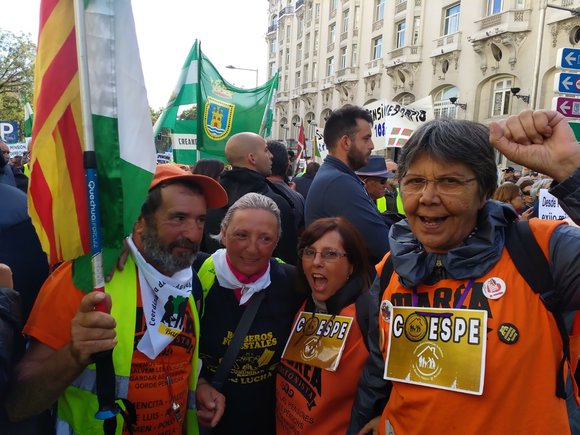
Miles de jubilados exigen mejores pensiones
Aunque algunos pensionistas y próximos pensionistas han calificado de «puñalada trapera» el acuerdo concertado entre el gobierno, la patronal y los sindicatos institucionales, no eran pocos los que ya habían advertido que los acuerdos entre el Ejecutivo de la coalición «progresista» y Bruselas apuntaban claramente hacia ese desenlace.
Apenas transcurridas unas horas después de que el triángulo gobierno -patronal -sindicatos festejara en los medios de comunicación el acuerdo de la reforma de las pensiones, un número de colectivos de jubilados ya han empezado a responder en la calle con concentraciones.
Otros han comenzado a convocar a sus integrantes para ir posicionándose de cara al próximo otoño (…).
Mientras que, inexplicablemente, los dos Secretarios Generales de CCOO y UGT celebraban gozosos con el representante de la patronal su acuerdo en relación con las pensiones, el ministro de Inclusión, Seguridad Social y Migraciones, José Luis Escrivá, se veía obligado a reconocer en una entrevista concedida a TVE que la llamada generación del baby boom, o sea, la de los nacidos entre finales de la década de los 50 y mediados de los 70, lo van a pasar un poco putas, dado el escuálido volumen que tendrán sus pensiones.

Sensu stricto, el inefable ministro vino a decir que, dado que la generación citada es «más ancha» en la pirámide demográfica española, quienes la integran tendrán que asumir el esfuercito «de la moderación que habrá que aplicar en el gasto en pensiones durante un periodo concreto de tiempo».
O sea, dicho en román paladino, que para aliviar la que se les viene encima si nada lo remedia, los llamados «baby boomers», que serán los futuros jubilados de dentro de dos o tres años, se encontrarán ante la dramática disyuntiva de tener que escoger entre dos opciones para afrontar su vejez.
Ambas, nos tememos, preñadas de crueldad. En palabras del ministro, tendrán que aceptar«un pequeño ajuste en su pensión», es decir, una sustancial disminución de su cuantía, o bien se verán obligados a «trabajar un poco más». La extensa experiencia pasada nos permite traducir con precisión el mensaje que contiene este reconocimiento salido de la boca de un ministro
Pese a ello, Escrivá con una alegría propia de un feriante vendedor de crecepelos, aseguró además que «España no tiene un problema agudo de pensiones», sino tan sólo «un problema coyuntural» para afrontar el incremento del gasto que supondrá la jubilación de la generación que él ha bautizado con la extranjerizante denominacion anglosajona de «baby boomers», ya que después el problema «se corregirá solo» (sic).
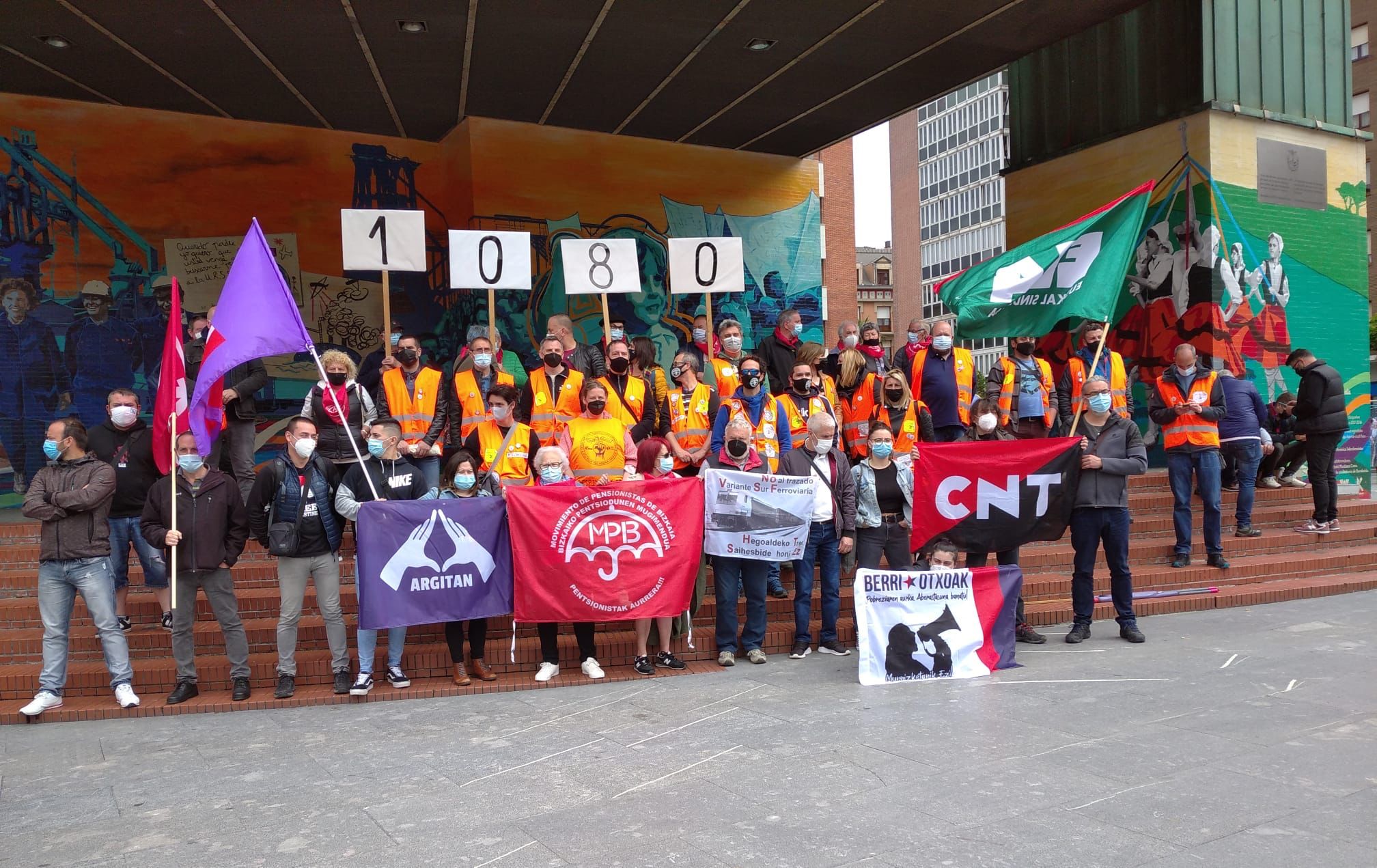
Como si hubieran ganado la batalla de Waterloo, el ejecutivo «progresista» y sus peculiarísimos «agentes sociales», que permanecieron escandalosamente ausentes durante el largo proceso de la lucha de los pensionistas, suscribieron regocijados el «primer paquete de medidas de la reforma de las pensiones», que contempla la sustitución del factor de sostenibilidad por un nuevo mecanismo de equidad intergeneracional, que estará definido en cinco meses y comenzará a aplicarse en 2027.
La reforma de las pensiones entrará en vigor «a fin de año», ha dicho el ministro, quien ha calculado que será presentada en el Congreso a principios de septiembre y «podrá estar vigente en algunos elementos centrales ya para el año que viene».
De esta forma -destacó Escrivá– las pensiones ya comenzarán a revalorizándose en 2022 con el IPC de 2021, de forma que «los pensionistas no tendrán que estar pendientes cada año de ver qué decide en presupuestos el Gobierno de turno».
COLECTIVOS DE PENSIONISTAS DENUNCIAN EL «TIMO DEL TOCOMOCHO»
Aunque todavía resulta demasiado pronto para conocer las entrañas de esta alevosa operación emprendida por el Gobierno y la Patronal española, con la necesaria complicidad de los sindicatos de la concertación, el acuerdo alcanzado ya ha sido denunciado por un número de colectivos de pensionistas.
La operación «tripartita» no tiene un pelo de ingenua. Ha sido preparada y dada conocer a principios de este singular verano de pandemia, teniendo en cuenta el clima de desmovilización todavía reinante. Sin embargo, su gozo en un pozo.
Algunos colectivos de pensionistas ya han comenzado a desenmascarar el «nuevo Factor de Equidad Intergeneracional», que podría terminar convirtiéndose -dicen- en un «sucedáneo endurecido del Factor de Sostenibilidad, al que de manera urgente tenían que cambiarle el nombre debido a su mala fama».

Se trataría ahora -sugieren- de una suerte de «caramelo» envenenado con el que el Ejecutivo y los sindicatos institucionales intentan «desmovilizar» a los pensionistas, ofreciéndoles un alivio a corto plazo con el propósito de ir introduciendo de manera paulatina, y con figuras como el propio «Factor de Sostenibilidad», los recortes en la cuantía de las pensiones ya avanzados por el propio ministro con su advertencia a las generaciones nacidas a partir de los últimos años de la década del 50 del pasado siglo.
Este recorte de las pensiones, que abriría un falaz camino a la promoción de los «planes privados», se llevaría también a cabo – denuncian – mediante el incremento paulativo de los años para el cálculo de las prestaciones. Pasando de los 25 que computarán a partir de 2022, a los 35, o incluso toda la vida laboral.
ENCIERROS DE PENSIONISTAS Y MOVILIZACIÓN FRENTE A LA SEDE DE COMISIONES OBRERAS
Sea como fuere, las primeras reacciones al acuerdo publicitado por el Ejecutivo español, CC.OO. y UGT, apenas transcurridas unas horas después de conocerse el contenido del acuerdo, han sido fulminantes. Este mismo miércoles miembros de #UnitatPensionista.Cat iniciaban un encierro en Barcelona y protagonizaban protestas frente a la sede del sindicato institucional Comisiones Obreras.
En esta misma línea, Unidad COESPE ha rechazado «esta nueva reforma contra el Sistema Público de Pensiones, siguiendo la pauta del “pacto de Toledo”», efectuada – dicen – por el ministro banquero José Luis Escrivá, con el acuerdo de los mal llamados “agentes sociales”, es decir la patronal y la burocracia sindical de CC.OO. y UGT».
«Debemos instalar en la sociedad -afirman- otro relato más veraz, que los cuentos que nos cuentan. Debemos seguir movilizándonos y adquiriendo fuerza, de cara al #OtoñoCaliente», que anule los acuerdos tomados» .
COESPE CALIFICA EL ACUERDO COMO «UN PACTO SOCIAL DE MÍNIMOS QUE NO RESUELVE LAS AMENAZAS A LAS PENSIONES»
Por su parte, la Coordinadora Estatal por la Defensa del Sistema Publico de Pensiones -identificada en sus redes sociales como Coespe Oficial– ha calificado el acuerdo alcanzado como «un pacto social de mínimos que no resuelve las amenazas a las pensiones»
COESPE valora que en el acuerdo «no se han atrevido a concretar la privatización de las cotizaciones sociales hacia sistemas privados de pensiones, y que se derogan aspectos sustanciales de la reforma de 2013 que el movimiento pensionista venía denunciando desde hace años y que ya habíamos conseguido en la calle».
Sin embargo -advierten – «ratifica por otra parte los recortes de las pensiones contenidas en la reforma de 2011 y, aunque cambia de nombre el Factor de Sostenibilidad mantiene su esencia; perpetua pensiones mínimas miserables; deja la puerta abierta a nuevos recortes y a la privatización del SPP; los Planes Privados de Empresa a través de la negociación colectiva, es un torpedo en la línea de flotación para el SPP, por lo que aplaza para los próximos meses los aspectos más regresivos propuestos en el Pacto de Toledo«.
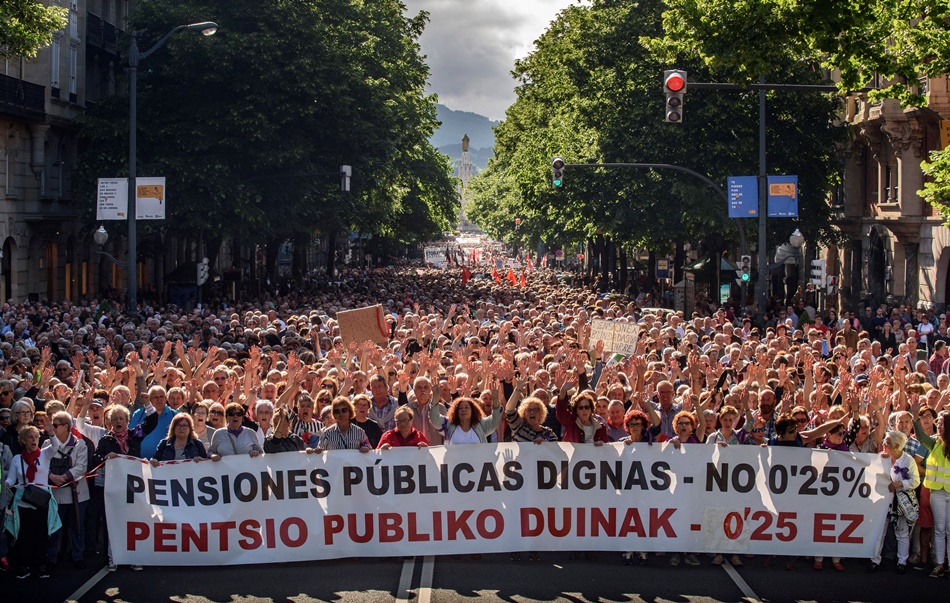
«Gran parte de nuestras reivindicaciones – explican – siguen pendientes, por lo que COESPE considera lesivos estos acuerdos adoptados en una mesa en que no está representado el movimiento de los pensionistas, verdadero artífice de los avances conseguidos y llama a seguir luchando en los próximos meses en defensa del Sistema Público de Pensiones».
«En este sentido – concluyen – vamos a seguir preparando nuestro plan de trabajo en defensa de una auditoria, la marcha el 16 de octubre a Madrid, la denuncia de las comisiones bancarias y la articulación de una movilización general de todos los movimientos pensionistas en noviembre en defensa del SPP»
por…. https://canarias-semanal.org/art/30902/gobierno-patronal-y-sindicatos-institucionales-a-por-el-movimiento-de-los-pensionistas via KAOS
Government, employers and institutional unions Attack the movement of pensioners
Por Eugenio Fernández Publicado el 5 Jul, 2021 via KAOS En La RED desde…. https://canarias-semanal.org/ar.. ilustraciones añadidas translation TheFreeOnline
Retirees within two years will have to choose between continuing to work or reducing the amount of their pensions
Although some pensioners and future pensioners have described the agreement concluded between the government, the employers and the institutional unions as a “backstabbing”, there were not a few who had already warned that the agreements between the Executive of the “progressive” coalition and Brussels pointed clearly towards that denouement.
photo..Thousands of retirees demand better pensions for themselves and their children
Just a few hours after the government-employer-union triangle celebrated the pension reform agreement in the media, a number of groups of retirees have already begun to respond in the street with rallies.
Others have begun to summon their members to position themselves for next fall (…).
While, inexplicably, the two General Secretaries of CCOO and UGT joyfully celebrated with the representative of the employer their agreement in relation to pensions, the Minister of Inclusion, Social Security and Migrations, José Luis Escrivá, was forced to recognize in a interview given to TVE that the so-called baby boom generation, that is, those born between the late 50s and mid-70s, are going to experience 'a bit of a bastard', given the squalid volume of their pensions.
Sensu stricto, the ineffable minister came to say that, given that the aforementioned generation is “wider” in the Spanish demographic pyramid, those who make it up will have to undertake the effort “of moderation that will have to be applied to pension spending during a specific period of time ».
In other words, said in Roman jargon, the so-called “baby boomers”, who will be future retirees in two or three years, will find themselves faced with the dramatic dilemma of having to choose between two options of old age.
In the words of the minister, they will have to accept “a small adjustment in their pension,” that is, a substantial decrease in its amount, or they will be forced to “work a little more.” Extensive past experience allows us to accurately translate the message contained in this recognition from the mouth of a minister
Despite this, Escrivá with a joy typical of a salesman selling hair growth, also assured us that “Spain does not have an acute pension problem”, but only “a temporary problem” to face the increase in spending that the retirement of the Generation that he has baptized with the foreignizing Anglo-Saxon denomination of «baby boomers», since later the problem «will correct itself» .
As if they had won the battle of Waterloo, the ‘progressive’ executive and its very peculiar ‘social partners’, who remained scandalously absent during the long process of the pensioners’ struggle, rejoiced in signing the’ first package of reform measures for the pensioners’. pensions ”, which contemplates the replacement of the sustainability factor by a new intergenerational equity mechanism, which will be defined in five months and will begin to be applied in 2027.
The pension reform will come into force “at the end of the year,” said the minister, who has calculated that it will be presented in Congress at the beginning of September and “may be in force in some central elements already for next year.”
In this way – Escrivá stressed – pensions will already begin to revalue in 2022 with the CPI of 2021, so that “pensioners will not have to be pending each year to see what the government of the day decides in budgets.”
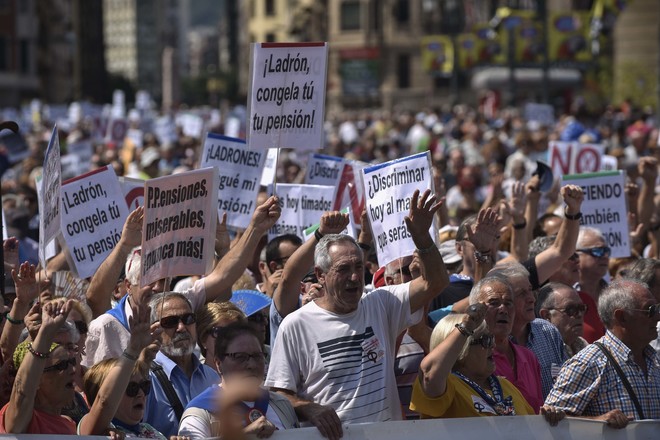
photo: DENONSTRATION! Retirees cry out in Spain for decent pensions – Noticia al Minuto
PENSIONIST COLLECTIVES DENOUNCE THE “SCAM OF TOCOMOCHO
Although it is still too early to know the ins and outs of this treacherous operation undertaken by the Government and the Spanish Employers’ Association, with the necessary complicity of the unions in the agreement, the agreement reached has already been denounced by a number of pensioner groups.
The “tripartite” operation is not a bit naive. It has been prepared and released at the beginning of this unique pandemic summer, taking into account the still prevailing climate of demobilization.
Some groups of pensioners have already begun to unmask the «new Intergenerational Equity Factor», which could end up becoming a “hardened substitute for the Sustainability Factor, which urgently had to be renamed due to its bad reputation.”
It would now be – they suggest – a kind of poisoned “candy” with which the Executive and the institutional unions try to “demobilize” pensioners, offering them short-term relief with the purpose of gradually introducing them, and with figures like the “Sustainability Factor” itself, to the cuts in the amount of pensions already advanced by the minister himself with his warning to the generations born from the last years of the 50s of the last century.
This cut in pensions, which would open a false path to the promotion of “private plans”, would also be carried out – they denounce – through the gradual increase of the years for the calculation of benefits. Going from the 25 that will compute from 2022, to 35, or even the entire working life.
Pensions and income distribution
Be that as it may, the first reactions to the agreement published by the Spanish Executive, CC.OO. and UGT (majority unions), barely a few hours after the content of the agreement was known, have been fulminating.
This same Wednesday, members of # UnitatPensionista.Cat began a sit-in in Barcelona and staged protests in front of the headquarters of the institutional union Commissions Workers.
Along the same lines, the COESPE Unit has rejected “this new reform against the Public Pension System, following the guidelines of the“ Toledo Pact ””, carried out – they say – by the banking minister José Luis Escrivá, with the agreement of the so-called wrong “Social agents”, that is, the employers’ association and the union bureaucracy of CC.OO. and UGT ».
“We must install in society – they affirm – another story more truthful than the stories they tell us. We must continue to mobilize and gain strength in the face of # AutumnCaliente » (Hot Autumn) which annuls the agreements made».
COESPE RATES THE AGREEMENT AS “A MINIMUM SOCIAL PACT THAT DOES NOT RESOLVE THREATS TO PENSIONS”
For its part, the State Coordinator for the Defense of the Public Pension System -identified in its social networks as Official Coespe- has described the agreement reached as “a minimum social pact that does not resolve threats to pensions.”
COESPE values that in the agreement “they have not dared to specify the privatization of social contributions towards private pension systems, and that substantial aspects of the 2013 reform that the pension movement had been denouncing for years and that we had already won, are now repealed. “.
However – they warn – “it also ratifies the cuts in pensions contained in the 2011 reform and, although it changes its name, the Sustainability Factor maintains its essence; perpetual miserable minimum pensions; leaves the door open to further cuts and the privatization of the SPP; Private Company Plans through collective bargaining are a torpedo on the waterline for the SPP, which is why it postpones the most regressive aspects proposed in the Toledo Pact for the next few months.
“A large part of our demands – they explain – are still pending, so COESPE considers these agreements adopted at a table where the pensioners’ movement is not represented, the true face of the progress achieved, and calls to continue fighting in the coming months. in defense of the Public Pension System ».
«In this sense – they conclude – we are going to continue preparing our work plan in defense of an audit, the march on October 16 to Madrid, the denunciation of bank commissions and the articulation of a general mobilization of all pension movements in November in defense of the SPP »
Por Eugenio Fernández Publicado el 5 Jul, 2021 via KAOS En La RED desde…. https://canarias-semanal.org/ar.. ilustraciones añadidas translation TheFreeOnline







 The Free