“Macdeath.” Illustration by Mr. Fish. This article originally appeared on ScheerPost.com on January 8, 2023 Our political class does not govern. It entertains. It plays its assigned role in our fictitious democracy, howling with outrage to constituents and selling them out. The Squad and the Progressive Caucus have no more intention of fighting for universal health care, workers’ rights or defying the war […]
The German and French foreign ministers wrapped up a two-day visit to Ethiopia on Friday, calling for cooperation between Europe and African countries to respond to world crises, including the war in Ukraine.
Speaking at the African Union (AU) headquarters in Addis Ababa, German Foreign Minister Annalena Baerbock said they wanted Africa to show solidarity with Europe against Russia’s war in Ukraine.
“In these times, when our peaceful order in Europe has been attacked by the Russian war of aggression, we, as Europeans, need the support of our friends and partners worldwide,” Baerbock…
Mage ( Mageshima)– Japan’s Island Beyond the Reach of the Law by Gavan McCormack
Mage is one such. Mage (literally: Horsehair) island sits well north of the line that separates Kagoshima from Okinawa prefecture.
It is not Okinawa but is worthy of attention because it shows the same general trends as does Okinawa – of “remote island” blues (especially depopulation), dependence on whims of the central government, and the insidious workings of a military base mentality (even though not one soldier has yet set foot on it).
Flora of Kagoshima islands, as Mage was before speculation.
Recent events in Mage make for a remarkable story, suggestive of bureaucratic irresponsibility, corruption, and environmental abuse on a grand scale.
While a great deal of attention focuses on the chain of islands dividing the East China Sea from the Pacific Ocean between Japan’s Kyushu and Taiwan, it tends to focus heavily on those that are part of Okinawa prefecture and to neglect those in the northern part of he chain that are close to Kyushu and administratively part of Kagoshima rather than Okinawa prefecture.
Furthermore, as in the islands of the Okinawa group, Mage and its adjacent Kagoshima Prefecture islands bear witness now to the gradual awakening of levels of civic responsibility and engagement till recently unimaginable.
Compared to Okinawa’s Henoko and Takae, the Mage struggle is at an early stage and remains little known nationally and scarcely at all internationally, but it shares much of the same character.
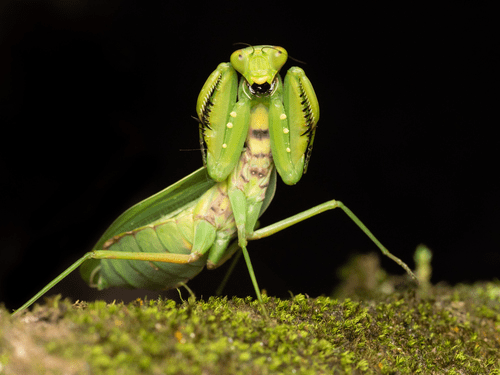
Giant Asian Mantis in Kagoshima Prefecture
Mage Island, now a couple of hours by a fast boat (ca. 115 kms) south of the city of Kagoshima, is located about 12 kilometres west of Tanegashima, the island in the East China Sea where in the 16th century Francis Xavier is said to have first landed in Japan, and about 40 kilometres north of the World Heritage island of Yakushima.
With a circumference of 16 kms and an area of just over 8 square kms, washed by the “warm current” (kuroshio) and enjoying sufficient rainfall to feed no less than 16 rivers, its tiny space is (or perhaps was) home to an astonishing biodiversity on both sea and land, from nesting turtles and giant hermit crabs to several species of killifish (medaka), and over 400 of birds including the ruddy kingfisher and the skylark, and known in particular for its own sub-species of deer, the “Mage deer.”
Mage was only sporadically populated by groups of fishermen till modern times. The researcher who probably knows the island best, having visited it with his students each year between 1987 and 2000, after which access was closed, describes it as a “Treasure island” of life.1 Mage Island (in red), In the Satsunan Islands just south of Kagoshima.
The vicissitudes that the island has undergone in the post-1945 era make it a window into the failures of regional development policies.
From 1951 settlement (or land-clearing, kaitaku) was officially encouraged, both as an outlet for rising population and as a source for food production, and Mage came to support 528 people (113 families), with a primary and junior secondary school, who made a living out of cultivation of rice and sugar cane, fishing, and collecting herbs and sea grasses.
Especially in season, the adjacent seas “boiled” with the eggs of teeming schools of flying fish.
2In the 1960s, however, the state reversed its policy, cutting back especially on rice production and reversing its earlier encouragement to agriculture.
In the 1970s, investors, strictly speaking speculators, gradually bought up the land and the residents abandoned the island, the local school closing in 1980, and successive blueprints for profitable development were imagined, adopted, and in due course abandoned:
as a tourist development site (“Mage Island Marine Leisure Land”), a Self-Defense Force radar base (1983), an oil storage site (1984), a nuclear waste storage site (ca. 1999), or as a landing site for the Japanese “Hope” space shuttle (late 1990s to ca. 2008).
Ownership (over 99 per cent) became concentrated in the Mage Island Development Company and the island was classified as unpopulated, although a small group of company staff continued to be based there.
Since about 2007, however, it has been closed off to researchers, journalists, the public, and even, astonishingly, to officials of Kagoshima prefecture or Nishinoomote City in which it is located who want to investigate apparent infractions of laws and regulations.
The company took the view that prefectural and city authorities were simply being antagonistic to a project designed to benefit the nation and the local region alike.3
For the time being, it remains a law unto itself. Not only is Mage in one sense a “treasure island,” it is also a “mystery island.”
In the early 21st century, it seemed that the speculative investment might be about to pay off. After the scrapping of successive blueprints based on agriculture and fisheries, tourism, heavy industry, and the nuclear and space industries, the military path seemed to offer the best prospect.
The Department of Defense was identified as the best potential customer to buy (or lease) the land. With that prospect in mind, Taston Airport (which in 1995 took over from Mage Island Development Company) began clearing the pristine landscape and during the first decade of the 21st century constructed two runways, 4,200 metres south-north and 2,400 metres east-west.
Japan today undertook the construction of a military base on Mage, (Mageshima) an eight-square-kilometre island with population removed, located in the Kagoshima prefecture, south of the Japanese archipelago, the Kyodo agency reported, citing the Defense Ministry.
The works in Mage will last four years and in the first phase tracks and ammunition depots for the Self-Defense Forces will be built, according to an environmental assessment report.
The project will allow American combat aircraft to train in this area. Currently, they are conducting takeoff and landing exercises on the island of Iwoto, some 1,400 kilometers from the Iwakuni base where they are based. Mage is much closer, 400 kilometers south of this airfield.
Ryukyu or Amami rabbit, is a dark-furred rabbit which is only found in Kagoshima Prefecture
Cabinet spokesman Hirokazu Matsuno said the new base will be “indispensable” for US aircraft carriers to consistently operate in the Asia-Pacific region.
“Given the more severe and complicated security environment of the post-war era, the government will build this facility and start operating it soon,” he said.
According to Kyodo, the Ministry of Defense has offered 2.2 billion yen ($17 million) in compensation to local fishermen who will not be able to fish in Mage for four years of works and in the following year, which will be an evaluation.
****************
Mage – Japan’s Island Beyond the Reach of the Law 馬毛−−法律の及ぶ範囲外の島 Gavan McCormack
February 20, 2012. slightly updated. Volume 10 | Issue 8 | Number 3 Article ID 3694
Mage ( Mageshima)– Japan’s Island Beyond the Reach of the Law by Gavan McCormack
Mage is one such. Mage (literally: Horsehair) island sits well north of the line that separates Kagoshima from Okinawa prefecture.
It is not Okinawa but is worthy of attention because it shows the same general trends as does Okinawa – of “remote island” blues (especially depopulation), dependence on whims of the central government, and the insidious workings of a military base mentality (even though not one soldier has yet set foot on it).
Flora of Kagoshima islands, as Mage was before speculation.
Recent events in Mage make for a remarkable story, suggestive of bureaucratic irresponsibility, corruption, and environmental abuse on a grand scale.
While a great deal of attention focuses on the chain of islands dividing the East China Sea from the Pacific Ocean between Japan’s Kyushu and Taiwan, it tends to focus heavily on those that are part of Okinawa prefecture and to neglect those in the northern part of he chain that are close to Kyushu and administratively part of Kagoshima rather than Okinawa prefecture.
Furthermore, as in the islands of the Okinawa group, Mage and its adjacent Kagoshima Prefecture islands bear witness now to the gradual awakening of levels of civic responsibility and engagement till recently unimaginable.
Compared to Okinawa’s Henoko and Takae, the Mage struggle is at an early stage and remains little known nationally and scarcely at all internationally, but it shares much of the same character.
Giant Asian Mantis in Kagoshima Prefecture
Mage Island, now a couple of hours by a fast boat (ca. 115 kms) south of the city of Kagoshima, is located about 12 kilometres west of Tanegashima, the island in the East China Sea where in the 16th century Francis Xavier is said to have first landed in Japan, and about 40 kilometres north of the World Heritage island of Yakushima.
With a circumference of 16 kms and an area of just over 8 square kms, washed by the “warm current” (kuroshio) and enjoying sufficient rainfall to feed no less than 16 rivers, its tiny space is (or perhaps was) home to an astonishing biodiversity on both sea and land, from nesting turtles and giant hermit crabs to several species of killifish (medaka), and over 400 of birds including the ruddy kingfisher and the skylark, and known in particular for its own sub-species of deer, the “Mage deer.”
Mage was only sporadically populated by groups of fishermen till modern times. The researcher who probably knows the island best, having visited it with his students each year between 1987 and 2000, after which access was closed, describes it as a “Treasure island” of life.1 Mage Island (in red), In the Satsunan Islands just south of Kagoshima.
The vicissitudes that the island has undergone in the post-1945 era make it a window into the failures of regional development policies.
From 1951 settlement (or land-clearing, kaitaku) was officially encouraged, both as an outlet for rising population and as a source for food production, and Mage came to support 528 people (113 families), with a primary and junior secondary school, who made a living out of cultivation of rice and sugar cane, fishing, and collecting herbs and sea grasses.
Especially in season, the adjacent seas “boiled” with the eggs of teeming schools of flying fish.
2In the 1960s, however, the state reversed its policy, cutting back especially on rice production and reversing its earlier encouragement to agriculture.
In the 1970s, investors, strictly speaking speculators, gradually bought up the land and the residents abandoned the island, the local school closing in 1980, and successive blueprints for profitable development were imagined, adopted, and in due course abandoned:
as a tourist development site (“Mage Island Marine Leisure Land”), a Self-Defense Force radar base (1983), an oil storage site (1984), a nuclear waste storage site (ca. 1999), or as a landing site for the Japanese “Hope” space shuttle (late 1990s to ca. 2008).
Ownership (over 99 per cent) became concentrated in the Mage Island Development Company and the island was classified as unpopulated, although a small group of company staff continued to be based there.
Since about 2007, however, it has been closed off to researchers, journalists, the public, and even, astonishingly, to officials of Kagoshima prefecture or Nishinoomote City in which it is located who want to investigate apparent infractions of laws and regulations.
The company took the view that prefectural and city authorities were simply being antagonistic to a project designed to benefit the nation and the local region alike.3
For the time being, it remains a law unto itself. Not only is Mage in one sense a “treasure island,” it is also a “mystery island.”
In the early 21st century, it seemed that the speculative investment might be about to pay off. After the scrapping of successive blueprints based on agriculture and fisheries, tourism, heavy industry, and the nuclear and space industries, the military path seemed to offer the best prospect.
The Department of Defense was identified as the best potential customer to buy (or lease) the land. With that prospect in mind, Taston Airport (which in 1995 took over from Mage Island Development Company) began clearing the pristine landscape and during the first decade of the 21st century constructed two runways, 4,200 metres south-north and 2,400 metres east-west.
The global decline of bees and other pollinators is stunting yields of fruits, vegetables, and nuts. Scientists estimate that the loss of these nutritious foods is leading to 427,000 early deaths a year.
“This study shows that doing too little to help pollinators does not just harm nature, but human health as well,” Matthew Smith, a researcher at the Harvard T.H. Chan School of Public Health and lead author of the study, said in a statement.
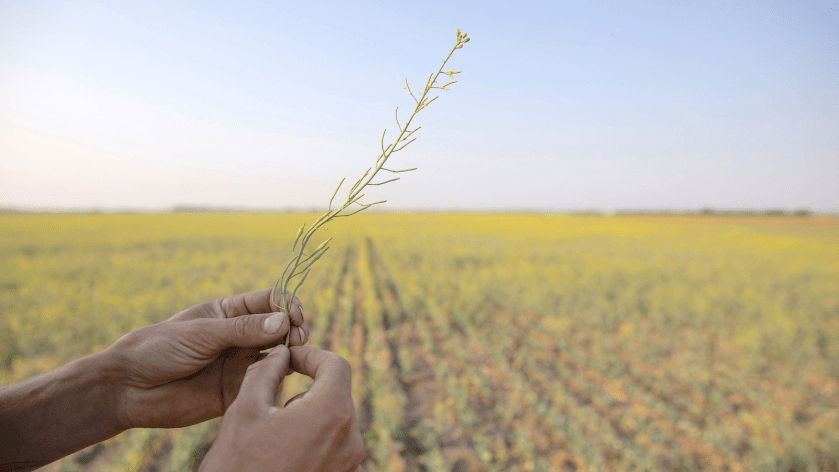
Rising temperatures, widespread use of pesticides, and habitat loss are fueling a downturn in the population of insects, with has dropped by nearly half in some parts of the world. Insects pollinate around three-fourths of crops, scientists said, and their decline has hurt the growth of key foods.
For the study, researchers gathered data from hundreds of experimental farms in Asia, Africa, Europe, and South America, finding that in 2020, growers produced 3 to 5 percent less fruits, vegetables, and nuts than they would have in a world with thriving insect populations. In lower-income countries, the impact was severe, with the loss of pollinators stunting agricultural incomes by an estimated 10 to 30 percent.
Researchers also modeled how the drop production is impacting public health, finding that declining consumption of fruits and vegetables is limiting the intake of needed nutrients and giving rise to heart disease, stroke, diabetes, and some cancers. Globally, the loss of pollinators is leading to an additional 427,000 deaths yearly. The effect is most pronounced in middle-income countries, such as China and Russia. The findings were published in the journal Environmental Health Perspectives.
“Globally, we consume too much of the wind-pollinated crops — wheat, rice, corn, barley — which are rich in carbs but relatively low in nutrients, leading to an epidemic of obesity and diabetes around the world,” University of Sussex researcher David Goulson, who was not affiliated with the study, told The Guardian. “We do not eat enough fruit and veg, most of which requires insects for pollination.”
Goulson added, “The most concerning aspect of this study is that, since insect populations are continuing to decline, this lost crop yield is going to get worse into the future, while the human population is going to continue growing to at least 10 billion.”
They are charged “simply for helping refugees and migrants in danger of drowning at sea,” says Amnesty. The story of the Syrian Mardini has reached the cinema.
Sarah Mardini and Seán Binder, two of the defendants. INTERNATIONAL AMNESTY
from thefreeonline The HuffPost / EFE Agency | Jan 13 2023
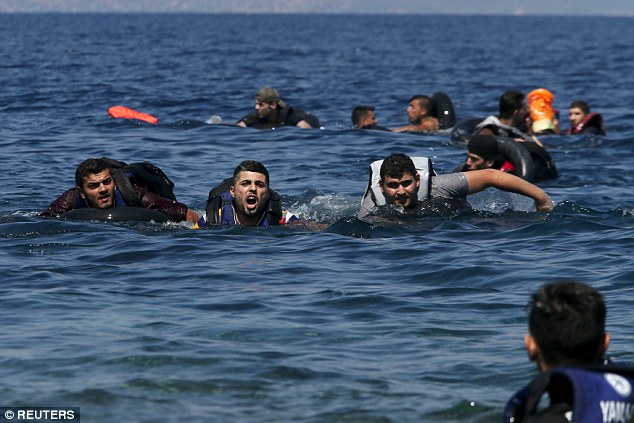
The trial against Syrian refugee and activist Sarah Mardini, whose odyssey to escape the war in Syria and reach Europe in 2015 has been turned into a film, and against 23 other members of a migrant rescue and rescue NGO, formally begins this Friday before the Court of Appeals for the North Aegean, on the Greek island of Lesbos.
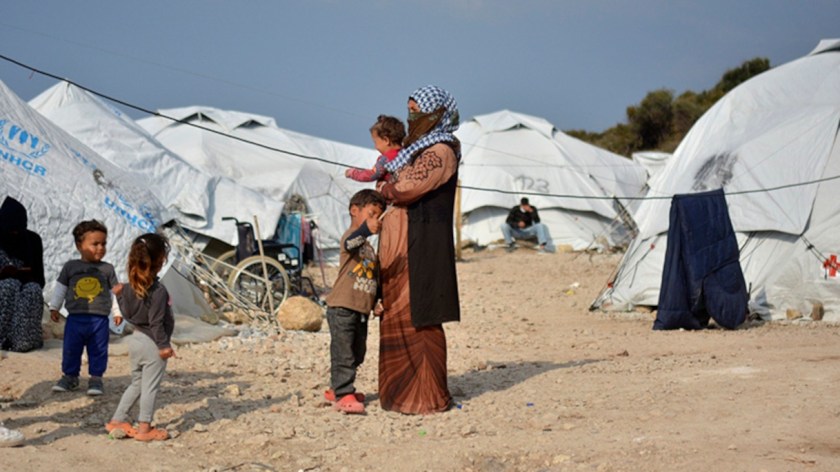
A woman holds a baby at Karatepe refugee camp, on the eastern Aegean island of Lesbos, Greece, Monday, March 29, 2021. The European Union’s home affairs commissioner is visiting asylum-seeker facilities on the eastern Greek islands of Samos and Lesbos amid continuing accusations against Greece of illegal summary deportations. (AP Photo/Panagiotis Balaskas)
Mardini, German trained salvage diver Sean Binder and 22 others are charged by the Greek judicial authorities for allegedly committing a series of offences, including espionage and forgery, and could face up to a prison sentence. eight years if convicted.
During the first session held on Tuesday, later delayed, the defendants’ defense lawyers testified and it was decided that the trial would continue on Friday.
The accusations against Mardini and the other members of the NGO Emergency Response Center International (ERCI), active in Lesbos between 2016 and 2018, have generated harsh reactions from international human rights organizations.
Son acusados “simplemente por ayudar personas refugiadas y migrantes en peligro de ahogarse en el mar”, dice Amnistía. La historia de la siria Mardini ha llegado al cine.
Sarah Mardini y Seán Binder, dos de los procesados. AMNISTÍA INTERNACIONAL
from thefreeonline via El HuffPost / Agencia EFE | 13 ene. 2023
El juicio contra la refugiada y activista siria Sarah Mardini, cuya odisea para escapar de la guerra en Siria y llegar a Europa en 2015 se ha convertido en una película, y contra otros 23 miembros de una ONG de rescate y salvamento de migrantes, empieza formalmente este viernes ante la Corte de Apelaciones del Egeo Norte, en la isla griega de Lesbos.
A woman holds a baby at Karatepe refugee camp, on the eastern Aegean island of Lesbos, Greece, Monday, March 29, 2021. The European Union’s home affairs commissioner is visiting asylum-seeker facilities on the eastern Greek islands of Samos and Lesbos amid continuing accusations against Greece of illegal summary deportations. (AP Photo/Panagiotis Balaskas)
Mardini, el buceador alemán con formación en salvamento Sean Binder y otras 22 personas son acusadas por las autoridades judiciales griegas por la presunta comisión de una serie de delitos, entre los cuales figuran el espionaje y la falsificación y podrían afrontar una pena de prisión de hasta ocho años en caso de que sean condenados.
Durante la primera sesión celebrada el martes, retrasada luego, prestaron declaración los abogados de defensa de los imputados y se decidió que el juicio continuará el viernes.
Las acusaciones en contra de Mardini y los otros miembros de la ONG Emergency Response Centre International (ERCI), activa en Lesbos entre 2016 y 2018, han generado duras reacciones por parte de organizaciones internacionales de derechos humanos.
Amnistía Internacional emitió el lunes un comunicado en el que califica los cargos de “injustos” e “infundados” y señala que los 24 miembros de ERCI son acusados “simplemente por ayudar personas refugiadas y migrantes en peligro de ahogarse en el mar”.
Según otro comunicado emitido por la ONG Human Rights Watch (HRW) los cargos se basan en un informe de la Policía griega que contiene flagrantes errores, “incluidas afirmaciones de que algunos de los acusados participaron en misiones de rescate en varias fechas cuando no estaban en Grecia”.
Just checking in to see if anti Armageddon riots are sweeping the USA.?. no NOTHING..NIX…. Oh yes! 2 Peace Women INTERRUPTED a War Promotion Event to politely ask for negotiations! Good for Code Pink!.. And yes wow! 20 democrats signed a letter asking for TALKS!.. But no.. withdrew the letter a day later.
So where are the protests? The Code Pink two did well, getting a video on You Tube (see below). But only a few marginal agencies even shared the news on Gobshite-Google. So I tried searching DuckDuckGo.. no protests. How about the Russian, Yandex.. nothing at all.
Seems that he US “Defense” Dept with its $ TRILLION budget is deeply embedded over generations in US society and industry. Not squeamish about splurging the odd billion on community events, scouts, scholorships, festivals, worthy causes and God knows what.
And of course nearly 100% of politicians, investors, CEO’s and maybe just middle class people have portfolio’s in the soaring shares of the Arms Industry and all its spinoffs and backhanders.
Every year the Pentagon fails to audit the multi trillions that have GONE MISSING! But it doesn’t really matter, as long as the US can still, just about, maintain economic hegemony, allowing it to just print money. Really!
So we’re happy enough it seems to sit tight and hold onto whatever privileges we still have left. At the Think -tank that Code Pink invaded, the eminent, despicable warmonger Adam Smith did in fact argue for cutting arms production! – Ah no… but only of obsolete armaments, and in favour of ginormous new, wonderful, shining massacre weapons.
It’s never been very hard for these profiteers to start a war in Europe. All it takes is to boost one petty rightwing State to NATO, then arm them and let them start killing any ethnic minority from a neighbouring nationalist rightwing State you don’t like… and bingo! Lovely War!
No protests… What a pity. It seems like declining capitalist states, especially settler states, are the WORST for blinding themselves in a spiral of hatred, ignorance, manipulated internal violence and the destruction of ‘enemies’, minorities and the planet.. in reality slowly destroying themselves.
And especially when living in a bubble of corrupt regime misinformation and led from behind by nuclear armed warmongers and psycopathic billionaire corporations.
Still, you never know, nobody expected Black Lives Matter, and US youth are in principle way ahead in experiencing total bullshit, and perhaps detonating a post capitalist rebellion.
*********
Code Pink activists urged talks with Russia during an event featuring a hawkish Democratic lawmaker
Code Pink activists urged talks with Russia during an event featuring a hawkish Democratic lawmaker













 The Free