
A COP28 proposal to eat less meat comes amid a right-wing backlash against alternatives.
from thefreeonline on 8th Dec 2023 main text by Max Graham at Grist (some inserts in italics added, with thanks)
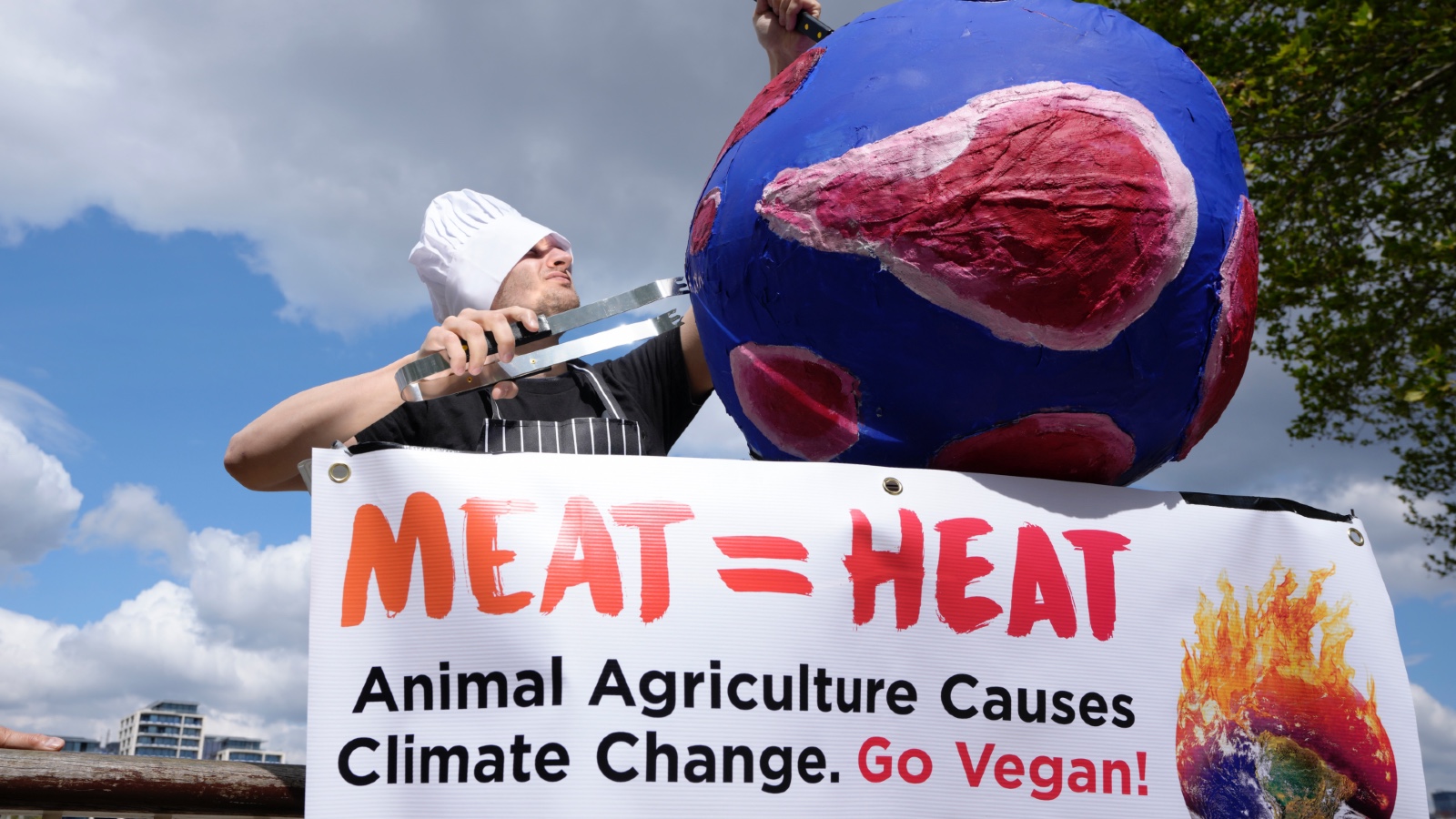
Fossil fuels usually suck up everyone’s attention at the annual United Nations’ climate summit. But at this year’s gathering in Dubai, COP28, another topic is generating headlines: food.
More than 130 countries signed a declaration on Friday saying that the world must transform its food systems, the source of one-third of all greenhouse gas emissions, “to respond to the imperatives of climate change.”

And on December 10, the U.N. is expected to call on countries that consume a lot of meat to eat less of it.
The problem is that meat consumption is as politically polarizing in the rich West as ever. Fox Business recently ran a headline saying world leaders planned to “declare a war on meat” at COP28.
The problem is how many powerful men love to dominate, mistreat, torture, kill and eat their fellow animals
However in the world’s most populous country, in India, 81% limit meat in diet and 39% say they are vegetarian. And in most other developing countries eating meat is likely once a week and at festivals.
When I was a child eating meat was a special treat. Now you’re considered weird if you don’t eat it every day. Customs change, and they could change again.
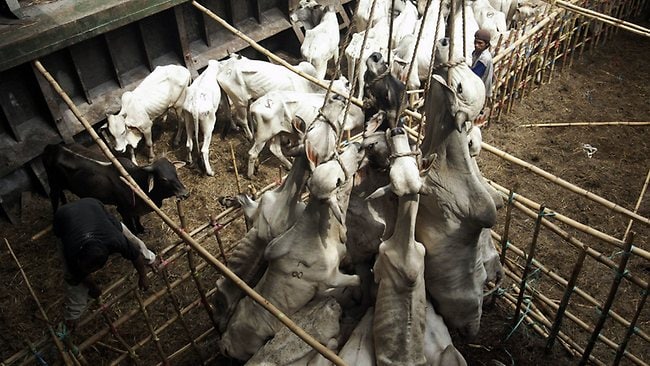
Abattoir Truth: Animals Boiled Alive, Abused & Slaughtered … https://www.youtube.com/watch?v=JBy30LDTUlo
For example it’s now possible to create cheap, identical animal feed by fermenting hydrogen with no land, animal or agriculture necessary, just a modest amount of water and renewable electricity. Expanding that technology could free up huge areas of land, save the collapsing biosphere, and still allow the ‘barbarian carnivores’ to eat their steaks.
In the US meat eating is nowadays tied into the national psyche of privilege and over wild over consumption, and US world media domination still assumes all must follow.
The Meat Culture War comes after years of prodding from scientists and environmental advocates who say the only path to keep global warming below the Paris Agreement’s goal of 1.5 degrees Celsius (2.7 degrees Fahrenheit) is to do things like limit how much meat people eat in the U.S. and its satellite countries (Livestock alone are responsible for about 15 percent of global climate pollution.)

“They don’t want solutions, they want a sick, depressed populace,” television chef Andrew Gruel said on the social media platform X. But of course he would also have a vested interest.
The political right is also taking aim at climate-friendly alternatives to meat, like cultivated chicken and beef, made from cells grown in labs.
State legislators in Florida recently proposed a bill that would make selling cultivated meat a second-degree misdemeanor.
In Europe the issue has been just as partisan. Italy’s right-wing government just banned the production and sale of cultivated meat, ostensibly to protect the country’s culinary heritage.
And Germany’s far-right Alternative for Deutschland party has been drumming up fears that the left is coming for their fried cutlets.
“They will not take away my schnitzel,” a petty party co-chair said at a campaign event this fall.
What would happen if everyone stopped eating meat tomorrow? Max Graham
Some of the backlash is likely a result of lobbying by the meat and dairy industries and misinformation on social media.
But no matter how good it might be for the planet to end factory farming and to stop converting forests into pastures, researchers say meat is inherently political.
“It’s a political relationship between our species and other species,” said Sparsha Saha, a political scientist who studies meat politics at Harvard University.
This is rubbish, of course, extending his local privileged cultural preferences to the whole human species. Ancient China for example, was once known for having profound veganism in its food culture. Its widespread vegetarianism originally comes from the Buddhist code (Vinaya) transferred from ancient India which valued not killing animals. The anarchist thinker Li Shizeng, for instance, argued that tofu and soy products were healthier and would be a profitable export.
“That’s what makes Meat Eating a lot different. It’s not a technology.”It’s how powerful men love to dominate, mistreat, torture, kill and eat their fellow animals.
Technological solutions tend to be more popular than lifestyle ones, even though some researchers say both may be necessary to avert environmental catastrophe.
According to a survey across 23 countries, people in every one but France showed more support for solving the climate crisis through technology and innovation than by changing how they live.
Saha’s research suggests that meat is even more polarizing than gas-guzzling cars.
In a recent study published in the journal Frontiers, she found that voters are more likely to oppose candidates who advocate for curbing emissions by eating less meat than those who talk about the need to limit emissions from transportation.
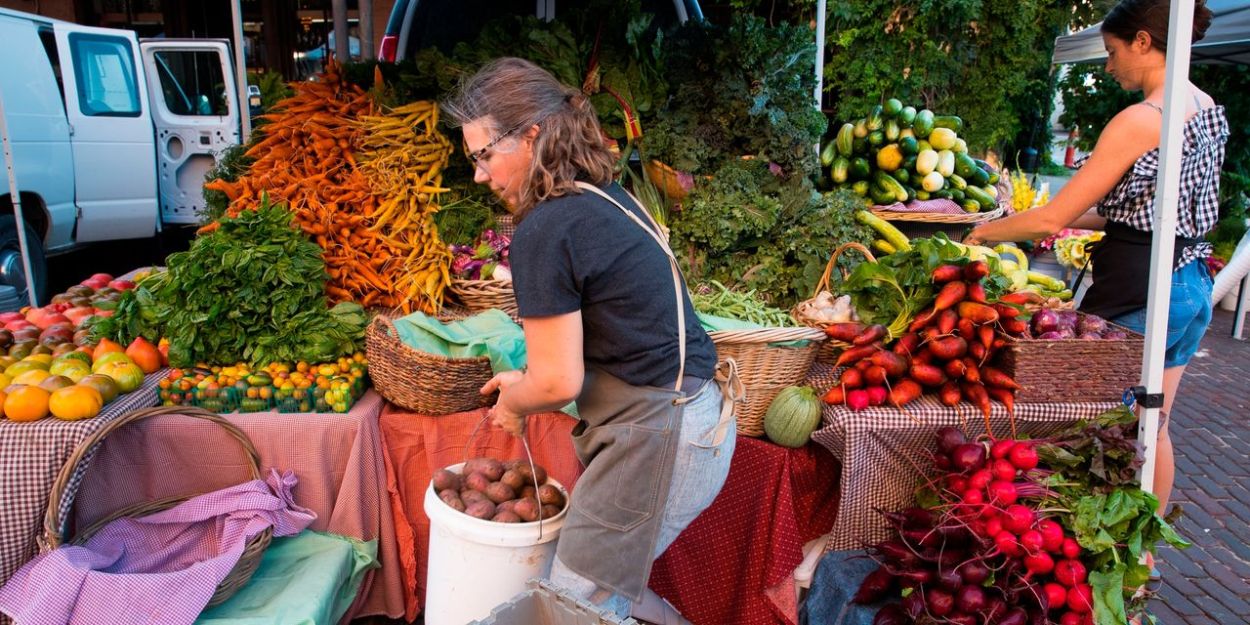
Climate Experts Advise Eating More Vegetables, Less Meat
“It’s like asking us to be a different kind of human,” Saha said. “I think that’s why people are so reticent about it. It is kind of a costly thing to bring up. Even as an academic, I have to be really thoughtful about how I’m framing things.”
To Saha, the solution isn’t to keep meat out of political conversation; it’s to talk about it differently and focus on building consensus. Rather than avoid the issue or pretend like it doesn’t have to be political, she thinks the meat-reduction movement would benefit from messaging supported by a broader coalition, including religious leaders, hunters, and even ranchers who oppose factory farming.
“If we had put more thought into how it could be communicated well to people ahead of time we might not be in this position,” Saha said. “It feels like it was sprung on people.”
Saha advises against “quiet meat politics,” an idea articulated in a piece published in 2021 by the Breakthrough Institute, an environmental research center in Berkeley, California. (Pro Nuclear, pro Corporations) ….. …
In January 2022, Google revealed that searches for “vegan food near me” had dramatically increased in 2021. The term achieved “breakthrough status”, meaning it increased by 5,000 percent or more indicating the rising popularity of vegan diets.[4][5]
Saha’s paper offers some evidence for a different perspective. To her surprise, she found that voters were more receptive to a theoretical candidate who talked about animal rights than one who talked about the environmental costs of meat eating.
That might signal that meat itself isn’t as divisive as some think. Perhaps it’s made more partisan through its connection to another polarizing issue: climate change.


 The Free