
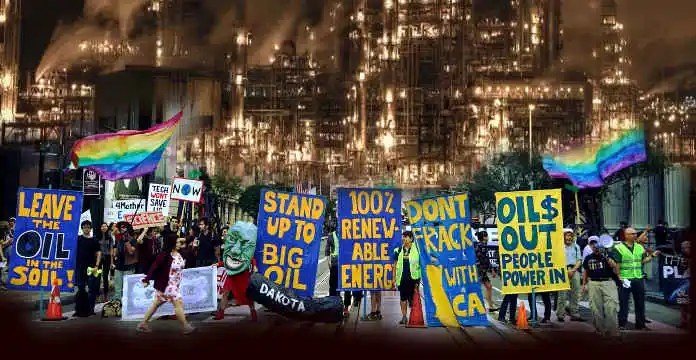
Fracking Gas and Oil to Supply Giant US Chemical Belt and Lock-in cheap Plastics Monopoly
The chemical plants that dot the industrial corridors of Texas and Louisiana produce some of the most toxic pollution in the country. Companies like Celanese and Indorama Ventures emit ethylene oxide and 1,3-butadiene into the air of predominantly Black and Latino communities, day and night.
At the start of his term running the EPA in 2021, Michael Regan pledged to tackle these emissions. On Tuesday, the agency announced a major step in that direction when it finalized a rule to cut thousands of tons of toxic emissions and require air monitoring at more than 200 chemical plants across the country.
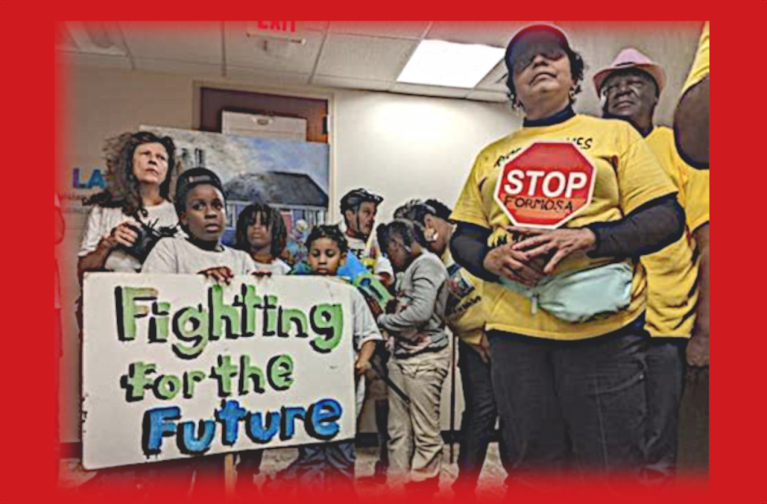
“We promised to listen to folks that are suffering from pollution and act to protect them,” Regan said in a press release. “Today we deliver on that promise with strong final standards to slash pollution, reduce cancer risk, and ensure cleaner air for nearby communities.”
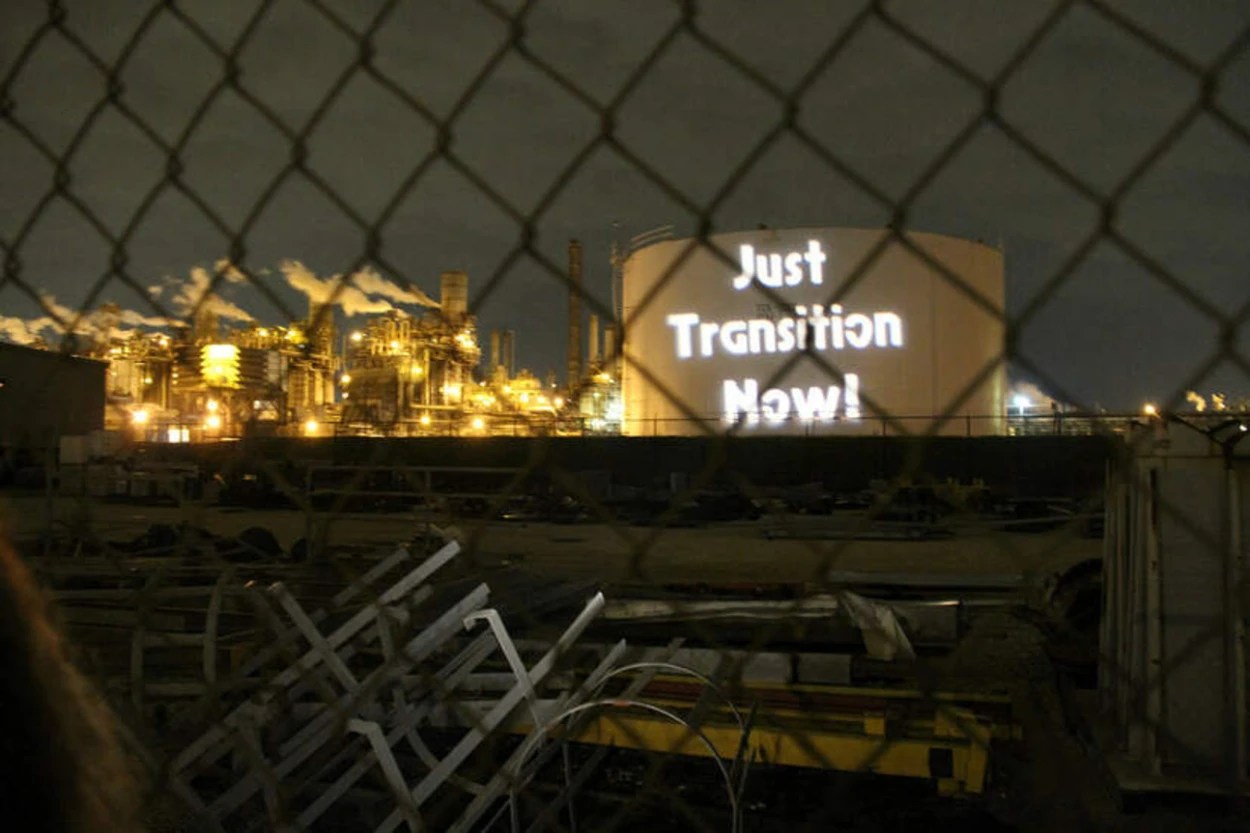
Image projected onto Houston petrochemical plant during the Houston Toxic Tour, Credit: Backbone Campaign, CC BY 2.0
It marks the first time that federal regulations for chemical plants have been updated in decades. The EPA expects the rule to cut more than 6,200 tons of toxic emissions each year, and lead to reductions of more than 100 hazardous pollutants. Officials also estimated a 23,000 ton-per-year reduction in smog-forming volatile organic compounds, which create the brown-tinged air often found in industrialized areas.
The announcement follows a move in March to crack down on emissions of ethylene oxide, a dangerous carcinogen, from facilities that sterilize medical equipment.
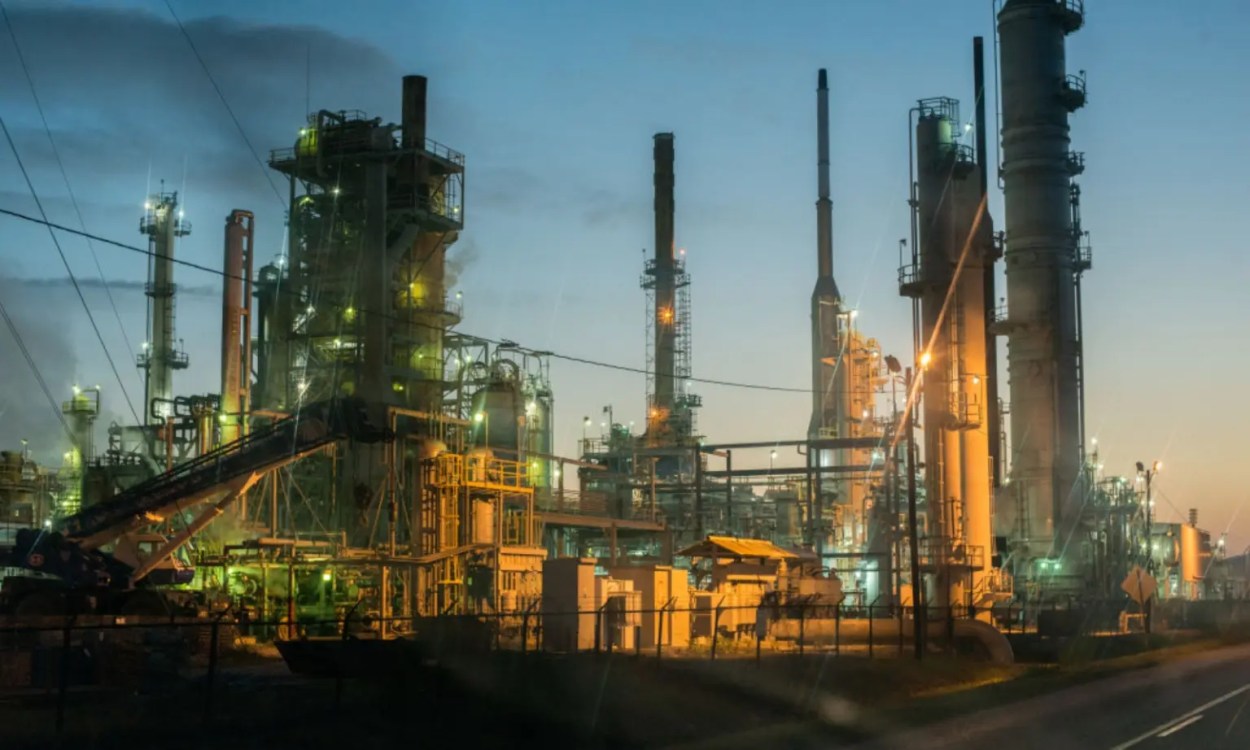
Between 2018 and 2050, production of new U.S. oil and gas reserves could unlock 120 billion metric tons of new carbon pollution. Meanwhile the U.S. — thanks to Permian production — just marked its first month as a net exporter since records have been kept. If production and expansion are not curtailed, U.S. oil and gas expansion will impede the rest of the world’s ability to manage a climate-safe, equitable phase out of oil and gas production.
Some of the facilities subject to these rules, such as the Denka Performance Elastomers plant in Louisiana’s St. John the Baptist Parish, are more than half a century old. Regan visited St. John on a tour of pollution hotspots across the Deep South in November 2021, and promised residents that they would see a reduction in Denka’s emissions of chloroprene, a toxic compound that studies have linked to cancers of the liver, lung, and digestive system.
But multiple avenues the agency took to tackle the plant’s pollution, including a civil rights complaint and an emergency legal motion, failed to cut the facility’s emissions.
The new rule “shows that the agency was not willing to give up after trying to use other legal platforms to address the problem,” said Scott Throwe, a former EPA enforcement official and air pollution expert.
The most important chemical that the rule seeks to reduce is ethylene oxide, a potent carcinogen that studies have linked to cancers of the breast and the lymph nodes.
Plants emitting ethylene oxide came under greater scrutiny after the EPA published a study in 2016 finding the chemical to be 30 times more toxic to adults and 60 times more toxic to children than previously thought.
Ethylene oxide pollution is particularly bad in the industrial suburbs of the Houston Metro Area and in Cancer Alley, the corridor full of oil refineries and chemical plants on the lower Mississippi River in southeast Louisiana.
No One Should Have to Breathe These Chemicals – AnaParras of Texas Environmental Justice Advocacy Services (@tejasbarrios). HOUSTON — While families across the country celebrated Thanksgiving with their loved ones, more than 50,000 people in Port Neches, Tex., were forced to evacuate from their homes and spend the holiday in makeshift
Once it’s in place, the rule is expected to reduce both ethylene oxide and chloroprene emissions from certain processes and equipment by nearly 80 percent. One provision seeks to improve the efficiency of flares, gas combustion devices that burn off excess chemicals. Recent research connected the practice of gas flaring to increased childhood asthma cases.

Fracking for Plastics, a DeSmog investigation into the proposed petrochemical build-out in the Rust Belt. Over 12.6 million people in the United States live within half a mile of an oil and gas facility.
The regulations will also require plant operators to install monitors around the perimeters of their sites to measure concentrations of a number of cancer-causing chemicals, including ethylene oxide and vinyl chloride.
If the amount of any of these chemicals is above the agency’s “action level,” plant operators will be required to determine the cause and make repairs.
see also..Texas Taxpayers Face $117,000,000,000 Bill For Orphaned Oil Wells, Authored by Josh Owens via OilPrice.com.
In a fact sheet published alongside the final rule, the EPA noted that a similar monitoring provision in the regulations for petroleum refineries led to significant reductions in benzene levels around those facilities.
Chemical companies subject to the rule will have two years to implement the new provisions. Officials estimated that the regulations will cost the chemical industry $1.8 billion over the next 14 years, the equivalent of $150 million per year.
“Most of the facilities covered by the final rule are owned by large corporations,” the agency noted. “The cost of implementing the final rule is less than 1 percent of their annual national sales.”
by… The EPA’s first chemical plant rule in 20 years targets polluters in Louisiana and Texas
RELATED POSTS
Fracking Gas and Oil to Supply Giant US Chemical Belt and Lock-in cheap Plastics Monopoly
Ecocidal US Frackers, to get a Bailout: Nationalism, Oil and Climate Crime in Texas

Climate fueled Hurricanes suspend Frack Gas exports of US Climate Criminals, cause toxic chemical fire
I
Cancer Alley Communities battle Exxon in Louisiana

More proof Methane spike due to US ecocidal Frackers.. Stopping it could delay Climate Catastrophe

As virus ravages Louisiana, ‘Cancer Alley’ residents Fight Back/
 see also.. More proof Methane spike due to US ecocidal Frackers.. Stopping it could delay Climate Catastrophe https://nomesgas.wordpress.com/2020/02/23/more…
- Texas Petroleum Chemical Plant Explosion, And Our Petrochemical ‘Collective Suicide’
- Washington Petrochemical Plant Subsidies Would Violate Federal ‘Double Dipping’ Rules Say Environmental Groups
- Pipeline Permit Scandal Highlights Confusion Amid Push to Build Plastics Plants
- Former Shale Gas CEO Says Fracking Revolution Has Been ‘A Disaster’ For Drillers, Investors
- Will Ohio River Get Optional Pollution Limits as New Fracking-Reliant Plastics Industry Moves in?
- Plastics Industry on Track to Burn Through 14% of World’s Remaining Carbon Budget: New Report
- ‘Virtually No Risk of Drilling Restrictions,’ West Virginia Official Tells Fracking-Reliant Petrochemical Industry
- New Warnings on Plastic’s Health Risks as Fracking Industry Promotes New ‘Plastics Belt’ Build-Out
- A Field Guide to the Petrochemical and Plastics Industry
- Pipeline that Exploded in Pennsylvania Part of Push to Build Fracking-Reliant Petrochemical Network
- As Industry Pushes Billion-Dollar Fracked Petrochemical Projects, State Regulators Struggle To Keep Up

 The Free