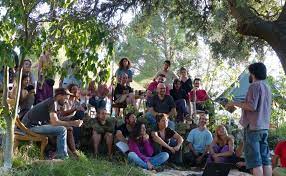
We started off with 100 friends to make a dual Consumer and work Coop, without bosses or private profits. When the big 15M social revolution took off we were flooded with young people and dozens of new projects.
by Gka/Jordi/ TheFree at Revolucion Integral Catalana on 1st October 2024 from thefreeonline –https://wp.me/pIJl9-EaE (on T’gram t.me/thefreeonline )

This text briefly and partially covers the Integral Coop’s (CIC) journey from 2010 to 2017, until it was effectively dissolved, although not officially, as it still operates today in a an ad hoc manner.
The CIC was formed in Barcelona in the period immediately after the outbreak of the 2008 crisis, based on the postulates of alter-economy, self-management and degrowth (it emerged in 2010 as a result of the march for degrowth) and it gradually adopted a line of discourse in favour of ecology, disobedience and against state power and the banking cartel, subsequently adopting the call for integral revolution (2014).

auto sub titles
Along its path, it produced a great confluence of ideologically disparate people; libertarians, anarchists, communists, trade unionists, new age and therapeutics, neo-rurals, independentists, etc. although the ideological label always remained in the background, with the principles that were discussed and established for this purpose taking centre stage.
Postmodern ideologies and traditional “isms” in the militant sphere did not have a significant presence in the public and operational sphere, except for some specific debates that were organised, for example, in relation to the independence of Catalonia, from the perspective of independence without a State.

However, the incompatibility of some visions and lifestyles, not explicitly addressed from the beginning through some kind of admission filter, was one of the triggers of the subsequent tensions and further disintegration.
At the peak of the post-15-M period (2012-2013, when the publication ¡Rebelaos!) was presented, the moment of greatest impact and repercussion occurred, with a significant number of interventions, reception of people and initiatives, training, support for the creation of sister integral cooperatives and the promotion of the network of integral cooperatives
A climate of hope was generated that quickly spread among sectors of activists who came from the 15M.
At the same time, and from the very beginning, there was a lack of trust in traditional activist sectors, due to the fact that it was operating outside the existing organisational framework and outside the militant scheme of the libertarian, pro-independence and postmodern neighbourhood circles that operated mainly in the city of Barcelona.
The CIC was an activist experience outside the traditional activist circles.
The operation was based on assemblies, based on work commissions and general assemblies, in addition to the assembly days that rotated monthly throughout the Catalan territory.

However, interpersonal conflicts and the distribution of monetary surpluses (in the form of salaries-allowances) soon dominated the theme of the assemblies.
It must be said that through the practice of economic disobedience and support for small commercial and productive activity, a significant capacity for generating monetary surpluses was developed, reaching a budget of 500 thousand euros per year.
However, an excessive amount of energy is gradually being directed towards obtaining resources from the euro economy and projects that allow for the construction of an alternative system to the prevailing one are losing relative weight (with some exceptions).
The quality of the subject was key, in terms of their ethical-relational disposition and their aptitude for the tasks of managing the common thing, since it represented the greatest weakness of the project.
Competitive and selfish attitudes typical of the system are repeatedly replicated, among people who seek to receive shelter rather than contribute to building, while there is a lack of empowerment in the assemblies to enforce collective agreements.

All this, although without significant success, was attempted to be addressed through convivial days, training and specific discussions; as well as with tools to provide transparency, clarity and organizational efficiency, based on planning, through agreed procedures and the assignment of responsibilities.
Over time, through disagreements and disillusionment, the CIC became a diminished vanguard surrounded by paid activists, where a minority is in charge of maintaining a structure that offers a service to a majority (which, moreover, does not reciprocate what it receives).
A pseudo-functional system that does not operate as a result of agglutinating and scaling up wills on a local scale but as a structure in itself, by itself and for itself. The chain of person>production>collectiveness>coordination structure is thus dissociated.
Every revolutionary initiative on a large scale must develop from the individual and local to the global and collective (as is traditionally said, “from the bottom up”), starting from projects, neighborhoods or fraternities that are clearly self-sufficient (ethically, discursively, organizationally and economically) so that these virtues can be scaled up with possibilities of success and thus encompass a range of action and coordination on a larger scale
In the CIC, a process was initiated to delve deeper into this type of model, starting from the premise of decentralized collaborative work, which led to a recentralization first and finally, as a corrective measure, it translated into a process of accelerated decentralization without consolidated organizational bases, which was the final trigger for the disintegration of the organization.

In any case, the CIC, due to its duration over time, 2010 to 2017, its impact on the territory, the people it brought together and its postulates clearly in favor of an integral transformation, represents one of the most important peninsular collective experiences of this beginning of the 21st century.
Therein lies the legacy of practices of economic disobedience, the experience in alternative economics and social currencies, collectivized supply, shared housing and spaces, free education, holistic health, self-managed technologies, itinerant assembly days, etc.
It must be said that numerous doctoral students, social and private initiatives have taken as a reference the practices and discourses that the CIC generated during its period of greatest activity.
The CIC has been a tangible experiment, showing that it is possible to build an alternative reality to the prevailing system in all areas of society; this represents a great legacy for the collective imagination and for projects of greater scope that are to come.
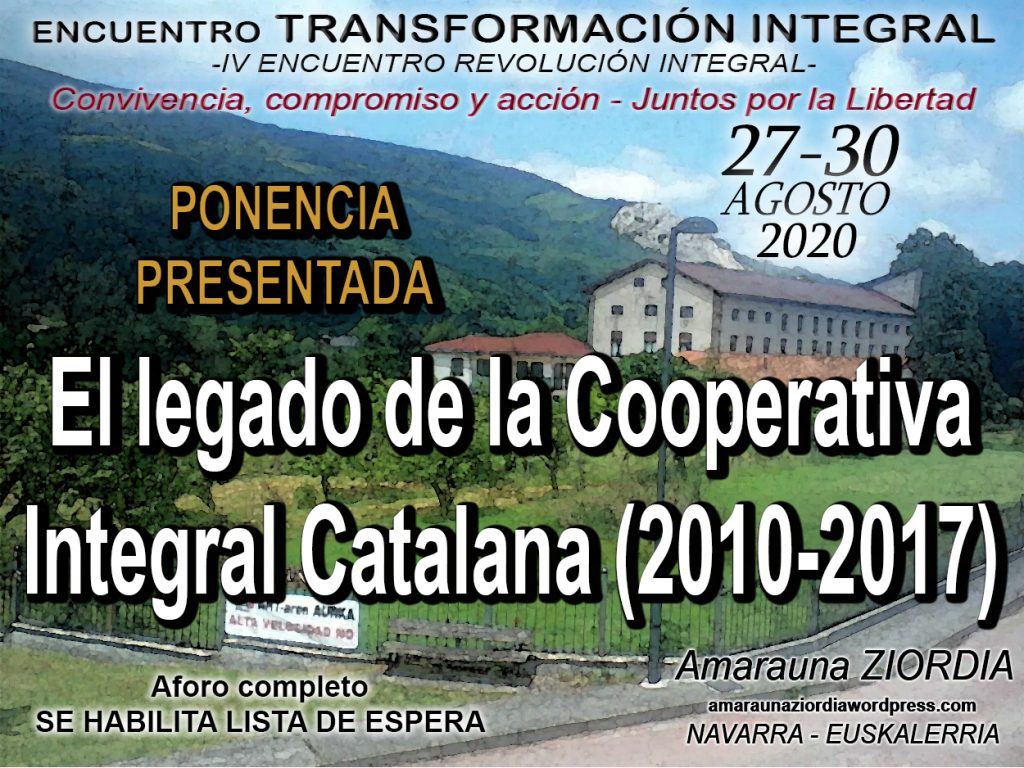
Greetings to all the people who in one way or another participated or were nourished by the discourse and experiences of integral cooperatives.
References
Integral cooperatives. Towards a self-managed society (Ekintza Zuzena Magazine, 2014)
Social currency, a transformative tool? (Group for the defense of the Alto Palancia territory, Argelaga Magazine, 2014)
Self-management of misery, miseries of self-management (Terra cremada, 2012)
Trobada Sense Fronteres 2017 de Cooperatives Integrals
Reproductor de vídeo https://player.vimeo.com/video/227063970?loop=0&_=1&
Arxiu documental videogràfic de la CIC (2010-2018)
Enllaços
Clicka les imatges per accedir-hi
Arxius
- Anarchist genius Enric Duran needs help in Exile – The Free en Comunicat d’Enric Duran des de l’Exili 23-04-19
- La Cooperativa Integral Catalana como modelo vivo de cooperativismo …
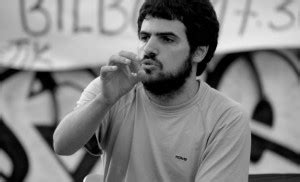
Integral Revolution Coop takes off in Barcelona 2014

Translation by The Free. From free mainstream paper ’20 Minutes’ and reprinted in ‘Rojo y Negro’ of the CGT union.
“At least 1,200 Catalans manage themselves with their own »money», education and health , they do not use the euro but ecos, a «free money» that can be exchanged for hours of work or products..
They have organized a network of health care, education and access to housing, based on trust among members.
They are expanding to the rest of the peninsula. in France and Italy similar experiences have been initiated.

cooperativa integral catalana Archives – Freedom Press
They have a currency of its own, a self-managed health care system, an educational network and housing office. They are self-managed cooperatives and self-organization, groups of people living outside the system, and make decisions in open assemblies based on trust organization.
In Catalonia, there are already 1,200 citizens who have chosen this way of life and the implementation of these communities is spreading.
The severe economic crisis and the 15M indignados movement has given it wings.

In Sardenya street of Barcelona, near the Sagrada Familia, was established the Cooperative Integral Catalana (CIC). In a building of three floors and a roof with a brand new urban garden, they coordinate and carries out activities like education, health and housing, workshops and courses for all ages.
Opening of the first ‘CAPS’
Just opened the first CAPS, which is not a clinic, but a Self-Managed Primary Health Center. There you can find «health facilitators’ persons accompanying patients to seek solutions to medical problems following the Holomedicina. «If you break a leg go to Emergencies,» explains Xavier Borràs, one of the first members of the Cooperative.
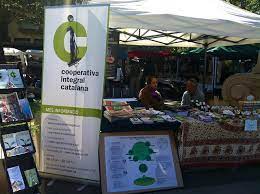
In one of the spacious and modern rooms of the building, is a day care place for children aged zero to three years. Parents of the district have organized to care for and educate their children.
In addition to the 30 euros it costs to register jn the Cooperative (refundable if you leave) you will not have to pay more money. you can pay for goods or services by working hours or in ecos, their own currency.

This is a «free money» that is not minted in physical form and serves for any trade you want to do within the network or even third parties who provide services, such as an ophthalmologist or farmers. The CIC uses the Community Exchange System (CES), an online software to manage the currency.

The eco is «free money» that has adopted by Cooperatives, Eco-Networks, Cores and Projects of Local Self Management and Initiatives of Collectivised Autonomies.
You can buy 100% organic products, or pay the dentist, part of social rent or day care of the children. Each eco is equivalent to a free market euro approximately. An active member of the Cooperative explained that he can live with about 150 basic-ecos a month .
The term «basic» means that they have to be ‘spent’ in that month, not accumulated as capital..
With this he can cover food and voluntary contribution to the joint public health system .
They also have a housing office, which advises those who are in danger of eviction.
They are informed of the gaps in the system and how they can benefit from them.
It is encouraging social renting and «house caretaking», a formula which is to recover the Catalan figure «masover», a person or family who lives free and operates a country house owned by another.
«All this is not going against the system, but leaving the system,» explains Borràs.
After years of protesting NO NO, «now is the time for YES’, and continues to clarify this history of the CIC, which was born with a hundred members and has increased already 12 fold.

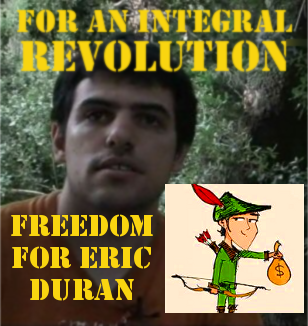
The organization is being helped by activist Enric Duran, the Robin Hood of the Banks, who is now on the run for taking out 400,000 euros in loans and giving it to social and revolutionary groups..( see links below)
This system is spreading throughout Catalonia and the Iberian peninsula and even in Italy and France groups have been looking to replicate it.
Related articles
- NO bosses borders banks: Integral Revolution Manifesto
- Integral CoOps,15M and Occupy.. an embryo for Post Capitalism?
- ‘Robin Hood’ outlaw still Free, attacks Banks, promotes Integral Revolution (thefreeonline.wordpress.com)
- Anarchist Robin Hood on Trial in Barcelona (thefreeonline.wordpress.com)
- Robin Hood: anarchist on the Run.. update (thefreeonline.wordpress.com)
- Barcelona #15M Newsletter 41: direct action/Enric Duran/media activism (thefreeonline.wordpress.com)

 The Free