
‘A revolution cannot be one thing for one group of people. It’s got to be woven together with many strands’.
by Margaret Killjoy at BirdsBeforetheStorm / Substack 11 comments on 23rd Feb 2025 via thefreeonline at https://wp.me/pIJl9-G82 Telegram https://t.me/thefreeonline/2364
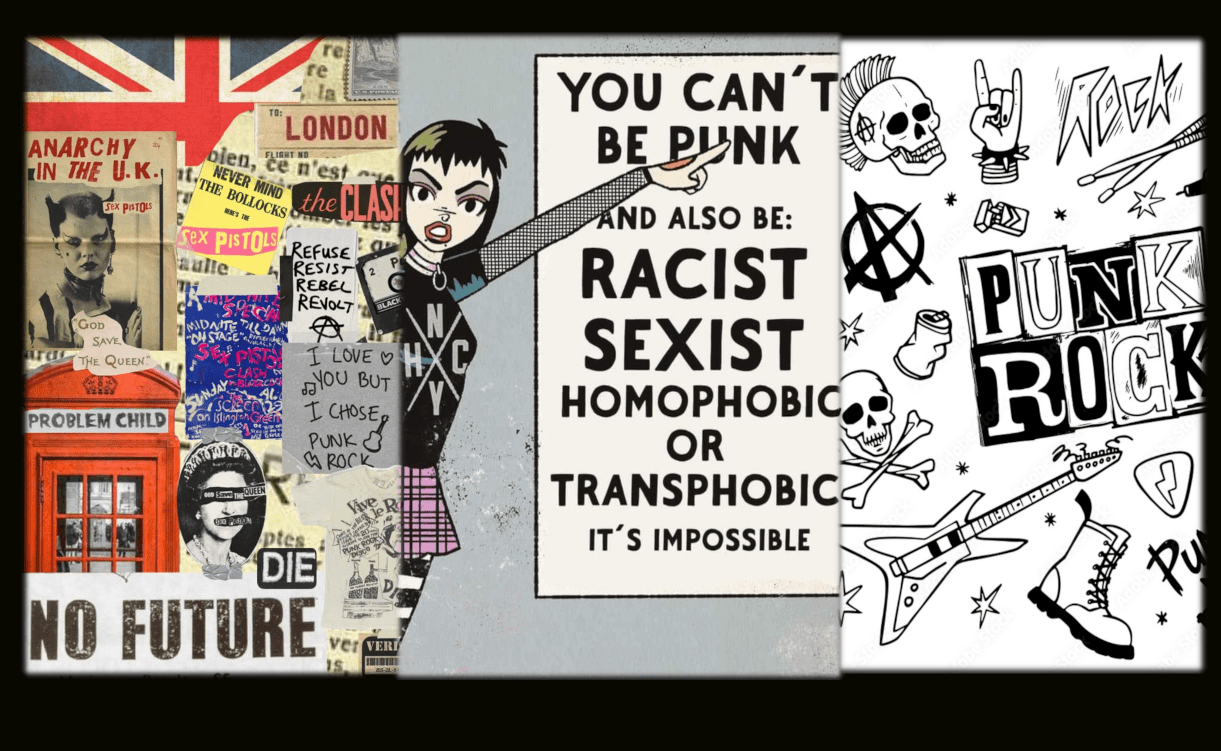
When I was nineteen, I spent awhile squatting in the suburbs of Baltimore, in a town called Towson (now famous as the birthplace of Luigi). This isn’t where I’m from… I had met some crustpunks in philly and started traveling with them.
We wound up in Towson, living in abandoned buildings or crawl spaces or bushes. We organized against war and we dumpstered and we shoplifted and we got run off by the cops several times a day.

You Do Not Flee a Storm- . or: morale as a terrain of struggle
There’s this moment I remember clearly, despite the large quantity of malt liquor I’d likely consumed: I remember being in a basement in Baltimore itself, probably one of the Food Not Bombs houses, while punk bands played.
Everyone was wearing all black with white-ink patches on their clothes, sewn together with dental floss. Floor joists were perilously perched above our heads. We did ourselves some permanent hearing damage in that basement.
The punk band had two singers, both women. It was called 2AM Revolution. During the chorus, everyone sang along as the singer screamed about how if she saw a Nazi she would “break my fucking 40 on his motherfucking face!”
And just like that, in that basement screaming along, I understood punk.
Because the thing is, those of us in that basement meant what we said about revolution. Our venues were collective houses that doubled as mutual aid kitchens. The singers of the band marched alongside us at antiwar and alterglobalization protests.
When a bus load of Nazis passed through town, the local punks working with Anti-Racist Action partnered with local gangs to ambush the fascists, smashing out the bus windows, pepperspraying inside, and jumping every nazi as they emerged.
Then everyone disappeared back through the alleys into the Maryland night.
A car full of antifascists showed up late and were carted off to jail, and the punk scene raised the money for their criminal defense. We meant what we said in our lyrics.
But one band and their fans isn’t a movement.

Festivals of Resistance against Trump, Repression, Poverty, Racism, Capitalism, Ecocide….
Anarcho-punk probably owes about as much to Poison Girls, fronted by a middle-aged anarchist mom. And it owes plenty more to all the organizers and squatters and activists and musicians who built that movement.
When people think about Crass and anarcho-punk today, they mostly talk about it as, you know, a band. A genre. I like some Crass songs, sure. I like their attitude and I respect the aesthetic sensibilities they pioneered that have drifted down through punk generations.
But what I hadn’t realized before I’d started deep-diving them was just how influential they were.

The Ghost of Anarchism with Margaret Killjoy – YouTube
When I came up in anarchism, the punk influence was inescapable. A slight majority of the anarchists I know my age came up through punk. These days, I’m glad to say, this isn’t the case as much—anarchism isn’t tied to this or that aesthetic culture to the same degree anymore.
Because there was always this critique that rang true to me: a social movement can’t be built on a subculture, nor even a counterculture. It can’t be built on a single culture or aesthetic. A revolution cannot be one thing for one group of people. It’s got to be woven together with many strands.
Some people offered that critique of punk to say that punk ought to be rejected outright. Some people said that in order to reach “the masses” punks had to take off their vests and stop patching their pants so that they could blend in. This has always been a garbage plan, one that is condescending to “the masses” it claims to want to reach.

A Short Guide For New Activists – Margaret Killjoy – Summer 2024- via The Free
But as mainstream society meets even fewer of our needs, we’ll be coming together more and more to meet our needs with each other, and by doing that, we’ll be creating subcultures. They might not be centered around music, but they’ll be real.

Anarchist Author Margaret Killjoy Crafts Trans Worlds in the Woods
It’s not that anarchism and political movements can’t be subcultural, it’s that they must be multicultural. You don’t become multicultural by abandoning culture but by embracing the diversity of cultures. We ought to embrace the radical potential of every subculture we can find.
If you’re going to be a punk, you should be politically radical. If you’re going to be politically radical, though, you don’t need to be a punk.
It would also be strange to stick too strictly to subcultural boundaries. The way to keep the spirit of anarcho-punk alive isn’t to cosplay as 1970s British punk rockers, nor early-aughts Baltimore crust punks.
Or, as Crass put it:
Be exactly who you want to be, do what you want to do
I am he and she is she but you’re the only you
No one else has got your eyes, can see the things you see
It’s up to you to change your life and my life’s up to me
If I were to list off the traits I identify with in order of priority, punk would be near the bottom of the list. I’m still more one for melancholy than anger. But subculture isn’t a membership club.
My friend Unwoman and I were once talking about subculture and its genre labels. She said, and I paraphrase here, that people make a mistake of thinking that subculture and genre are “categories,” where you have to pick one and be sorted. She preferred to think of them as tags.
It’s hard right now to really believe in the power of culture, subculture, and counterculture (three terms with three meanings that people who aren’t me like to argue about the difference between).
There’s a certain power to subculture, one that is good and bad an equal measure. When people split off from the mainstream, they’re able to form a sort of echo chamber as they bounce ideas off of each other instead of the broad culture.
This is a necessary process for experimentation, but it’s very easy to take it too far, to become so removed from the rest of society that you’re incapable of impacting that society except as outsiders. It’s echo chambers that bring us cults and “high control groups.” A little bit of echoing is useful. A lot is poison.

Most of the critiques I’ve read of the anarcho-punk culture of the 80s and 90s call it “puritan.” Steve Ignorant from Crass himself called it “square.”
Arguments about whether or not it’s ethical to smoke, or put milk in your tea, or do this or that specific thing, turned people away from the culture.
This is a pattern that’s familiar today with online “discourse” (I put that word in scare quotes because “talking about ideas” is good, but what’s called “discourse” online seems to mostly be people trying to develop the One True, Pure ideology and ethics that ought to be universally applied to everyone).
In some ways, social media feels like a distillation of subculture down to its worst parts. We’re left with the ability to critique one another, to look for ways that each of us has failed.
We’re left with the negative effects of the echo chamber, and we’re able to spin off new echo chambers at fantastic speed.
But social media isn’t a punk show, or a reading group, or a food not bombs feeding. It’s not an interwoven community that is trying to develop its ethical standards… it’s all standards, no community.
This isn’t to say “kids today are lost and don’t have what we had” or any nonsense like that. Subculture is alive and well, doing all the best and worst things that it can do.
Some of it even happens online, though that’s a more precarious space to develop community. I can’t say subculture is dead when furry hackers just leaked a bunch of police documents, after all.
The Baltimore scene took a dark turn at some point, a bit after I left. I could point a few different directions as to what happened: the opiod crisis and oxycontin take maybe most of the blame, and it was always a substance-positive culture. I lost friends to drinking and driving, to suicide, to overdose, to asyphixiation.
read 11 COMMENTS at Substack here
Related

You Do Not Flee a Storm- . or: morale as a terrain of struggle
Secret Anarchist Punk History Of Chumbawamba’s Tubthumping’
We Are the Strange and Scary Things in These Woods – Margaret Killjoy

Festivals of Resistance against Trump, Repression, Poverty, Racism, Capitalism, Ecocide….
A Short Guide For New Activists – Margaret Killjoy – Summer 2024- via The Free

 The Free