
The Syrian government’s Turkish and US backed offensive breaking ceasefires and unleashing terrorist mercenaries to destroy Rojava feminists, direct democracy and Revolution.
by Ryan Grim / Alexis Daloumis at Drop Site News on Jan 21, 2026 via thefreeonline wp.me/pIJl9-HSx Telegram https://t.me/thefreeonline/5097

A year ago, as you might remember, Drop Site hosted a virtual screening of the film “Belkî Sibê,” a documentary directed by Alexis Daloumis that followed leftist Western fighters—of which he was one—who fought alongside the Kurdish-led, American-backed Syrian Democratic Forces in their battle against ISIS. Daloumis recently traveled back to the Kurdish-held area of northeastern Syria and we asked him to send us a new dispatch as the region braced for war. That war broke out in earnest in the past few days.
The Syrian government announced a four-day ceasefire on Tuesday afternoon, but attacks from militias linked to Damascus continue. ( )
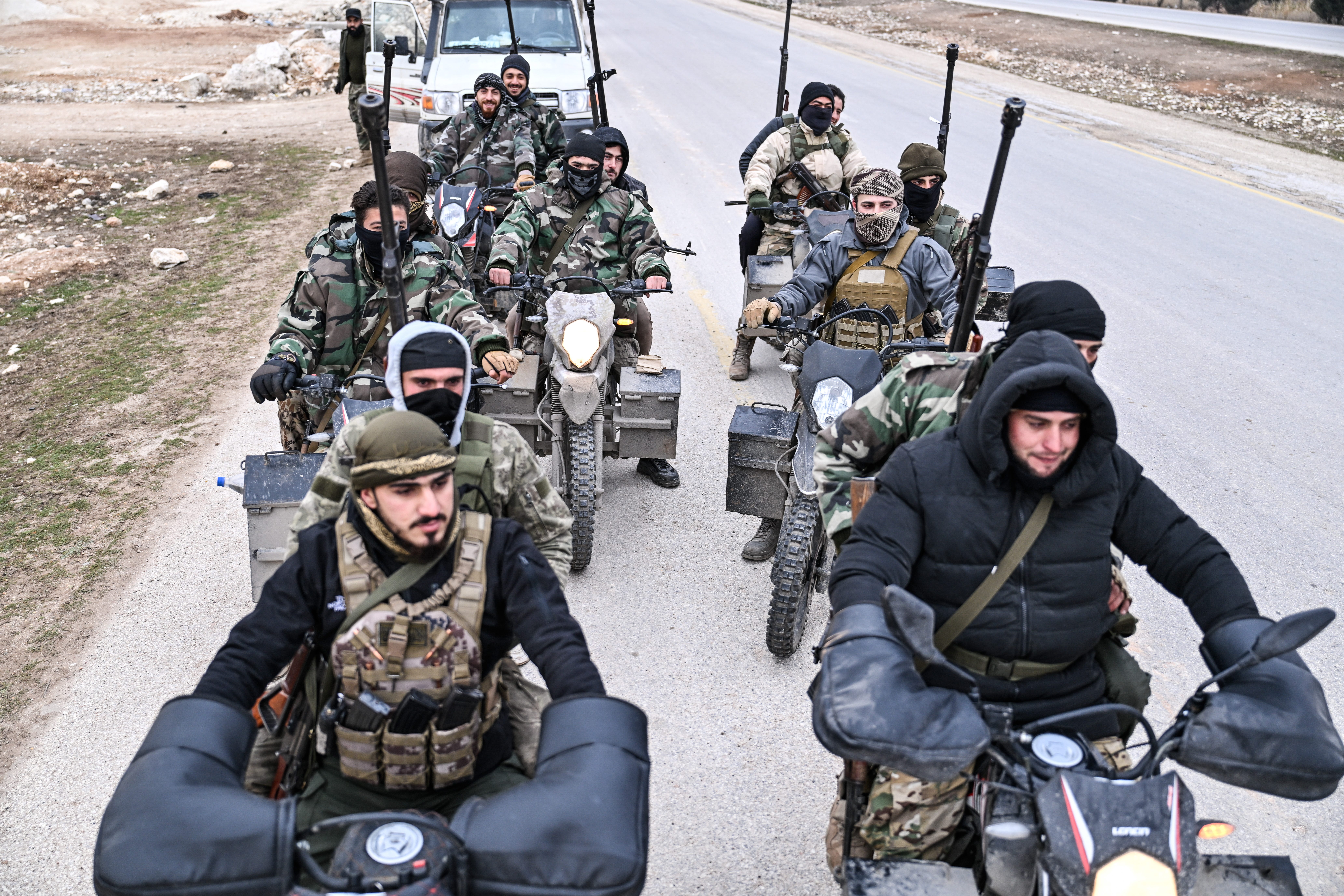
Story by Alexis Daloumis
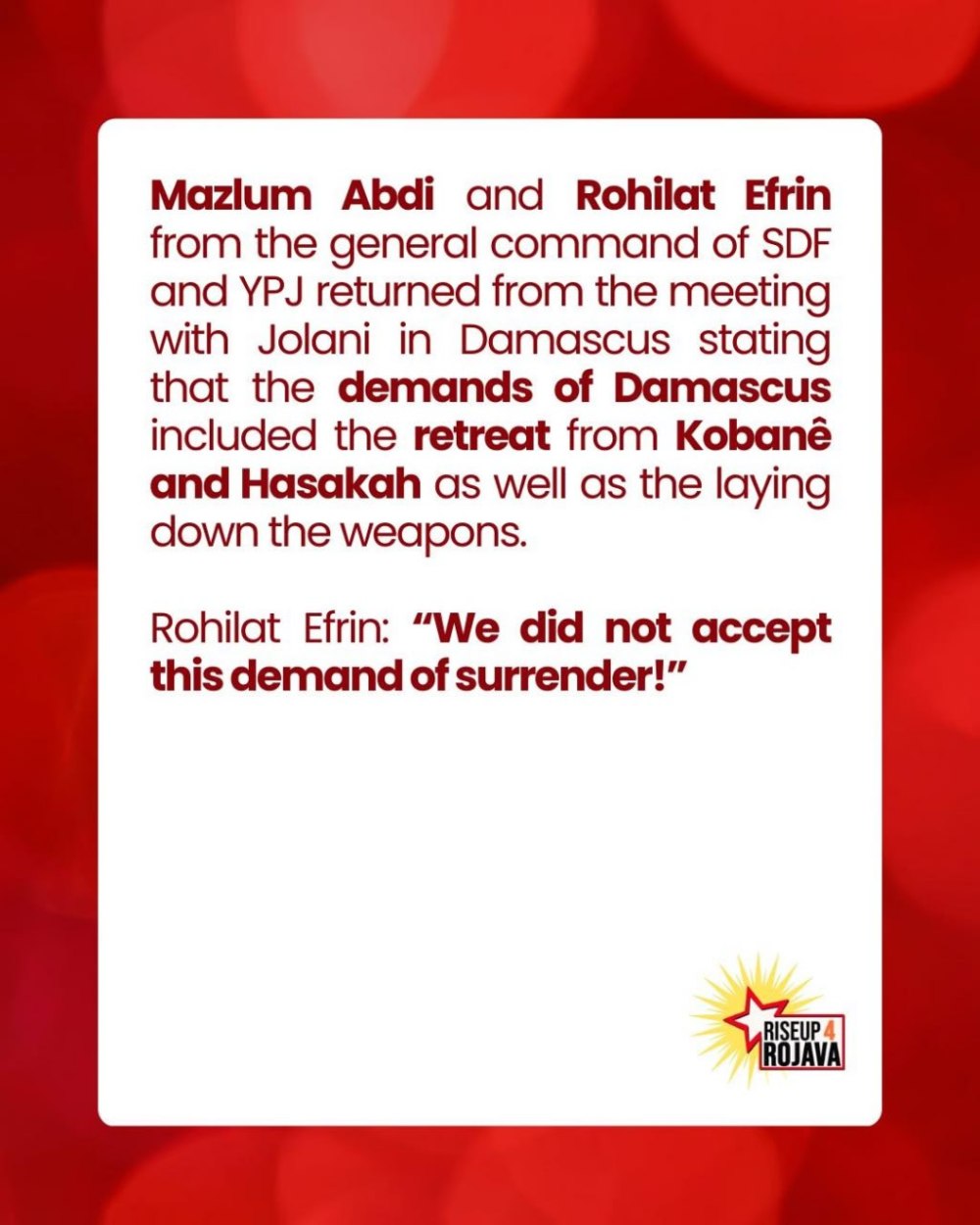
On Sunday, January 18, the text of a reported agreement between the Syrian central government based in Damascus, and the Kurdish-led Syrian Democratic Forces (SDF) began circulating on social media and local news channels.
The agreement was intended to be signed after a meeting between Syrian President Ahmed al-Sharaa and SDF Commander-in-Chief Mazloum Abdi in Damascus that would avert a long-feared, all-out war between the two sides.
It was wishful thinking. The meeting, and along with it the tenuous ceasefire, collapsed.
Read more: “Total War For Survival”: Syria’s SDF Showdown With Jihadi Damascus RegimeThe government had demanded full and immediate handover of SDF-held territory to its control, the disbandment of the SDF as an armed force, and liquidation of independent civil institutions—steps the SDF was unwilling to take.
Instead, local Arab tribes formerly allied to the group, which had recently switched allegiances and joined the government, pressed forward with attacks on SDF positions.
SDF officials accused Syrian government aligned forces of executing captives and vowed to resist the onslaught, with officials sharing a video that they said depicted the partial beheading of SDF fighters.
In a statement posted on social media hours after news broke of the failed talks with the Sharaa-led government, SDF spokesperson Farhad Shami indicated that the group was steeling itself for a full-blown confrontation, writing: “For our people, either a life with dignity or a death with honor.”
The SDF is a militant group that emerged from the maelstrom of the Syrian civil war and controlled at its peak roughly a third of the country’s territory under an independent political administration known as the Democratic Autonomous Administration of North and East Syria (DAANES), which includes the area known as Rojava to the Kurds.
The DAANES, which has described itself as a democratic confederalist project inside Syria at odds with both the previous Ba’athist regime and the country’s new Sunni Islamist rulers, also attracted large numbers of left-wing and anarchist foreign fighters to its cause during its fight against the Islamic State.
At its peak, the DAANES included all territory east of the Euphrates river—home to most of Syria’s oil resources and two major dams.
Since the fall of the Assad regime just over a year ago, the new government has been pushing for the SDF to integrate itself under the Syrian Ministry of Defense and return the DAANES to centralized rule under Damascus.
Prior to the collapse of talks, al-Sharaa circulated a decree offering protection for Kurdish civil rights inside a future Syria, though the decree did not represent material changes to the Syrian constitution. ( Note: the decree was an attempt to splitntg the SDF. It was declared and signed exclusively by Sharaa/Jolani, the self appointed Turkish baacked ‘Al Qaeda’ warlord, sitting alone in his office, trumpeted in the West and ridiculed by the SDF.
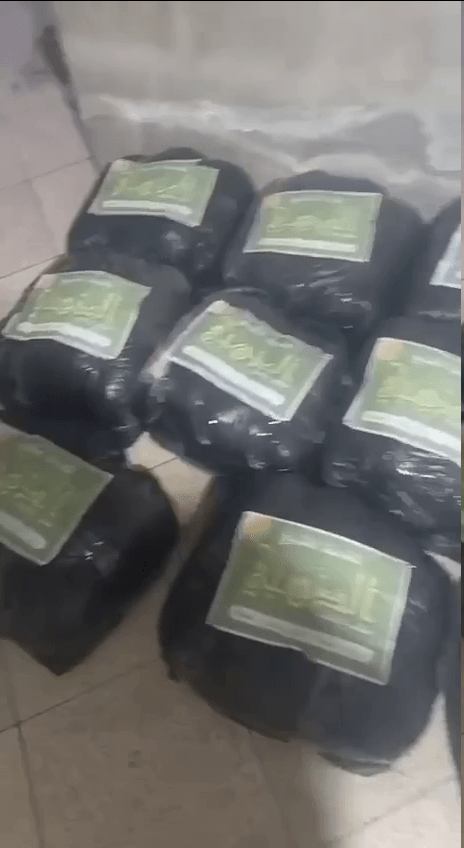
The fake declaration of “Kurdish Rights” omitted the key role of women’s freedom and participation, condemijng half the popilation to social slavery. The first measure ofn tghe Jihadis on taking back Raqqa was the issue of black clothing to cover the women La UE acaba de donar 620 milions d’€ al govern islamista. https://www.reuters.com/world/middle-east/eu-grants-syria-722-million-recovery-humanitarian-aid-von-der-leyen-says-2026-01-09/
Several former SDF fighters who spoke with Drop Site described themselves as committed to fighting against attempts by Damascus to reintegrate them and expressed suspicion and hostility towards the country’s new rulers, particularly in the wake of bitter fighting between Damascus and Kurdish groups in Aleppo earlier this year and previous massacres targeting Druze and Alawite minorities in the country.
“The current Syrian interim government has through its actions proven its murderous mentality,” said Serafin, a former SDF fighter based in the city of Hasakeh, who declined to give a full name for security reasons. “If a total war for survival were to break out on this land we live on tomorrow, whether we like it or not, we would have to take up arms again to defend our people and our land.”
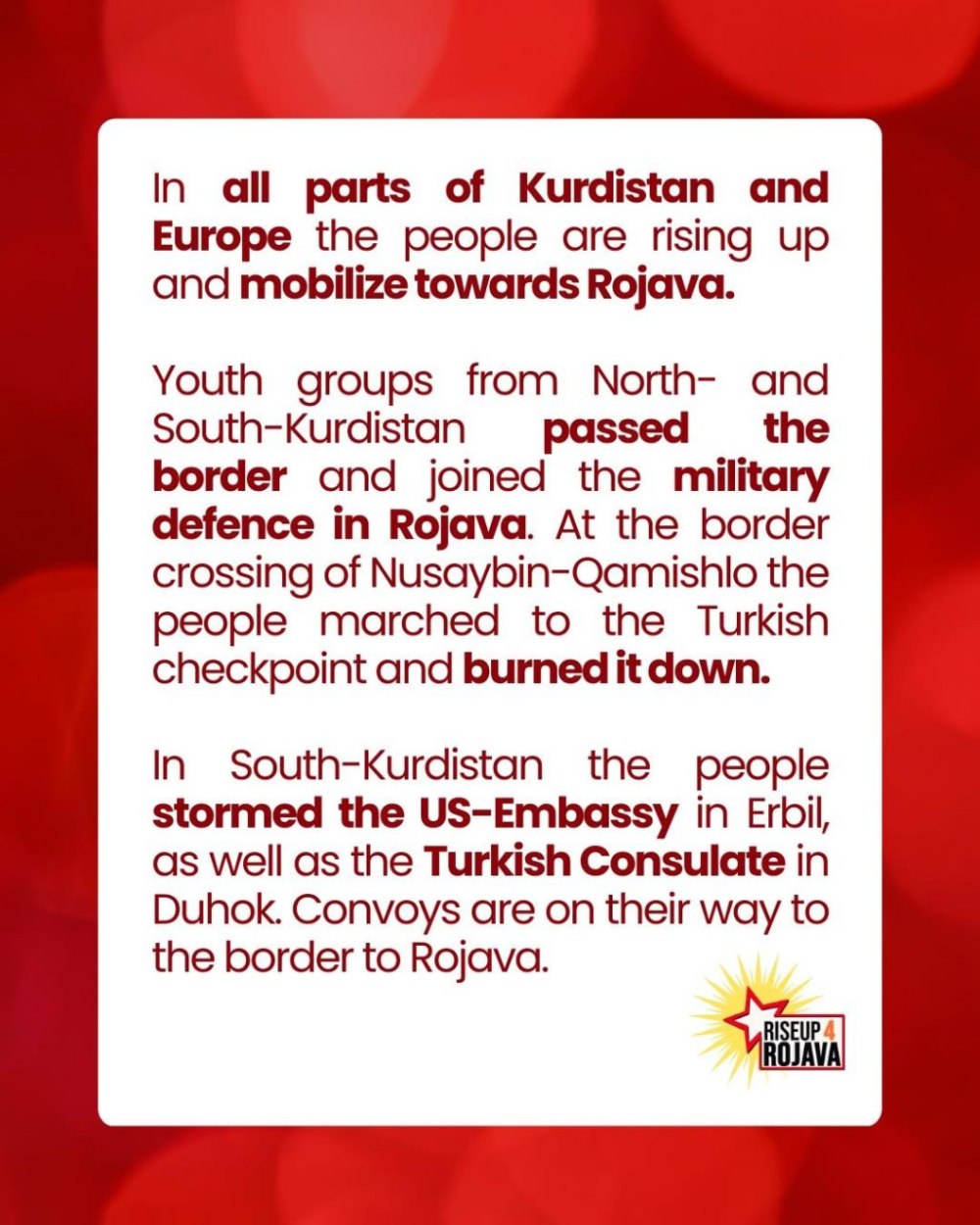
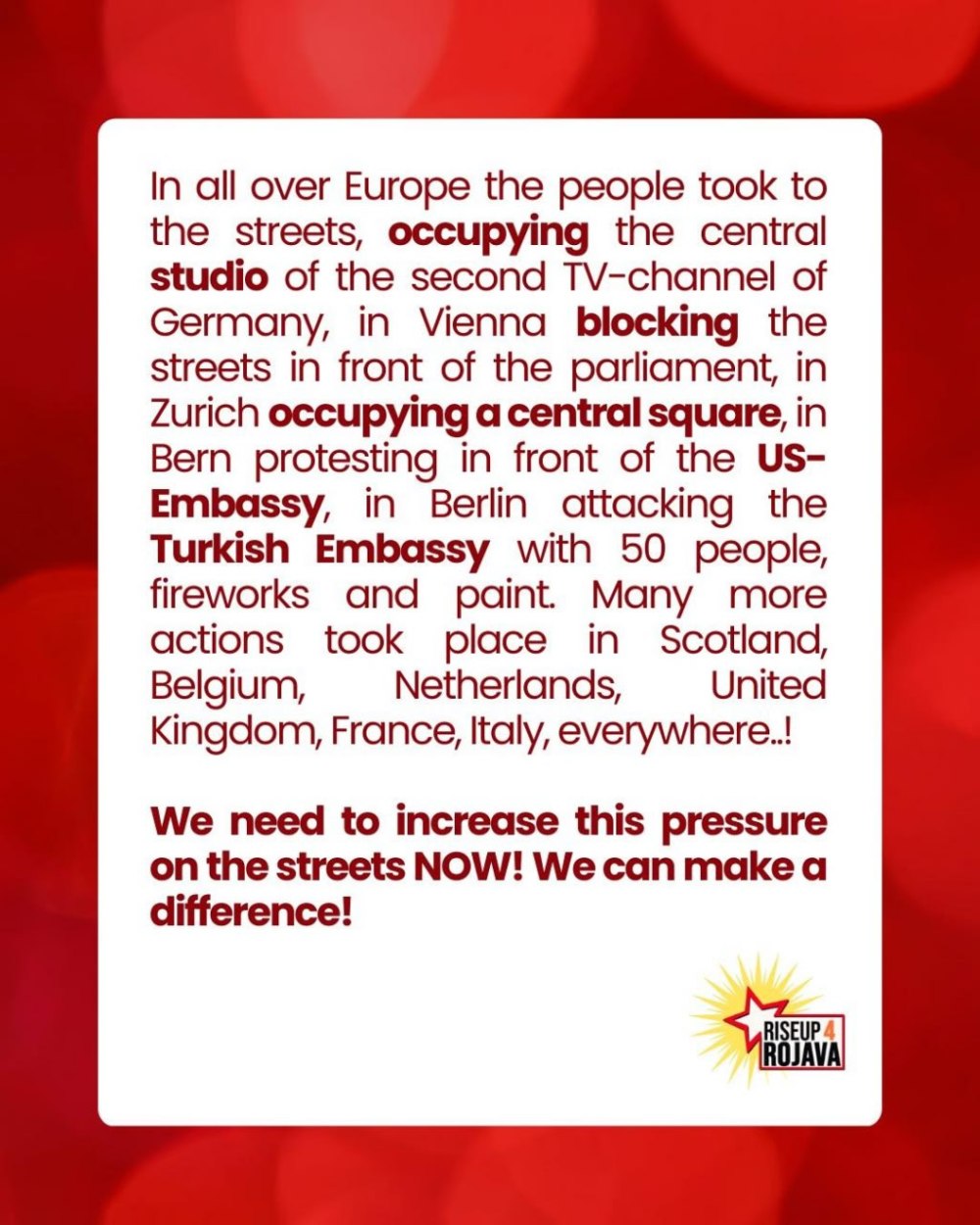
European cities and the four parts of Kurdistan witnessed massive demonstrations in solidarity with Rojava, condemning the attacks of the Syrian Interim Government’s mercenaries, and demanding a halt of the attacks and the protection of the civilians.
The Trump administration has reportedly been involved in efforts to broker another detente between Damascus and the SDF. On late Monday, President Trump reportedly held a phone call with Sharaa to discuss the deteriorating situation. According to a readout of the call, “both sides emphasized the need to guarantee the Kurdish people’s rights and protection within the framework of the Syrian state,” adding that they also “affirmed the importance of preserving the unity and independence of Syrian territory.”
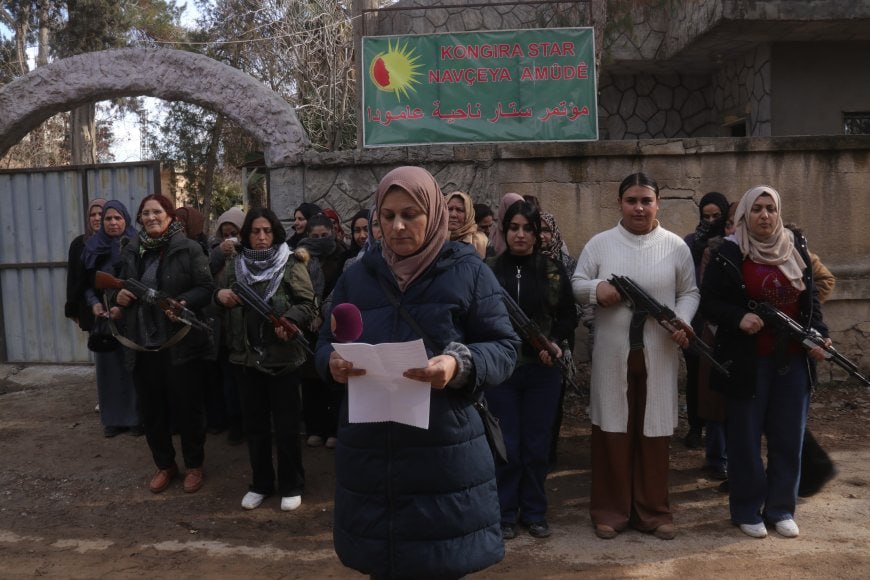
🔵🟠Kongra Star members announce their joining general mobilization. The Kongra Star members confirmed their joining the general mobilization, and stressed the continuation of their struggle in the squares, supporting the forces, and defending the region against the attacks of the Interim Government’s mercenaries.🌐More (https://hawarnews.com/en/kongra-star-members-announce-their-joining-general-mobilization)
The lack of U.S. commitment to defending the SDF foothold in the country has embittered many former allies who fought with the U.S.-led coalition against ISIS. “The international coalition betrayed us. We were retreating from the Arab majority regions to not have a big war between Arab and Kurdish people, but now they will see our real war,” Mahir Bakirciyan, a former SDF field commander who took part in the anti-ISIS war, told Drop Site.
Kurdish political leaders aligned with the SDF and other factions have also alleged that Turkey, which has been pushing aggressively for the reassertion of Syrian government control over the DAANES, played a role in the present breakdown of ties between Damascus and the SDF. Turkey enjoys close ties with Damascus and views the SDF as a hostile force aligned with the Turkish-based PKK movement.
On January 11, Sipan Hemo, a senior SDF commander, claimed in public comments that a “foreign actor” had disrupted a meeting between SDF and Syrian government officials in Damascus earlier in January and reversed progress towards an agreement between the two sides.
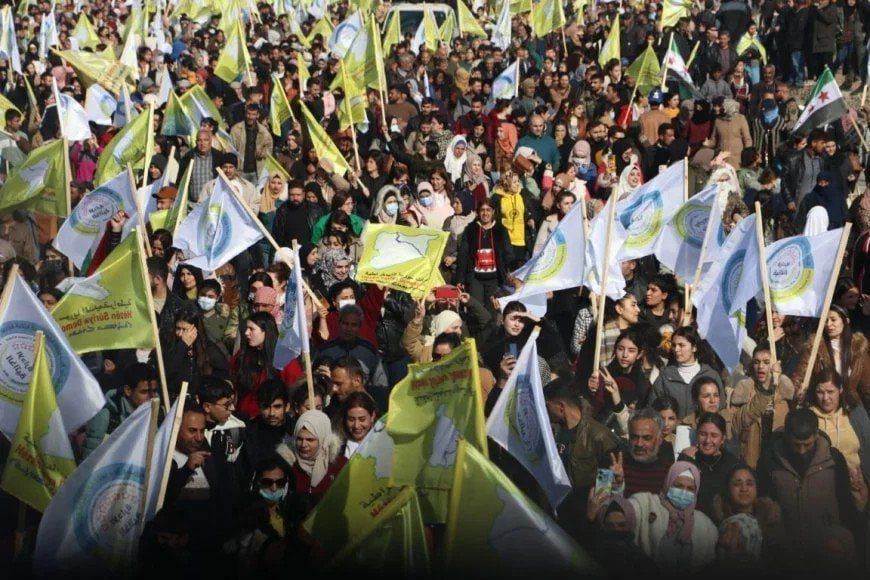
🟠Syrian Women demand protection for civilians and end to massacres 🔵Women in Raqqa Canton and those forcibly displaced from the occupied areas of Afrin and Shahba called for the protection of civilians, an end to violations and massacres against various Syrian communities, and the guarantee of their rights in the new Syria.🌐More (https://hawarnews.com/en/syrian-women-demand-protection-for-civilians-and-end-to-massacres)🔔 HAWAR NEWS AGENCY #ANHA
Drop Site News spoke with Kurdish political figures who blamed Syrian officials closely aligned with Turkey for interrupting the talks at the behest of Ankara.
Ismet Akkurt, a member of the Kurdistan National Congress, claimed that Turkish pressure on Syrian Foreign Minister Asaad al-Shaibani had paused talks between the two sides on January 4 and prevented the signing of an agreement that may have averted a conflict.
Akkurt further speculated that ongoing talks in Paris mediated by the U.S. between Syria, Israel, and Turkey just days before the outbreak of fighting in Aleppo had also resulted in a green light for Syrian attacks on SDF positions in the country. “We cannot separate the meeting in Damascus and the meeting held in Paris between Israel, the US, Syria, and Turkey from the Aleppo attack,” he said.
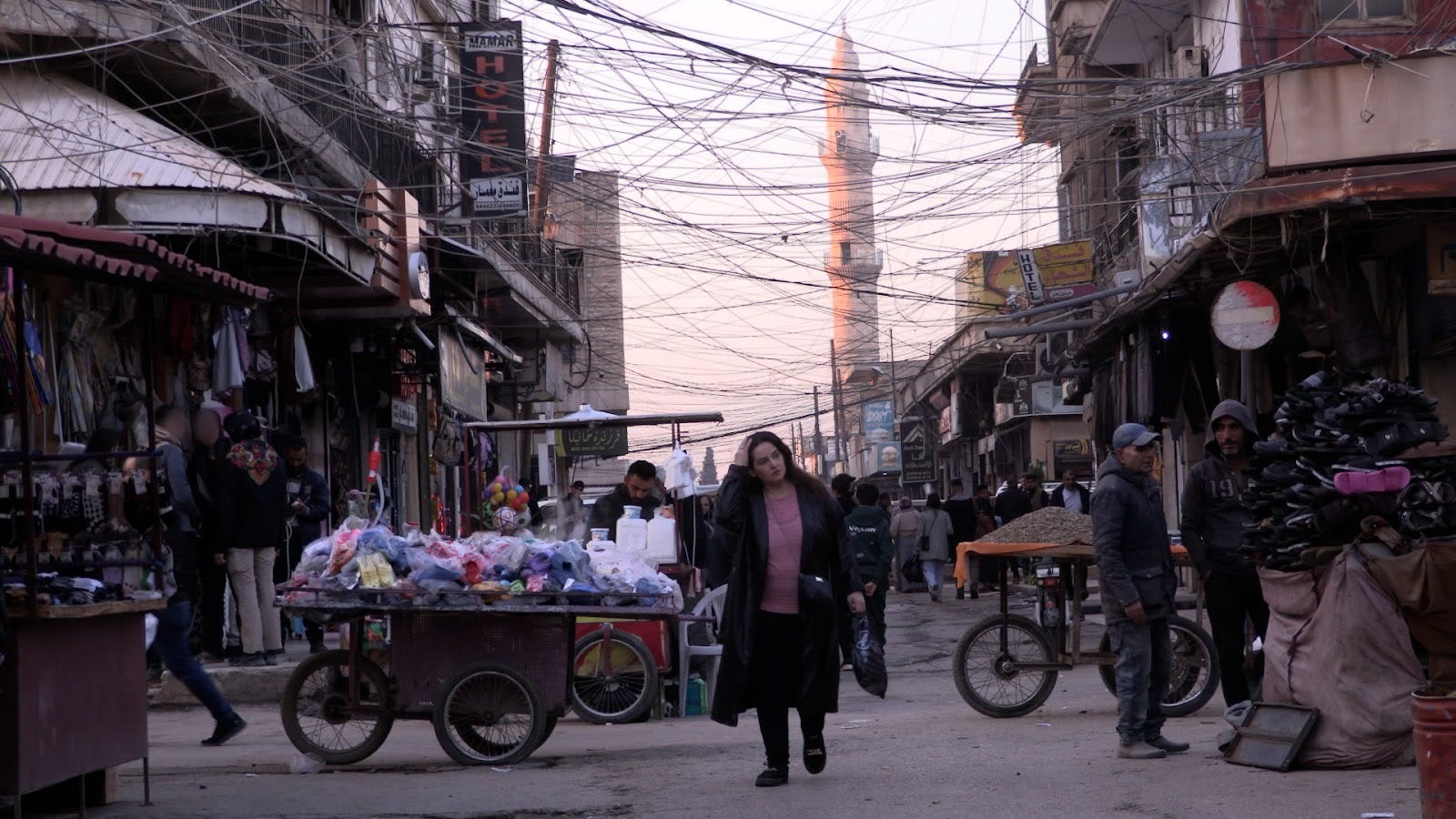
“War is knocking at your door”
In the initial stages of the government offensive, several tribal groups that had allied with the SDF during the war switched sides, leading to a rapid loss of territory including in major urban centers like Raqqa. Adding to the chaotic situation, reports have emerged of the release of ISIS-linked prisoners from facilities formerly controlled by the SDF—a major concern of the U.S. military which has allied with both the SDF, and more recently Syria’s new rulers in Damascus, to prevent a resurgence by the group.
Inside the remaining cities held under SDF control, a sense of grim acceptance that an escalated conflict is inevitable has begun to take hold.
“A full-scale war in the region seems inevitable at this stage. We don’t know who would win such a war, but the losers would certainly be the people of the region,” said Berxwedan, another former SDF fighter living in Hasakah, and lamented the impact of the climate of uncertainty on the region even before the current crisis.
“Many people we know are afraid to even invest in their own land. Because of the intense migration, permanent investment is not a wise option; people are forced to position themselves in their own countries in a way that allows them to mobilize quickly.”
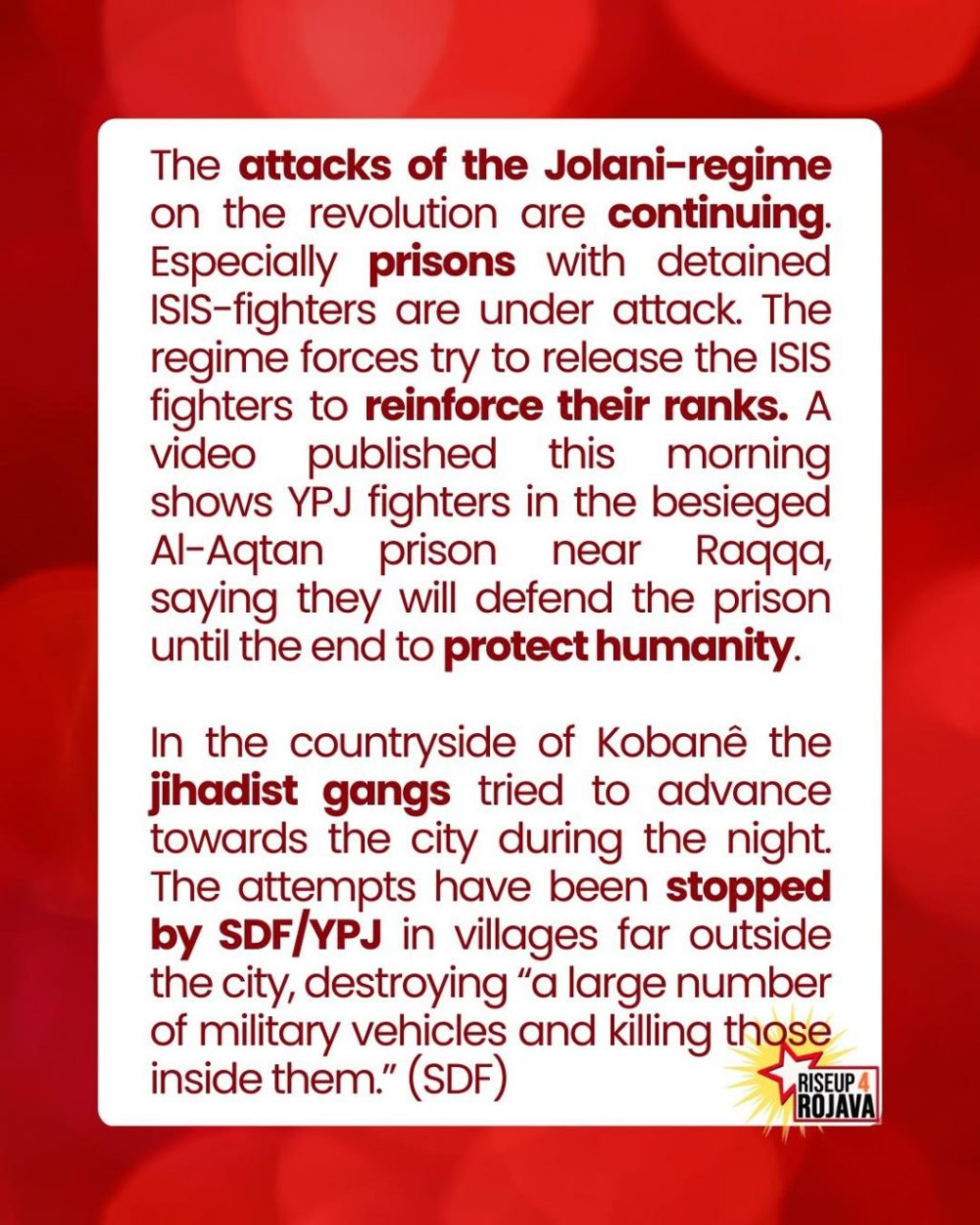
The Syrian Democratic Forces (SDF) released footage showing the moment militants of the Interim Government removed ISIS detainees from Al-Shaddadi prison.The SDF confirmed that Al-Shaddadi Prison is no longer under their control, noting that despite the prison being only two kilometers away from the International Coalition base, the coalition did not intervene despite repeated calls. The Syrian Democratic Forces (SDF) confirmed that clashes around Al-Aqtan Prison in the city of Raqqa are still ongoing, and that these clashes have resulted in the martyrdom of 9 of its fighters and the injury of 20 others..🔵
While the Syrian government presses forward with what may be intended as a final offensive against the SDF, other people living in the DAANES say that they will enlist to defend themselves—partly out of fear after witnessing the actions of government-aligned militias that previously targeted Alawites and Druze minorities in the country, some of whom have since fled to SDF-held territory.
“After what we’ve seen in Suwayda and the coast I’m very worried that the Damascus government will do the same to our people in Ashrafiyah and Sheikh Maksoud,” Kadrokh, a 27-year-old in the DAANES living in the city of Qamislo told Drop Site weeks before the current outbreak of fighting.
“I can see a possibility of total war between SDF and the Damascus government, if they murder our people in Aleppo,” he said. “I don’t wish for a war here or any place in Syria. But when war is knocking on your door you must fight.”

 The Free