Hoy domingo 4 de Marzo a las 11 de la mañana unos 500 miembros del Sindicato de Obreros del Campo – Sindicato Andaluz de Trabajadores hemos ocupado la finca Somonte en el término municipal de Palma del Río. Esta finca propiedad de la Junta de Andalucía sale mañana a subasta. Privatizan la tierra mientras la gente del pueblo sufre un paro extremo de 1.700 personas en Palma del Río y más de 4.000 personas paradas en los pueblos de alrededor. Están vendiendo más de 20000 hectáreas en Andalucía quedando aún unas 8.000 sin subastar. Ante este atropello el SOC-SAT se va movilizar durante estos días y el próximo jueves a las 11 de la mañana hará una manifestación en la Consejería de Agricultura de Sevilla pidiendo que se paralice esta venta de tierras y que en lugar de pasar a banqueros y terratenientes sean trabajadas por cooperativas de jornaler@s en paro.
Sunday March 4 at 11 am about 500 members of the Laborers Union City – Union Workers Andalusian Somonte have occupied the farm in the town of Palma del Río. This property owned by the Junta de Andalucía leaves tomorrow for auction. Privatize the land while the common people suffer extreme arrest 1,700 people in Palma del Rio and more than 4,000 people standing in the surrounding villages. They are selling more than 20000 hectares in Andalusia leaving about 8,000 still without offers. Before this attack the SOC-SAT will mobilize these days and on Thursday at 11 am will be a demonstration at the Ministry of Agriculture asking Sevilla to a standstill this sale of land and instead of going to bankers and landowners are farmed by cooperatives of agricultural laborers s unemployed.
A partir de esta ocupación unas 30 personas de Posadas, Palma del Río y otros pueblos se han quedado en esta finca con el objetivo de permanecer en ella y comenzar a trabajarla. Pensamos que esta es la única forma de llevar a cabo nuestras ideas consecuentemente ya que la tierra tiene que ser autogestionada por los propios trabajadores y trabajadoras para crear el máximo número de empleo y favorecer el desarrollo de la economía local y comarcal. El terreno de Somonte tiene 359 has. de secano y 41 has. de regadío. La parte de regadío podría dar en una primera etapa unos 50 puestos de trabajo mediante el cultivo de espárragos, cebollas y otras hortalizas. A medio plazo se podría generar mucho más empleo a través del cultivo social de todo el terreno, de agroindustrias y comercialización de los productos por medio de las inversiones necesarias
From this occupation about 30 people from Posadas, Palma del Rio and other peoples have been on this farm in order to stay there and begin to work it. We think this is the only way to carry out our ideas accordingly as the land has to be self-managed by workers themselves to create the maximum number of jobs and helping to develop local and regional economy. The field has 359 Somonte you. rainfed and 41 hectares. irrigated. The share of irrigation could result in an early stage about 50 jobs through the cultivation of asparagus, onions and other vegetables. In the medium term it could generate more employment through the social culture of the whole land, agribusiness and marketing of products through the necessary investments.
Desde el SOC-SAT hacemos un llamamiento urgente a la solidaridad de Palma del Río y los pueblos de alrededor y a todos los compañer@s de la provincia de Córdoba y de Andalucía para que apoyen estacausa viniendo a sumarse a la lucha y el trabajo en la finca de Somonte presionando a los órganos de poder, difundiendo la noticia y apoyándonos materialmente: comida, semillas, plantas, materiales, dinero y lo que se vea posible.
Esta acción debe ser el comienzo de la revolución agraria que en este momento de paro, penurias y estafa neoliberal tanta falta nos hace. Hoy en día cualquier alternativa para sobrevivir con dignidad debe pasar por la lucha por la tierra, la agricultura campesina, la soberanía alimentaria y el desarrollo que genera como ha pasado y vemos cada día en Marinaleda y otros pueblos de Andalucía.
Animamos a tod@s los trabajadores y parad@s de Andalucía a que luchen por la tierra pública o privada para su colectivización por parte del pueblo.
SI EL PRESENTE ES LUCHA, EL FUTURO ES NUESTRO
¡VIVA ANDALUCÍA LIBRE!
From the SOC-SAT we urgently appeal to the solidarity of Palma del Rio and the surrounding villages and all the comrades’ s the province of Cordoba and Andalusia to support this cause coming to join the fight and work in the estate of Somonte pressing the organs of power, spreading the word and supporting us materially food, seeds, plants, materials, money and see what is possible.
This action must be the beginning of the agrarian revolution in this time of unemployment, hardship and neoliberal scam we need so badly. Today any alternative to survive with dignity must go through the struggle for land, farming, food sovereignty and development that generates as has happened and see every day in Marinaleda and other towns of Andalusia.
We encourage tod @ s workers and parad Andalusia ‘s fight for public or private land for collectivisation by the people.
Using its colossal market power, Monsanto craftily penetrated into the Indian markets.
Monsanto convinced the Indian government that its GM seeds would produce better crops. According to a report by Farm Wars, one former Managing Director of Monsanto claimed that Monsanto manipulated research data “to get commercial approvals for its products in India.”
Indian regulatory agencies, instead of verifying the data, simply remained compliant with the findings of what Monsanto presented. “They did not even have a test tube to validate the data and, at times, the data itself was faked,” the Farm Wars report says.
Government regulations worked in favor of Monsanto to monopolize the Indian seed market. For example, “Prime Minsiter’s Office” in India pressured various state governments to sign MOUs with Monsanto to privatize the seed market.
Through these “vested interests” with the Indian government, Monsanto eventually has monopolized the GM seed market for more than a decade……….
The failure of Monsanto’s GM seeds was palpable. The farmers held onto their hopes for better crops after they had planted the “magic” seeds. Their crops never came. Throughout the villages in India the harvest from the GM seeds failed. The parasites destroyed the so-called “pest-proof” GM seeds.
Monsanto uses methods of manipulation and misinformation to reap their own benefits and profits at the cost of the farmers who rely on organic methods to grow their crops and animals, a tradition that existed in India for centuries.
By a contractual clause, the farmers could not save Monsanto’s GM seeds for reuse after the first season……….
With no harvest, the farmers could not pay back the lenders. Burdened with debts and humiliation, the farmers simply took their own lives, some by swallowing poisonous pesticides in front of their families. To date, an estimated 200,000 farmers have committed suicide all over India.
To add to the misery, wives inherited the debts along with the fear of losing their homes and lands. With no money coming in, they also had to pull their kids from the schools. The mass suicide among the Indian farmers is known as the “GM genocide.”
In its company website Monsanto declares that its pledge is “our commitment to how we do business.” And then there are the business philosophies with virtuous words like “integrity” and “transparency.”
Read Long full article HERE Globalresearch.caGlobal Research Articles by Iqbal Ahmed
More bio tech type stories I’d like to re blog (from The Watchers with thanks)
Organic farmers sue Monsanto over GMO seeds A landmark lawsuit filed on March 29 in US federal court seeks to invalidate Monsanto’s patents on genetically modified seeds and to prohibit the company from suing those whose crops become genetically contaminated. The Public Patent Foundation filed suit on behalf of 270,000 people from sixty organic and sustainable businesses and trade associations, including thousands of certified-organic farmers. In Organic Seed Growers and Trade Association, et al. v. Monsanto, et al. (U.S. District Court, Southern……
Secret GM wheat experiments begin in Australia Australia’s first trial of genetically modified wheat and barley is under way near Narrabri, New South Wales in the south-eastern area of the country. The goal of the GM wheat is said to be more nutritious bread (http://www.smh.com.au/nsw/gm-wheat-…). How exactly the genes were altered to create this alleged more nutritious bread remains a secret. All that is known is that 14 different strains of wheat and barley will be grown. Some strains will allow researchers……
Plant disease raises questions on modified crops Sudden death syndrome (SDS) of soybean was first discovered in 1971 in Arkansas and since then has been confirmed throughout most soybean-growing areas of the U.S. SDS is a fungal disease that also occurs in a disease complex with the soybean cyst nematode (SCN, Heterodera glycines). SDS is among the most devastating soil-borne diseases of soybean in the USA. When this disease occurs in the presence of SCN disease symptoms occur earlier and are more……
Nikola Aleksic, Serbian ecology leader arrested for openly defying GMOs and chemtrails In October 2011, Nikola Aleksic, leader of Ecological Movement of Novi Sad in Serbia, was arrested and fined. Earlier on his way to a conference in Belgrade, an attempt was reportedly made on his life. And Monsanto has sued him with the threat of removing him and his family from their rented flat as “collateral.” Why all the fuss? Nikola made a spirited speech, recorded on video, challenging the Serbian president for allowing GMOs to……
Did the USDA deregulate all new genetically modified crops? In press release titled “ USDA Responds to Regulation Requests Regarding Kentucky Bluegrass,” agency officials announced their decision not to regulate a “Roundup Ready” strain of Kentucky bluegrass—that is, a strain genetically engineered to withstand glyphosate, Monsanto’s widely used herbicide, which we know as Roundup. The maker of the novel grass seed, Scotts Miracle Gro, is now free to sell it far and wide. So you’ll no doubt be seeing Roundup Ready bluegrass blanketing lawns……
BASF tries (again) to push ‘Frankenpotatoes’ on Europe Europeans have made it abundantly clear time and time again that they want nothing to do with genetically-modified organisms (GMOs). But chemical giant BASF refuses to take no for an answer, and is once again pushing for EU approval of a “Frankenpotato” known as Fortuna that, if approved, would represent the EU’s second new legalized GMO in more than a decade. Unlike most Americans, Europeans generally take a keen interest in the integrity of their……
Biotech’s dirty tricks exposed in new documentary: ‘Scientists Under Attack’ “One question means one career.” This was the harsh warning of UC Berkeley Professor Ignacio Chapela for those daring to conduct independent research on genetically engineered foods and crops. “You ask one question, you get the answer and you might or might not be able to publish it; but that is the end of your career.” Both he and biologist Arpad Pusztai dared to asked questions and do the research. And then all hell broke……
Hilary Wainwright explores the deepening organization of the Indignados movement
The Catalans have a phrase: ’em planto’. It has a double meaning: ‘I plant’, or ‘I’ve had enough’. At end of the huge 15 October demonstration of Indignados (‘outraged’) in Barcelona – the papers put it at around 250,000 – we were greeted with an impromptu garden under the Arc de Triomf, the end point of the march. Campaigners for food sovereignty had planted vegetables in well-spaced rows, ready for long term cultivation.
The point was partly an ecological one. But the surrounding placards indicated that the gardeners also intended it to make a symbolic point about the broader significance of the march. ‘Plantemos’ declared a large cardboard placard, meaning: ‘we plant ourselves’ – ‘we stand firm’. Mariel, who was dressed as a bee – essential to flourishing horticulture and now facing pesticidal destruction – explained that the activists who organised the garden were part of the agro-ecology bloc on the march. The march as a whole had several layers of self-organisation that became apparent at certain moments. There were three main focal themes – all issues on which active alliances had come together over recent months: education (yellow flags), health (green flags) and housing (red flags).
As we approached the Arc de Triomf, someone on a loud hailer announced that the different directions in which those following each of the themes should go, guided by an open lorry carrying the appropriate flag. The idea was that the demonstration would end not with speeches to the assembled masses, on the traditional model. Instead, the plan was to hold assemblies to discuss action and alternatives to cuts and privatisation.
News came through later in the evening that two of these assemblies had taken action, leading an occupation of a third hospital – two that were making redundancies had already been occupied the day before the demonstration. They had also squatted a large unoccupied building to turn it into housing for ten families. Evictions have become a focus of intense conflict in Barcelona as the numbers grow every day.
As well as clusters around themes, it was the regular neighbourhood assemblies, feeding into an occasional assembly of assemblies, that were the organism that gave the demonstration its impressive life.
The neighbourhood assemblies emerged in early summer this year, following the birth of the Indignados movement in the occupations of the squares of Spain and Greece. As the occupation of Barcelona’s Plaça de Catalunya reached its peak towards the end of May and the general assembly in the square began to plan its future, the locus of organised indignation spread to the neighbourhoods – sometimes reviving or connecting with pre-existing neighbourhood associations, sometimes building on quite dense social bonds. For example, the assembly from Sant Andreu, a predominantly working-class neighbourhood in the north of the city, marched for over an hour to reach the demonstration, proudly announcing their assembly on their yellow T-shirts.
Like many on the demonstration, they brought handmade placards. Some of their slogans were specific: ‘education is not for sale’, ‘for high quality education; against the cuts’. Others were more general: ‘nothing to lose; all to gain’, ‘the system is dead, the people are alive’. A lot of these homemade banners highlighted the exhaustion and corruption of the political system, one offering a reward: ‘2,000 euro for an honest politician’. Abstentions could be high in November’s elections.
There is disillusionment too with trade unions. In the occupation of the square earlier this year, it was not only parties that were not wanted, but also the unions. They had been part of a social contract with the government that had let workers down, leading to a fall in wages and weak protection. Most significantly, they showed no concern – and often hostility – to the growing numbers of people, especially among the young, who had no chance of a long term job. Yesterday only the CNT (Confederación Nacional del Trabajo), the union founded by the anarchists and still less bureaucratised than other trade unions, dared show its face.
Interestingly, though, there are signs of workers recovering the confidence to organise in their workplaces as a direct result of the collective action taking place on the streets, and waking up the unions in the process.
Bea recently worked in a call centre. She remembers the fear that made her fellow workers timid and passive. She was impressed that after the occupations of the squares, the call centre workers went on strike over injustices they had previously suffered in silence. ‘It was as if the strength of the example of collective action on the square gave them the confidence, broke through the fear,’ she said.
Where this kind of awakening will lead is unclear. General goals are clearly expressed: real democracy based on popular assemblies in the neighbourhoods, reform of the electoral system for different levels of government, the right of referendums including on the European level, an end to cuts and privatisation of public services, banks and finance under public control, economic development based on co-operation, self-management and a social economy – the list is long and elaborate (see here, for example).
The important, distinguishing feature of this vision of change is that it is not centred on what governments should do. Rather it is a guide to action at many levels, starting with what the people can do collaboratively, through spaces they occupy, resources they reclaim, new sources of power they create. There is a self-consciousness that the creation of far-reaching alternatives will take time. In conversation, the slogans are put in context: ‘we’re going slowly, because we are going far’ is a common saying.
One thing is certain: the energy, creativity and will comes from outside the existing institutions. Bargaining, pressure, people and organisations that bridge the outside and the inside will no doubt be part of the process of change, but the established institutions have lost the initiative. There is no bravado about this. Among those I talked to on our way home from the Arc de Triomf and the improvised garden, there was anxiety as well as elation at the size and success of the demonstration. ‘I feel some people are looking for leaders,’ said Nuria, a translator and free culture activist. But in the many levels of organisation producing this impressive show not only of anger but of serious engagement in creating alternatives, it becomes clear that this is not a ‘leaderless’ movement. It is emerging, experimentally perhaps, as movement where leadership is shared and is learnt – a movement that can grow and flourish as well as stand firm.
Hilary’s really captured the spirit of yesterday’s march well, but I think her post also goes some way to correcting a lot of the US/anglocentric/major financial centres bias written in round-ups of the global protests. Inspiring as the Wall Street protests are, it is not really accurate to claim (as the Guardian, New York Times and even activist sites like ZNet have it) that these were the spur to rallies that swept the globe.
An initial call was made several months ago: http://15o.democraciarealya.es/ and the most successful of these have been based on concerted organising, not simply the fact that (as Jon Stewart of the Daily Show recently put it, the media dial has turned from blackout to circus).
It’s easy to over-state the “new model of protest” line too (eg. http://www.redpepper.org.uk/birth-of-a-new-movement/ ). There are many novel elements in this, enabled by the internet as well as the re-organisation of global labour– as Paul Mason has pointed out a while ago http://www.bbc.co.uk/blogs/newsnight/paulmason/2011/02/twenty_reasons_why_its_kicking.html
But in other ways it is all decidedly old-school: unemployment, job insecurity and the defence of a welfare state under threat from a massive austerity programme are spurring protests, coupled with a revolt against a banking system that’s totally out of control.
The story of the three strands of the march that Hilary describes is also worth following. In Nou Barris, a working class suburb in the north of Barcelona, the march was followed by the occupation of an empty block of flats, with the aim of housing families that had faced home repossessions: http://acampada9barris.wordpress.com/2011/10/16/okupat-un-bloc-de-pisos-buits-a-nou-barris/
A 6,000-strong march continued to the Hospital del Mar, in support of a revolt against health cuts that had already seen the occupation of two hospitals on the night before the main demonstration. The symbolic end point saw a huge die-in, with activists playing dead to symbolise “the deaths of many citizens” as a result of savage health sector cuts. http://www.setmanaridirecta.info/noticia/la-columna-de-sanitat-la-mes-concorreguda-de-totes
Thousands more formed an education block that met up with an occupation at the Geography and History Faculties of the University of Barcelona, located close to the centre of the city. Once there, convened an assembly to discussed the demands of the recently formed Platform for a Public University (Plataforma Unitària per la Universitat Pública), which has called for a strike on 17 November. http://www.setmanaridirecta.info/noticia/2000-persones-una-assemblea-la-facultat-del-raval-reocupada-la-columna-vermella
really insightful article….makes great sense to those who weren’t there…this huge demo…and all the rivers of resistances it symbolises…is trully inspiring …it looks like the ‘indignados’ movement is here to stay and hopefully irreversible.
NOTE . This blogger is preparing a series of cool posts, on Squat Centers, Free Universities, Circus Squats, Anarchist roots, Food and consumption CoOps, Mutual Aid Networks, Alternative Banking, etc. in the Catalunya area.. watch this space for updates….
The front of his white and blueT-shirt had the Watershed Management Group (WMG) logo on it and in a font that looked like it had been stamped diagonally across read the words “CO-OP”. When he turned around to grab a pick axe, other wise known as an Arizona Shovel, the back of the shirt said “I Do My Labor with My Neighbor!”.
-This catchy little phrase does more than just rhyme. It tells of an opportunity for community, a way to reach an otherwise high costing goal. A chance to not only change your own personal landscape, but eventually heal a neighborhood and enjoy a little bit more of a responsible feeling as you look out at your land.
-The WMG has created, and successfully run, this CO-OP program down in Tucson and I have been lucky enough to not only participate in some of the workshops, but I have also been able to meet some amazing and interesting people who share like views on how we should be friendly to the desert……….
……….. -While the clock neared the end of the workshop…who am I kidding, it was actually an hour past end time, the clouds could no longer hold back their hydro-soaked insides and it began to RAIN!! Like I said, the workshop was officially over, but there was still almost every single volunteer still there. This was a passion and a need to see this through. A belief that this was important and an opportunity to grow a property AND grow the knowledge inside. So we hit another gear, put the final pieces into place, and actually started catching that SkyGold into one of the pur-tiest metal tanks in the neighborhood.
-My brain, my clothes and my passion left soaked that early evening as I drove off…back to the Valley of the Sun. -Hopefully in the very near future, I too can wear a white shirt with a blue logo that PROUDLY states:
Here’s what I’m excited about these days: we just held a volunteer workshop to totally makeover a Tucson family’s front yard. 15 volunteers transformed it from a sterile, black-plastic and rock-laden heat island into a runoff-capturing garden of native plants, organic mulch, and (soon) living soil. This workshop, which was followed by blessed afternoon monsoon rain showers, was just the second in some 24 public workshops that WMG is co-hosting with six different Tucson neighborhoods over the next year. Through these projects we will de-pave a closed alley to turn it into a pocket park, install rainwater-fed trees along the entrance of a school, and create rain gardens in the middle of a parking lot, among other things. We will do all of this alongside volunteers from each neighborhood. 20 of these volunteers recently completed a 5-month training with WMG to assess, design, build, and advocate for these kinds of green infrastructure in their communities.
WASHINGTON, Oct 1, 2011 (IPS) – Home to a fast-growing network of farmers’ markets, cooperatives and organic farms, but also the breeding ground for mammoth for-profit corporations that now hold patents to over 50 percent of the world’s seeds, the United States is weathering a battle between Big Agro and a ripening movement for food justice and security.
Conflicting ideologies about agriculture have become ground zero for this war over the production, distribution and consumption of the world’s food. One camp – led by agro giants like Monsanto, DuPont and Syngenta – define successful agriculture and hunger alleviation as the use of advanced technologies to stimulate yields of mono-crops.
The other side argues that industrial agriculture pollutes, destroys and disrupts nature by dismissing the importance of relationships necessary for any ecosystem to thrive. At the heart of this struggle is the debate about genetically modified organisms (GMOs), which were given the green light in 1990 when the U.S. Food and Drug Administration (FDA) stated, “(We) are not aware of any information showing that GMO foods differ from other foods in any meaningful or uniform way.”
The Pitfalls of Terminator TechnologyAccording to Frees, one of the worst manifestations of GE/M is the use of Terminator technology, used to cause seed sterility and forcibly eliminate seed saving.
“Terminator is a biological means to enforce intellectual property rights, and its introduction into developing countries that rely on saved seeds for 80 to 90 percent of planting could mean elimination of farmers’ right to save seeds; dramatically higher seed costs; and poor farmers’ inability to survive,” he said.
“Terminator is morally reprehensible and must be banned,” Frees told IPS. Lovera added that between 2001 and 2007, annual U.S. glyphosate use on GE crops doubled to 185 million pounds.
“Ubiquitous Roundup application has spawned glyphosate-resistant weeds, driving farmers to apply even more toxic herbicides, according to a 2010 National Research Council report,” Lovera told IPS.
“Farmers may resort to other herbicides to combat superweeds, including 2,4- D (an Agent Orange component) and atrazine, which have been associated with health risks including endocrine disruption and developmental abnormalities.”
“In the United States, irrigated corn acreage increased 23 percent and irrigated soybean acreage increased 32 percent between 2003 and 2008,” she added. “The rising U.S. cultivation of GE corn and soybeans further threatens the strained High Plains Aquifer, which runs beneath eight western states and provides nearly a third of all groundwater used for U.S. irrigation,” Lovera said.
“Ninety-seven percent of High Plains water withdrawals go to agriculture, and these withdrawals now far exceed the recharge rate across much of the aquifer.”
“The worldwide expansion of industrial-scale cultivation of water- intensive GE commodity crops on marginal land could magnify the pressure on already overstretched water resources,” Lovera warned. “But these are the crops the biotech industry has to offer.”
In addition to wreaking havoc on land, GE/M has also filtered into the oceans, with the attempted introduction by Aqua Bounty of GE salmon engineered with a growth hormone gene to grow faster.
“Studies suggest that the salmon could be more susceptible to disease; and if it’s grown in pens in the ocean and [inevitably] escapes, it could mate with wild salmon and make them less fit, potentially devastating wild salmon populations,” Frees told IPS.
But a report released Wednesday by the Washington- based Food and Water Watch (FWW) on the destructive impacts of GMOs added fuel to a two-decades-long fight by farmers, economists and experts against the FDA’s conclusions.
“Genetically Engineered Food: An Overview” details how the genetic engineering of seeds, crops and animals for human consumption is not the foolproof answer long championed by agribusiness and biotechnology industries to feeding the world.
To the contrary, the study found that genetically engineered/modified (GE/M) organisms do not out-perform their natural counterparts, and their proliferation into vast tracts of cropland have caused a slew of environmental and health crises, and actually increased poverty by forcing millions of farmers to “buy” patented seeds at exorbitant prices.
The report also says that three U.S. federal agencies – the FDA, the Department of Agriculture (USDA) and the Environmental Protection Agency (EPA) – are complicit in these crises due to shoddy oversight, weak enforcement of regulations and a complete absence of coordination.
It found that Big Agro spent half a billion dollars between 1999 and 2009 on lobbying to ease GE regulatory oversight, push GE approvals and prevent GE labeling.
This, after attorney Steven Druker in 1999 obtained 40,000 pages of FDA files containing “memorandum after memorandum warning about the hazards of (GE) food,” including the likelihood that they contained, “toxins, carcinogens or allergens” and testified that GE foods violated “sound science and U.S. law”.
Ceci King, a member of the Black Farmers and Agriculturalists Association, told IPS that in 2011, an estimated “60 to 70 percent of all processed foods in the U.S. contain at least one GE element.”
“Eighty-four percent of GM crops in the world today are herbicide- resistant soybeans, corn, cotton or canola, predominantly Monsanto’s ‘Roundup Ready’ varieties that withstand dousing with herbicide,” Bill Frees, science policy analyst at the Center for Food Safety (CFS) and author of ‘Why GM Crops Will Not Feed the World’, told IPS.
“Pesticide and chemical companies like Monsanto, DuPont, Syngenta, Dow and Bayer have bought up many of the world’s largest seed companies, and now call themselves biotech companies – this represents a historic merger of the pesticide and seed industries, which allows them to profit twice by developing expensive GM seeds that increase use of the company’s herbicide products,” he added.
Seed patents, an off-shoot of the “agro-biotech revolution” that also spawned GE/M, have had two negative consequences since their original issuance by the U.S. Patent Office in the mid-1990s, Frees told IPS: “They enticed pesticide companies to buy up seed firms; and they led to criminalisation of seed-saving.” “Farmers have saved seeds from their harvest to replant the next year for millennia,” he added. “Monsanto is changing that. The company has already sued thousands of farmers in the U.S. for saving and replanting its patented seeds and won an estimated 85 to 160 million dollars from farmers, in lawsuits that have ruined farmers’ lives, and (partially explains) why we have ever fewer farmers in America.”
The fightback
Ray Tricomo, a mentor at the Kalpulli Turtle Island Multiversity in Minnesota, told IPS, “People of colour must re-radicalise themselves and go on the offensive including the return to land bases, from Turtle Island to Africa and Asia.” “Ancient knowledge systems are to be painstakingly recovered, even if it takes centuries,” he added. And this is exactly what is happening.
Despite the deep pockets and aggressive efforts of Big Agro, a major pushback from a broad coalition of forces has limited 80 percent of GE/M planting to just three export-oriented countries: the U.S., Brazil and Argentina. Nearly two dozen other countries, including the European Union and China, have passed mandatory GE/M labeling, and millions around the world are refusing seed patenting and developing seed banks to protect, share and preserve their seeds.
In Florida, the 4,000-strong Coalition of Immokalee Workers (CIW) is organising to resist farm wage-slavery and “seed-servitude”. The Landless Workers Movement (MST) in Brazil has organised 400,000 peasants to join forces with the nearly half-billion farms around the world that are responsible for producing 70 percent of the world’s food. Navdanya, an organisation in the Indian State of Andhra Pradesh, has united 500,000 farmers in their struggle to fight chemical dependency and save indigenous seeds, including preserving over 3,000 varieties of rice. “For five years, the United Nations Conference on Sustainable Development (CSD) had indigenous farmers from all over the globe come to speak against destructive farm practices and GMOs,” King told IPS.
“During the Indigenous People’s Permanent Forum, there were complaints about the harm caused by industrial agriculture and the acts in the name of agribusinesses. Farm workers like the (CIW) are protesting their fate,” she added. “They are picketing companies like Trader Joes and Whole Foods, letting the public know that their tomatoes were picked from workers who are basically slave labour.” “Third World Network is fighting back by exploring the problem of GMOs and publishing findings that scientists working on GMOs are capitalists using humans as guinea pigs in a global lab experiment,” she added.
“[Numerous] deaths and disabilities have been traced back to a GM product emulating tryptophan. It took nearly 20 years to find the source of the problem,” King told IPS. “GM technology i antithetical to an agroecological approach to agriculture, our only hope for truly sustainable food production,” Frees told IPS. “Without radical change we will continue to have famines,” he added. “Haiti is a good example of what happens when a country’s farmers are put out of business by cheap, subsidised imports from a rich producer nation (here the U.S.).”
PLOWBOY: And did all your contact with the wilds have any effect on your perceptions of our modern agricultural system?
MOLLISON: Oh yes! Everything I did, either in research or in fieldwork, indicated that there was something fundamentally wrong with modern farming methods. For instance, every problem I found in commercial agribusiness was actually caused by the industry itself. Usually — when a farmer called in the CSIRO for a consultation — the results of our investigation pointed the finger straight at the grower him- or herself!
As I saw the same situation occur time and time again, I gradually came to the conclusion that most contemporary crop-raisers must be doing things the wrong way. So my last few years with the CSIRO were spent in the forest,
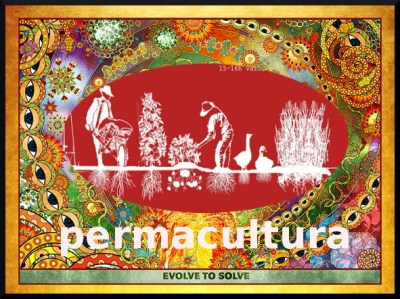
permaculture is mutual aid
observing the plant and animal species on location . . . and there I learned that everything in nature is self -controlled and self -balancing.
You know, a lot of modern thought suggests that the planet — as a living organismic — seeks to protect itself by rejecting any species that causes it harm. For instance, if cattle damage part of the earth, the harmed region will respond by growing thorn bushes and poisonous plants, thus rejecting the animals. Well, I think we — the members of the human race — are perilously close to being rejected by the earth in that same way . . . and quite rightly so, since we’ve created some terrible damage.


 Freak weather is not climate change… up to a point..when it suddenly becomes clear fromn all the evidnce, that runaway climate change is happening.









 The Free
Hilary’s really captured the spirit of yesterday’s march well, but I think her post also goes some way to correcting a lot of the US/anglocentric/major financial centres bias written in round-ups of the global protests. Inspiring as the Wall Street protests are, it is not really accurate to claim (as the Guardian, New York Times and even activist sites like ZNet have it) that these were the spur to rallies that swept the globe.
An initial call was made several months ago: http://15o.democraciarealya.es/ and the most successful of these have been based on concerted organising, not simply the fact that (as Jon Stewart of the Daily Show recently put it, the media dial has turned from blackout to circus).
It’s easy to over-state the “new model of protest” line too (eg. http://www.redpepper.org.uk/birth-of-a-new-movement/ ). There are many novel elements in this, enabled by the internet as well as the re-organisation of global labour– as Paul Mason has pointed out a while ago
http://www.bbc.co.uk/blogs/newsnight/paulmason/2011/02/twenty_reasons_why_its_kicking.html
But in other ways it is all decidedly old-school: unemployment, job insecurity and the defence of a welfare state under threat from a massive austerity programme are spurring protests, coupled with a revolt against a banking system that’s totally out of control.
The Barcelona protest was one of the numerous protests in cities across the state of Spain, from 60,000 in Sevilla in the south to over 10,000 reported in Vigo in the north-west, and 500,000 in the capital Madrid. There are reports and videos (in Spanish) at
http://www.kaosenlared.net/noticia/estado-espanol-recopilacion-cronicas-videos-manifestaciones-15-o
and
http://madrid.tomalaplaza.net/2011/10/15/la-indignacion-sale-a-las-calles-de-todo-el-mundo-el-15-de-octubre/
The story of the three strands of the march that Hilary describes is also worth following. In Nou Barris, a working class suburb in the north of Barcelona, the march was followed by the occupation of an empty block of flats, with the aim of housing families that had faced home repossessions:
http://acampada9barris.wordpress.com/2011/10/16/okupat-un-bloc-de-pisos-buits-a-nou-barris/
A 6,000-strong march continued to the Hospital del Mar, in support of a revolt against health cuts that had already seen the occupation of two hospitals on the night before the main demonstration. The symbolic end point saw a huge die-in, with activists playing dead to symbolise “the deaths of many citizens” as a result of savage health sector cuts.
http://www.setmanaridirecta.info/noticia/la-columna-de-sanitat-la-mes-concorreguda-de-totes
Thousands more formed an education block that met up with an occupation at the Geography and History Faculties of the University of Barcelona, located close to the centre of the city. Once there, convened an assembly to discussed the demands of the recently formed Platform for a Public University (Plataforma Unitària per la Universitat Pública), which has called for a strike on 17 November.
http://www.setmanaridirecta.info/noticia/2000-persones-una-assemblea-la-facultat-del-raval-reocupada-la-columna-vermella