A rally against the 59th Munich Security Conference was held in the capital of Bavaria. The participants in the mass action also expressed their dissatisfaction with NATO policy and opposed the supply of weapons to Ukraine.
According to recent opinion polls, more than half of the inhabitants of Germany do not support the transfer of tanks and combat aircraft to Kyiv, although these issues have become one of the central topics on the agenda of the current Munich conference.
On Saturday, February 18, several thousand protesters gathered in the capital of Bavaria for a rally against the Munich Security Conference taking place in the city these days.
According to preliminary police data, about 10,000 people took to the streets.
The demonstrators gathered in the city center, from where they moved to the square in front of the Munich Glyptothek (a museum of ancient Greek and Roman sculpture).
“There are enough resources in this country for everyone to have a decent home, job, and services and welcome refugees,”
Demanding an “Ireland for All,” tens of thousands of Irish people on Saturday marched through Dublin to make clear their opposition to recent violent attacks on migrants and rallies claiming the country “is full” and can’t accept refugees.
Carrying signs reading, “Protect Lives, Not Borders” and “Everyone Is Welcome,” the demonstrators on Saturday called on the federal and city government to ensure there is enough housing for everyone and to address the cost-of-living crisis—which advocates said the far-right is exploiting to drum up anti-immigration sentiment.
Demonstrators display signs with messages welcoming refugees at a protest in Dublin on February 18, 2023.(Photo: @TooManyEmmas/Twitter
A rise in racism across Ireland “has been deliberately been stoked up by organizers of the far-right,” Bríd Smith of the ecosocialist group People Before Profit told The Independent. “We had [cost-of-living] crises long before refugees came, long before the Ukrainian war.”
This statement was issued and endorsed by an international coordination of anarchist organizations. It is the first statement issued by this grouping that Black Rose / Rosa Negra has signed on to.Examples of previous statements can be found here.
The earthquakes of 6 February and their aftershocks have devastated entire regions. The death toll is in the tens of thousands and continues to rise. Access to water, electricity, gas, food and other basic necessities is reduced or non-existent for millions of people.
Our comrades in anarchist organisations, grassroots unions and popular organisations are working together and are directly involved in the relief efforts.
We are now launching a fundraising drive to support the work of these organisations.
In February of 2008, Kosovo’s parliament – dominated by Albanian separatists – declared the province’s independence from Serbia. Belgrade objected to the move, but it the new “state” was recognized the very next day by the United States, Britain, France, Türkiye, and Albania. More than 50 countries followed by the end of that year.
As of now, almost 100 UN member states have recognized Kosovo’s sovereignty. However, this figure is in constant flux, as some countries have withdrawn their support due to Belgrade’s diplomatic efforts. Nevertheless, Pristina continues to claim that 117 countries support its “independence.”
In fact, more than half of the countries belonging to the UN do not recognize Kosovo’s independence. Among these are China, India, most of the post-Soviet countries, as well as several EU members, namely Greece, Spain, Cyprus, Romania, and Slovakia.
Russia is one of the main opponents of Kosovo’s declaration of independence and has been consistent about the consequences for the world order. Upon closer examination, it turns out that the vast majority of global states are dealing with some form of separatist issues, ranging from significant to very minor.
A Balkan Patchwork Quilt
The disputed status of Kosovo is only the latest instance of separatism resulting in the emergence of a new state-like entity in the Balkans. The disintegration of the region has been dubbed ‘Balkanization’, and deservedly so.
At the end of the last century, most of the Balkans were incorporated into a united country called Yugoslavia. Today, there are seven independent countries in its place, but this is by no means where it might end.
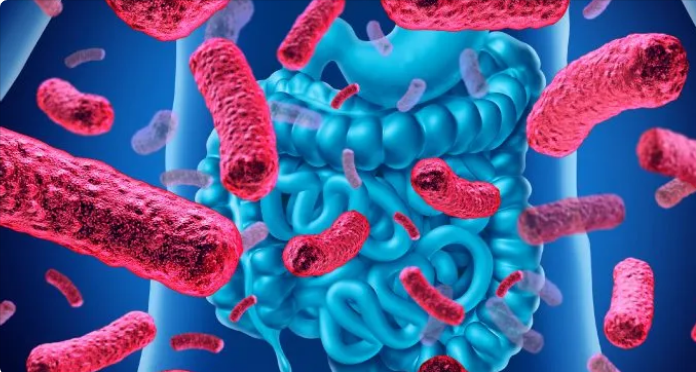
…Being stalwart guardians of our microbiomes is of utmost importance if we are making the health of our future generations, which is perhaps the most fundamental evolutionary imperative we have, a priority.
Because our microflora consists of a selective array of commensal microorganisms that ultimately originated from the environment–the air we breathe, the soil we interact with, and the water and food that we ingest–our mission must encompass a wider breadth and a more far-reaching scope if we are to save our microbiomes from certain demise”
But this strictly material layer of nutritional analysis barely touches the surface when it comes to appreciating the informational complexity of food.
FOOD AS INFORMATION: Living Water, Epigenetic Pathways, and the Wisdom of the Ancestral Diet
Food delivers powerful healing properties that scientists have spent decades analyzing in detail.
Take an apple, for example. This amazing fruit is brimming with pharmacologically (or better yet, nutrigenomically) active compounds, most notably ascorbic acid, also known as vitamin C. Another compound it contains is phlorizin, over a dozen polyphenols, potent antioxidants concentrated in the skin of the apple and known to elicit multitargeted effects that reduce the impact of high blood sugar in animal models.1
Apples contain structured water molecules with a hexagonal crystalline configuration (H302) that’s halfway between liquid and crystal. Named “the fourth phase of water” by Washington University professor Dr. Gerald Pollack, the micro-clustering pattern of structured water is capable of holding and transmitting both energy and information.2
In fact, all raw plant, animal, fungal, and bacterial cells contain this structured water, each with a configuration as unique as a snowflake, assuming it has not been desiccated and denatured through cooking, processing, or the gamma irradiation-based food preservation process known as “cold pasteurization.” “Raw” is a key word here.
Raw fruit juice has a high concentration of naturally structured water, which accounts for a good portion of the anecdotal and scientific evidence regarding its healing benefits. Processed juice, on the other hand, is said to contain dys-information (dys- is a word-forming element meaning “bad, ill; hard, difficult; abnormal, imperfect,”) that may misdirect the expression of our genes and harm our physiology.3
Virtually all water in uncooked and unprocessed plant food possesses beneficial genetic-expression-modifying information. This is a profound departure from looking at water as a fundamentally material, inert bystander in biological systems, as has been the case for centuries. Additionally, within the biological tissue of which they are composed, all foods contain the noncoding RNA molecules known as microRNAs, which affect the expression of the majority of genes in our bodies and stimulate biological pathways conducive to our species’s health and wellness. Packaged in exosomes, which are roughly the size of a virus (~65 nanometers), microRNAs survive digestion, whereupon they penetrate systemic circulation in the body and affect the structure and function of all our tissues.