— Middle East Observer (@ME_Observer_) July 16, 2024
The vessel was attacked with an uncrewed suicide boat two days earlier because its owners violated the Houthis’ blockade on Israel and continued to ship goods to the country.
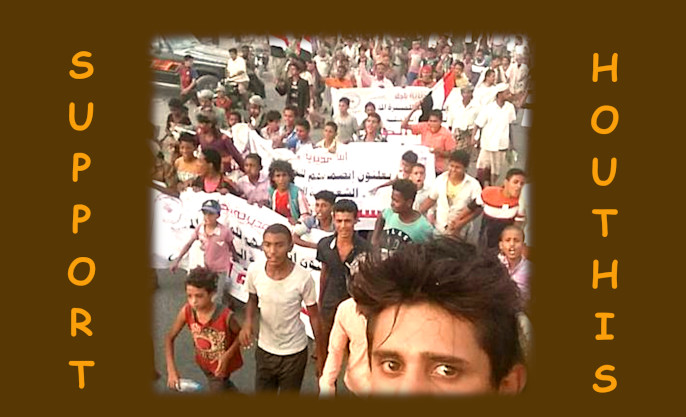
Houthi Heroes
The US/UK sponsored Israeli state has so far massacred 38,000 people, mainly children and women in an ongoing Genocide revenge for the Oct 7th breakout and abductions from the Gaza ‘open air prison’. That’s the count of the local health system, but an authoritative survey by LANCET puts the number at up to 200,000 Palestinians now dead.
The Houthis spent 9 years developing their missile technology in underground bunkers while being attacked by Saudi colonists with US backing. Now they are part blocking the Red Sea and Israeli ports “until Israel STOPS THE GAZA SLAUGHTER”, and this despite constant retaliation bombing attacks by the US and proxies.
The latest of hundreds of videos published by Houthis shows a powerful explosion resulting from the ‘uncrewed suicide boat’ detonating into the left side of the oil tanker. It is worth noting that the boat was blurred in the footage, apparently to hide its characteristics and specifications.
“The [Yemeni] armed forces affirm that their operations will continue and will increase … as long as the Zionist aggression on the Gaza Strip is ongoing,” the Houthis warned in the video.
Both the Joint Maritime Information Center, which is overseen by the United States Navy, and the United Kingdom Maritime Trade Operations, which is a detachment of the Royal Navy, confirmed that the Chios Lion sustained damage in the attack.
Since last November, the Houthis have attacked dozens of vessels affiliated with Israel or owned by the U.S. and the UK in the Red Sea, the Gulf of Aden, the Arabian Sea, the Indian Ocean and the Mediterranean Sea in response to the Israeli war and siege on Gaza..
The Houthis also claim to have developed their own hypersonic missiles, and are awaiting the imminent arrival of the aircraft carrier USS Roosevelt to replace the USS Eisenhower which they accused of ‘fleeing’ last month after their attacks.
The higher speed hypersonics, up to X20 Sound Speed, now deployed by Russia and China, make aircraft carriers obsolescent with their ‘unstoppable’ missiles.
In addition, the group launched dozens of drones and missiles at the southernmost Israeli city of Eilat and shot down six American-made combat drones over Yemen and nearby waters.
The U.S. and the UK have carried out hundreds of strikes against Houthi-controlled areas in Yemen since January in an attempt to deter the group and degrade its offensive capabilities, but to no avail.
Thu 18 Jul 2024 18.47 CESTFirst published on Thu 18 Jul 2024 16.37 CEST
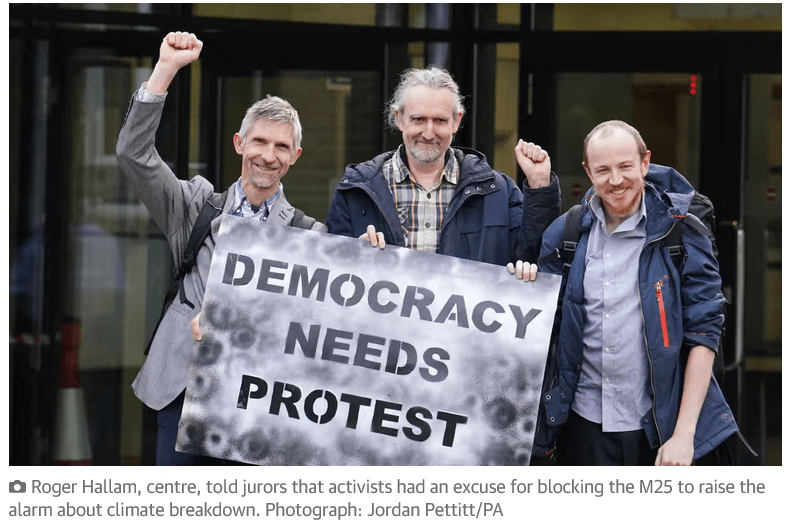
Five supporters of the Just Stop Oil climate campaign who conspired to cause gridlock on London’s orbital motorway have been sentenced to lengthy jail terms by a judge who told them they had “crossed the line from concerned campaigner to fanatic”.
Roger Hallam, Daniel Shaw, Louise Lancaster, Lucia Whittaker De Abreu and Cressida Gethin were found guilty last week of conspiracy to cause a public nuisance for coordinating direct action protests on the M25 over four days in November 2022.
Hallam received a five-year sentence on Thursday, while the other four were each sentenced to four years.
The sentences are thought to be the longest sentences ever given in the UK for non-violent protest, exceeding those given to the Just Stop Oil protesters Morgan Trowland (three years) and Marcus Decker (two years and seven months) for scaling the Dartford Crossing.
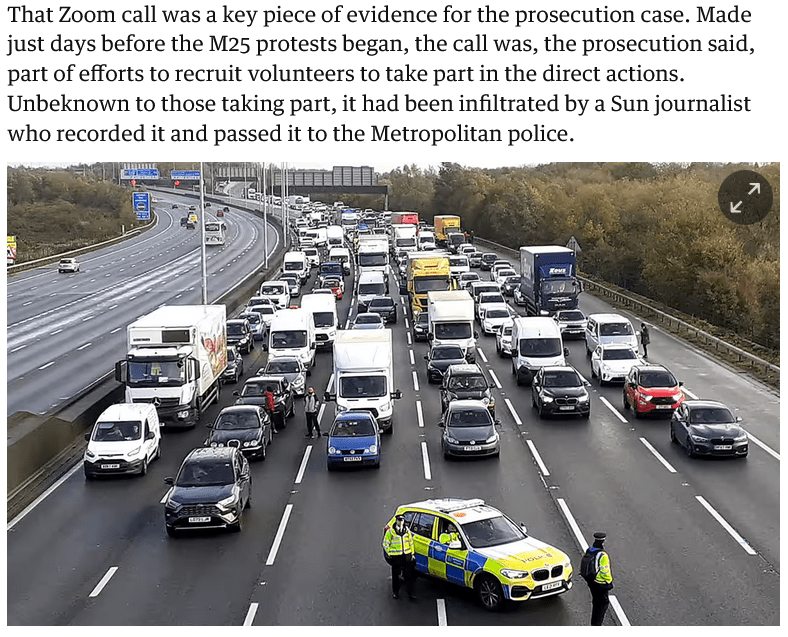
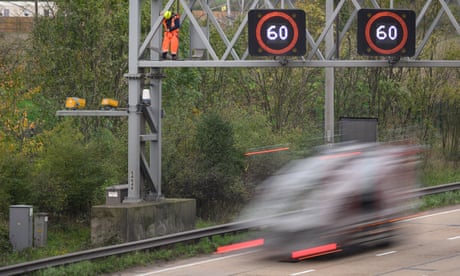
All five had spoken on a Zoom call trying to recruit potential volunteers for the actions, which involved activists climbing gantries at strategic points on the London orbital motorway.
On the call, Hallam said they intended to cause “the biggest disruption in British modern history” in an effort to force the government to meet Just Stop Oil’s core demand, an end to new oil and gas exploration in the North Sea.
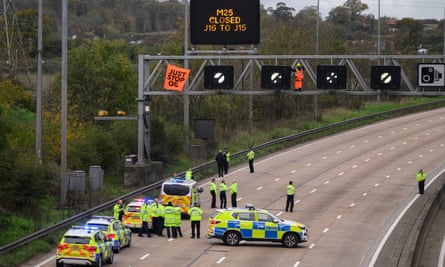
Police officers on the M25 after an activist put a Just Stop Oil banner on the gantry during the motorway protest in November 2022. Photograph: Leon Neal/Getty Images
Hehir admitted there was a scientific and social consensus that human-made climate breakdown was happening and action should be taken to avert it. “I acknowledge that at least some of the concerns motivating you are, at least to some extent, shared by many,” he said.
“But the plain fact is that each of you has some time ago crossed the line from concerned campaigner to fanatic. You have appointed yourselves as the sole arbiters of what should be done about climate change, bound neither by the principles of democracy nor the rule of law.
“And your fanaticism makes you entirely heedless of the rights of your fellow citizens. You have taken it upon yourselves to decide that your fellow citizens must suffer disruption and harm, and how much disruption and harm they must suffer, simply so that you may parade your views.”
Although all of the defendants ended the trial representing themselves, three of them – Hallam, Shaw and Whittaker De Abreu – instructed counsel to speak on their behalf in mitigation.
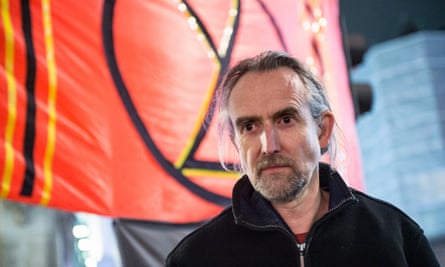
Roger Hallam, who has been jailed for five years. Photograph: Ollie Millington/Getty Images
Each barrister sought unsuccessfully to persuade the judge that lengthy sentences could be avoided. Francesca Cociani, for Shaw, said the likelihood of his reoffending was lowered by the fact that the new Labour government had essentially met Just Stop Oil’s core demand by ending North Sea oil and gas exploration.
Gethin, who offered her own comments in mitigation, said: “I want to remind the court once more that my reasons for taking action were not beliefs or opinions. Earth’s life-support systems are breaking down due to human activities, whether we believe it or not.
“These are not beliefs or opinions and feeling strongly that this is wrong is greatly understandable, I would argue. I deeply regret that this action was necessary … I maintain that it was necessary and I stand by my actions as the most effective option available to me.”
Supporters of the defendants expressed outrage at the sentences, which came after a two-week trial in which the judge denied them any of the defences in law for causing a public nuisance.
Hehir ruled that the jury should not take into account evidence about climate breakdown, which the defendants wanted to point to as the key motivation behind their actions, and which they said provided them with a reasonable excuse for them.
Michel Forst, the UN’s special rapporteur on environmental defenders, who attended part of the trial, issued a statement at its conclusion.
“Today is a dark day for peaceful environmental protest” in the UK, he said. “This sentence should shock the conscience of any member of the public. It should also put all of us on high alert on the state of civic rights and freedoms in the United Kingdom.
“Rulings like today’s set a very dangerous precedent, not just for environmental protest but any form of peaceful protest that may, at one point or another, not align with the interests of the government of the day.”
Greenpeace UK’s programme director, Amy Cameron, said: “What sort of country locks people away for years for planning a peaceful demonstration, let alone for talking about it on a Zoom call?
We’re giving a free hand to the polluting elite robbing us of a habitable planet while jailing those who’re trying to stop them – it makes no sense.
“These sentences are not a one-off anomaly but the culmination of years of repressive legislation, overblown government rhetoric and a concerted assault on the right of juries to deliberate according to their conscience. It’s part of the mess the Labour government has inherited from its predecessor and they must fix it by giving back to people the right to protest that’s been slowly being taken away from them.”
Separately on Thursday, three airports were granted high court injunctions against fossil fuel and environmental activists protesting at their sites. Leeds Bradford airport, London Luton airport and Newcastle international airport were given injunctions banning protesters from trespassing or causing a nuisance.
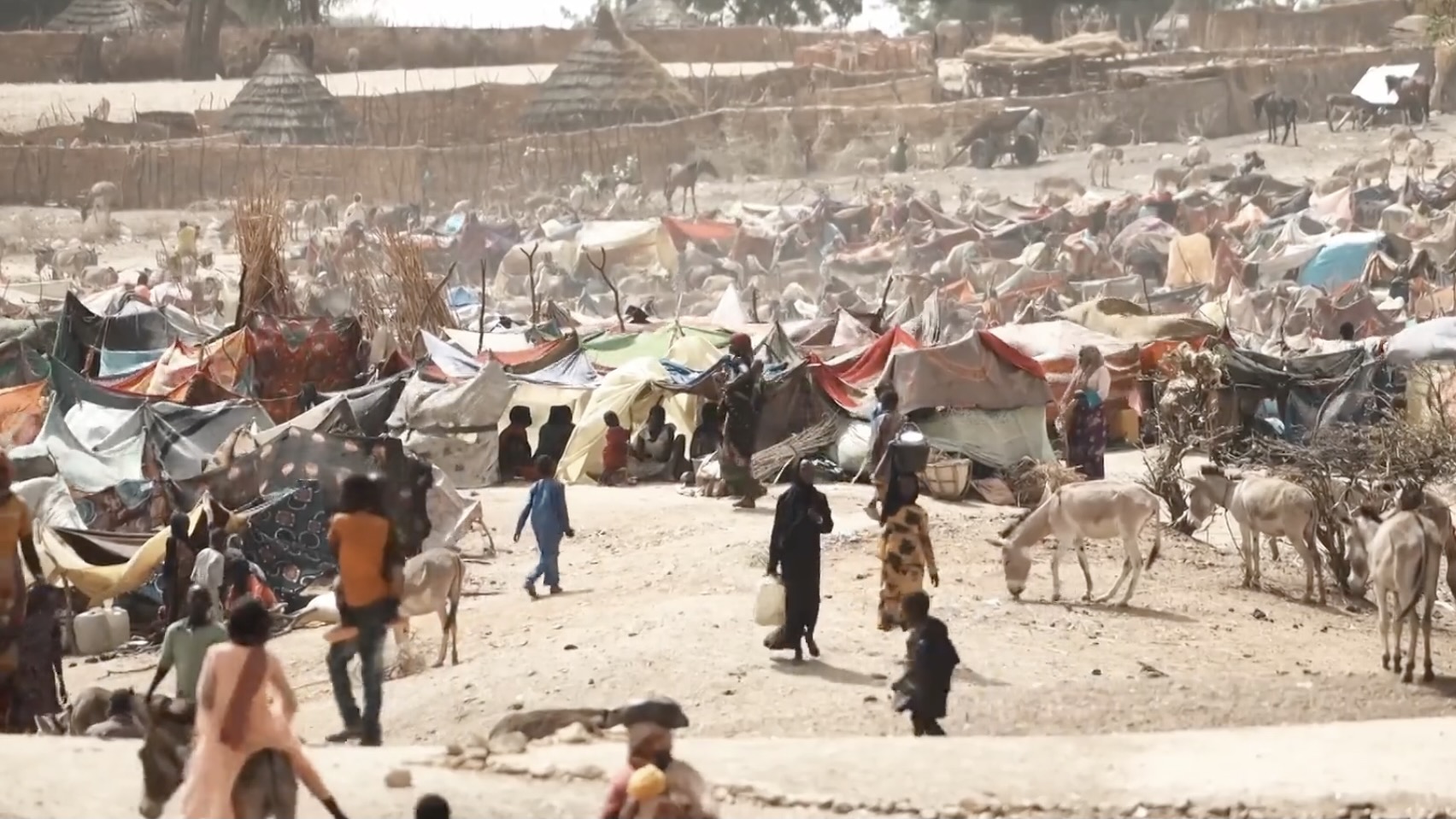
Sudanese refugees in Chad. Over 10 million people have been forcibly displaced in over a year of war in Sudan. Photo: Wikimedia commons Famine looms in Sudan, forcing people to flee to neighboring countries, while talks between warring parties and a UN envoy are still under way in Geneva Reposted from Peoples Dispatch The governments of […]
Some years ago I met a man called Diego Camacho (pen name Abel Paz) who wrote the classic biography ‘Durruti: The People Armed’, and a dozen more great books and films in castilian Spanish.
An agile grinning old fellow, with a Ducados in his mouth, he complained jokingly that he never got a cent back from the English version of the Durruti book (now in 14 languages!).
I foolishly said I would try and translate something for him, but I was never able and he died in 2009..
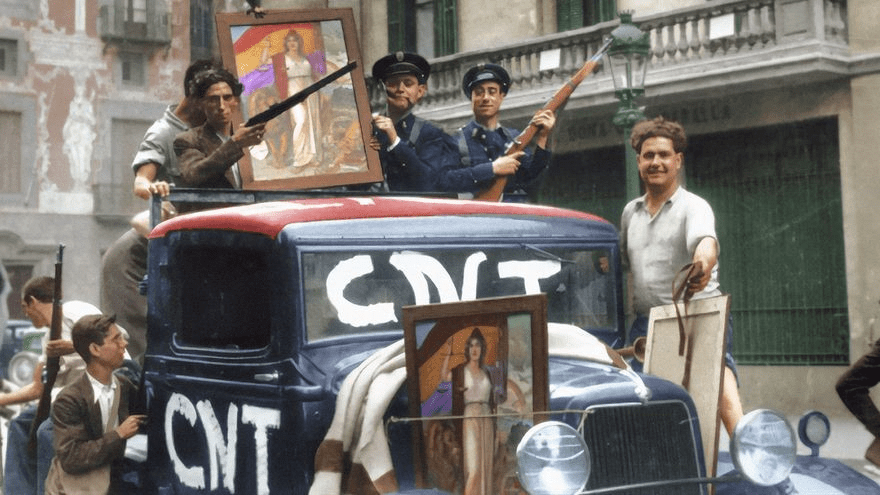
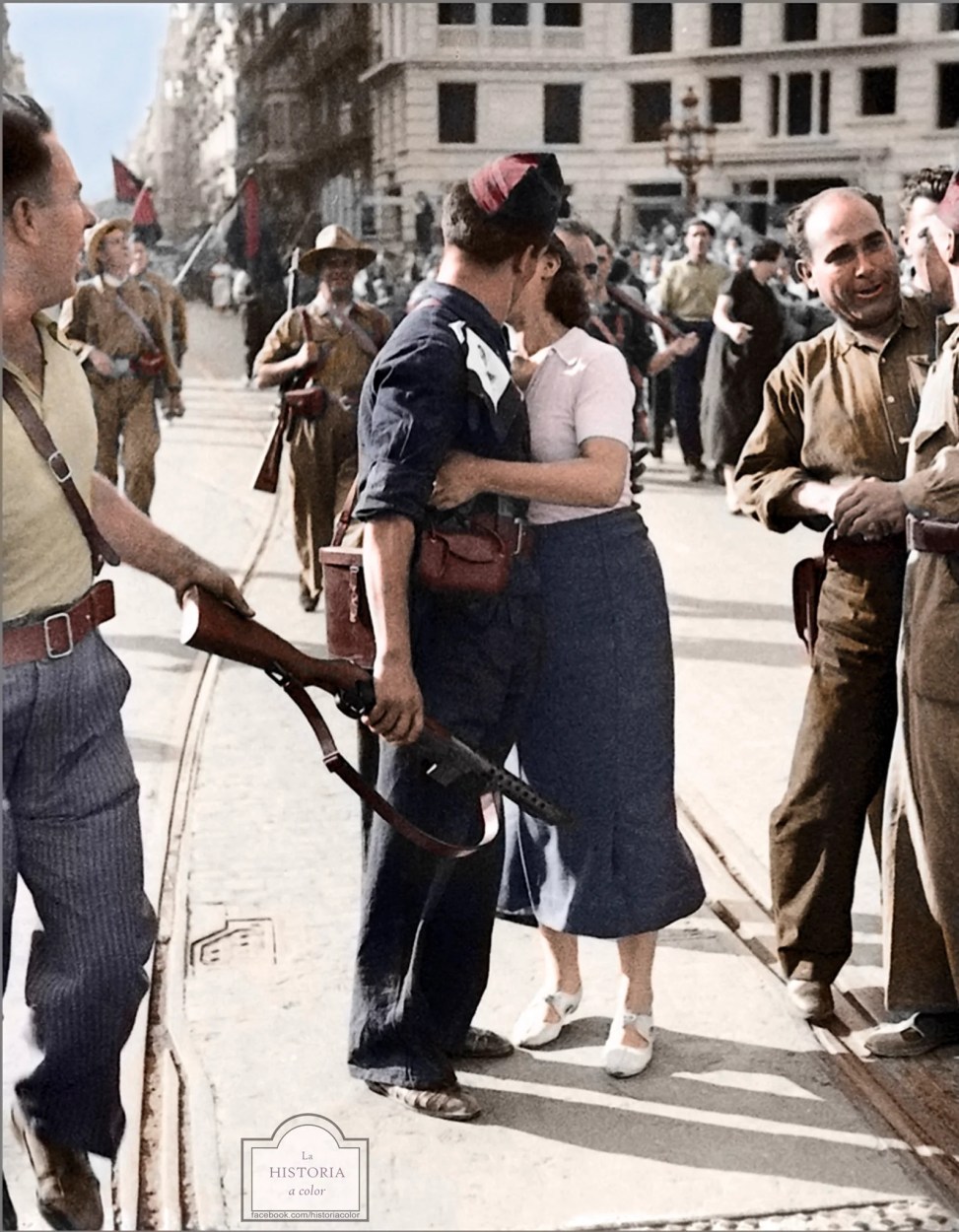
colorized
Diego outlived his exile, his torturers and his jailors (he spent more than 10 years in fascist death prisons) and came back again a lifetime later to live in Barcelona, where he had attended the ‘Ferrer’ anarchist Free School, Natura, as a child
He spent his time explaining what he’d seen during the Social Revolution, tirelessly inspiring new generations of youth, even touring to promote the film ‘Land and Liberty’.
But what the hell happened here in Barcelona, that hot sunny day, the 19th July 1936?
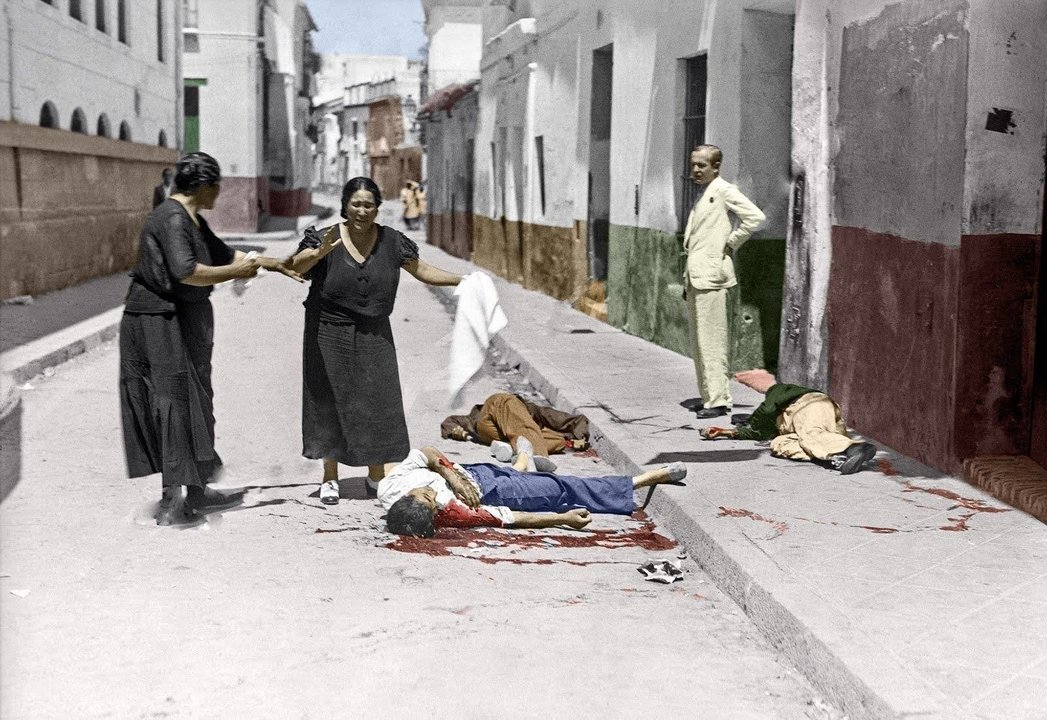
What could be so shocking, that all sides collaborated, to murder tens of thousands and gag people till today, intent on wiping all memory of those events from the face of this earth?.
I place here some paragraphs from one of Diego’s books ‘Trip to the Past’ (Viaje al Pasado, my bad translation). He was just 16 at the time, on the streets on 19th July 1936.. Revolution Day.
……….. ‘I wandered from group to group. All talk was of the rapid victory over the army (takeover attempt) in less than 12 hours of street fighting with the troops… one incident… In the blink of an eye the multitude had raised a colossal barricade across the Paralelo.’ (a main street).
‘The troops took up positions, commanded by a lieutenant, who showed little patience, and ordered his subordinates to attack the barricade without protection. Just when he began yelling the orders to attack a captain turned his weapon… and shot him dead.
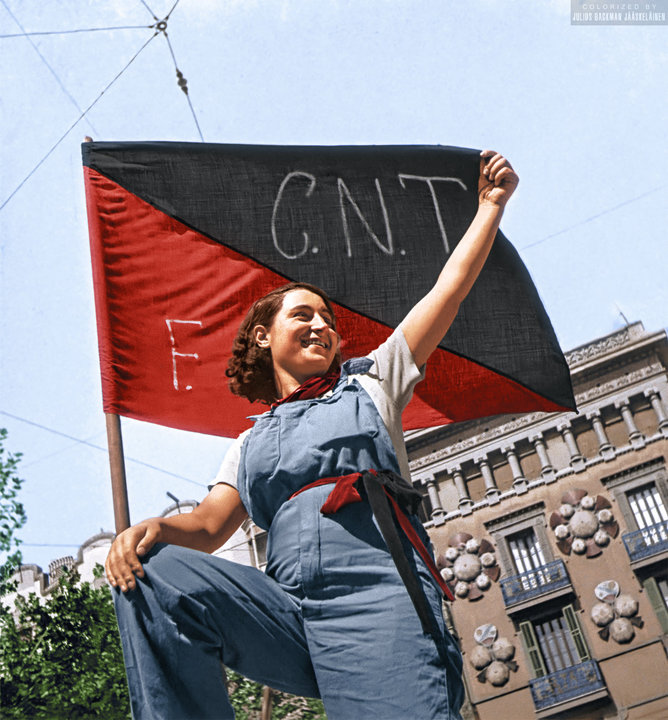
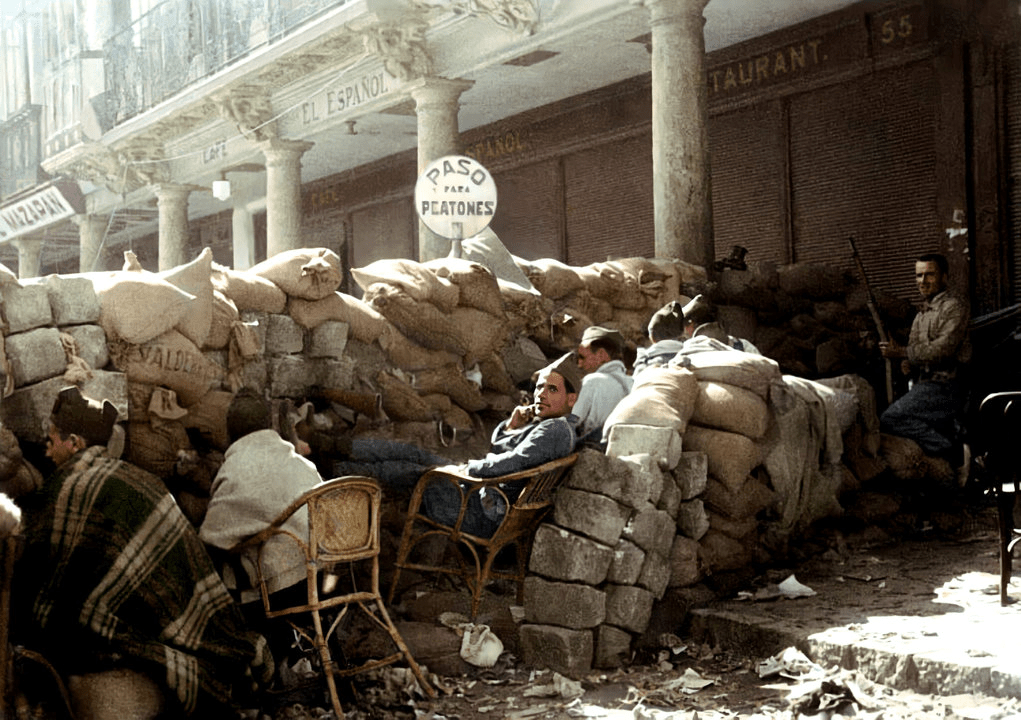
colorized
The soldiers stopped firing and began to approach us, shouting enthusiastically ‘Viva La República’… We all started fraternizing like crazy; they were stripping off uniforms and all explaining how they’d been misled by their superiors…’
page 439 ‘Barcelona had been converted into a labyrinth of barricades, many strategically useless, yet meaningful, built by all the neighbours, who placed with every piled up paving stone, their longing for social and political change.’…
( My note: This was a big modern city and a beehive of social and political activity. Another takeover by the army, this time fascist controlled, was the last straw. When the CNT activists set off the factory sirens in warning, everyone finally said ‘They Shall Not Pass’, and built barricades.)
…… ‘For me the time spent at our local barricade in the Clot neighborhood was vital. Nearby the Bar Fornos had its billiard hall converted in a twinkling into a free Popular Restaurant. The Damm beer workers had left 100’s of bottles, store workers piled up hams and sausage, hotbread…’-
.. ‘Barcelona was being transformed, and so were social relations. For example… at the barricade I met Lola, a family friend who’s partner Antonio caused constant problems due to his obsessive jealousy. She was running about, being useful, surrounded by men.
Later Antonio arrived with a lorry-load of activists. I saw no hint of his usual jealousy he was delighted to see her there, only worried about their 5 year old daughter.
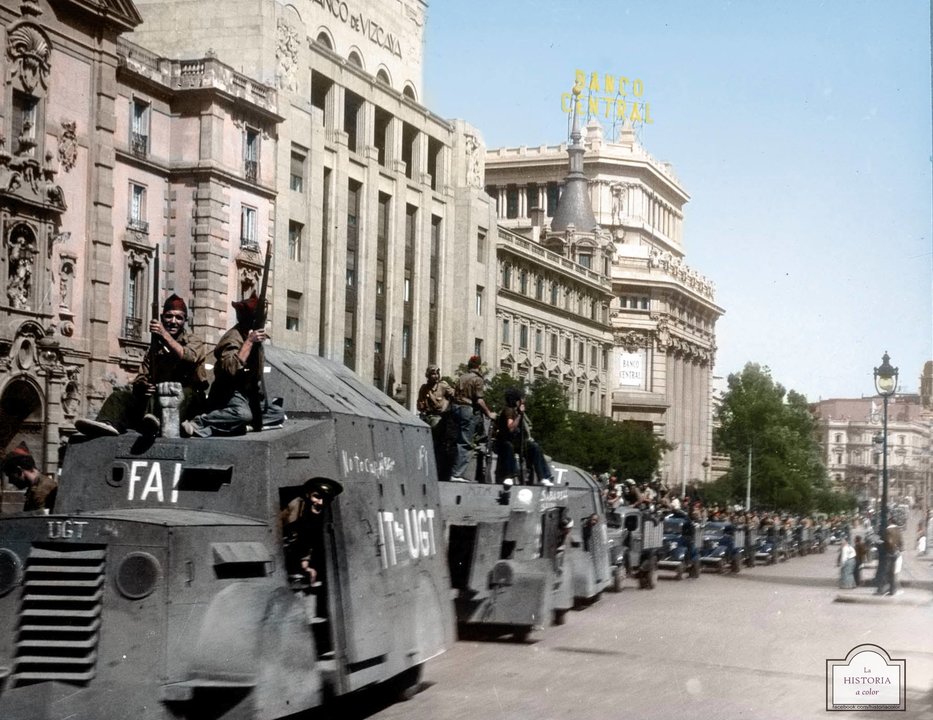
The lorry went through amid wild cheering for the CNT and FAI. How many more people experienced similar changes?’…
‘On the 27th July the local federation of the CNT union published a manifesto calling for the end of the General Strike, and asking people to go back to work. The generalized expropriations (workplace takeovers) were a response to the abandonment, which we found when we got there.
Most of the owners had gone, both big and small, for fear of reprisals by the (mistreated) workers. They called open Assemblies and collectivized industry… In less than36 hours the economic base passed (surprisingly ) from private to collective property. ‘-…
colorized
That’s what happened. Instead of installing the National Catholic dictatorship the military fascists accidentally provoked a leap into future, allowing a unique, short-lived Social Revolution, light years ahead of State Communism or predator Capitalism.
Diego was there, he lived that revolution that terrified all oppressors. He’s dead now, but he inspired us too, and he’d have enjoyed being quoted in these new editions of The Free. The book is a novel first, but the settings and background explore creative updates of ‘The Idea’, in the context of resource and climate collapse.
The trick is to play it live, to peep around our daily blinkers.
Other worlds and social systems are not only possible, but are coming, pronto, like it or not….
La revolución se inició por la decisión del gobierno de José Giral el domingo 19 de julio de «armar al pueblo» para hacer frente a la sublevación militar iniciada en el Protectorado Español de Marruecos en la tarde del viernes 17 de julio y que se extendió a la península durante los dos días siguientes.
Gabriele Ranzato considera que «armar al pueblo fue armar a la revolución».2
«El gobierno Giral perdió inmediatamente el control de la situación, y en los primeros meses las milicias armadas más que a hacer la guerra se dedicaron a una obra revolucionaria, localista y utópica, realizada más por los sindicatos —anarquista y socialista— que por los partidos políticos».3
Julián Casanova comparte esta valoración. Según este historiador, a causa de la decisión del nuevo gobierno de José Giral el Estado republicano perdió el monopolio de las armas, por lo que no pudo impedir que se iniciara una revolución social, ya que las organizaciones obreras no salieron a la calle «exactamente para defender la República, a la que se le había pasado la oportunidad, sino para hacer la revolución.
A donde no había llegado la República con sus reformas, llegarían ellos con la revolución. […]
Un golpe de estado contrarrevolucionario, que intentaba frenar la revolución, acabó finalmente desencadenándola».4 Luis Romero ya destacó la paradoja de que el «desencadenamiento» de la revolución «iba a ser consecuencia directa de la sublevación militar y fascista.
Como ha señalado el historiador italiano Gabriele Ranzato, durante los cinco meses de gobierno del Frente Popular (de febrero a julio de 1936) «la idea revolucionaria se difundió en una parte creciente del pueblo».
El ideólogo del socialismo caballeristaLuis Araquistáin ya advirtió que «si el capitalismo había llegado a tal punto de decadencia que no puede existir sin que haya millones de hombres sin trabajo y sin pan, y sin los que trabajan puedan hacerlo más que por jornales insuficientes y en condiciones de vida inhumanas, que desaparezca y deje el paso a un sistema económico donde no haya clases parasitarias».
Y esto es lo que explicaría que millones de trabajadores en todo el mundo, especialmente tras el impacto de la Crisis de 1929, «se vieran atraídos por la perspectiva de la revolución», y que «buena parte del pueblo español se viera impulsado a perseguir esa meta …».2
Terminado el aspecto violento de la revolución, se declararán abolidos: la propiedad privada, el Estado, el principio de autoridad y, por consiguiente, las clases que dividen a los hombres en explotadores y explotados, oprimidos y opresores.
coloriozado
Socializada la riqueza, las organizaciones de los productores, ya libres, se encargarán de la administración directa de la producción y del consumo.
Establecida en cada localidad la Comuna Libertaria, pondremos en marcha el nuevo mecanismo social. Los productores de cada ramo u oficio, reunidos en sus sindicatos y en los lugares de trabajo, determinarán libremente la forma en que este ha de ser organizado.
En el mismo Congreso también se acordaron las medidas para defender la nueva sociedad comunista libertaria instaurada tras el triunfo de la revolución «ya sea contra el peligro de una invasión extranjera capitalista, ya para evitar la contrarrevolución en el interior del país»:7
El pueblo armado será la mayor garantía contra todo intento de restauración, por esfuerzos del interior o del exterior, del régimen destruido.
Existen millares de trabajadores que han desfilado por los cuarteles y conocen la técnica militar moderna. Que cada comuna tenga sus armamentos y elementos de defensa, ya que hasta consolidar definitivamente la revolución estos no serán destruidos para convertirlos en instrumentos de trabajo.
Recomendamos la necesidad de la conservación de aviones, tanques, camiones blindados, ametralladoras y cañones antiaéreos, pues es en el aire donde reside el verdadero peligro de invasión extranjera.
Si llega este momento, el pueblo se movilizará rápidamente para hacer frente al enemigo, volviendo los productores a los sitios de trabajo tan pronto hayan cumplido su misión defensiva.
Desarrollo
Milicianas anarquistas durante la Revolución social española de 1936.
Así describió en sus memorias el comunista Manuel Tagüeña lo que sucedió en la zona republicana durante los primeros meses de la guerra civil:8
La situación real, que podía observar el que mirase a la calle, es que había terminado la II República. La sublevación militar, paradójicamente, había desencadenado la revolución que pretendía impedir y el poder efectivo estaba en manos de los grupos armados, de anarquistas, socialistas y comunistas, aunque se mantuviera formalmente el Gobierno como símbolo de la legalidad republicana ante la opinión internacional.
Cada grupo con sus objetivos, sus programas y sus fines diferentes y muy pronto cada uno con sus unidades de milicianos, sus policías, sus intendencias y hasta sus finanzas. En cuanto a los republicanos, habían sido barridos por los acontecimientos y muy poco iban a significar durante toda la guerra.
De julio a septiembre de 1936: el «verano de la revolución»
Los sindicatos CNT y UGT convocan una huelga general del 19 al 23 de julio como respuesta a la sublevación militar.
Ya en estas primeras semanas, se establecen dos matices entre los sectores revolucionarios anarcosindicalistas: el grupo radical, vinculado fundamentalmente a la FAI y a través de ella a la CNT, aunque también participen otras organizaciones menores, que entiende el fenómeno del que participa como una revolución a la usanza tradicional; y el grupo posibilista, formado también por miembros de otro sector de la CNT (y otros grupos revolucionarios más moderados), que expresa la conveniencia de participar en un frente más amplio, el posteriormente llamado Frente Popular Antifascista (FPA), resultado de sumar los sindicatos a la coalición electoral Frente Popular.
En pocos días se articulan los frentes de la Guerra Civil, de los cuales uno de los principales en el contexto de la revolución es el de Aragón. El 24 de julio de 1936 parte la primera milicia voluntaria de Barcelona en dirección a Aragón.
Además, se formarán otras de estas estructuras militares de carácter «popular» como la Columna de Hierro o la Columna Roja y Negra que parten también hacia Aragón. Allí tendrá lugar la mayor experiencia colectivista de la revolución.
Durante esta periodo la mayor parte de la economía española fue puesta bajo el control de los sindicatos. Principalmente en áreas anarquistas como Cataluña, este fenómeno llegó al 75% del total de la industria, mientras que en las áreas de influencia socialista la tasa fue bastante menor.
Las fábricas fueron organizadas por comités de trabajadores, las áreas agrícolas llegaron a colectivizarse y funcionar como comunas libertarias. Incluso lugares como hoteles, peluquerías, medios de transporte y restaurantes fueron colectivizados y manejados por sus propios trabajadores.9 George Orwell describe una escena de Aragón durante este periodo, en el cual participó como parte de la División Lenin del POUM, en su libro Homenaje a Cataluña:
Yo estaba integrando, más o menos por azar, la única comunidad de Europa occidental donde la conciencia revolucionaria y el rechazo del capitalismo eran más normales que su contrario.
En Aragón se estaba entre decenas de miles de personas de origen proletario en su mayoría, todas ellas vivían y se trataban en términos de igualdad. En teoría, era una igualdad perfecta, y en la práctica no estaba muy lejos de serlo.
En algunos aspectos, se experimentaba un pregusto de socialismo, por lo cual entiendo que la actitud mental prevaleciente fuera de índole socialista.
çMuchas de las motivaciones corrientes en la vida civilizada —ostentación, afán de lucro, temor a los patrones, etcétera— simplemente habían dejado de existir. La división de clases desapareció hasta un punto que resulta casi inconcebible en la atmósfera mercantil de Inglaterra; allí sólo estábamos los campesinos y nosotros, y nadie era amo de nadie.
Las comunas libertarias se rigieron por el principio básico de «De cada uno de acuerdo a su habilidad, a cada uno de acuerdo a su necesidad». En algunos lugares, el dinero fue totalmente eliminado, para ser reemplazado por vales.
Bajo este sistema, el costo de los bienes era con frecuencia un poco más de un cuarto del costo anterior. Las tierras expropiadas fueron el 70% en Cataluña, cerca del 70% en el Aragón oriental, el 91% en la Extremadura que quedó bajo el control de la República, el 58% en Castilla-La Mancha, el 53% en la Andalucía no ocupada a los militares insurrectos, el 25% para Madrid, el 24% para Murcia10 y el 13% en la actual Comunidad Valenciana.
Del total de las tierras expropiadas el 54% fueron colectivizadas, según datos del IRA.11 Sin embargo, dado que el Ministerio de Agricultura, y por extensión el IRA, estaban bajo control del Partido Comunista, hostil a la colectivización, los datos podrían ser mayores.
Las provincias donde adquirieron mayor importancia las colectividades rurales, fueron las de Ciudad Real -donde estaban colectivizadas en 1938, 1 002 615 has, el 98,9 % de la superficie cultivada en 1935- y Jaén -con 685 000 has y el 76,3 %-, quedando a mucha distancia el resto de las provincias republicanas.12 Muchas colectividades aguantarían hasta el final de la guerra.
En el Aragón en el que se proclama el comunismo libertario se formaron aproximadamente 450 colectividades rurales, la práctica totalidad de ellas en manos de la CNT, con un número que rondará las 20 a cargo de la UGT. En el área valenciana se constituirán 353 colectividades, 264 dirigidas por la CNT, 69 por la UGT y 20 de manera mixta CNT-UGT. Unos de sus principales desarrollos serán el Consejo Levantino Unificado de Exportación de Agrios (conocido por sus iniciales, CLUEA) y la total socialización de las industrias y servicios de la ciudad de Alcoy.13 En Cataluña los sindicatos obreros de la CNT se hicieron con numerosas fábricas textiles, organizaron los tranvías y los autobuses de Barcelona, implantaron empresas colectivas en la pesca, en la industria del calzado e incluso se extendió a los pequeños comercios al por menor y a los espectáculos públicos.
colorised
En pocos días el 70 % de las empresas industriales y comerciales habían pasado a ser propiedad de los trabajadores en aquella Cataluña que concentraba, por sí sola, dos tercios de la industria de España.
Se ha afirmado que las comunas anarquistas producían más que antes de ser colectivizadas.14 Trabajaron sobre los principios libertarios: las decisiones eran tomadas a través de concilios de ciudadanos comunes sin ningún tipo de burocracia.
Sumado a la revolución económica, existió un espíritu de «revolución cultural y moral»: los ateneos libertarios se convirtieron en lugares de encuentro y auténticos centros culturales de formación ideológica, en los cuales se organizaban desde clases de alfabetización hasta charlas sobre sanidad, además de una amplia gama de actividades: excursiones al campo, bibliotecas de acceso público, representaciones teatrales, tertulias políticas o talleres de costura.
Se fundaron numerosas escuelas racionalistas, que ampliaron la oferta ya existente en ateneos y centros sindicales, en las cuales se llevaban a cabo los postulados educativos de Ferrer y Guardia, Mella, Tolstoi o Montessori. Igualmente, en el terreno social algunas tradiciones eran consideradas como tipos de opresión, e igualmente la moral burguesa era vista como deshumanizante e individualista.
Póster propagandístico de la CNT llamando a la revolución (1930).
Así por ejemplo, durante la revolución, a las mujeres se les permitió abortar en Cataluña, la idea del amor libre consensuado se hizo popular y hubo un auge del naturismo.
El orden público también varrió sustancialmente, llegando prescindir de las fuerzas de orden público clásicas (Policía, Guardia Civil, Juzgados y ejército) suplantadas por las Patrullas de Control formadas por voluntarios, las milicias populares y las asambleas de barrio en las cuales se pretendían resolver los problemas que pudieran surgir. Las puertas de muchas prisiones fueron abiertas liberando a los presos entre los cuales había muchos políticos pero también delincuentes comunes, siendo algunas prisiones derribadas.
Pese a la situación de descomposición de facto del poder estatal, el 2 de agosto el gobierno de Giral tomó una de las primeras medidas al objeto de restablecer el Estado republicano con la creación de los Batallones de Voluntarios, embrión del Ejército Popular de la República. También promulgó algunos decretos, más simbólicos que reales:
Decreto del Gobierno de la República del 18 de julio declarando cesantes a los militares que participen en el golpe.
Decreto declarando cesantes a los empleados del Gobierno que simpaticen con los golpistas del 25 de julio.
Decreto de intervención de la industria del Gobierno del 25 de julio.
Decreto de incautación de los ferrocarriles del Gobierno del 3 de agosto.
Decreto de intervención en los precios de venta de alimentación y ropa del Gobierno del 3 de agosto.
Decreto de incautación de fincas rústicas del Gobierno del 8 de agosto.
Decreto de clausura de instituciones religiosas del Gobierno del 13 de agosto.
Decreto de socialización y sindicalización de la economía del Gobierno autonómico catalán del 19 de agosto.
Decreto de creación de los Tribunales Populares del Gobierno del 23 de agosto.
colorised
Surgen también ya las primeras tensiones entre la estrategia de la CNT (y el conjunto del movimiento anarquista) y la política del Partido Comunista y su extensión en Cataluña, el PSUC, y el 6 de agosto salen los miembros del PSUC del gobierno autonómico catalán por las presiones anarcosindicalistas.
De septiembre a noviembre de 1936: la formación del gobierno de Largo Caballero
Milicianos en una barricada improvisada en Barcelona (19 de julio de 1936).Escudo del Consejo Regional de Defensa de Aragón
Debido al crecimiento de la escalada bélica los sindicatos empiezan a ceder circunstancialmente el control de las columnas al Estado para la Defensa de Madrid de octubre-noviembre, que fue dirigida por un organismo semiindependiente, en el que estaban representados todos los partidos del Frente Popular además de los anarquistas, la Junta de Defensa de Madrid, luego llamada Junta Delegada de Defensa de Madrid.
El inicio de todo este progresivamente mayor acuerdo y acercamiento entre los partidos del Frente Popular y los sindicatos se plasma en la formación el 4 de septiembre del gobierno de Francisco Largo Caballero. Entre las medidas que adopta destacan el Decreto de incautación de fincas de condenados por los Tribunales Populares del Gobierno del 17 de septiembre y el Decreto de creación de los Jurados de Urgencia del Gobierno del 10 de octubre.
Por su parte el gobierno autónomo catalán aprueba el Decreto de colectivizaciones y control obrero del 22 de octubre.
El principal objetivo del gobierno de Largo Caballero no fue intervenir activamente en el desarrollo de la revolución sino potenciar y fortalecer el Ejército, medidas entre las que destacan la Constitución de la Milicia de Vigilancia de Retaguardia (16 de septiembre), el Decreto de transvase voluntario de jefes y oficiales de las milicias populares al Ejército (28 de septiembre) y el Decreto de aplicación del Código de Justicia militar a las milicias populares (29 de septiembre).
Cuando la guerra se empieza a prolongar, el espíritu de los primeros días de revolución afloja y comienza la fricción entre los muy diversos integrantes del Frente Popular, especialmente entre los anarquistas y los comunistas.1516
El PCE defendía la idea de que la Guerra Civil hacía necesario posponer la revolución social en curso hasta que se ganase la guerra, una vez derrotadas las fuerzas del General Franco. El PCE abogaba por no enemistarse con las clases medias, las bases de los partidos republicanos, que podrían verse afectadas y perjudicadas por la revolución y volverse hacia el enemigo.
Los anarquistas y los poumistas (comunistas antiestalinistas) estaban en desacuerdo con esta opinión, al entender que la guerra y la revolución eran lo mismo en el contexto español, una prolongación la una de la otra. Creían que la guerra era una manifestacción de la lucha de clases, y que el proletariado había derrotado a los militares precisamente por este impulso revolucionario que traían desde hacía años y no por defender una «república burguesa».
Según los anarquistas y los poumistas, a las milicias de los partidos y grupos que se situaban en contra de la posición del gobierno del Frente Popular se les estaba obstaculizando la ayuda y recursos, viendo así estos reducida su capacidad de actuación, a causa de lo cual en la mayoría de las áreas republicanas comenzaron lentamente a revertirse los recientes cambios realizados.
Una excepción la constituirá la consolidación del proceso colectivista en Aragón, a donde llegarán miles de milicianos libertarios de Valencia y Cataluña, y en donde ya antes del inicio de la Guerra Civil existía la más importante base obrera anarcosindicalista afiliada a la CNT de toda España. La asamblea convocada en Bujaraloz en las semanas finales de septiembre de 1936 por el Comité Regional de la CNT de Aragón, con delegaciones de los pueblos y las columnas confederales, siguiendo las directivas propuestas del 15 de septiembre de 1936 en Madrid por el Pleno Nacional de Regionales de la CNT, de proponer a todos los sectores políticos y sindicales la formación de Consejos Regionales de Defensa vinculados federativamente a un Consejo Nacional de Defensa que haría las funciones del gobierno central, acuerda la creación del Consejo Regional de Defensa de Aragón, que celebra su primera asamblea el 15 de octubre del mismo año.17
Por otra parte el Consejo Regional de Defensa de Aragón es legalizado y regulado el 6 de octubre por decreto (aunque puede decirse que este se mantuvo siempre “al margen de la legalidad republicana”, siendo esta quien lo aceptará). Frente a esta aparente tolerancia, un decreto de la Generalidad ilegaliza el 9 de octubre todos los Comités locales en Cataluña, sustituyéndolos formalmente por Consejos Municipales del Frente Popular Antifascista.
Todas estas concesiones a las instituciones fueron considerados por algunos como una traición a los principios clásicos del anarquismo.a
De noviembre de 1936 a enero de 1937: la integración de la CNT en el gobierno de Largo Caballero
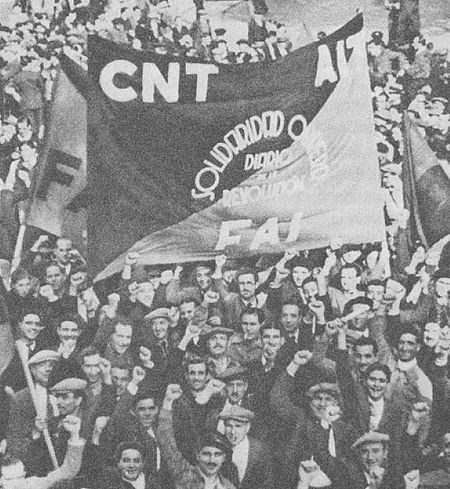
Manifestación obrera con consignas de la FAI, CNT, AIT y Solidaridad Obrera.Evolución del número de afiliados oficiales de la CNT entre 1911 y 1937.
El 2 de noviembre el Comité Ejecutivo Popular de Valencia aprueba un nuevo programa de acción que le subordina a la política del Gobierno de la República (segundo gabinete de Largo Caballero el 4 de noviembre), en el que se integran como ministros Juan García Oliver, Juan López Sánchez, Federica Montseny y Juan Peiró, miembros destacados de la CNT. Durante este mes, la Columna de Hierro decide tomar brevemente Valencia, en protesta por la escasez de aprovisionamientos que le proporciona el Comité Ejecutivo Popular, en manos de los posibilistas, produciéndose posteriormente enfrentamientos por las calles de la ciudad entre milicias libertarias y grupos comunistas, con un saldo de más de 30 muertos.
El día 14 de noviembre, la Columna Durruti llega a Madrid, después de ceder ante la presión de los posibilistas, que exigen la colaboración con el Estado. El 20 de noviembre muere en extrañas circunstancias Buenaventura Durruti combatiendo en la batalla de Madrid, a donde había llegado con más de mil milicianos desde el Frente de Aragón.
Funeral de Durruti en Barcelona (23 de noviembre de 1936). La pérdida de este líder anarquista durante la Defensa de Madrid supuso un duro golpe para las milicias en la Guerra Civil.
El 17 de diciembre el diario soviético Pravda de Moscú publica un editorial donde se lee: «Ya ha comenzado en Cataluña la depuración de trotskistas y anarcosindicalistas; se ha llevado a cabo con la misma energía que en la Unión Soviética».19
Por su lado, otra de las estructuras radicales, el Comité de Guerra de Gijón es trasformado por decreto del 23 de diciembre en el Consejo Interprovincial de Asturias y León, regulado por las autoridades gubernamentales de la República y más moderado en sus políticas, al tiempo que reconoce oficialmente la formación del Comité de Defensa Nacional. El 8 de enero de 1937 se disuelve el Comité Ejecutivo Popular de Valencia.
Durante estos meses el Gobierno pasa a controlar definitivamente las milicias populares anarquistas, disolviéndolas para que se integren obligatoriamente en el Ejército Popular, estructurado y jerarquizado bajo mando de oficiales profesionales.
De enero de 1937 a mayo de 1937: el fin del gobierno de Largo Caballero
El 27 de febrero de 1937, el gobierno prohíbe el periódico de la FAI, Nosotros (iniciando así el período durante el que la mayor parte de las publicaciones críticas con el gobierno pasan a sufrir censura), al día siguiente prohíbe a los policías pertenecer a partidos políticos o sindicatos, medida adoptada por el gobierno autonómico catalán el 2 de marzo.
El 12 del mismo mes, la Generalidad aprueba una orden exigiendo la entrega de todas las armas largas y materias explosivas a los grupos que no estén militarizados. Empiezan más enfrentamientos entre los sectores del Frente Popular, y el día 27 se produce la dimisión de los consejeros anarquistas del gobierno autónomo catalán.
Durante el mes de marzo se completará la militarización de las milicias, transvasadas a un Ejército regular y sujetas a los regímenes de disciplina y jerarquía de este, contra lo que se alzarán muchas voces del anarquismo.
El 17 de abril, al día siguiente de que los ministros de la CNT volvieran a la Generalidad, una fuerza de carabineros en Puigcerdá pide a las patrullas obreras de la CNT que les entreguen el control de las aduanas de la frontera con Francia; al mismo tiempo la Guardia Civil y la Asalto es enviada a Figueras y a otras localidades de la provincia de Gerona para acabar con el control de la policía por parte de las organizaciones obreras y es disuelto el Consejo de la Cerdaña, uno de los más autónomos. Simultáneamente, en Barcelona, la Guardia de Asalto procede a desarmar a los obreros a la vista del público, en las calles.
Durante el mes de mayo se agudizan los enfrentamientos entre los partidarios de la revolución y los partidarios de la reconstrucción del Estado republicano.
El 13 de ese mes de 1937, tras los sucesos de las Jornadas de Mayo de Barcelona, los dos ministros comunistas, Jesús Hernández y Vicente Uribe, proponen al Gobierno que se castigue a la Confederación Nacional del Trabajo (CNT) y el Partido Obrero de Unificación Marxista (POUM), iniciándose en la práctica la represión contra este último partido.
El 16 de mayo dimite Largo Caballero, a lo que sigue la formación del gobierno del socialista Juan Negrín (aparentemente un hombre de Prieto) pero sin apoyo de los anarquistas ni de los socialistas caballeristas.
El gobierno Negrín: la reconstrucción del Estado republicano
El día 25 de mayo queda excluida la FAI de los Tribunales Populares. El 8 de junio de 1937, el gobierno (que desde noviembre de 1936 tenía su sede en Valencia), promulga un decreto por el que ilegalizaba temporalmente las colectividades rurales que aún no habían sido disueltas. El 14 de junio, se forma un nuevo gobierno de la Generalidad de Cataluña, también sin los anarquistas y poumistas. El 15 es ilegalizado el POUM y su comité ejecutivo es detenido. El 16 se disuelve la 29.ª División (Ex División Lenin, del POUM).
En agosto, se prohíbe por medio de una circular del gobierno las críticas a la URSS.[cita requerida] En este mes también el gobierno central dispone la disolución del Consejo de Defensa de Aragón, prácticamente el último órgano de poder revolucionario que quedaba, el cual es ocupado militarmente por tropas del Ejército republicano el día 10.
Joaquín Ascaso, su presidente, es detenido. Asimismo, la undécima división comunista arremete contra diversos comités aragoneses y disuelve las colectivizaciones, aunque poco después se reorganizan en muchos casos.
El día 7, el gobierno autoriza el culto religioso en privado, una de sus muchas medidas intentando restablecer el poder del Gobierno en la zona republicana, al tiempo que en Barcelona se producen manifestaciones contra la suspensión de la publicación anarcosindicalista Solidaridad Obrera, disueltas con gran violencia. El día 16 se prohíben en Barcelona los mítines políticos. El 26 del mismo mes, el Consejo asturiano se proclama Consejo Soberano de Asturias y León, ente soberano e independiente de la República.












.jpg)




.jpg)


.svg)






 The Free