“This is not a crisis, but the result of a system sold to speculation and the commercialization of housing.” proclaimed the PAH ( Platform for People Affected by Mortgages Movement), which called the Demonstration
New suicide, this time double, as a result of an eviction. In this case, they are two sisters, aged 64 and 54, who took their lives a few hours before the execution of the eviction order set for this Monday at 11 in the morning due to non-payment of rent . .
This is the second case of suicide by eviction known in Catalonia this year, after the 70-year-old resident of Sabadell was evicted from his home after living there for 30 years.
The protesters have denounced a “criminal system” that “causes despair” to families who suffer an eviction order,” said Juanjo Ramón, spokesperson for the PAH,
In this case, there is no previous vulnerability report by the social services of Barcelona City Council.
The activists have demanded from the Administration “measures to change this structural drama” and have criticized the fact that Catalonia continues to be the territory with the most Evictions (they estimate 32 a day) despite having “the most guaranteeing law in Europe”
Updated on July 2, 2024 / By Kaosenlared Editorial Staff
At 4:30 in the morning, they both jumped into the void through the interior patio of the building where they lived, located on Navas de Tolosa street in the Barcelona neighborhood of Sant Andreu.
The lawsuit for non-payment against the tenants occurred in March 2023 by the owner and according to a statement from the Superior Court of Justice of Catalonia (TSJC), they accumulated a debt of 9,000 euros for not paying the monthly payments established since March 2021.
Candles in memory of the two sisters who died on Monday. / ZOWY VOETEN Velas en recuerdo de las dos hermanas fallecidas el lunes. / ZOWY VOETEN
Barcelona City Council has reported that it became aware of the case in February, when it received a request from the court for a report on the vulnerability of the tenants, arguing its inaction due to not having been able to contact them.
41,359 families evicted during 2021, 40.6% more than in 2020. The highest number of claims were presented in Catalonia, 26.7% of the national total. https://kaosenlared.net/41-359-fa…
The courts, for their part, claimed the impossibility of contacting the victims before the eviction. “The procedure was processed in absentia as no one appeared in the case and the sentence was executed in January 2024,” they point out.
This is the second case of suicide due to eviction known in Catalonia in 2024, an outcome that housing defense entities have known well for more than a decade.
Before these sisters, Álex, a 70-year-old resident of Sabadell, took his own life, having been evicted from his home after more than three decades in it.
After his eviction was confirmed, the man left the home in a state of shock, went to a nearby park and committed suicide.
Álex, 70, took his life a few minutes after being evicted. The events occurred in Sabadell (province of Barcelona), the municipality where he and his partner shared an apartment that had been his home for the last three decades.
¡No son suicidios, son asesinatos!: dos hermanas se quitan la vida en Barcelona cuando iban a ser desahuciadas
Manifestación de la PAH
Protesta en Barcelona por la muerte de dos hermanas horas antes de ser desahuciadas: “No es un suicidio, es un asesinato”
La manifestación ha sido convocada por la Plataforma de Afectados por la Hipoteca, que ha lamentado que lo sucedido “no es una crisis, sino el resultado de un sistema vendido a la especulación y la mercantilización de la vivienda”
A Palestinian man who had been detained by Israeli forces is welcomed by family and well-wishers at Al-Aqsa Hospital in Deir el-Balah, central Gaza Strip, July 1 [Bashar Taleb/AFP]
Israel has freed dozens of Palestinians detained during its war in Gaza, including the director of one of the enclave’s main hospitals.
Israel released 55 prisoners on Monday to free up space in its jails, unconfirmed reports claimed. Speaking shortly after his return to Gaza, al-Shifa Hospital Director Muhammad Abu Salmiya asserted that Palestinian prisoners in Israel’s prisons were facing daily abuse.
With thousands of Palestinians having been added to those already detained since the war began on October 7, Israel’s prisons are “full,” reported the Israeli Public Broadcasting Corporation.
Abu Salmiya was arrested amid claims by the Israeli military that Hamas was using al-Shifa Hospital as a base. The medical chief said no charge had ever been laid against him.
Freed after more than seven months of custody, he said detainees endured “daily physical and psychological humiliation” in captivity.
“Our detainees have been subjected to all kinds of torture behind bars,” he said at a news conference in Gaza. “There was almost daily torture. Cells are broken into and prisoners are beaten.
“Several inmates died in interrogation centres and were deprived of food and medicine,” he added.
Palestinians, holding banners and photos of their relatives, gather to stage a demonstration on demanding release of the Palestinian prisoners in Israeli jails in front of International Committee of the Red Cross (ICRC) building in Ramallah, West Bank on January 02, 2024 [İssam Rimawi – Anadolu Agency]
El 28 de marzo de 2024, las calles que rodean el Palacio de Justicia de Milán están abarrotadas de diferentes cuerpos de seguridad italianos. La policía municipal ha traído un coche patrulla, aparcado despreocupadamente junto a un quiosco de periódicos. La policía estatal y la policía militar (los Carabinieri) se pueden ver en las calles […]
Tunisians take to the streets again to demand an end to the genocide being committed in Gaza by Israeli occupation forces.
Israeli media rumour: “It is expected in the coming days that the Netanyahu government will announce the conclusion of the operation in Rafah and the end of the war in its current form”
Tunisia saw on Sunday mass popular demonstrations outside the US embassy, in support of Gaza and in rejection of the ongoing Israeli aggression on the Strip, amid demands for the expulsion of the American ambassador and the closure of the embassy.
Since the start of the Israeli war on Gaza, Tunisians have been continuously taking to the streets and staging sit-ins to raise their voices in support of the Resistance and to demand an end to the genocide being committed in Gaza by Israeli occupation forces.
تظاهرة من أمام السفارة الأميركية في #تونس للمطالبة برحيل السفير الأميركي وغلق السفارة فيها
Salaheddine al-Masri, the chairman of the Tunisian League for Tolerance, told Al Mayadeen that the Israeli occupation would destroy itself if it dared to confront the Lebanese Resistance, as evidenced by the United States sending messages to the Israeli entity not to open a front with Lebanon.
Al-Masri also hailed Yemen’s stance, which, according to him, “humiliated” both the Israeli and American armies.
He emphasized that the steadfastness of Palestinian women was the greatest message and slap in the face to the international community, pointing out that inaction toward violations committed by Israeli occupation forces against Palestinian women is a disgrace to the Arabs and humanity.
Elsewhere, the chairman of the Tunisian League for Tolerance pointed to the elderly Palestinian woman who was attacked by the Israeli occupation forces and their dogs during a night raid on her home in the Gaza Strip.
Related News
Israeli media rumour: Netanyahu is currently in discussions with senior military leaders regarding ending the operation in Rafah and the dramatic change in the nature of the war Israeli media: It is expected in the coming days that the Netanyahu government will announce the conclusion of the operation in Rafah and the end of the war in its current form
Voter turnout in the French legislative elections reached 59.39% at 5 pm local time, compared to 39.42% in 2022: Al Mayadeen’s correspondent
Israeli media: 9 army soldiers were injured, 3 of whom are in serious condition, as a result of the explosion of a drone in the Golan Heights launched by Hezbollah
The Islamic Resistance in Lebanon announced targeting the military workshop of the Beit Hillel occupation base with a Falaq rocket, directly hitting it and destroying a part of it
Israeli media: This year, 900 officers with the rank of captain and major requested to be discharged from the army
Ernst Albrecht with his beloved “Röschen.” [Source: welt.de]
Her father Ernst Albrecht, President of the German state of Lower Saxony from 1978 to 1990, brought unrehabilitated Nazis into his administration and carried out a black terrorist operation designed to discredit the left-wing Red Army Faction.
In the wake of the Russo-Ukrainian war, terms like “European values” have come back into the mainstream. One of the people who has been most responsible for this is Ursula von der Leyen, the president of the European Commission who is now a nearly omnipresent figure in the media.
According to Ursula, “European values” represent only the highest attributes of humankind: freedom, justice, solidarity, and rule of law.
Ursula shoveled nearly half a billion euros into the coffers of CIA linked McKinsey and others for “consulting” services, and received absolutely nothing in return.
Of course, anyone with even a passing knowledge of history can tell you that these are nothing but euphemisms. Not long ago, “European values” meant something very different.
Those values drew the borders of the world in oceans of blood, both of Europeans and those they conquered.
A look at the history of Ursula’s aristocratic European family can show us the true face of these “European values” and how the ruling class profited from imposing them on the world.
“If we succeed in bringing people of above-average capabilities to governance an autocracy or the rule of the few will be able to create a better order than the rule of the people.” – Ernst Albrecht
Ursula von der Leyen is the scion of two aristocratic German families. She was born Ursula Albrecht, the daughter of a prominent European bureaucrat, CDU party leader, and former governor of Lower Saxony, Ernst Albrecht.
The family carefully nurtured a cosmopolitan image as Ernst spent most of his life working for the EU and various precursor organizations. Growing up, Ursula was nicknamed “Röschen” (Rosie in English) by her father, and images of the happy family featured heavily in her father’s political advertisements.
The Albrecht family made its fortune by using its position as customs enforcers in the Holy Roman Empire to dominate the cotton markets of 19th-century Bremen and, from there, the name Albrecht has been a fixture throughout German history.
As is typical for bourgeois Germans, the otherwise exhaustively documented history of the Albrecht family has a mysterious gap between 1936 and 1945.
To avoid uncomfortable questions about where their power and money came from and what they did to earn it, the House of Albrecht, like so many others, is content to pretend the Nazi regime simply never existed.
Since we will never have answers, perhaps if we raise a light to what surrounds this void, the shadow it casts can show us the true shape of the “European values” Ursula is so fond of.
To begin, we can look at Ernst’s first job in politics, with the European Coal and Steel Commission under the direction of another aristocrat, Hans von der Groeben.
Hans was already a long-time bureaucrat by this point. During the war, he worked as a deputy for the Reich Ministry of Agriculture under the command of Richard Walther Darré.
Darré was a fanatical Nazi, writing his first fascist propaganda in 1926 and joining the Nazi Party in 1930.
He soon joined the SS and his loyalty and dedication to the cause led Heinrich Himmler to personally select Obergruppenführer Darré as head of both the SS Race and Resettlement Office and later the Reich Department of Agriculture.
Darré was one of the party’s leading ideologists, and he combined the tasks of the agricultural and race offices to set the foundation for Generalplan Ost, the Nazi plan to exterminate the entire Slavic race and colonize Eastern Europe.
Darré was the architect of the Nazi “blood and soil” agrarian policies and sought to create a new land-owning “Aryan” aristocracy.
He passed laws requiring an “Aryan certificate” to inherit farmland and was instrumental in Nazi eugenics programs, particularly the Lebensborn program, designed to breed a new generation of “Aryan” supermen and purge the German people of “undesirable bloodlines.” Darré shaking hands with Hitler. [Source: collections.ushmm.org]
One of his most promising acolytes was a doctor by the name of Josef Mengele who was put in charge of “racial health” policies within the department. Mengele would later go on to become the infamous angel of death who carried out some of the vilest crimes in history with his industrial-scale medical experiments at Auschwitz concentration camp.
Mengele, known to the CIA as Helmut Gregor. [Source: wikipedia.org]
Mengele particularly targeted children as his victims and kept them alive for months to gain as much data as possible. He never forgot where he came from: Mengele always cited Darré as inspiration for his ideas on “racial hygiene.”
Some of Mengele’s victims after their liberation by the Red Army. [Source: bbc.com]
After the war, Mengele escaped justice by fleeing to Argentina and later Brazil on the “rat lines” operated by CIA agent, future head of West German intelligence and unreformed Nazi Reinhard Gehlen and was protected under the personal order of CIA Director Allen Dulles, who viewed Mengele as a useful ally in his war against the USSR. Mengele died a free man in 1976 and was buried under the name Wolfgang Gerhard in São Paulo, Brazil.
Darré was proud of his work. He wrote thousands of pages outlining his plans in various publications, and routinely gave speeches inside Nazi Germany promoting his ideas.
“By blitzkrieg…before autumn…we shall be the absolute masters of two continents…a new aristocracy of German masters will be created….[With] slaves assigned to it, these slaves to be their property and to consist of landless, non-German nationals…we actually have in mind a modern form of medieval slavery which we must and will introduce because we urgently need it in order to fulfill our great tasks. These slaves will by no means be denied the blessings of illiteracy; higher education will, in future, be reserved only for the German population of Europe…” – Richard Darré
Together with Hans von der Groeben, they implemented what was known as the Hunger Plan to feed the Reich at the expense of conquered territories.
Millions of slaves worked on starvation rations, forced to send every morsel of food to the Reich where it would be used to quite literally sustain the Nazi machine which oppressed them.
By 1944, more than 15 million tons of foodstuffs had been requisitioned from the USSR, and this led to the intentional deaths by starvation of more than 10 million people.
According to Darré’s plan, after they had been all been sterilized and starved to death, the Slavic “Untermensch” was to be replaced by Darré’s new race of “Aryan” aristocrats, ready to use this land for the benefit of the Reich.
After the war, Darré was arrested and tried for war crimes at Nuremberg. He was found guilty, but despite the scope and scale of his crimes, he received a sentence of only seven years.
He served just three of them and was released in 1950. He died of liver cancer in 1953. While this sentence was shockingly lenient, it could have been worse. Hans von der Groeben never saw the inside of the courtroom.
A squatter, who goes by the name of Leaf, 28, relaxes in an empty former youth centre that is now occupied by squatter activist group Reclaim Croydon, in Croydon, South London. [Hannah McKay/Reuters]
A new leap in already Extortionate Rents has pushed million of Britons to the edge of Homelessness.
In the shopping streets and housing estates of the South London town of Croydon, some once-derelict buildings are slowly coming back to life.
People walk past a homeless man on a high street in Croydon. London Councils, an umbrella group representing the capital’s local authorities, said the number of people presenting as homeless increased by 14.5 percent in the year to September 2023, with more than 175,000 homeless and living in temporary accommodation. The cost of providing temporary housing in hotels, hostels or house shares rose by almost 40 percent last year to 90 million pounds ($113.54m) a month, London Councils said. [Hannah McKay/Reuters]
At a former school, peeling walls are getting a new coat of paint, and laundry hangs on a line to dry. Over at a disused youth centre, there is laughter in the gymnasium-turned-dormitory, and a vase of purple flowers decorates a scrubbed kitchen counter.
A child watches TV from his highchair in the space where he lives. The Reclaim Croydon collective has taken over disused commercial premises to provide beds for the homeless, saying it is providing a community-based solution to a broken housing market. [Hannah McKay/Reuters]
The Reclaim Croydon collective, a squatters group, has taken over disused commercial premises to provide beds for the homeless, saying it is providing a community-based solution to a broken housing market.
“The government is failing homeless people,” one of the youth centre’s new occupants, who goes by the name Leaf, told Reuters.
Zin, 47, paints a wall in an area used as a common room of the place he lives, which was once a school and is now occupied by Reclaim Croydon. [Hannah McKay/Reuters]
Britain has long lacked enough housing, but a 22 percent jump in private rents in England over the last five years has left growing numbers of people struggling to find anywhere to live. Housing routinely appears in the top five issues that pollsters report as the most important for voters ahead of Thursday’s general election.
The high rents and unaffordable house prices have meant people in their 20s or 30s are still living at home with parents or in house shares. At the most acute end, growing numbers are sleeping on the streets and in empty buildings, official figures show.
Squatters eat an evening meal together in a room used as a common room in the place where they live. [Hannah McKay/Reuters]
Studies have found that ethnic minorities are disproportionately affected, with a 2022 report published by the Centre for Homelessness Impact charity showing that Black people were more than three times as likely to become homeless as white people in England.
Both Prime Minister Rishi Sunak’s Conservatives and the main opposition Labour Party have pledged to tackle the housing crisis by building more homes.
Housing campaigners have long argued that local councils should also utilise some of the roughly 700,000 vacant homes in England as a cheaper and faster solution.
An external view of a former solicitors’ office, an empty building which Reclaim Croydon formerly occupied before they were evicted, is seen on a high street in Croydon. [Hannah McKay/Reuters]
“We’re seeing more and more councils saying that temporary accommodation budgets for people that they theoretically have a legal duty to house are literally bankrupting them,” Chris Bailey, campaign manager for the Action on Empty Homes charity, told Reuters.
KFARHAMAM, LEBANON – MAY 08: A view of damage after Israeli air strike hits Kafr Hamam town in Hasbaya district in southern Lebanon on May 08, 2024.(Photo by Ramiz Dallah/
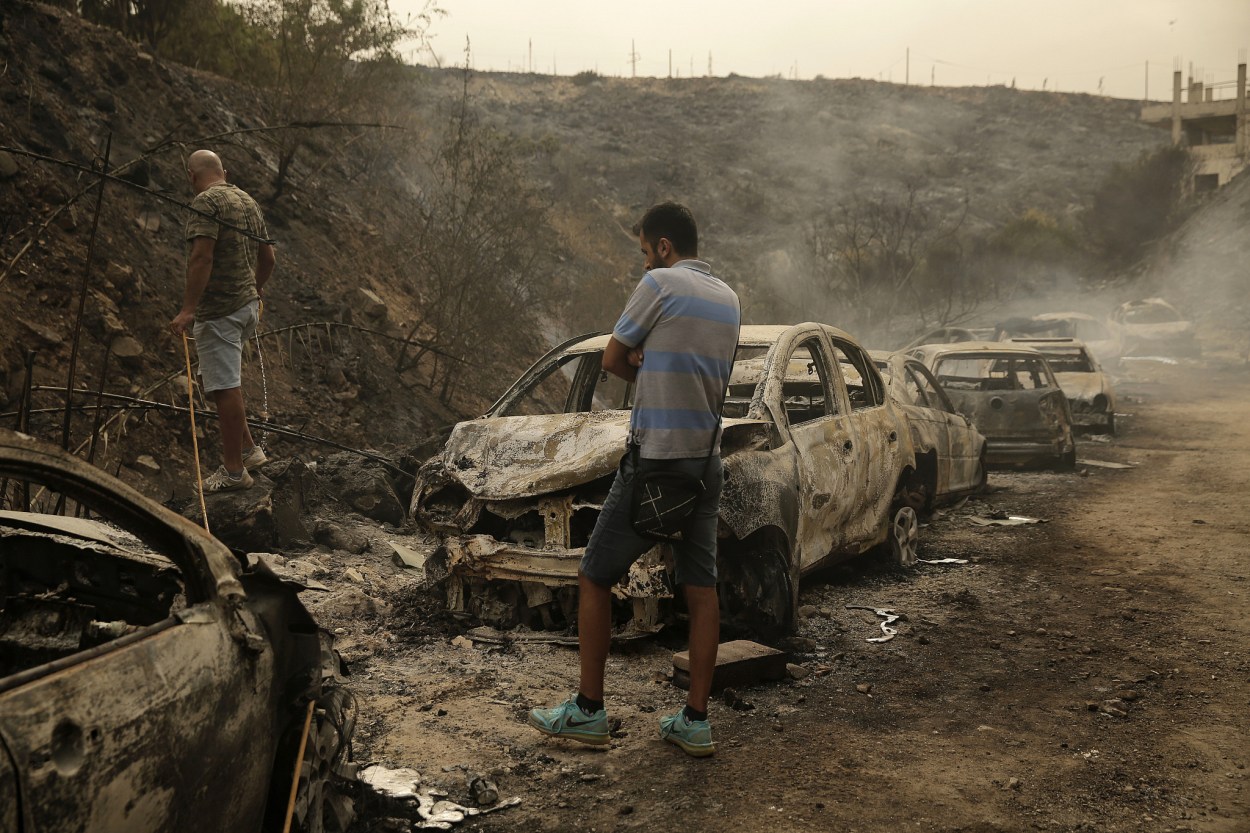
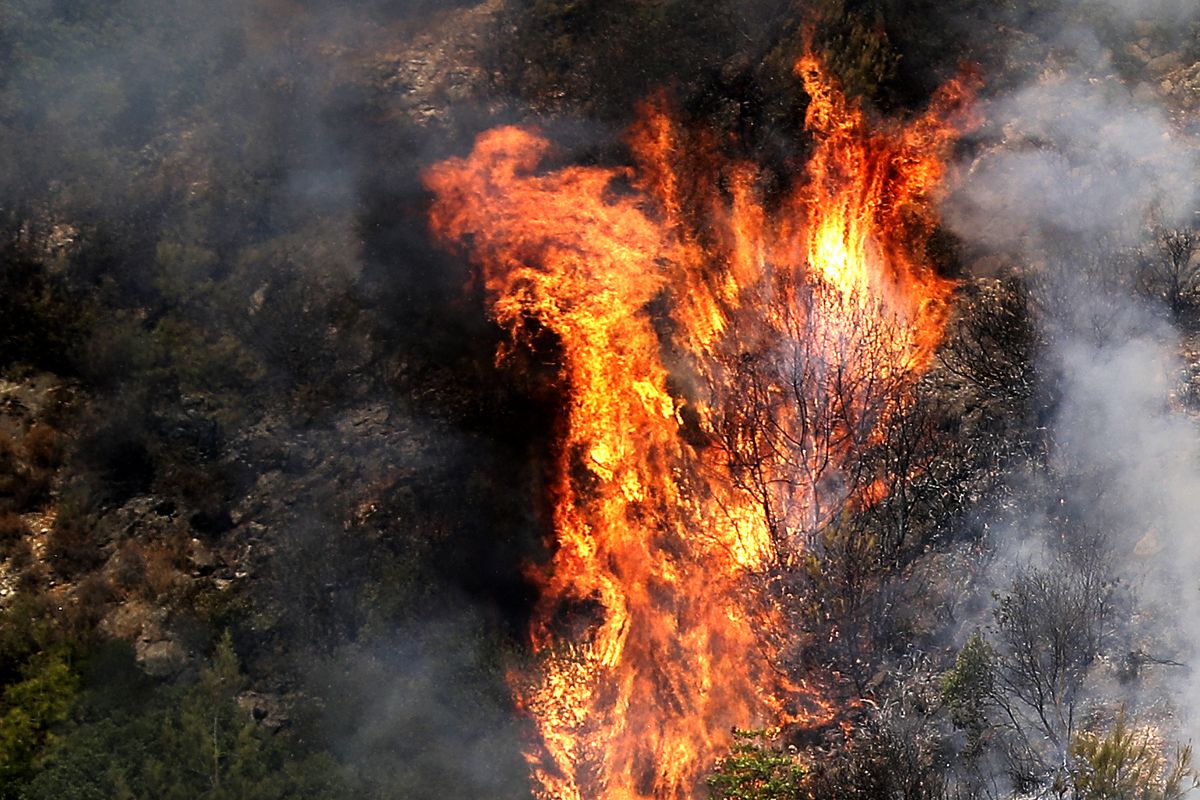
The Israeli army wants to impose a buffer zone on the border with Lebanon approximately 100 kilometers long. It is doing so by devastating the forests and vegetation cover with phosphorus bombardment, as an even hotter summner begins..
Amnesty International has confirmed that Israel is using white phosphorus, an unconventional weapon, in its bombardment of southern Lebanon.
Tel Aviv justifies itself by saying that it is destroying shelters used by Hezbollah for its military operations against its residents.
In December last year, Lebanese Prime Minister Najib Mikati raised his voice. “Large areas of Lebanon are subject to a regression of environmental conditions due to continuous Israeli attacks,” he warned.
Israel was defeated by Hezbollah in 2006 in Southern Lebanon and ever since the military have been screaming for revenge. In recent months, the strong Lebanese resistance has systematically destroyed dozens of radar stations, night vision cameras, infrared sensors, long-range communications towers, telescopes antennas inside Israel. This makes all Israel a target if war breaks out, including Jerusalem and the main Haifa port.
Hezbollah’s policy has left many Israeli bases unprotected, and forced a mass evacuation of up to half a million Israeli colonizers. Frustrated by failure to eliminate Hamas or complete the Genocide in Gaza the now unhinged extreme rightwing military/ regime is crying out for blood, threatening to “bomb Lebanon back to the stone age” and ‘devastate Beirut like Gaza‘.
It remains to be seen whether the Israeli dominated neocon US regime, which has bankrolled the ongoing Gaza genocide, will provide the billions of dollars necessary and risk a wider world war, spreading to Russian backed Iran, and even China.
“Constant Israeli attacks, including the use of banned white phosphorus weapons are killing civilians and causing irreversible damage to more than 5 million square meters of forests and agricultural land, in addition to having damaged thousands of olive trees,” the Lebanese prime minister claimed.
The situation is deteriorating as the days go by. The NGO Save the Children even fears a humanitarian crisis affecting tens of thousands of families in southern Lebanon, who were left without livelihoods after Israeli army fire destroyed more than 47,000 olive trees as well as other crops during their harvest.
Israel white phosphorous attacks on Lebanon are harming people and ecosystem… More than 92,600 people have been displaced from their villages in south Lebanon by the attacks, according to the IOM.
Four-year-old Merve has serious burns on her body due to phosphorus used by Israel on Gaza, according to doctors, shown here being treated at El Arish Hospital in El Arish, Egypt on November 15, 2023 [Burcu Calik Gocumlu/Anadolu via Getty Images]
With eight hundred hectares of land completely devastated, 340,000 head of livestock dead and about 75 percent of farmers destitute, Prime Minister Mikati warns that southern Lebanon risks becoming an “agricultural disaster zone.”
This part of Lebanon is famous for the production of citrus fruits, olives and tobacco in particular.
It is an area more than 100 kilometers long, stretching from Naqura to Mount Hermon and the hills of Kfar Shuba, and at a depth that exceeds an average of 6 to 7 kilometers.
More than eight months of war have left at least 458 people dead in Lebanon, including some 90 civilians and nearly 300 Hezbollah fighters.
Since the beginning of the Gaza war, in solidarity with the Palestinian people, Hezbollah has periodically exchanged fire with the Israeli army.
Israel believes that the Lebanese resistance movement uses the vegetation cover adjacent to the Lebanese border to conceal its military operations.
In addition, Israeli shelling targeted several southern regions, killing two people, including a Hezbollah fighter, and sparking large fires on Saturday.
It is absoulutely VITAL that you spread these articles and share them far and wide!!There will never be ads, nor paywalls on this website and I do this, delivering articles for free, so please donate if you can afford it!
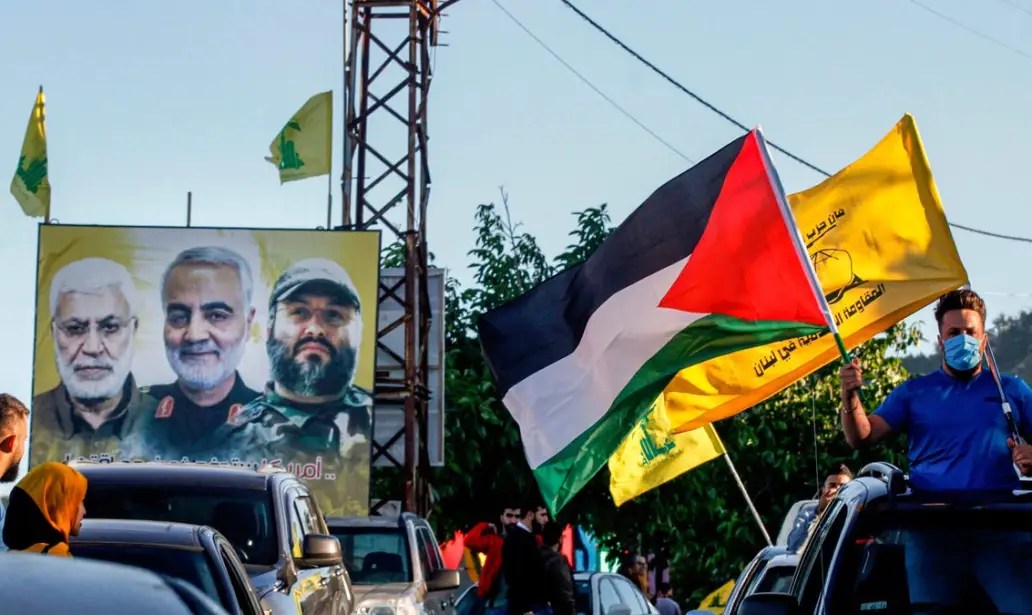
Since October 7, all eyes have been on Hezbollah. The Zionists know that if it makes a false move in Gaza, the various factions of the Axis of Resistance, and first and foremost Hezbollah, will be confronted.
Hamas spokesman Abu Obaida says in a statement posted on social media that his organization had captured several Israeli army soldiers during an ambush in Jabaliya in the northern Gaza Strip. Members of the Palestinian organization lured an Israeli unit into a tunnel in Jabaliya refugee camp and ambushed it.…05.06.2024
Hezbollah attacked 15 sites in Metulla yesterday with anti-tank missiles and Shlomi Eldar, Israeli correspondent for Channel 13, confesses that the protectiles are a significant threat because Israeli warning systems are unable to detect them. Israeli media acknowledge that Hezbollah’s missiles, which are aimed beyond Israel’s border, have intensified and…14.12.2023













.jpg)