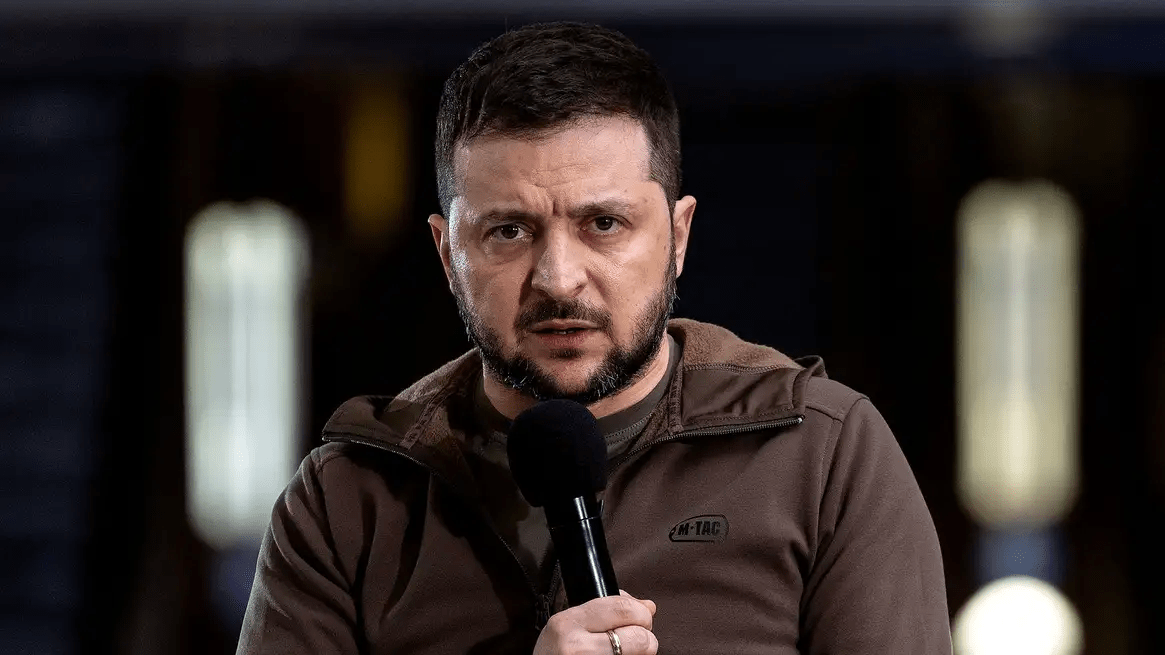
In a desperate plea for aid in the continued effort to expel his nation’s Russian occupiers, sources reported Friday that President Volodymyr Zelensky had called upon the United States to send a totally psycho marine to assist in Ukraine’s war effort.
“You know, one of those expertly trained, one-man-army guys who carries an arsenal on his back and has killed so many people in combat he’s now cold, unfeeling, and completely insane—you gotta have at least one of those to spare, right?”
Said Zelensky, specifying that the ideal candidate would be a wild-eyed shirtless muscleman who functioned as a completely self-sufficient killing machine and could take out hundreds, if not thousands, of enemies all by himself.
“In order to get the upper hand against Russia, we’re going to need your most batshit, balls-to-the-wall ex-special-forces guy.
He’ll have a crazy name like Razor or Bloodhound or something, and he’ll always be blacking out and waking up covered in blood with a whole village dead around him.
If he has a personal score to settle with the Russians, that’s great, but the most important thing is that he just kills and kills and kills and kills—sometimes using a cherished hunting knife that belonged to a fallen comrade, even though a gun would be faster.
Honestly, he can kill a few Ukrainians too, if he wants, just so long as he gets the job done.”
At press time, the U.S. Marine Corps had reportedly agreed to send “the craziest motherfucker” it had, just as soon as he had applied his face paint, donned a necklace of severed human ears, and stopped in for chest wax.
Also, YouTube removes the Project Veritas video. Every expert I’ve talked to said, “you can’t make up a story like that” when viewing the PV video. Plus, the part you didn’t see…
Project Veritas releases explosive video that gets over 20M views, YouTube blocks it, Pfizer issues press release two days later which doesn’t deny anything in the video, and three experts validate authenticity of what was described in the video.
When Pfizer finally replied to the scandal their statement DOES NOT DENY Walker works for them or punish him.. Thus accepting what he says.
Worldwide press blackout. All the articles in newspapers (such as the Daily Mail) were taken down minutes after being posted! If you had any doubts about the news media objectively reporting the news, this action should erase all doubts.
Wow.
Also, update on the status of the FAA/pilot story at the end!
********
Introduction
Here’s the Project Veritas video on YouTube… it’s been blocked:
Essentially, YouTube blocks anything that goes against what the US government wants you to know even when it is true!
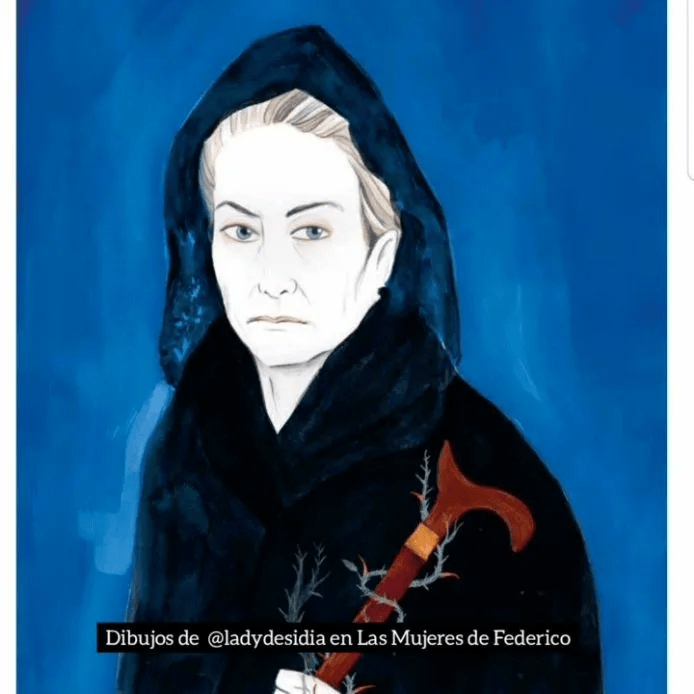
La escritora y periodista especializada en violencia de género Ana Bernal Triviño y la ilustradora con una desbordante sensibilidad Lady Desidia enfrentan a mujeres lorquianas contra la cruda realidad del machismo imperante, en la segunda entrega de la trilogía ilustrada sobrepersonajes que aparecen en laobradel poeta y dramaturgo Federico García Lorca.
Portada del libro “Los hombres de Federico”, segunda parte de la trilogía de Ana Bernal-Triviño y Lady Desidia. Cedida por Lunwerg Editores.
Por Ane Amondarain
Grabación de la presentación de ‘Los hombres de Federico’ texto de Ana Bernal Triviño e ilustraciones de Lady Desidia, publicado por Lunwerg Editores.
..Un año después, las mujeres de Federico se reúnen de nuevo en la Huerta de San Vicente ante la llamada de Novia, pero ellas ya no son las mismas y el entorno también ha cambiado por un paisaje sombrío y bañado en rojo. El encuentro se complicará cuando las protagonistas descubran que García Lorca creó un manuscrito sobre sus nuevas vidas que deja una puerta abierta a que otros personajes se adueñen de la historia. Las mujeres se darán cuenta de que algo no va bien cuando ocurran situaciones extrañas en la casa y su angustia irá en aumento con los rumores de que los hombres de Federico (las antiguas parejas o amantes de ellas) quieren llegar hasta el lugar con propósitos desconocidos. Solo la magia y mantenerse juntas podrán ayudarlas a enfrentarse a la incertidumbre y a los peligros que les depara esa imprevista llegada...
Si bien en la primera parte de la trilogía de ficción,«Las mujeres de Federico»(2021), editada también por Lunwerg, se narra el cambio en los destinos de las mujeres lorquianas de principios del siglo XX, que se zafan del encorsetamiento al que están designadas por su género, esta vez se tropezarán en más de una ocasión con las violencias machistas.
Sin embargo, en este desalentador contexto, la sororidad se abrirá paso y se convertirá en una poderosa herramienta para salir adelante.
Ilustración del libro «Los hombres de Federico» de Lady Desidia. Cedida por Lunwerg Editores.
Y es que en esta nueva aproximación con perspectiva de género a la obra del poeta y dramaturgo granadino, adscrito a la generación del 27, Ana Bernal Triviño ha querido confrontar con su pasado a mujeres lorquianas como Rosita, la Novia, Bernarda, Adela o Yerma, entre otras, y enfrentarlas a sus antiguas parejas o amantes, es decir, a «Los hombres de Federico».
Best known as a founder of Class War and lifelong irreverent troublemaker against the Establishment, Ian Bone has been an anarchist since the late 1960s, with particular highlights including the time he was designated “the most dangerous man in Britain” by The Sunday People and his role in organising legendary festival Anarchy in The UK in 1994. He was also active during the 1990 anti-Poll Tax campaign, and talked to Rob Ray about his memories of Hackney at the time …
So you were in London when things started kicking off?
Yeah I used to live on Brook Road — a little estate near Clapton Pond, one of my kids was born there. It has changed a lot.
There was Stamford Hill squatters, just loads and tonnes of stuff happening, housing issues with all sorts of different groups. Class War was going really full pelt in Hackney, loads of graffiti everywhere. occupations of Mare Street Town Hall, all sorts of stuff, a big squatting movement.
The Pembury (pub) was like a sort of red base, with squatters, red actionists and class warriors, also a palpable anarchist community, like maybe there’d been in Brixton in the early ’80s, lots of anarchists per head of the population and a lot of little magazines like Hackney Heckler, loads of other stuff, a very vibrant scene. There was the music scene, then we’d do stuff like chase the housing manager down the road. Yeah, people were declaring it the People’s Republic of Hackney.
What was driving that?
Well in Hackney at the time … quite a few people actually lived there. It works best within a sizeable squatting infrastructure, so we got a lot of people squatting. It gives you a solid base for action.
There was a lot of empty accommodation, a lot of big squats from Stamford Hill down to the Pembury and others, there were a lot of people who lived cheek by jowl, big music scenes, parties, there was a whole heap of punk, squat gigs, a lot more than normal you know? There were a lot of easy to access squats along Mare Street. And there were a lot of just quite imaginative squatters who put a lot of time in.
I can’t recall any massive sectarianism among the anarchists in Hackney, even the ones that were reflected nationally they got stuck in for the Poll Tax, people worked together really well. I mean there was a lot of them, a lot of people who were identifiable as anarchists just from the clothes they were wearing, loads of slogans everywhere.
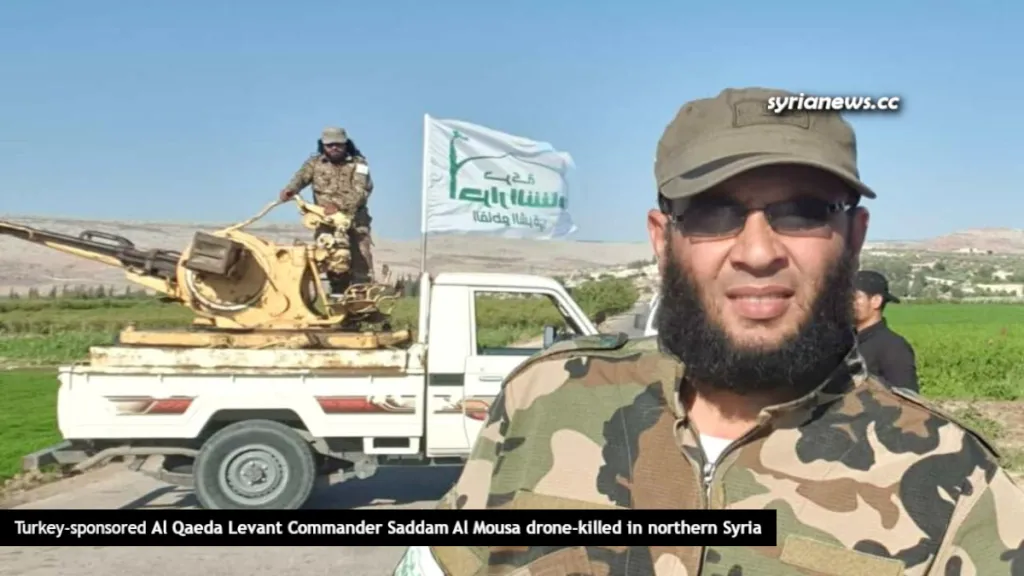
A NATO Turkey-sponsored Al Qaeda commander was killed along with some sheep in a bombing by a drone in a village in the eastern countryside of Aleppo, north of Syria Wednesday, 25 January 2023.
Local sources in Al Bab city in the eastern countryside of Aleppo said that so far, nobody claimed responsibility for the killing of the Al Qaeda commander Saddam Al Mousa aka Abu Adi, and at least 2 sheep near his house in the village of Al Hadath in the early evening hours of Wednesday.
The bombed terrorist had earned many enemies throughout his terrorist career, and any of those enemies are capable of drone-killing him with the sheep.
Some of the local sources in Al Bab said the terrorist was eliminated after refusing to share the spoils he extorted from the Syrian locals crossing at the Al Hamran makeshift checkpoint in the same…
Unlike the stagnant political quagmires and latter-day Goebbels & Co. media complexes that maintain tight control over the State, the economy, international relations, and all public discussion and debate over these topics in most of Europe, North America and other NATO bastions of the ‘free world’, there is never a dull moment in Latin American politics where there is a long tradition of military coups (usually in close collaboration with the traditional political and economic elites and the United States), along with animated public debate, mass social mobilization, rebellions and revolutions by ‘the people’ in most countries. In Peru, after a pause during the Christmas – New Year period, the mass social protests resumed on the 4th of January, with more social sectors and political factions and groups adding their voices to the opponents of the coup d’etat. The situation also remains tense and volatile in Brazil, where pro-Bolsonaro/ military groups continue trying to destablilize and overthrow the government of Lula da Silva.
Ongoing mass protests and social mobilization in Peru
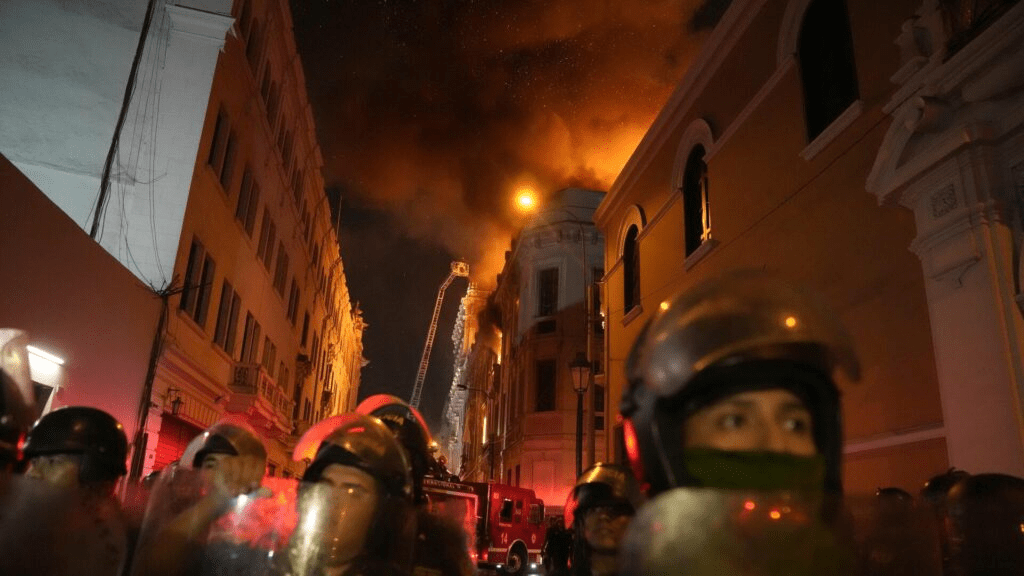
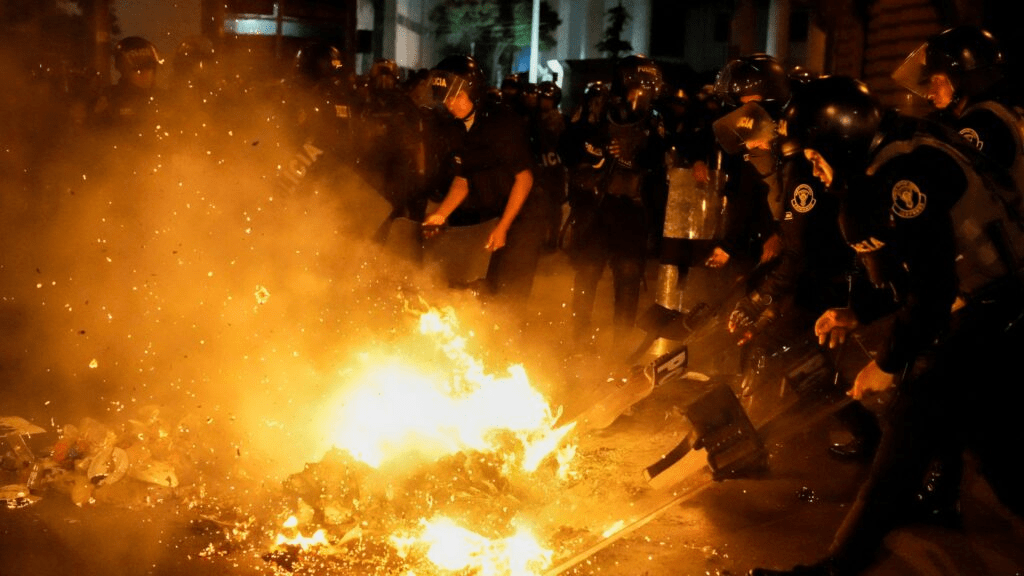
In Peru, the post-coup regime nominally headed by Dina Boluarte – but largely based on and controlled by the remnants and successors of the political factions that ruled Peru with an iron fist during the Fujimori dictatorship, buttressed and enforced by the military and police – is still refusing to budge and appears determined to cling to power at any cost, trying to smash the protests by brute force whilst claiming to be a democratic expression and legitimate representative of the same people it is wantonly massacring. This uncompromising attitude has been encouraged and supported by the United States.
Although there are major discrepancies between official accounts and those of independent observors and civil society organizations, it is estimated that around 55-60 protestors have been killed during the protests and blockades of key transport routes and infrastructure (most of the victims unarmed protestors who died from bullet wounds fired by the ‘security forces’) with many hundreds of others seriously injured, and hundreds of protestors have been arrested.
The military and police forces that have been deployed to contain, disperse and if possible quash the protests and all political opponents (at the same time protecting the vast properties and privileges of the oligarchs, landlords, and foreign investors that they serve – the latter particularly active in the lucrative mining sector, which operates with little or no regard for social and environmental standards) are particlarly vicious and deadly when groups of protestors try to occupy or surround airports, presumably because the airports enable the privileged sectors of society to continue with their luxurious jet-setting lifestyles largely uninterrupted and undisturbed by the misery, suffering and turmoil afflicting the rest of the country (apart from their strategic importance to the military and police forces to deliver weapons and equipment and redeploy their forces rapidly to crush and disperse the protestors at key social mobilization points).
Over the last week the protests and mass social mobilization have become a massive nationwide avalanche that may yet sweep away the coup regime and its collaborators through sheer force of numbers, with most of the country’s major trade unions, student and professional associatons and rural and Indigenous organizations and social movements joining the protests, with the latter organizing caravans in regional areas headed for Lima vowing to ‘occupy the capital’ until Boluarte resigns.
While the strategy of ruthless oppression and attrition being waged by the coup regime could achieve the intended result of crushing and exhausting the mobilized sectors as the physical, emotional and economic costs of the protests and social mobilization become increasingly unbearable, it is possible that if the coup regime refuses to give ground and agree to dialogue and negotiations over a transitional power-sharing arrangement, it might simply harden the resolve and determination of the protestors, and could even trigger the onset of another catastrophic civil war in the country.
The country suffered from a devastating civil war that peaked from 1980-2000 with the rise of two armed insurgent movements, the Shining Path (Sendero Luminoso) and Tupac Amaru Revolutionary Movement (Movimiento Revolucionario Tupac Amaru). In 2003 a Truth and Reconciliation Commission established to investigate the killings, massacres, and other war crimes and human rights violations that occurred between 1980 and 2000 reported that the total number of people killed during the height of the civil war, whether by the insurgent groups or the armed forces, was approximately 70,000.
Alberto Fujimori was president from 1990 to 2000. Although he was elected to an unprecedented third term, he subsequently fled to Japan when the director of the secret police and one of his closest advisors, Vladimir Montesinos, was jailed for bribing a member of Congress and it seemed that his arrest would soon follow. He returned to neighbouring Chile in 2005 where he was later detained pursuant to outstanding warrants for a long list of corruption, war crimes and human rights abuses committed during his presidency and subsequently extradited to Peru.
After a protracted series of legal proceedings, challenges and appeals he was sentenced to more than 35 years’ imprisonment. In March 2022 the Constitutional Court (whose members are appointed by the Congress) ruled by 4:3 to grant Fujimori a medical pardon; Pedro Castillo later appealed against the decision, lodging a complaint with the Inter-American Court of Human Rights. Alberto’s daughter Keiko Fujimori is a veteran politician and is the leader of the political party Fuerza Popular; she was Pedro Castillo’s opponent in the 2021 presidential campaign, losing by a narrow margin.
Presumably, during his detention Alberto Fujimori’s prison cell resembled the facilities that Pablo Escobar built for his incarceration following his agreement to surrender to the authorities in Colombia, or the luxury resort enclave encconced with the notorious La Picota Prison complex in Bogota housing the politicians arrested in the aftermath of the parapolitics scandal for their links to the death squads that have killed many thousands of people in Colombia as part of the counter-insurgency campaign, also terrorizing and forcibly displacing hundreds of communities to make way for sprawling cattle ranches, sugar and African palm plantations or resource development projects. Also with the full support and backing of the US.
The key demands of the opponents of the coup d’etat have not chamged – the immediate resignation of Dina Boluarte and the dissolution of the Congress followed by elections as soon as possible, and the immediate release from prison of ousted president Pedro Castillo – though other demands have been added, namely that those responsible for the deaths of the protestors be duly investigated and prosecuted and the convocation of a constituent assembly to draft a new Constitution (the current constitution was adopted in 1993 during the Alberto Fujimori dictatorship).
Although it remains too early to know what the final result will be, the strategy of embarking on a ferocious crackdown to disperse the protests by brute force appears to have backfired as it has persuaded many other political factions, social sectors and provincial regions who initially remained aloof or undecided to join the protestors. As a consequence, pressure is rapidly building on the members of the coup regime and the National Congress to resign – or, perhaps, to seek a negotiated compromise solution to the political crisis – as the protests have spread to other regions (initially protests and transport blockades were limited to only a few regions and social sectors, mainly in the impoverished and rebellious south of the country, where the inhabitants have a long list of grievances against the traditional ruling elites who have directed the plunder and devastation of their region from their mansions and estates in or around Lima).











 The Free