A secret Centers for Disease Control (CDC) report has revealed that nearly half a million children and young adults died within a year of Fauci’s fateful announcement that younger people can also be “vaccinated” for COVID-19. Over 1118,000 of those deaths are suspected to be due to the Covid-19 vaccine’s dangerous side effects, according to reports found by The Daily Exposé.
Dr. Anthony Fauci infamously used propaganda, lies, and manipulation to coerce parents into getting their children vaccinated. In the aftermath of those shots, 118,000 youths “died suddenly” by October of 2022.
The truth about the Covid vaccine’s safety had been buried deep within Fauci’s own lies and deceit and confidential United States Government and Pfizer documents. A secret Centers for Disease Control (CDC) report has revealed that nearly half a million children and young adults died within a year of Fauci’s fateful…
Have you heard? We’re at war! And, in the fog of war, nothing is certain.
Well, one thing is for certain: the weather is going crazy. Have you ever seen anything like it?
The US went from killer heat waves, unprecedented drought, mega wildfires and hurricanes in the closing months of 2022 and then switched to unprecedented arctic snowstorms and monstrous flooding over Christmas and the opening days of what promises to be a very bumpy 2023.
“We’re in a war!” proclaimed New York’s Governor, Kathy Hochul, during her Xmas day emergency news conference as her state got pounded by some of the coldest temperatures and biggest snow dumps the region had ever seen. At that point, over 30 people had died in western New York alone, frozen in houses without power or trapped in stationary cars on gridlocked highways.
So, who’s the adversary here?
“We’re at war with Mother Nature,” explained the Governor. “And she’s been hitting us with everything she has.”
Inger Andersen, the Executive Director of the UN Environment Programme, also believes we’re in a war with Nature; however, she sees Nature as more as the victim than the aggressor.
Ollantay Itzamná There is no certain hypothetical scenario in the short term for Peru in mourning between the state weapons and the streets. The only certainty is that this criminal state conjuncture unveiled what for centuries the State and official Peruvianity tried to hide: racism and authoritarianism are constitutive elements of the State and of bicentennial Peru.
Those who plotted and executed the overthrow of President Pedro Castillo in Peru December 7, never imagined, nor calculated, the popular rural insubordination in and from the impoverished and plundered territories of the bicentennial republican state.
At some point it will be understood what factors activated this simultaneous and sustained massive and unprecedented collective action in the history of the country. Regularly, even the historical accumulation of social force is activated and agglutinated around some nuclear leader. In this case, there is no leader.
It seems that one of the unifying elements of the popular uprising is the indignation at the pain caused by the massacres, and the growing popular agenda that is gaining space in the national political narrative: Everyone resign, new elections, new Constituent Assembly, Castillo released.
Dutch farms are feeling the squeeze from EU rules and need to make sweeping changes to the farm system – could a huge producer like the US follow suit?
Cows in a meadow at a dairy farm in Zundert, the Netherlands.Photograph: Robin Utrecht/REX/Shutterstock
Ingrid de Sain is one of thousands of dairy farmers in the Netherlands who says she sometimes lies awake at night. Since a court rulingin 2019which found the Dutch were breaking European environmental law, her farm of 100 cows in north Holland has been illegal.
Like the other2,500-plus farmerswhose environmental permission was suddenly invalid,she wants a futurewhere she can earn a living and farm legally again.
The Netherlands is first to face questions scientists believe will soon come to all intensively farmed areas: how can…
I did ask myself whether it was useful to put together this volume, given that the contents are already available online, sometimes on more than one website.
But, on reflection, I feel that placing them together in one volume restores to each essay a sense of context that can be lost in the busy churn of the internet.
‘They knew’: Fury at Met for not sacking serial rapist despite 24 counts of rape in two decades
Campaigners have called the Metropolitan Police an “institution in crisis” after it emerged it failed to sack an officer despite allegations of rape, domestic violence and harassment allegations over two decades.
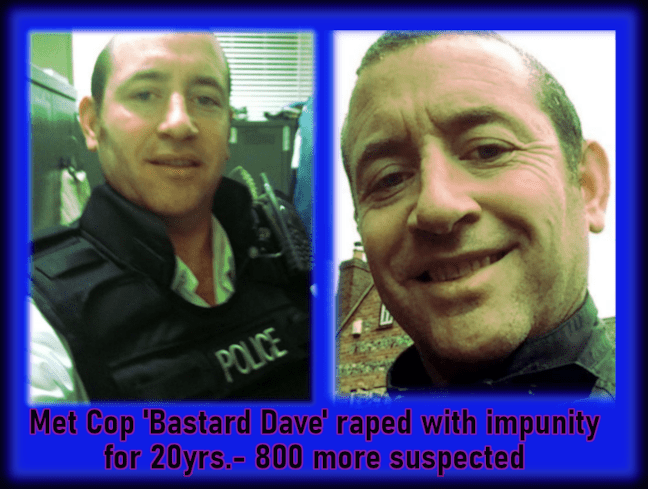
The force apologised to victims on Monday after PC David Carrick, 48, admitted 49 offences, including 24 counts of rape, after carrying out sex attacks on 12 women over an 18-year period.
He had come to the attention of police over nine incidents including allegations of rape, domestic violence and harassment, between 2000 and 2021.
Carrick, nicknamed “Bastard Dave” by colleagues because he was “mean and cruel”, joined the force in 2001 before becoming an armed officer with the Parliamentary and Diplomatic Protection Command in 2009.
But he faced no criminal sanctions or misconduct findings and was only suspended after being arrested over a second rape complaint in October 2021.
Watch: Metropolitan Police ‘truly sorry for ‘clear failure’ in David Carrick case
He appeared at Southwark Crown Court on Monday to plead guilty to four counts of rape, false imprisonment and indecent assault, relating to a 40-year-old woman in 2003.
In December at the Old Bailey, Carrick, who had served in the army before joining the Met in 2001, admitted 43 charges against 11 other women, including 20 counts of rape, between March 2004 and September 2020.
Metropolitan Police officer David Carrick admitted carrying out sex attacks on 12 women over an 18-year period. (PA)
David Carrick: ‘Bastard Dave’ sacked from Met police after decades long reign of terror
London mayor Sadiq Khan tweeted: “I am absolutely sickened by the truly abhorrent offences that David Carrick has committed.
“Serious questions must be answered about how he was able to abuse his position as an officer.”
Assistant Commissioner Barbara Gray, the Metropolitan Police’s lead for professionalism, said: “We should have spotted his pattern of abusive behaviour and because we didn’t, we missed opportunities to remove him from the organisation.”
Metropolitan Police officer David Carrick has pleaded guilty to 49 offences, including 24 counts of rape, against 12 women over two decades. (PA)
The Met Police is investigating 1,000 sexual and domestic abuse claims involving about 800 of its officers.
Sir Mark Rowley announced all 45,000 Met officers and staff would be rechecked for previously missed offending.
The spokeswoman who faced the press admitted having missed opportunities to identify a pattern of abusive behaviour; one would have thought having the nickname “Bastard Dave” might have been a bit of a clue.
One is led to believe that the Met is actually trolling us; that these prolific sex offenders are flaunting their behaviour.
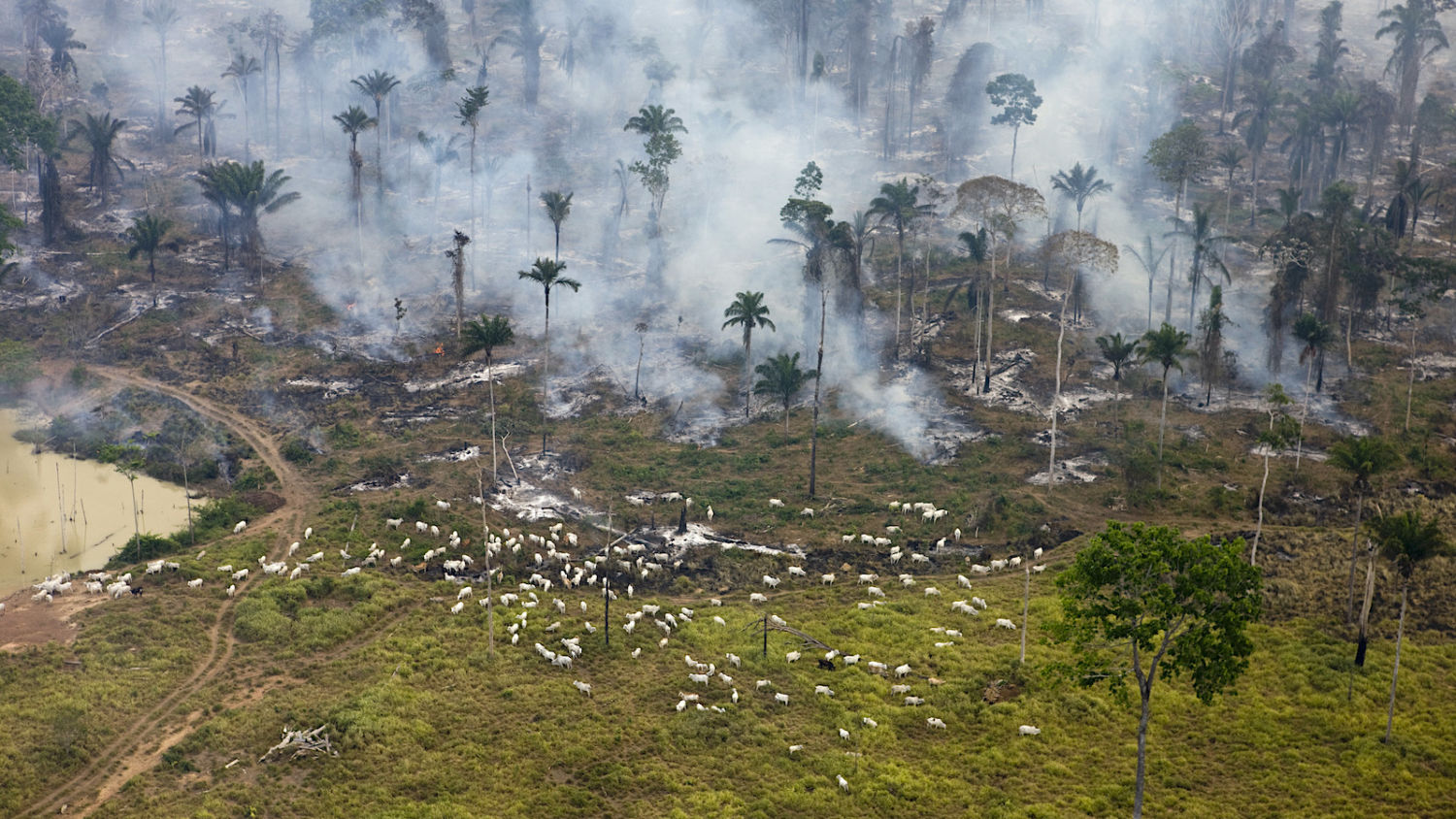
A fire set to clear land for cattle in Pará state in the Brazilian Amazon. Daniel Beltrá / Greenpeace
INTERVIEW
Journalist Heriberto Araujo spent four years reporting on the destruction of the Brazilian Amazon. In an interview with Yale Environment 360, he talks about his new book, which explores the complex web of issues underpinning the deforestation of the world’s largest rainforest.
Last October, when former President Luiz Inácio Lula da Silva defeated the far-right incumbent, Jair Bolsonaro, in Brazil’s national election, environmentalists around the world breathed a sigh of relief.
Under Bolsonaro, who had weakened environmental protections and pushed to open Indigenous lands to commercial exploitation, deforestation in the Amazon had exploded.
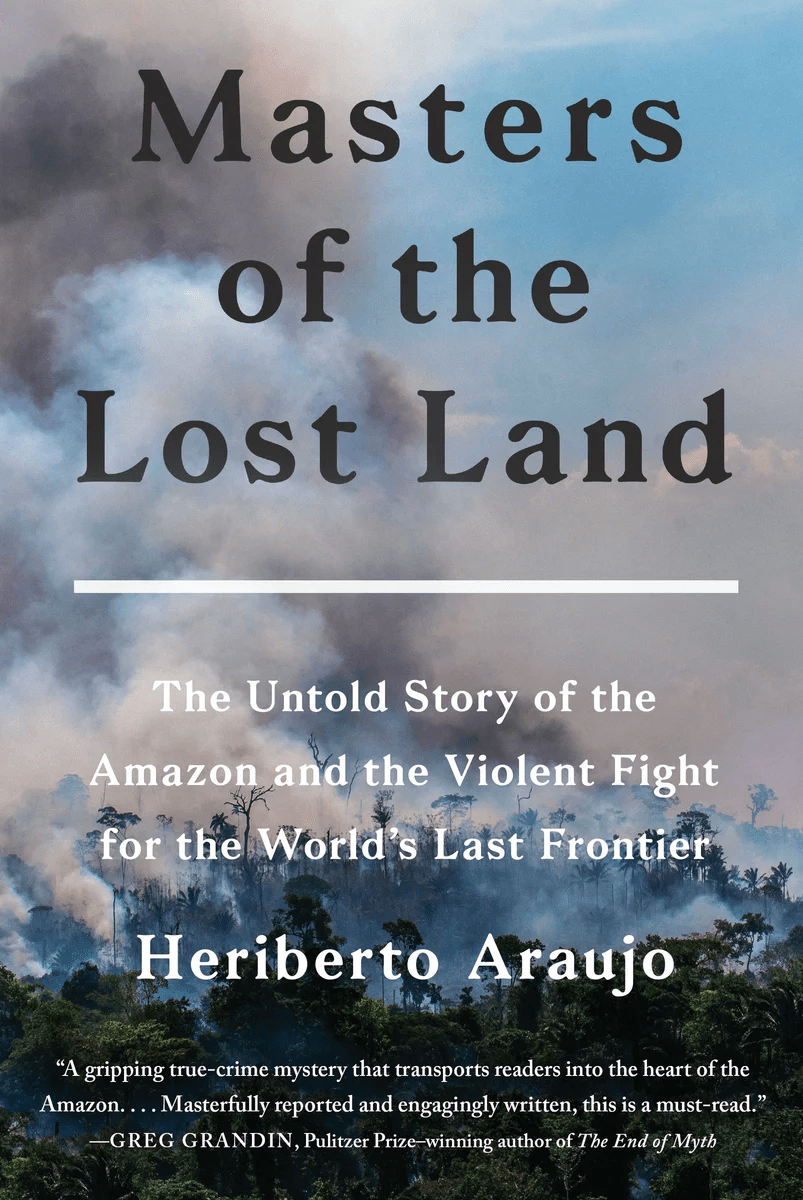
For his new book, Masters of the Lost Land, Araujo spent four years traveling from his home in Rio de Janeiro to Rondon do Pará, a town in the eastern Brazilian Amazon, to understand how, in less than 60 years, the largest rainforest on the planet has been transformed into an engine of economic growth.
Tracing the story of land rights activist José Dutra da Costa, or “Dezinho,” who, before his assassination in 2000, led a revolution among landless peasants, Araujo comes to see how a handful of ranchers managed to grab huge swaths of pristine rainforest and why deforestation, violence, and lawlessness remain pervasive in the region.
Heriberto Araujo. Heriberto Araujo
When it comes to reining in the destruction, Araujo tells e360, stopping those holding the chainsaws must be only the beginning.
“The key issue will be making sure the bad guys are unable to benefit from global markets. Because if there’s a way to launder your deforestation-linked timber or beef and to sell it, you have an incentive to continue doing that.”
Yale e360: What made you decide to write this book?
Heri Araujo: I had begun making trips to the Amazon to report on deforestation, and at one point someone at Greenpeace told me about a town named Rondon do Pará and an activist there whose husband had been murdered — her husband had died in her arms.
So I traveled to Rondon and found Maria Joel. Eventually I realized that this little town allowed me to explain the whole story of the Brazilian Amazon.
In terms of deforestation, everything is pretty recent. It started in the 1960s. And every time I learned about a new person or event related to the phenomenon, I could always find a link to Rondon or Maria Joel.
e360: It must have been difficult to report.
Araujo: It was a complicated process. It helped that I had been a reporter in China for seven years. I learned to deal with censorship and other kinds of dangers — maybe not the danger of being murdered, but of being expelled from the country.
And I learned to avoid announcing my presence as a foreign reporter. I speak decent Portuguese, and I kind of look like an average Brazilian, so people were relatively open to talking with me.
“Today, something like 45 percent of the land in Brazil is controlled by 1 percent of the population.”
e360: Tell me about the progression of Rondon over the decades.
Araujo: As often happens in that area — the eastern edge of the Amazon — it started with an infrastructure project. In Rondon, it was an unpaved road, named the Nut Road.
There were several trails that collectors of Brazil nuts would follow to enter the rainforest. In the late ‘60s, the state began to think about developing a road to allow these nut gatherers to increase their production.
As soon as people became aware that it might be possible to claim a plot on the side of the road, they began to move in. At the time, Rondon was a frontier. It was inhabited by Indigenous nations.













 The Free