
Originally published: CovertAction Magazine on December 15, 2022
by Jeremy Kuzmarov via thefreeonline
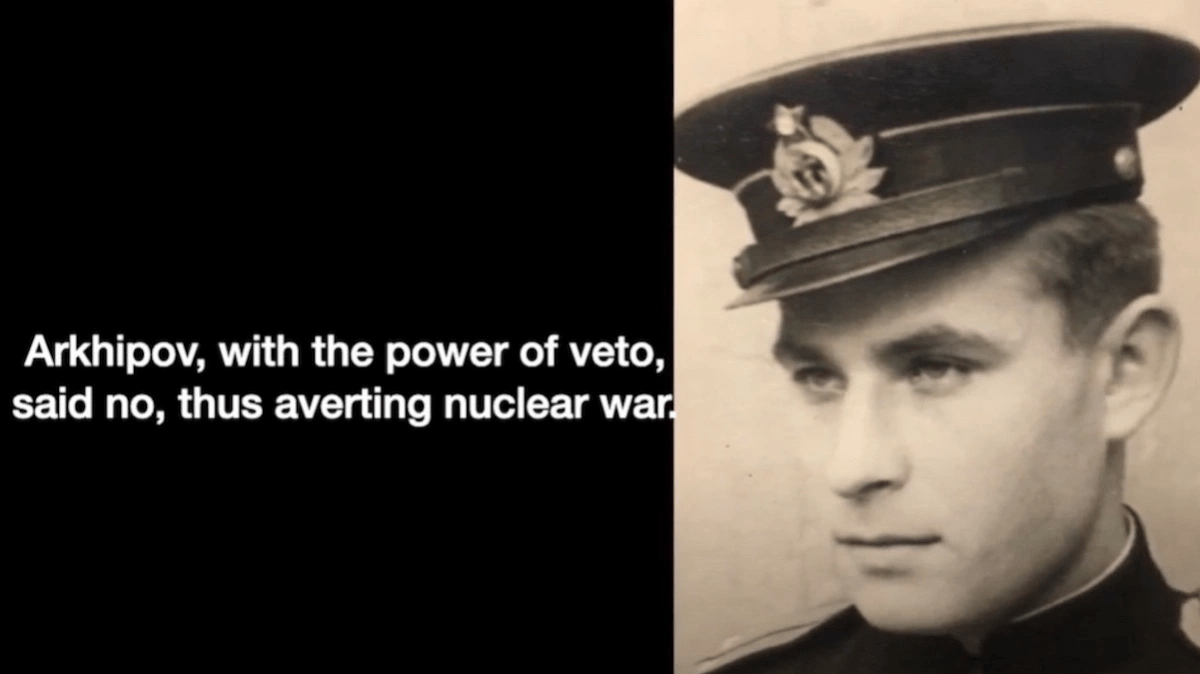
On October 27, 1962, Soviet naval officer Vasily Arkhipov helped prevent the outbreak of World War III and saved humanity from nuclear catastrophe.

A minesweeper during the Pacific War, Arkhipov was the commander of a diesel submarine that had been sent by Soviet Premier Nikita Khrushchev to escort merchant ships bound for Cuba, which were equipped with a torpedo boat armed with a nuclear warhead.
On October 14, 1962, a U.S. spy plane flying over Cuba had revealed that the Soviet Union was building ramps for the installation of missiles with nuclear warheads, in retaliation for the United States deploying missiles with nuclear warheads capable of striking the Soviet Union in Italy, at Gioia del Colle (Apulia in southern Italy), and in Turkey.

President Kennedy’s imposition of a naval blockade after the spy plane discovery triggered the 13-day Cuban Missile Crisis, during which time the submarine that Arkhipov commanded was being pursued by U.S. destroyers which, using depth charges, were trying to force Arkhipov’s submarine to the surface.
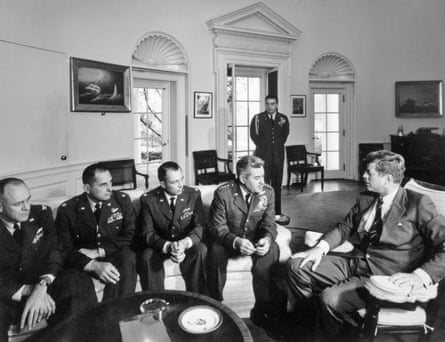
President Kennedy with the Joint Chiefs of Staff during the 1962 Cuban Missile Crisis. [Source: freedomrockradio.co]
After the Soviet sub’s ventilation system broke down and communication was cut, the captain of the Soviet submarine group, Valentin Grigoryevich Savitsky, was convinced that war had broken out.
Not wanting to sink without a fight, he decided to launch a nuclear warhead at the aircraft carrier pursuing his sub.
The political officer, Ivan Semyonovich Maslennikov, agreed with the captain, but on the flagship B-59, Arkhipov’s consent was also needed, and he objected, convincing Savitsky ultimately to do the same.1
Arkhipov’s persuasion averted a nuclear war, whose consequences would have been horrific. After surfacing, Arkhipov’s sub was fired on by Americans but was able to return to the Soviet Union safely.

Spooked about how the world had come so close to the nuclear brink, President Kennedy gave a speech at American University in June 1963, five months before his assassination, calling for a “reexamin[ation of the U.S.] attitude towards the Soviet Union” and “Cold War” and for the U.S. and Soviets to work together for a “just and genuine peace” and to “halt the arms race.”
“Confident and unafraid,” Kennedy concluded,
we must labor on—not towards a strategy of annihilation but towards a strategy of peace… 5 months later he was murdered.
Another Grave Moment of Danger
Defense Secretary Robert S. McNamara was not mincing his words when he said years after the events that “We came very, very close [to nuclear war during the Cuban missile crisis,] closer than we knew at the time.”
Arthur Schlesinger, Jr., characterized the period of the Cuban Missile Crisis as “not only the most dangerous moment of the Cold War [but] the most dangerous moment in human history.”
That moment of danger unfortunately appears just as sharp today.
Continue reading “Armageddon Avoided: Thanks to this Naval Officer,Vasily Arkhipov, you and your loved ones are alive today”








 ANF
ANF (@dlrdrk2)
