It is extremely difficult to find your way because you can hardly see anything and even the buoys marking your way are only visible when they are right next to you…(continues below)
You become aware of a sound ahead of you and you see several very vague different shapes appearing in the gloom.
There’s a light there and another there. So two vessels approaching, perhaps. But, wait, what’s that right up high?
Suddenly you realise that these are not separate objects at all, but parts of one huge oil tanker bearing down on you, which you urgently need to avoid!
This ability to interpret minimal incoming data in order to understand the bigger picture, this capacity for joining the dots, making the connections, is an essential one, as Max Wertheimer (see below) set out.
It is a particular kind of intelligence. It is not the kind of intelligence that allows people to remember lists of dates or to perform complex mathematical equations, but it is still intelligence, and crucial intelligence at that.
Initially, this looked like a variety of different issues and trends that were not necessarily connected.
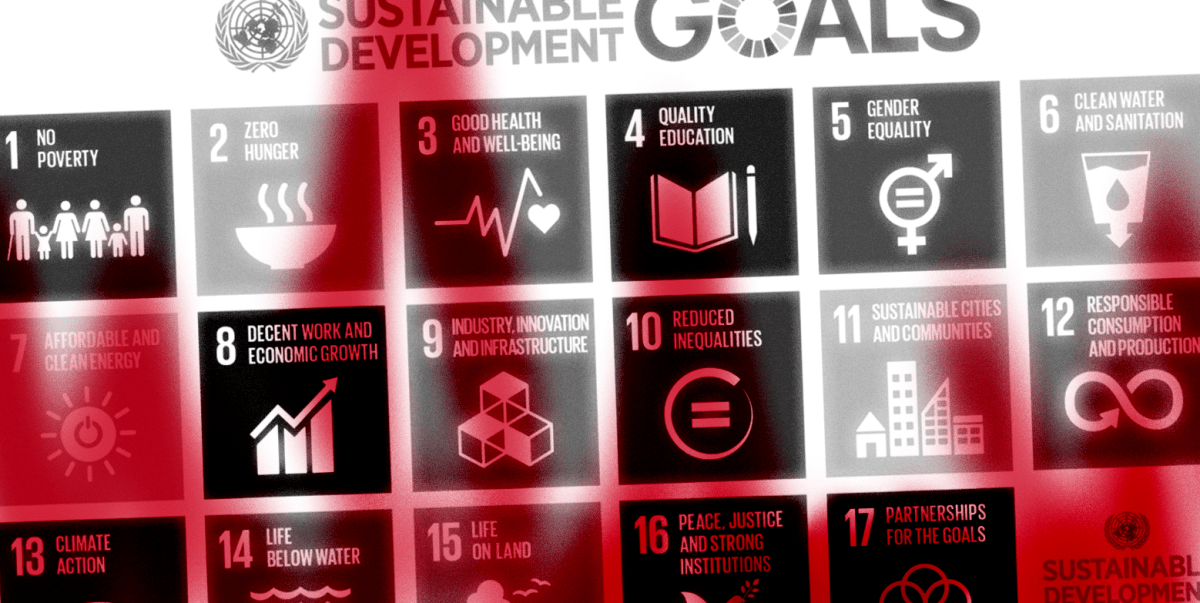
It was not obvious to us all, to start with, that climate capitalism was linked to the Covid operation, that war in the Ukraine was linked to the Great Reset, that the pope was linked to the transhumanists, that left-wing “intersectionality” was linked to the impact investment agenda, that Charles and the British “Crown” were very close to the global financial mafia, that the United Nations and the World Bank had been working together for decades to deliberately impose a “development” agenda that benefited financial interests at the expense of humankind and nature.
But now, vast numbers of people are aware of these connections and understand that all these elements are aspects of one single agenda being imposed on us by one single power.
This power depends on its own invisibility for its success. Its scams will simply not work if we can all see who is pulling the strings and with what aim in mind.
It is therefore important for this single power, this criminal global money power, to try to discredit those who can see the bigger picture and to stop them from communicating what they have seen.
Agroecology — sustainable farming that works with nature, rather than depleting nature — is the solution to global hunger, poverty and climate change, Vandana Shiva, Ph.D., told Robert F. Kennedy, Jr., on a recent episode of “RFK Jr. The Defender Podcast.”
Vandana Shiva, Ph.D., environmental activist, is an author and founder of Navdanya International.
“Asset management companies go to an indebted company and say, ‘Give us your forest and your mountains, and here’s the money to pay your debt.’
“Because we are in a debt crisis, this kind of new enslavement will increase unless we rise up and say, ‘Nature’s not for sale.’”
Shiva’s latest book, “Agroecology and Regenerative Agriculture: Sustainable Solutions for Hunger, Poverty, and Climate Change,” provides evidence-based solutions for pressing crises in global ecology, agriculture and public health.
She told Kennedy she became an environmentalist when she realized corporations that sold chemicals and “poisons” wanted to own seeds and were promoting GMOs (genetically modified organisms) in order to patent the seeds.
“I happened to be at a meeting where they were talking about this 1987,” she said. “That’s when I said, ‘No, the seed must be saved. We cannot allow the poison cartel to be the owners of life and take royalties from the farmers.’”
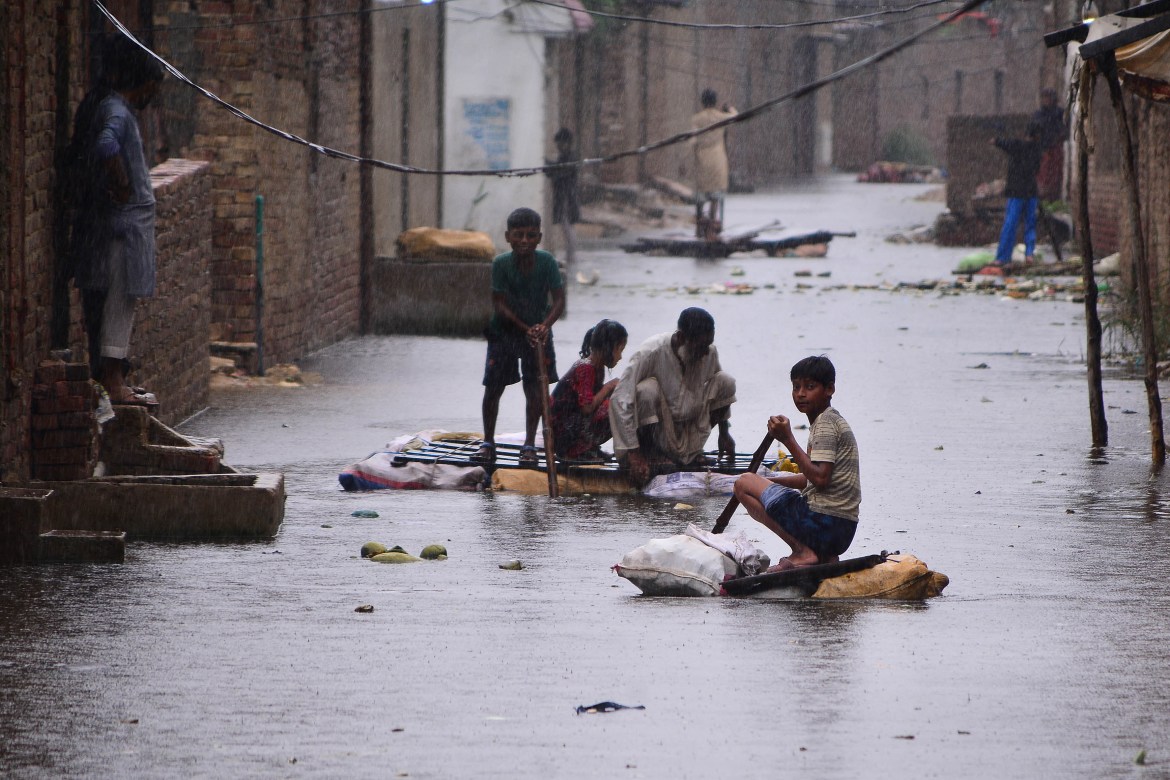
Men paddle on makeshift rafts as they cross a flooded street in Hyderabad, Pakistan. [Yasir Rajput/Reuters]
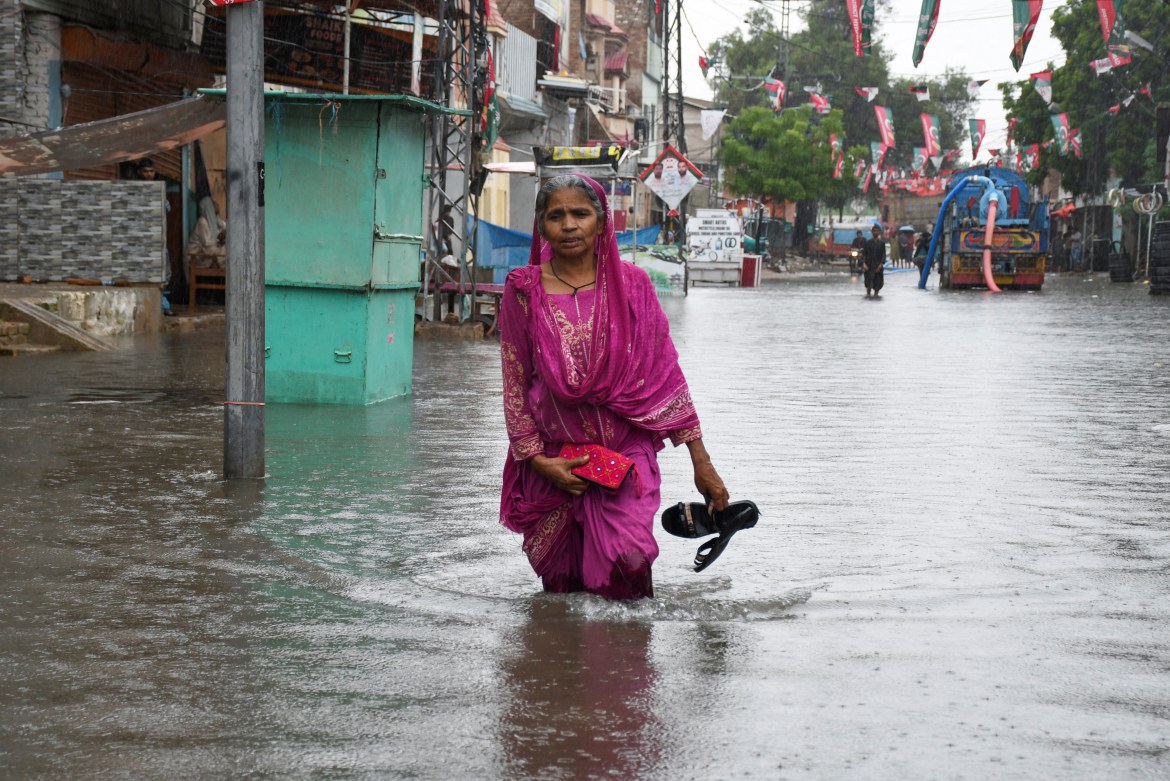
Heavy rains have triggered flash floods and wreaked havoc across much of Pakistan since mid-June, killing at least 903 people and leaving about 50,000 homeless, the country’s disaster agency says.
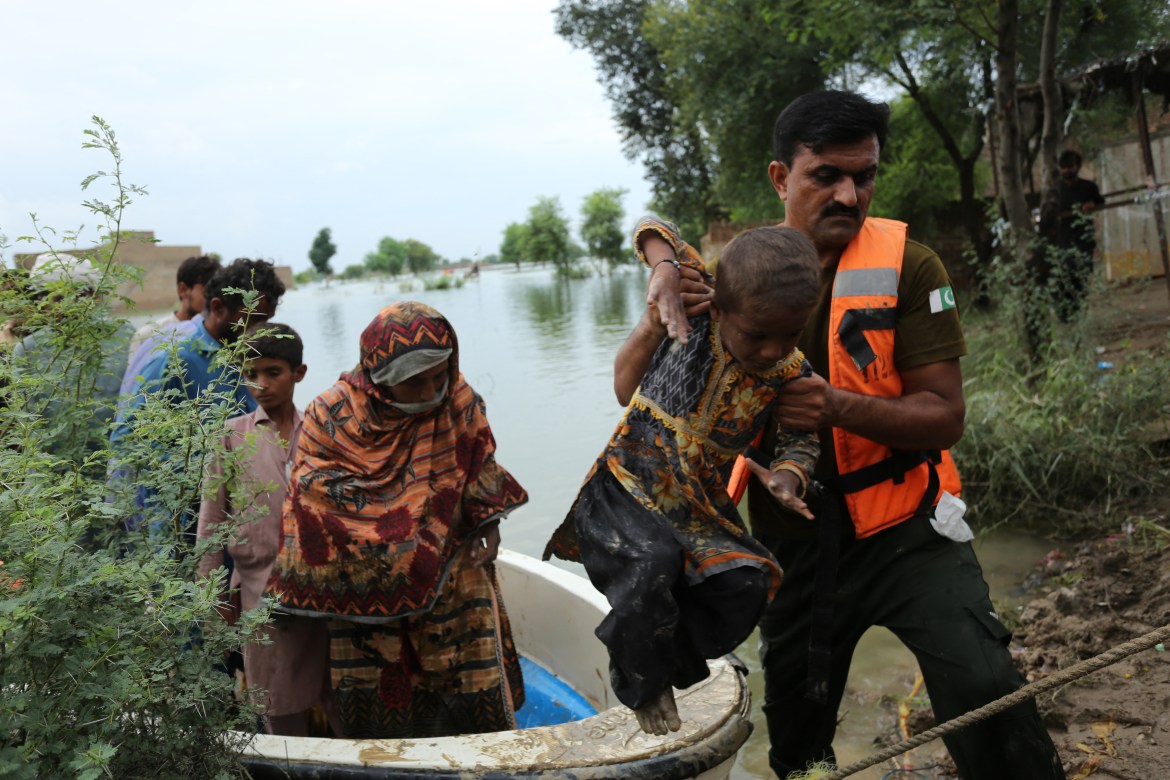
Thousands whose homes were swept away now live in tents, kilometres away from their inundated villages and towns, after being rescued by soldiers, local disaster workers and volunteers.
A woman wades through a flooded road in Hyderabad. [Yasir Rajput/Reuters]
The flooding has further exacerbated Pakistan’s economic crisis. Prime Minister Shehbaz Sharif issued an appeal on Wednesday from abroad, urging philanthropists to help flood-affected areas in Pakistan.
After inundating much of southwestern Balochistan and eastern Punjab province, flash floods also affected the southern Sindh province. Authorities this week closed schools in Sindh and Balochistan.
Residents use makeshift rafts to make their way along a waterlogged street in a residential area of Hyderabad. [Akram Shahid/AFP]
Monsoon rains, which started in mid-June, were expected to continue this week, mainly in the south.
Residents are evacuated from a flood-affected area of Rajanpur, Punjab province. [Shahid Saeed Mirza/AFP]
Murad Ali Shah, the top elected official in Sindh province, said the situation was worse than in 2010, when floods killed at least 1,700 people in Pakistan, mostly in Sindh. “We are doing our best to evacuate people from flood-hit areas,” he said on Tuesday.
Enemigxs del estado no es una consigna ni un panfleto, es la convicción de vida que nos permite transitar integrxs y sin retorno en la intensa,violenta y hermosa senda de la guerra social.
Confrontando sin pausas el poder con una continuidad de lucha,apostando desde el anarquismo y la subversión a seguir fortaleciendo la guerrilla urbana.
Ninguna prisión ni condena frenarán el latido de los negros corazones de nuestrxs hermanxs de lucha. Mónica y Fransisco nuestra complicidad y amor en guerra.
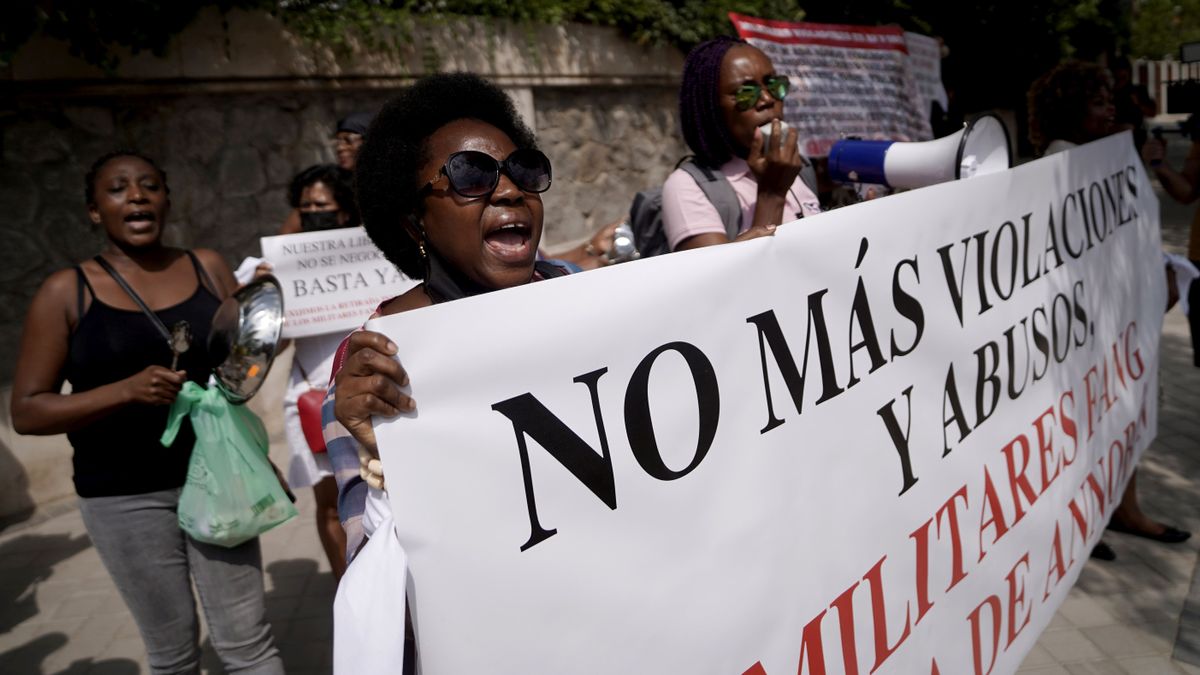
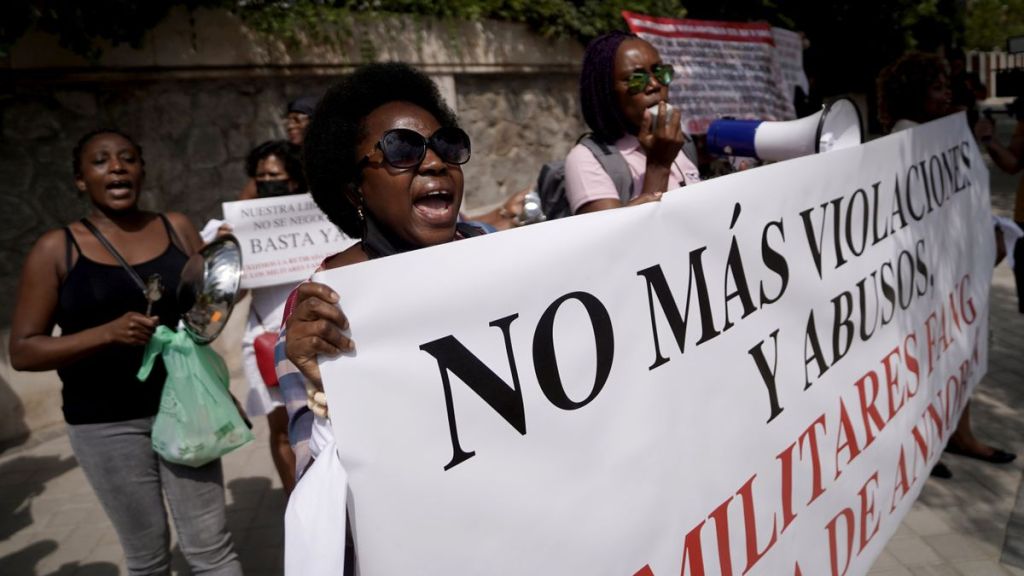
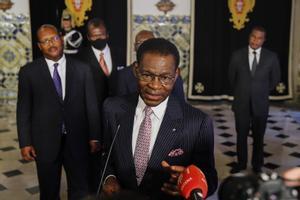
Unas 20 personas de la isla de Annobón se concentran ante la embajada de Guinea Ecuatorial en Madrid para denunciar las brutales agresiones a embarazas y niñas
Unas20 mujeres naturales de la isla de Annobón,enGuinea Ecuatorial,se han manifestado este viernes frente a la embajada de Guinea en Madrid. Denuncian lasviolaciones que sufren por parte de los militaresque Teodoro Obiang, quien preside el país desde 1979 tras un golpe de estado, tiene desplegados por la isla.“Queremos justicia”,“Todo se queda impune” o “No más militares en Annobón” han sido algunos de los lemas que se han podido leer. Las manifestantes han entregado al embajador unmanifiestodenunciando la grave vulneración de derechos humanos en la isla y prevén volverse a manifestar en octubre.
On Tuesday, June 28, in the UK, the Police, Crime, Sentencing and Courts Act came into force, the biggest blow to protest rights in a generation.
There are those who know only too well what it is like to live under a government that sets as a goal the removal of your rights.
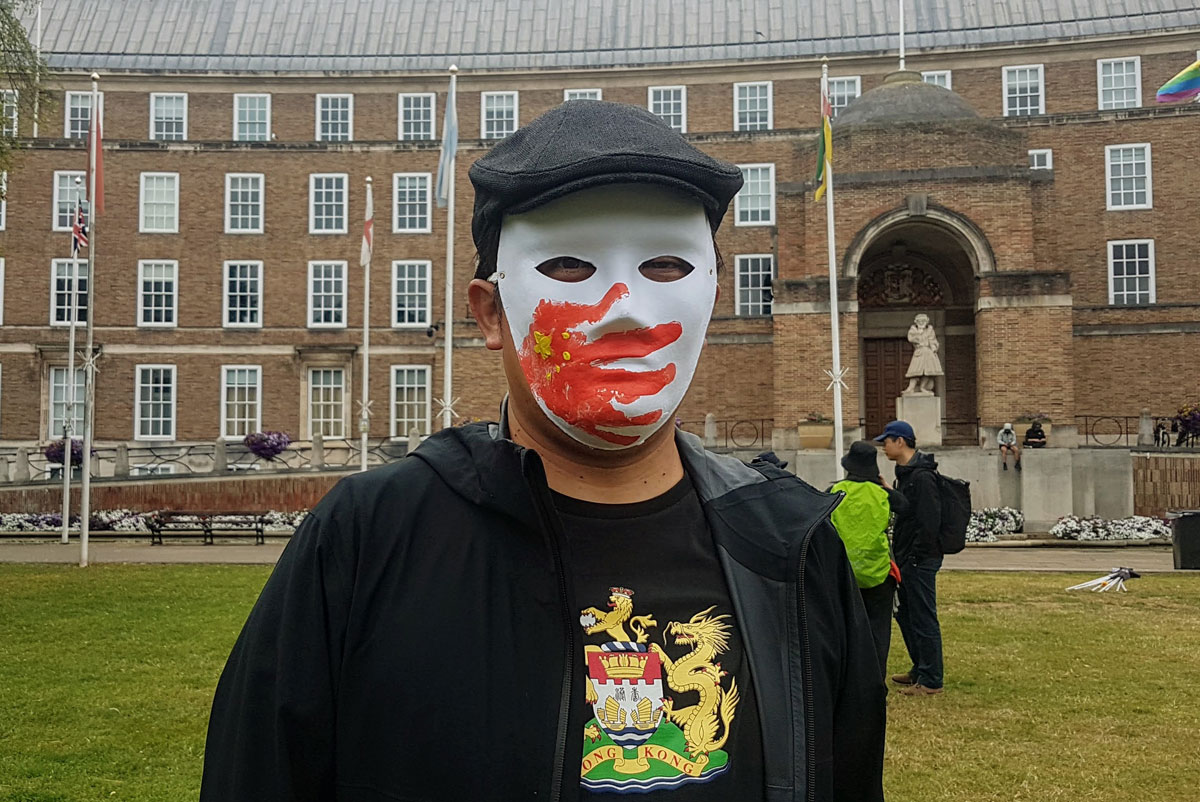
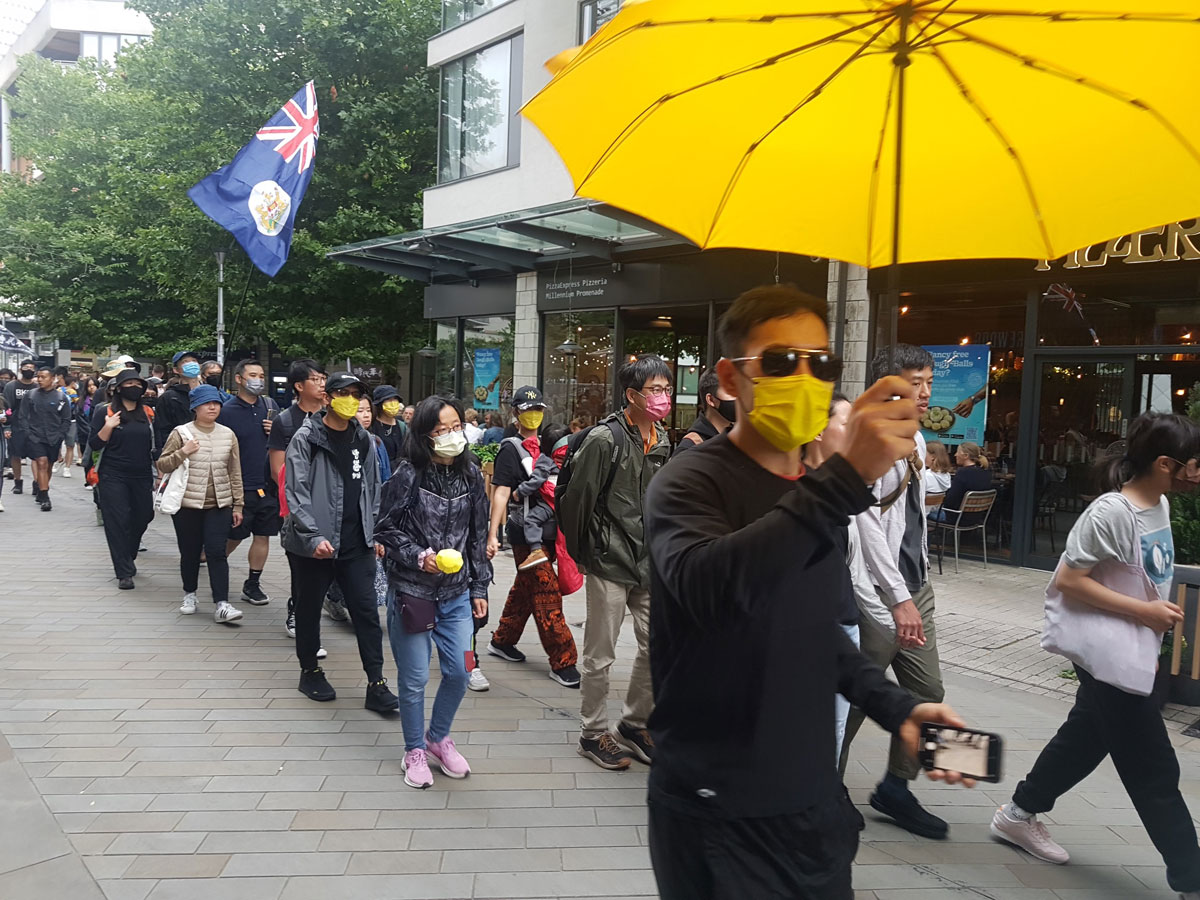
Several thousands Hong Kongers live in Bristol, having fled their city following the uprising of 2019 and 2020, in which protesters battled police on the streets of Hong Kong for freedom and self-governance against the imposition of new laws by China.
On July 23, around 150 of those Hong Kongers gathered on College Green to remember the uprising, and the particularly brutal events of July 21, 2019 in which protesters were attacked whilst waiting for trains. The attackers are thought to have been acting in collusion with the local police.
Many of those in the crowd fled Hong Kong when China passed the National Security Law, a law that limited free speech, curtailed protest and banned political dissent.
Whilst it would surely be an overreach to compare the National Security Law with our own Police, Crime, Sentencing and Courts Act, it is worth noting the parallels.
Both rely on vaguely defined offences and cover-all terms that could potentially apply to anyone and any act the government deems offensive.