All these Studies show vaccines cause Autism.. yet “There is no Science that shows vaccines cause Autism” …

by Talesfromtheconspiratum 19/12/24 via thefreeonline at https://wp.me/pIJl9-FgW

There is no science that shows vaccines cause Autism …except in these published studies which show vaccines cause Autism: .

http://ncbi.nlm.nih.gov/pmc/articles/PMC3878266/… http://ncbi.nlm.nih.gov/pubmed/21623535 http://ncbi.nlm.nih.gov/pubmed/25377033 http://ncbi.nlm.nih.gov/pubmed/24995277http://ncbi.nlm.nih.gov/pubmed/12145534 http://ncbi.nlm.nih.gov/pubmed/21058170 http://ncbi.nlm.nih.gov/pubmed/22099159 http://ncbi.nlm.nih.gov/pmc/articles/PMC3364648/… http://ncbi.nlm.nih.gov/pubmed/17454560 http://ncbi.nlm.nih.gov/pubmed/19106436 http://ncbi.nlm.nih.gov/pmc/articles/PMC3774468/… http://ncbi.nlm.nih.gov/pmc/articles/PMC3697751/… http://ncbi.nlm.nih.gov/pubmed/21299355 http://ncbi.nlm.nih.gov/pubmed/21907498 http://ncbi.nlm.nih.gov/pubmed/11339848 http://ncbi.nlm.nih.gov/pubmed/17674242 http://ncbi.nlm.nih.gov/pubmed/21993250 http://ncbi.nlm.nih.gov/pubmed/15780490 http://ncbi.nlm.nih.gov/pubmed/12933322 http://ncbi.nlm.nih.gov/pubmed/16870260 http://ncbi.nlm.nih.gov/pubmed/19043938 http://ncbi.nlm.nih.gov/pubmed/12142947 http://ncbi.nlm.nih.gov/pubmed/24675092 Causal relationship between vaccine induced immunity and autism http://ncbi.nlm.nih.gov/pubmed/12849883 Subtle DNA changes and the […]

by Talesfromtheconspiratum

https://twitter.com/CartlandDavid/status/1868982000423780764

Related

Over 300 pages of evidence from the CDC show that vaccines cause autism

November 24, 2024

In “Autism”

Childhood Vaccines and Autism

Childhood Vaccines: 1983 = 10 vaccines 2013 = 32 vaccines 2022 = 74 vaccines Autism Rates: 1983 = 1 in 10,000 2013 = 1 in 88 2022 = 1 in 36 2025 … estimates 1 in 2 https://twitter.com/BarbaraOneillAU/status/1849626682858066183October 25, 2024

In “Autism”

New studies once again link mercury to autism

December 17, 2016

In “Alternative medicine”

Britain’s perfidy created Permanent War: the Origins of the Syrian. Lebanese, Israeli mess

British origin of Syrian mess-via thefreeonline at https://wp.me/pIJl9-FgV

SYRIA. World War II. 1941. British and F.F troops advances on Damascus …

The conflict between Arab and Jew in the Middle East and most of the mess in Syria and the general region is a direct product of Britain’s Great War on the Ottoman Empire.

Britain, after declaring war on the Ottoman Empire in November 1914, as part of the Great War taken on against Germany, expected to make short work of the Turks.

However, the major reverse suffered at Gallipoli in 1915 convinced the British that they required various regional allies to help them conquer the Ottomans. They had already acquired the Russians through a convention in 1907, and through them the Armenians and their irregular forces in the eastern parts of Ottoman territory.

The Tsar was persuaded through an offer of his heart’s desire, Constantinople, which was made formal in a secret 1915 agreement by Sir Edward Grey after much diplomatic work done behind the scenes in the previous year.

However, having failed to defeat the Turks in the time expected and with the Russians and Armenians, England lured the Arabs into active participation in the war against the Muslim Ottoman State on the promise of a great Muslim Arab state after it.

To achieve this the seeds of nationalism were sown amongst this people, which had, up until then, proved impervious to such things. And Syria/Lebanon/Palestine/Jordan, they were led to believe, would be part of the nationalist inheritance at the harvesting of victory.

However, at the same time Britain divided up the Arab lands, including Syria, with their allies in secret agreements, despite knowing that this would confront the new Arab nationalism which they were cultivating, after the War.

While the McMahon correspondence and treaty with Shereef Hussein was being formulated, in which Britain agreed to establish a large Arab state in return for an Arab rising against the Ottomans, London began making secret treaties with the French (The Sykes/Picot Agreement of May 1916) which sought to divide up the Middle East amongst the Western Christian Powers after the Great War was won.

In 1917 Britain launched yet another project, on another set of promises, of a Jewish colony in Palestine, during a moment of great difficulty during its Great War. The object was to win over what it believed to be the considerable force of international Jewry to the failing Allied cause.

To do this it announced the Balfour Declaration and Britain set about the process of large-scale Jewish colonization of Palestine under the auspices of the Mandate system of Versailles. The plan was not to establish an independent Jewish State but a Jewish colonial state of the British Empire.

So, having created an Arab nationalism in the region that was going to be confronted with Imperialist domination, England simultaneously made sure of its frustration by giving it a powerful alien rival nationalism to also conflict with.

It is sometimes said that the Arab world was the victim of a British double-cross. But it actually fell foul of a triple cross. And in the century or so from 1918 there has been a working out of what emerged from the activities of the British State between 1916 and 1918 in destroying the Empire of the Ottoman Turks.

Shereef Hussein knew nothing of the agreement that aimed to balkanise the region so that the Muslims could not operate a state that would amount to anything in the world.

This plan of balkanisation was, of course, a most unsuitable way to administer the region because divisions within the Arab world were not national in any way. They were religious and cultural. Different religions and cultures were spread right across the region and could not be delineated by national boundaries or through nation states drawn out of the sand.

That was why the Ottoman structures worked – because they enabled different religious groups, clans and families with different cultures, ways of life and allegiances to live next to each other, with no lines in the sand to bother them.

When the lines in the sand were imposed on the Arabs they were forced to see themselves as nationalities, (but with no historical meaning) and to see others (who had the same history, religion or culture as themselves) as alien and a threat, because they were from without the newly imposed lines in the sand..

read MUCH more… Britain and the origins of the Syrian mess

ZIONIST DUBLIN EMBASSY CLOSES TO REGRETS AND CELEBRATIONS

On By rebelbreeze via thefreeonline at https://wp.me/pIJl9-FgU.

Diarmuid Breatnach (Reading time: 3 mins.)

The Zionist state announced the closure of its embassy in Dublin, accusing the Irish Government of being anti-Israel.

1 The broad Palestine solidarity movement celebrated the announcement while Harris for the Irish Government expressed regret.

ZIONIST DUBLIN EMBASSY CLOSES TO REGRETS AND CELEBRATIONS

The Zionist Embassy at 28 Shelbourne Road, Ballsbridge, Dublin has been without an Ambassador since she left Ireland last May in protest after the Irish Government, along with the Spanish and Norwegian governments, officially recognised the state of Palestine.2

D.B cartoon drawing of celebrations outside the block in which the Zionist Embassy was located (and under 24-hour Garda protection). Many of the other users of the building will be relieved at the departure also.

However the Irish State’s recent decision to join South Africa’s case against Israel at the International Court of Justice3 seems to have prompted the closure of the Embassy and led once again to allegations of “anti-semitism” in Ireland which the President called a “gross slander”.4

Simon Harris, Taoiseach (prime minister equivalent) of the outgoing Irish Government5 expressed his regret at the ‘Israeli’ decision while at the same time rejecting vigorously the allegation that the Government is anti-Israel. He is absolutely correct in doing so.

Irish Governments have consistently been pro-Israel and colluding with Zionism, in contradiction to Irish popular opinion. The outgoing government6 has allowed military supplies for ‘Israel’ to fly through Irish airspace and the US military to land and depart from Shannon Airport.

One of the participants outside the Israeli Embassy yesterday celebrating its imminent departure. (Photo: D.Breatnach)

The Irish Government has also held up for years the relatively mild UN-compliant Occupied Territories Bill. These points were well made in an Al Jazeera Inside Story7 program by Mícheál Mac Donncha, Sinn Féin Dublin City Councillor and by Zoe Lawlor, IPSC8 Chairperson.

Norway hits the brakes on mining the Arctic Ocean — for now

by Gautama Mehta from Grist home on 18th Decmber 2024 via thefreeonline at https://wp.me/pIJl9-Fcy Telegram t.me/thefreeonline

    Activists from Greenpeace stand next to a ship called the Arctic Sunrise. In the foreground, an activist stands with her back to us, and her shirt reads Stop Deep Sea Mining.
    Ulrich Perrey/DPA

    Over the last decade and a half, deep-sea mining has captured worldwide attention as a potential source for the minerals like manganese, nickel, and cobalt that are needed to make electric vehicle batteries and other technology in support of the global energy transition. 

    While the most coveted seabed area for potential mining — the vast and relatively flat Clarion-Clipperton Zone in the Pacific Ocean — is under international jurisdiction, parts of the world’s oceans controlled by individual nations have also attracted interest.

    https://www.altaposten.no/nyheter/i/rl2nXR/fosen-demonstrasjon-i-oslo-sentrum-i-gang-sperrer-av-kryss-i-karl-johans-gatei

    Some countries, like Papua New Guinea, have taken the step of issuing exploration contracts. France, by contrast, passed an outright ban on mining in its waters. (In Papua New Guinea, reports recently emerged of illegal mining in its waters.) Other countries are still debating what to do.

        Since 2017, Norway has been considering the possibility of mining in the part of the Arctic Ocean set aside as its exclusive economic zone — specifically in an area comprising over 100,000 square miles, about the size of Italy.

        The resources of interest there include two coveted deposits: polymetallic sulfides, which are ores that form around hydrothermal vents, and cobalt-rich ferromanganese crusts, or accretions of metal along the sides of underwater mountains.

        https://www.forskningsradet.no/portefoljer/hav/havforskningstiaret/prosjekteksempler/kan-dyphavsgruvedrift-forega-barekraftig/

        Earlier this year, in January, a proposal to allow companies to survey Norway’s waters and assess its resource potential sailed through parliament with an 80-20 vote. Until that point, seabed mining had not been a widely publicized issue in Norway, but the vote prompted a groundswell of civil society opposition. 

        “To large parts of Norwegian society, this came as a surprise when the Norwegian government suddenly announced that they were going for deep sea mining, and it sparked a lot of outrage,” said Haldis Tjeldflaat Helle, a deep sea mining campaigner at Greenpeace Nordic.

        Environmental organizations found themselves in an unusual alliance with the country’s fishing industry, which organized against the mining plan because of the threat it posed to fish stocks (seafood is Norway’s largest export after oil and gas).

        Continue reading “Norway hits the brakes on mining the Arctic Ocean — for now”

        La Ciudad De Los Prodigios — Eduardo Mendoza / The City of Marvels by Eduardo Mendoza

        Se ha dicho que “Detrás de una gran fortuna hay siempre un gran crimen”. En España todos los que no tenemos esa fortuna tenemos la sospecha de que así fue en el caso de los grandes financieros que nos gobiernan en realidad y que están exentos de la cris actual si no son los causantes más o menos directos de ella, sin Justicia que llegue inquietarlos, pues tienen comprado el poder político.
        Y esta novela expone magníficamente cómo uno de estos magnates utiliza su rapacidad y astucia para ascender, de simple campesino catalán emigrado a Barcelona en las postrimerías del s XIX, a ser uno de los hombres más ricos de España y de Europa. 
        Onofre Bouvila llega efectivamente emigrado del campo y, tras unos trabajos miserables de albañil en las obras de la exposición mundial que tuvo lugar en esa ciudad, encuentra el modo de ascender por medio del crimen, si es necesario violento, asesinatos incluidos, la extorsión y matrimonios y manejos varios de conveniencia, aun siendo prácticamente analfabeto. Solo tiene una debilidad, y es la desdichada camarera que lo atiende en la triste pensión donde vive al principio, nada afortunada en ningún sentido salvo el intelectual. Sin duda, seguramente es la mejor y más trabajada novela de Eduardo Mendoza aunque aquí, su humor tradicional puede brillar menos.

        Una de esas obras en las que el autor parece dedicar todos sus recursos de muchos años para levantar un monumento y sorprendentemente este se sostiene. Es una historia trepidante, asombrosa, cruel y despiadada, como su protagonista Onofre Boavila, y repleta de disgresiones históricas que pasan por escenas como Antonio Gaudí pidiendo limosna o Mata Hari saltando a un tren desde un automóvil.
        A caballo entre la novela picaresca y el realismo mágico, el libro te conduce a la Barcelona de finales del siglo XIX y te deja a las puertas de la Segunda República y la tormenta por descargar en España y el resto de Europa. En el trayecto verás una ciudad cambiar hacia un progreso desbocado del que no está claro el para qué. Como le ocurre a Onofre con su vida.
        Lo que más me gustó: esa voz irónica y sarcástica de un narradador sin embargo benevolente.
        Novela que camina entre el realismo mágico y el surrealismo. Mendoza, con su estilo fresco, culto y esos toques de humor con los que yo me desternillo, nos muestra las luces y las sombras propias de la ciudad de Barcelona entre los siglos XIX y XX sin pretender moral alguna, sólo el desarrollo de la ciudad mediante un impresionante collage de personajes.
        Narra el ascenso imparable de su protagonista en el plano económico en el período comprendido entre las dos Exposiciones Universales llevadas a cabo en Barcelona. La acción sirve al autor para describir a la perfección cómo era esta ciudad a finales del siglo XIX y principios del XX. Como todos los libros del autor está muy bien escrito, aunque en este caso tiene más fondo quizás que los libros del «detective sin nombre» (muy recomendables también), pero al mismo tiempo, echo en falta más toques cómicos de los suyos. Los personajes secundarios, como es habitual en él, sobresalientes.

        Libros del autor comentados en el blog:

        It has been said that “Behind every great fortune there is always a great crime.” In Spain, all of us who do not have that fortune suspect that this was the case with the great financiers who govern us in reality and who are exempt from the current crisis if they are not the more or less direct cause of it, without Justice that comes to disturb them, because they have bought political power. And this novel magnificently exposes how one of these magnates uses his rapacity and cunning to rise, from a simple Catalan peasant emigrated to Barcelona at the end of the 19th century, to become one of the richest men in Spain and Europe. Onofre Bouvila actually arrives emigrated from the countryside and, after some miserable jobs as a bricklayer on the construction site of the world exhibition that took place in that city, finds the way to rise through crime, violent if necessary, including murder, extortion and marriages and various schemes of convenience, despite being practically illiterate. He has only one weakness, and that is the unfortunate waitress who serves him in the sad boarding house where he lives at the beginning, not very fortunate in any sense except the intellectual one. Without a doubt, it is surely Eduardo Mendoza’s best and most elaborate novel, although here, his traditional humor may shine less.

        One of those works in which the author seems to dedicate all his resources over many years to raise a monument and surprisingly it stands up. It is a fast-paced, amazing, cruel and merciless story, like its protagonist Onofre Boavila, and full of historical digressions that go through scenes like Antonio Gaudí begging for alms or Mata Hari jumping onto a train from a car.
        Halfway between a picaresque novel and magical realism, the book takes you to Barcelona at the end of the 19th century and leaves you at the gates of the Second Republic and the storm about to break out in Spain and the rest of Europe. Along the way you will see a city change towards unbridled progress for which it is not clear why. As happens to Onofre with his life.
        What I liked most: that ironic and sarcastic voice of a narrator who is nevertheless benevolent.
        A novel that walks between magical realism and surrealism. Mendoza, with his fresh, cultured style and those touches of humor that make me laugh, shows us the lights and shadows of the city of Barcelona between the 19th and 20th centuries without any moral pretensions, only the development of the city through an impressive collage of characters.
        He narrates the unstoppable rise of his protagonist in the economic field in the period between the two Universal Exhibitions held in Barcelona. The action serves the author to perfectly describe what this city was like at the end of the 19th century and beginning of the 20th. Like all of the author’s books, it is very well written, although in this case it has more depth perhaps than the books of the «detective without a name» (also highly recommended), but at the same time, I miss more of his comic touches. The secondary characters, as usual, are outstanding.

        Books from the author commented in the blog:

        Starmer’s Waspi betrayal will come back and sting him

        What exactly is going on with this Labour government? It’s like they have decided to set out to piss off as many pensioners as they can in the shortest amount of time. If that’s what they’re doing, then they are certainly one of the most successful governments in modern history. Perhaps they’re hoping all the […]

        Starmer’s Waspi betrayal will come back and sting him

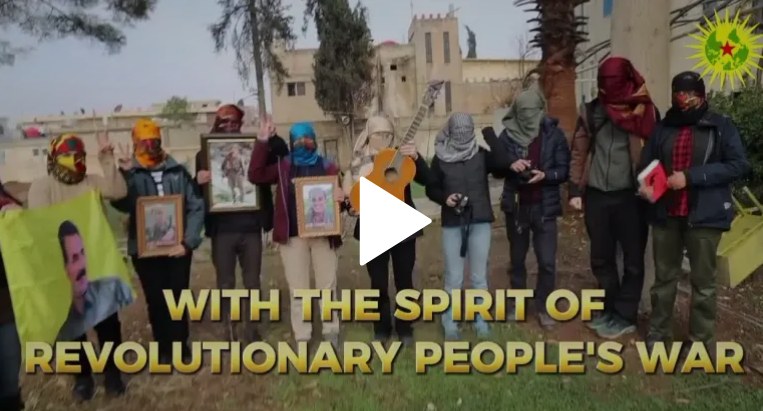
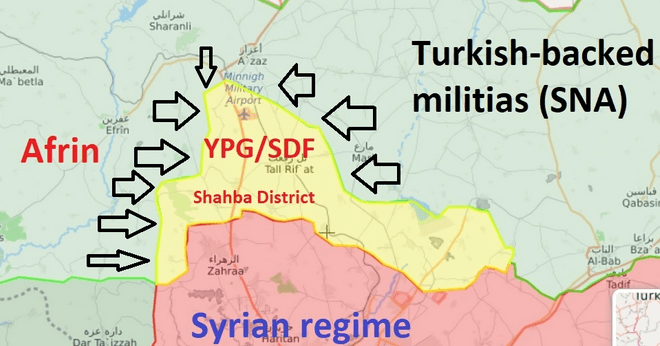
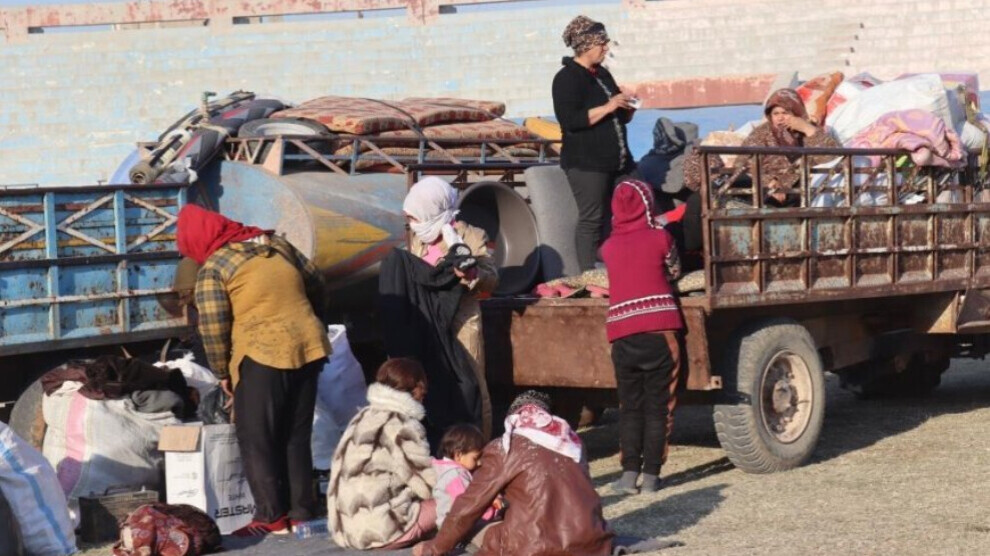
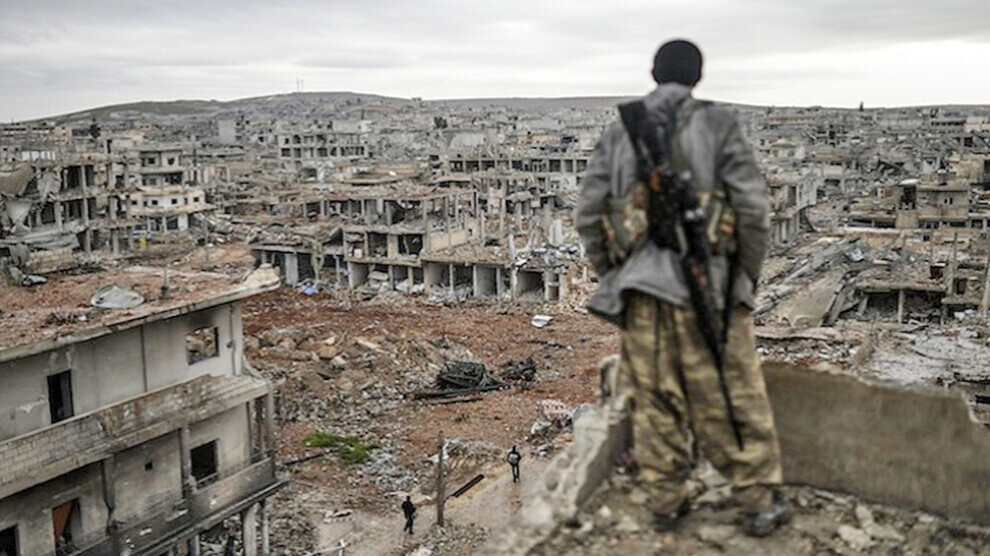
        Turkey/SNA is preparing to destroy Kobanê, the living Symbol of Resistance to ISIS, Al Qaeda and Turkish Terror.

        The Turkish State and its jihadi mercenary proxies have prepared a large scale offensive to cross the Euphrates, and attack Kobanê. Turkey has also opened their wall with Kobane and massed troops and artillery on the border.

        from t.me/International_Rev /t.me/RiseUp4RojavaEng World News 17/12/24 via thefreeonline at https://wp.me/pIJl9-FfG Telegram t.me/thefreeonline

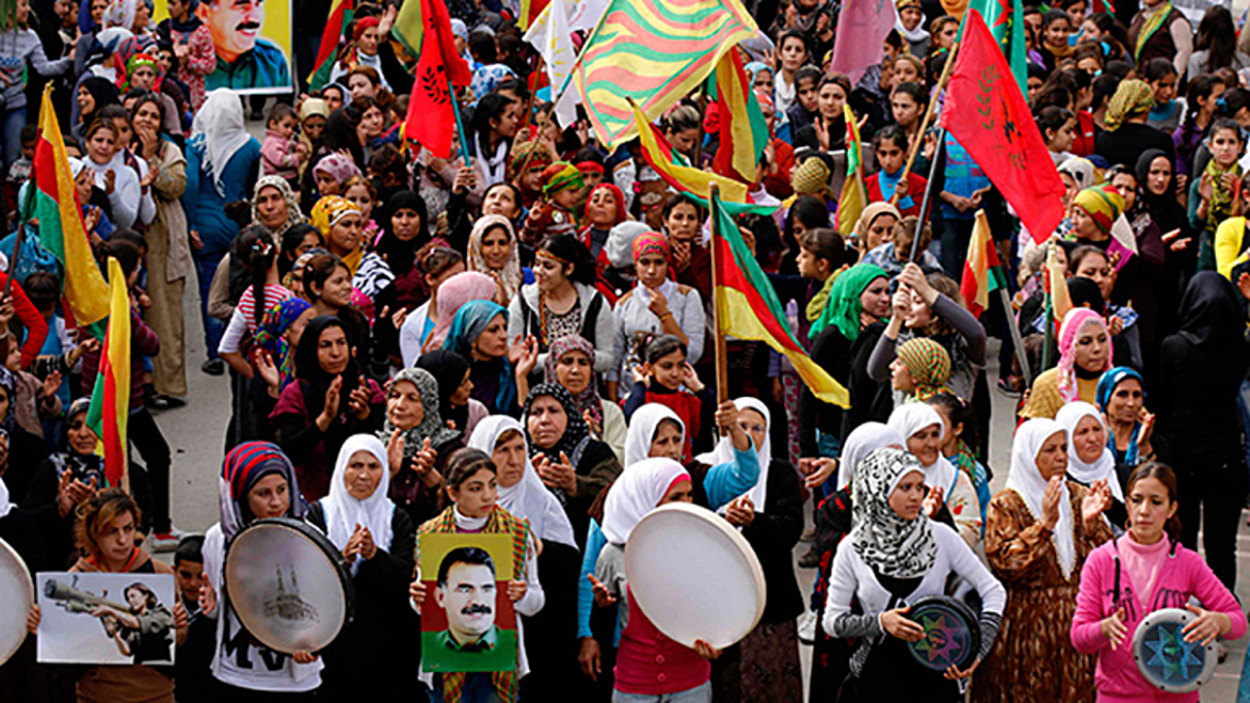
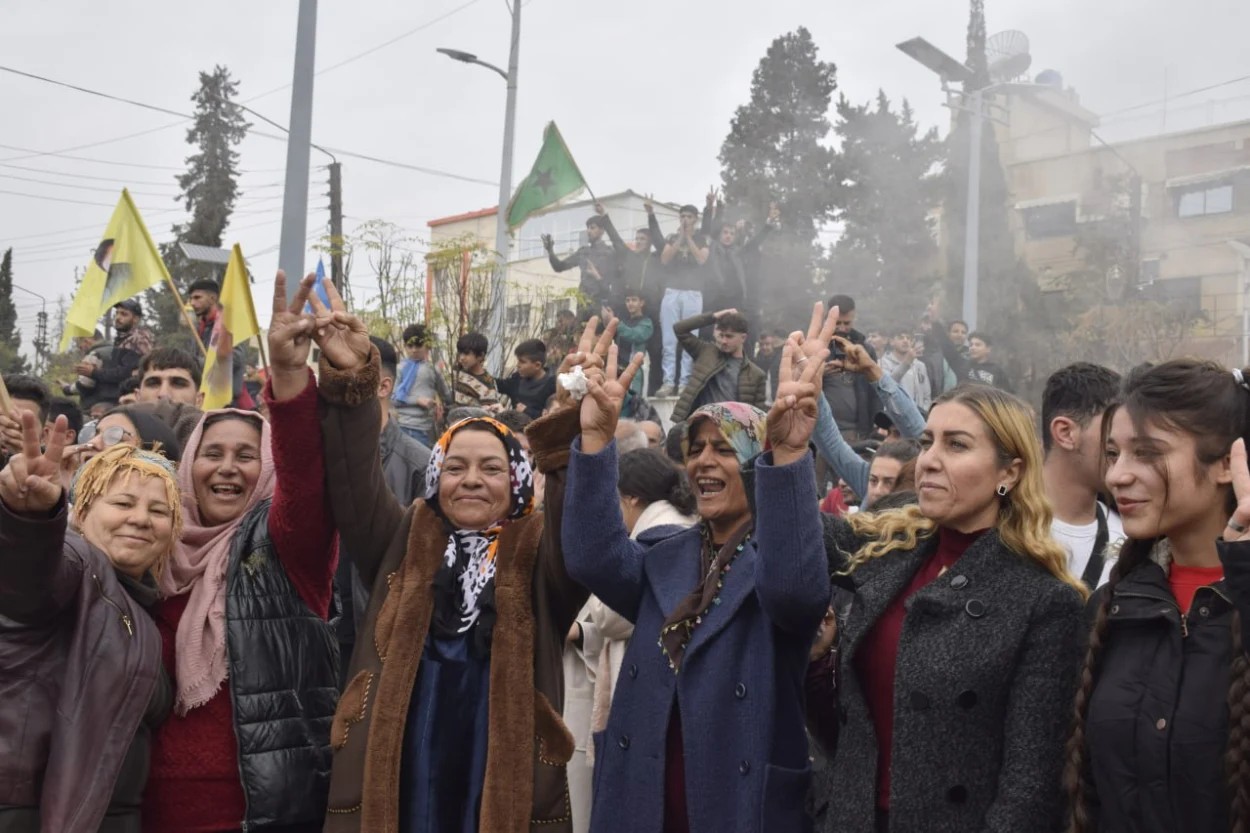
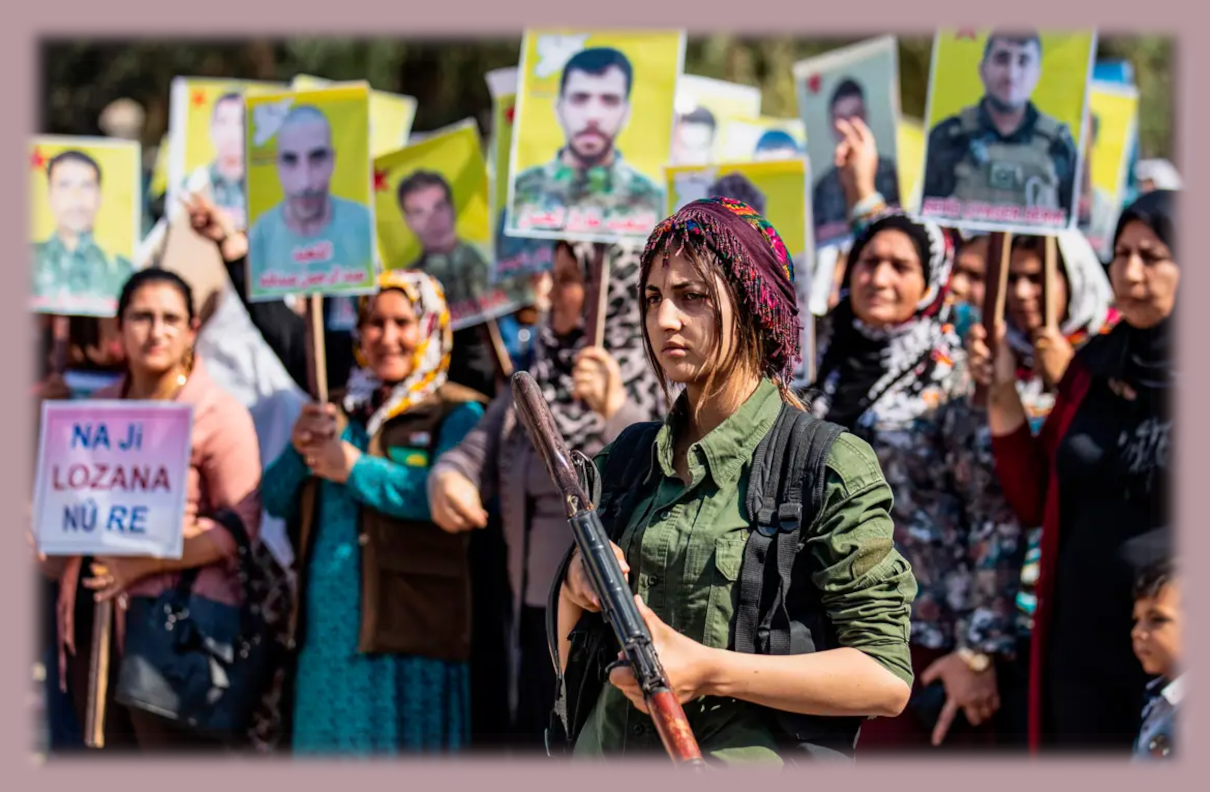
        Today’s demonstration in Kobane with the entire town taking part,carrying portraits of their relations killed by Turkish attacks.

        VIDEO

        Kobanê now: tens of thousands of residents on the streets in protest against the attacks and threats of the Turkish occupation state and its mercenaries in the city of Kobanê (Syrian Kurdistan)

        From Kobanê they plan to push into the rest of North East Syria. They did not stop at Afrin, Shehba or Minbic. They will not stop at Kobanê. The Turkish State wants it all.

        Yesterday thousands of people in Kobanê protested against Turkey’s plans.

        Stand with Kobanê and defend Rojava.

        Read full article here: https://hawarnews.com/en/thousands-in-kobani-our-message-is-to-live-in-democratic-syria

        riseup4rojava.org
        t.me/RiseUp4RojavaEng https://t.me/RiseUp4RojavaEng

        https://t.me/International_Rev

        17 Dec, 2024 12:12 HomeWorld News

        Türkiye ‘building up forces’ on Syrian border – WSJ

        For days, there have been increasing reports that a large-scale attack on Kobane is imminent. Turkish media are openly announcing this. We see videos of SNA convoys, already camouflaged with mud, gathering on the west side of the Euphrates.

        Kurdish officials are reportedly pleading with US President-elect Donald Trump to convince Ankara not to launch an invasion

        The Turkish army removes the separation wall between Kobane and Turkiye1 day Kobane, Aleppo Governorate – 17 December 2024. … Syrian Democratic Forces: Turkish army is preparing to launch an offensive on Kobani

        Türkiye and its militia allies are reportedly building up their forces near the Syrian border in what is speculated to be preparation for a large-scale incursion into Kurdish-held territories, the Wall Street Journal reported on Monday, citing senior US officials.

        Erdogan has long boasted of Turkish plans to conquer and Turkify all of Syria.. see also.. Assad’s overthrow an ‘unfriendly takeover’ by Türkiye – Trump

        Continue reading “Turkey/SNA is preparing to destroy Kobanê, the living Symbol of Resistance to ISIS, Al Qaeda and Turkish Terror.”