from alethonews.com by Alastair Crooke at Strategic Culture Foundation | via thefreeonline
By Alastair Crooke | Strategic Culture Foundation | May 30, 2022
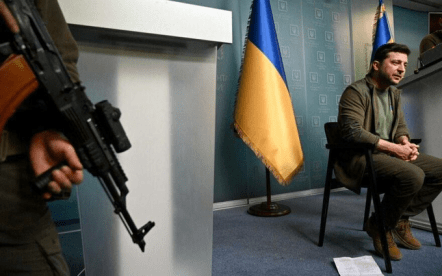
Klaus Schwab, passionate for Ukraine, essentially configured the World Economic Forum (WEF) to showcase Zelensky and to leverage the argument that Russia should be kicked out of the civilised world.
Schwab’s target was the assembled crème de la crème of the world’s business leaders assembled there.
Zelensky pitched big: “We want more sanctions and more weapons”; “All trade with the aggressor should be stopped”; “All foreign business should leave Russia so that your brands are not associated with war crimes”, he said.
Sanctions must be all encompassing; values must matter.
Disquiet ran through the Davos set: The WEF is high-octane globalist, right? Yet this Schwab line suggests a de-coupling ‘on stilts’. It precisely reverses interconnectedness.
Plus, the western generals in charge are saying that this conflict may last not just years, but decades.
What will this signify for their markets in parts of the world that refuse action against Russia, the moneymen were wondering?
It is unlikely that this whiff of disorientation is what Schwab had intended.
Perhaps the latter was more aligned with Soros’ later intervention that a quick victory over Russia was needed to save the ‘Open Society’ and civilisation itself – and that this was intended as the WEF 2022 message.
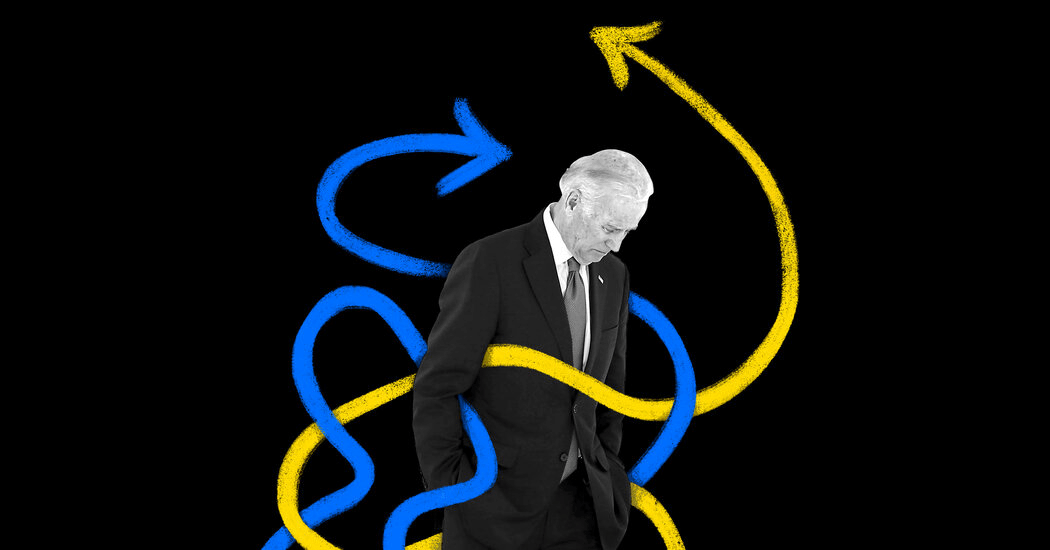
Opinion | What Is America’s Strategy in Ukraine? – The New York Times
The Davos ‘greater disquiet’ emerged however, from an unexpected quarter. Just before the WEF began, the NY Times had run a piece from the editorial team urging Zelensky to negotiate with Russia.
It argued that such engagement implied making painful territorial sacrifices.
The piece attracted indignant and angry push-back in Europe and the West, possibly because – albeit couched as advice to Kiev – its target was evidently Washington and London (the arch belligerents).
Eric Cantor, a former whip in the U.S. House of Representatives (a legislator well versed on Iran sanctions), also at Davos, questioned whether the West would be able to maintain a united front in pursuit of such maximalist aims as Zelensky and his Military Intelligence Chief have demanded.
“We may not get the next vote”, Cantor opined (in wake of the $40 bn vote ostensibly earmarked for Ukraine).
Cantor said excluding Russia entirely would require secondary sanctions against other countries.
Continue reading “Disquiet at Davos and the Unsaid Fear of Failure – The First Shoots of a U.S. Ukraine Shift”