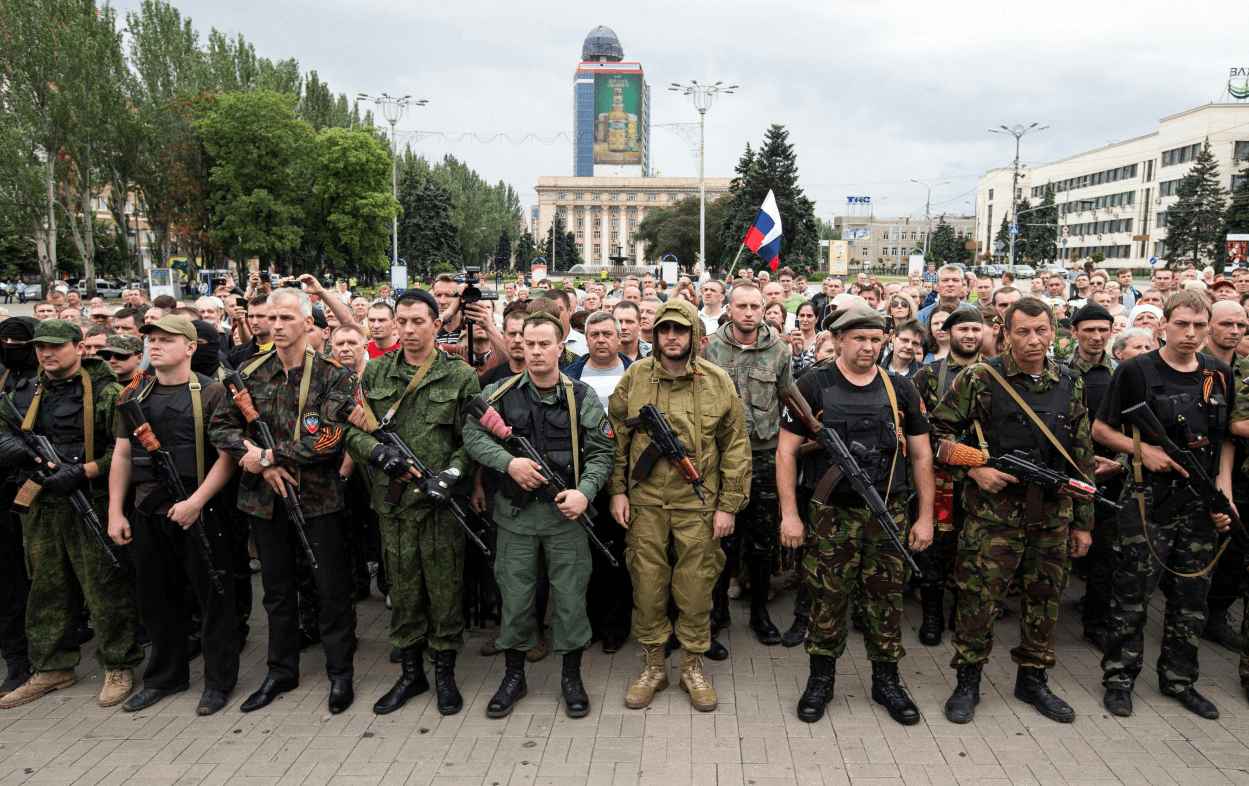
People wave Russian national flags celebrating Moscow’s recognition Donetsk and Lugansk, eastern Ukraine, Feb 21, 2022
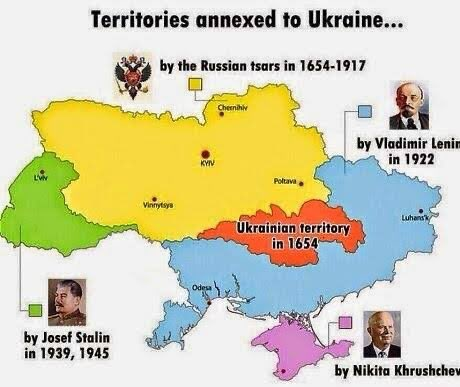
Russia’s recognition of the ‘people’s republics’ of Luhansk and Donetsk in the eastern Ukrainian region of Donbass on Monday is a watershed event.In a manner of speaking, by this decision President Vladimir Putin crossed the Rubicon.
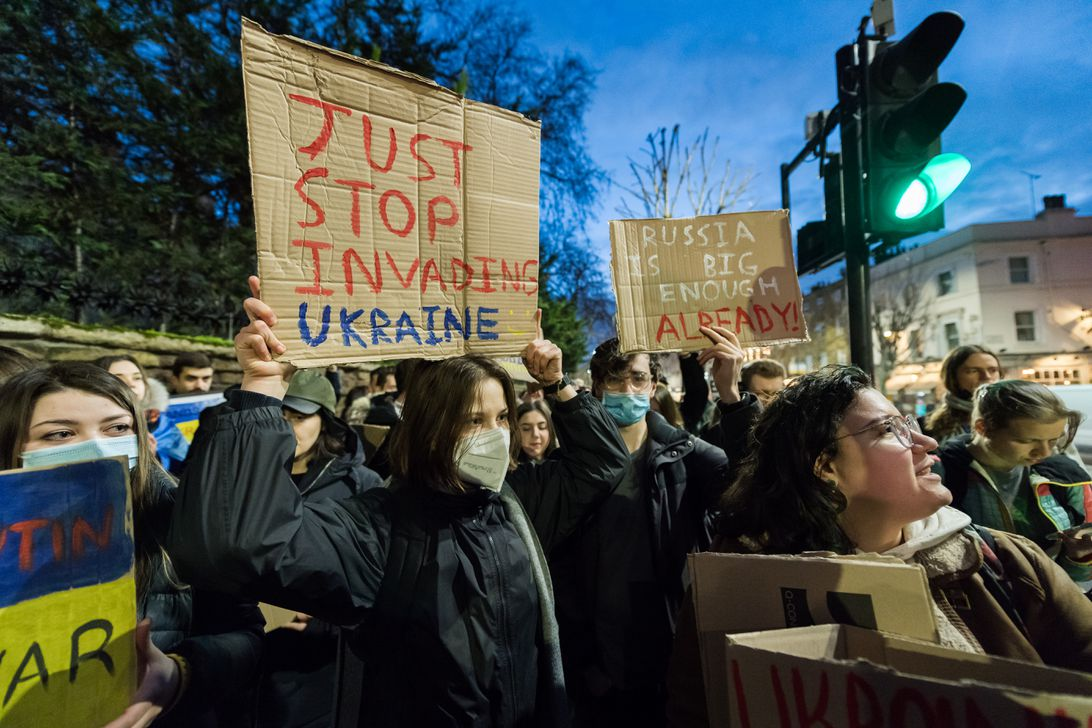
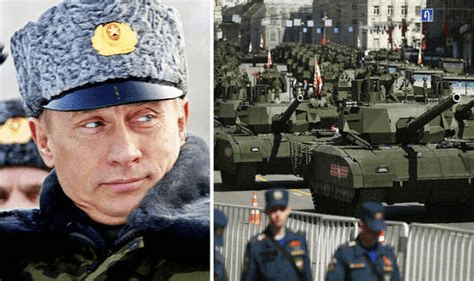
Russia has launched “a full-scale invasion” of Ukraine with explosions heard across major cities. Vladimir Putin, in a statement on Russian TV, said warned allies of Ukraine who try to interfere with his attack will “face consequences greater than any you have faced in history”.
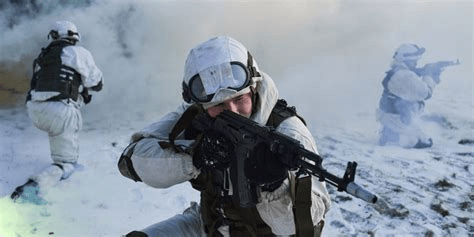
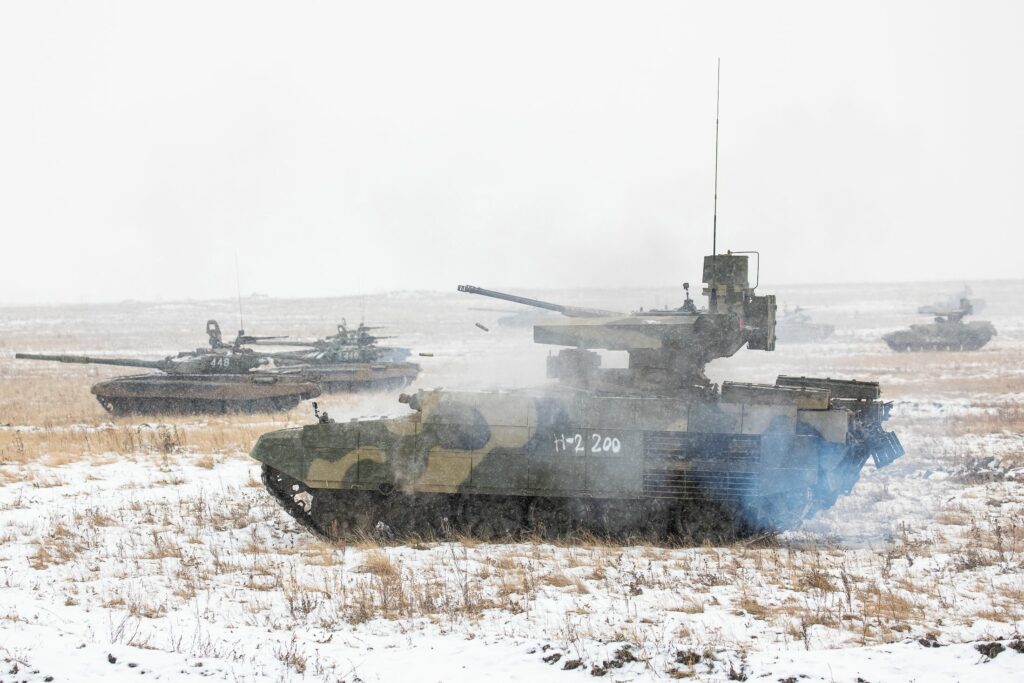
Within moments of confirming a military operation in the neighbouring nation, explosions rung out and could be heard across a number of eastern cities. Troops have since crossed the Russia/Ukraine border, with air raid sirens being tested in Kyiv. Ukraine President Volodymyr Zelenskyy quickly announced martial law across all territories.
Videos show cars of people fleeing Ukraine’s capital Kyiv, as others sheltered in basements to the sound of distant explosions.
*************
It also obtained the authorisation by Russia’s Federation Council, or upper parliament house, for the use of armed forces outside Russia (as required under the constitution.)
Beirut, Feb 24 (Prensa Latina) Social networks in Lebanon today reproduced massive criticism against the hypocritical policy of the United States of besieging Russia for recognizing Donetsk and Lugansk, while supporting the illegal Israeli occupation in Palestine and Syria.
Hundreds of activists in this country rejected this position of double standards, to which several Western governments are added.
For them, the threats against Russia for its recognition of the sovereignty of the people’s republics of Donetsk and Lugansk and on the other hand accepting the attempts of annexation by Israel of the Golan Heights, of Syria, and the total occupation of the West Bank, in Palestine.
Similarly, they condemned the West for avoiding mentioning cases of human rights violations, killings and illegal detentions by Israeli forces in occupied Palestinian territory, including holy religious sites in Jerusalem.
Beirut, 24 feb (Prensa Latina) Las redes sociales en Líbano reprodujeron hoy críticas masivas contra la hipócrita política de Estados Unidos de asediar a Rusia por reconocer a Donetsk y Lugansk, mientras apoya la ocupación ilegal israelí en Palestina y Siria.
Centenares de activistas de este país rechazaron esa postura de doble rasero, a la cual se suman varios gobiernos de Occidente.
Para ellos se trata de una hipocresía total las amenazas contra Rusia por su reconocimiento a la soberanía de las repúblicas populares de Donetsk y Lugansk y de otro lado aceptar los intentos de anexión por Israel de los Altos del Golán, de Siria, y la total ocupación de Cisjordania, en Palestina.
De igual manera, condenaron a Occidente que evita mencionar los casos de violación de derechos humanos, asesinatos y detenciones ilegales de las fuerzas israelíes en territorio palestino ocupado, incluidos sitios religiosos sagrados en Jerusalén.
In a statement made public this Monday, the constitution of the Unitary Platform was announced at the initiative of thirty entities and activists to organize the response to the summit that NATO plans to hold in Madrid on June 29 and 30.
In a statement made public this Monday, the constitution of the Unitary Platform was announced at the initiative of thirty entities and activists to organize the response to the summit that NATO plans to hold in Madrid on June 29 and 30.
We reproduce the statement in its English, Spanish and Catalan versions:
‘Platform for Peace – NATO No’ ESTABLISHED IN CATALONIA
Last Thursday, February 17, representatives of thirty social, civic and political entities met in Barcelona, as well as prominent activists from the mobilizations against the war in Iraq, with the aim of organizing the citizen response in defense of peace before the summit of the NATO that will take place in Madrid on June 29 and 30.
After the presentation and round of speeches, it was agreed to set up the ‘ Platform for Peace – NATO NO’ in Catalonia. Among its objectives is:
The dissolution of NATO, the withdrawal of Spain from NATO
The closure of the United States military bases in Spain
The reduction of military spending.
In the immediate term, the withdrawal of troops, planes, and Spanish military ships in Eastern European countries and in the conflict zone between Ukraine and Russia.
The Platform for Peace- NATO NO of Catalonia expresses its desire to build the broadest unity and coordination with all those platforms and assemblies that share the same objectives both within Catalonia, Spain, and internationally.
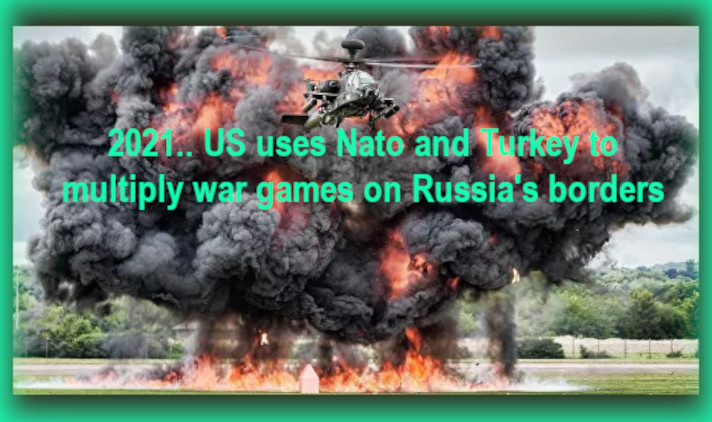
The active defense of peace is more urgent than ever in the face of NATO’s warmongering expansion worldwide and the conflict between Ukraine and Russia. Barcelona, February 2022 Platform for Peace- NATO NO
En un comunicado hecho público este lunes, se ha anunciado la constitución de la Plataforma unitaria a iniciativa de treinta entidades y activistas para organizar la respuesta a la cumbre que la OTAN tiene previsto celebrar en Madrid los próximos 29 y 30 de junio.
En un comunicado hecho público este lunes, se ha anunciado la constitución de la Plataforma unitaria a iniciativa de treinta entidades y activistas para organizar la respuesta a la cumbre que la OTAN tiene previsto celebrar en Madrid los próximos 29 y 30 de junio.
Reproducimos el comunicado en sus versiones castellana y catalana:
SE CONSTITUYE LA “PLATAFORMA POR LA PAZ OTAN NO” EN CATALUÑA
El pasado jueves 17 de febrero se reunieron en Barcelona representantes de treinta entidades sociales, cívicas políticas, así como destacados activistas de las movilizaciones contra la guerra de Irak, con el objetivo de organizar la respuesta ciudadana en defensa de la paz ante la cumbre de la OTAN que tendrá lugar en Madrid el 29 y 30 de junio.
Tras la presentación y roda de intervenciones se acordó constituir en Cataluña la “Plataforma por la PAZ OTAN NO”. Entre sus objetivos se reivindica la disolución de la OTAN, la salida de España de la OTAN, el cierre de las bases militares de Estados Unidos en España, la reducción del gasto militar, y en lo inmediato, la retirada de las tropas, aviones, y navíos militares de España en los países del este de Europa y de la zona de conflicto entre Ucrania y Rusia.
La Plataforma por la PAZ OTAN NO de Cataluña expresa su voluntad de construir la más amplia unidad y coordinación con todas aquellas plataformas y asambleas que compartan los mismos objetivos tanto en el ámbito de Cataluña, de España, como a nivel internacional.
La defensa activa de la paz es más urgente que nunca ante la expansión belicista de la OTAN a nivel mundial y el conflicto entre Ucrania y Rusia.
Barcelona, febrero 2022 Plataforma por la PAZ OTAN NO
ES CONSTITUEIX LA “PLATAFORMA PER LA PAU OTAN NO” A CATALUNYA
El passat dijous 17 de febrer es van reunir a Barcelona representants de trenta entitats socials, cíviques polítiques, així com destacats activistes de les mobilitzacions contra la guerra de l’Iraq, amb l’objectiu d’organitzar la resposta ciutadana en defensa de la pau davant de la cimera de la OTAN que tindrà lloc a Madrid el 29 i 30 de juny.
Després de la presentació i la roda d’intervencions es va acordar constituir a Catalunya la “Plataforma per la PAU OTAN NO”. Entre els seus objectius es reivindica la dissolució de l’OTAN, la sortida d’Espanya de l’OTAN, el tancament de les bases militars dels Estats Units a Espanya, la reducció de la despesa militar, i immediatament la retirada de les tropes, avions, i navilis militars d’Espanya als països de l’est d’Europa i de la zona de conflicte entre Ucraïna i Rússia.
La Plataforma per la PAU OTAN NO de Catalunya expressa la seva voluntat de construir la més àmplia unitat i coordinació amb totes aquelles plataformes i assemblees que comparteixin els mateixos objectius tant a nivell de Catalunya, d’Espanya, com a nivell internacional.
La defensa activa de la pau és més urgent que mai davant de l’expansió bel·licista de l’OTAN a nivell mundial i el conflicte entre Ucraïna i Rússia.
Barcelona, febrer 2022 Plataforma per la PAU OTAN NO
Bowing to demands from the Russian Parliament Putin has recognized and can send ‘Peacekeeping’ troops to Donbass
By effectively taking control of Donbass Russia may protect the Russian population not already evacuated and thwart the US and Ukraine’s NATO backed Russophobic campaign.
The Great Gamble of course is whether the powerful US military issues Russia with a nuclear ultimatum to get out of Ukraine. And if Ukraine launches the 150,000 army it has on the Donbass borders, armed with the latest free gifts from NATO.
Then Russia would have to defend Donbass (or abandon a million Russians) causing a massacre of Ukrainian troops, causing a NATO intervention, causing a nuclear holocaust ……
Latest indications are that the US will back down, not cutting Russia’s Energy exports or stifling trade by banning it from the Swift system.
The EU and US will no doubt install their already prepared massive economic sanctions, but Russia has resisted previous sanctions and right now is rolling in cash, with gas and oil prices still rising.
The sanctions were coming anyway, and could be a massive own goal if energy and other vital raw materials are cut off in reply.
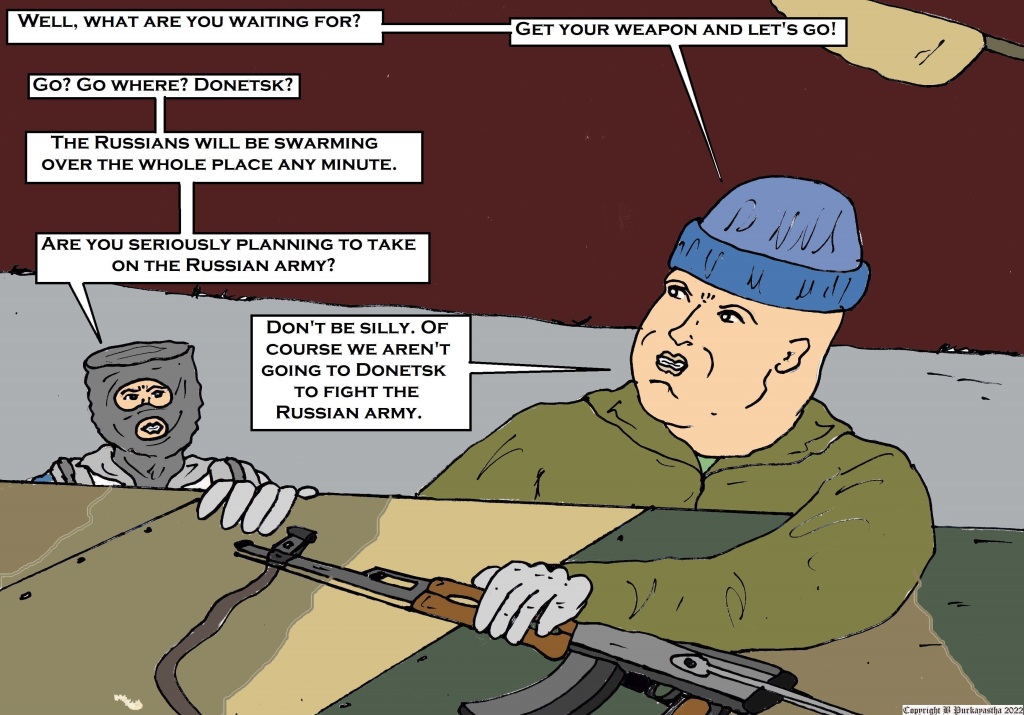
The Donbass rebels lack Turkish Drones, Javelin missiles, Stingers, etc
The trouble with the chessboard analogy is that the aim of that game is to annihilate the enemy.. which could easily include you and me! And even if Russia does manage to force a Peace it will surely worsen rightwing chauvinism and repressive nationalism in Russia, to the detriment of any dissent and the over 100 ethnic minorities
The final logic of decadent predator Capitalism is total war. This combined with the curse of far right Statist nationalism in Europe has historically inspired hatred, repression and finally killing of ethnic and religious minorities, who happen to be stranded in the ‘wrong’ State.
After two world wars the recipe repeats itself, with the west advancing on Russia’s borders, colonizing and supporting the neo nazi movement in Ukraine. Nobody really knows why..
Russia cannot abandon its citizens in Donbass, and is obsessed with the memory of the last time the west attacked Russia in 1941, finally leaving over 20 million Russian and USSR people dead.
Putin’s Great Gamble is to step right into the trap and double dare the USA to attack. And to see if Russia can survive Savage Sanctions. Europe has let itself be dragged into the endless insane US and UK Crusade against Russia, which must now assert its borders and turn East, to China.
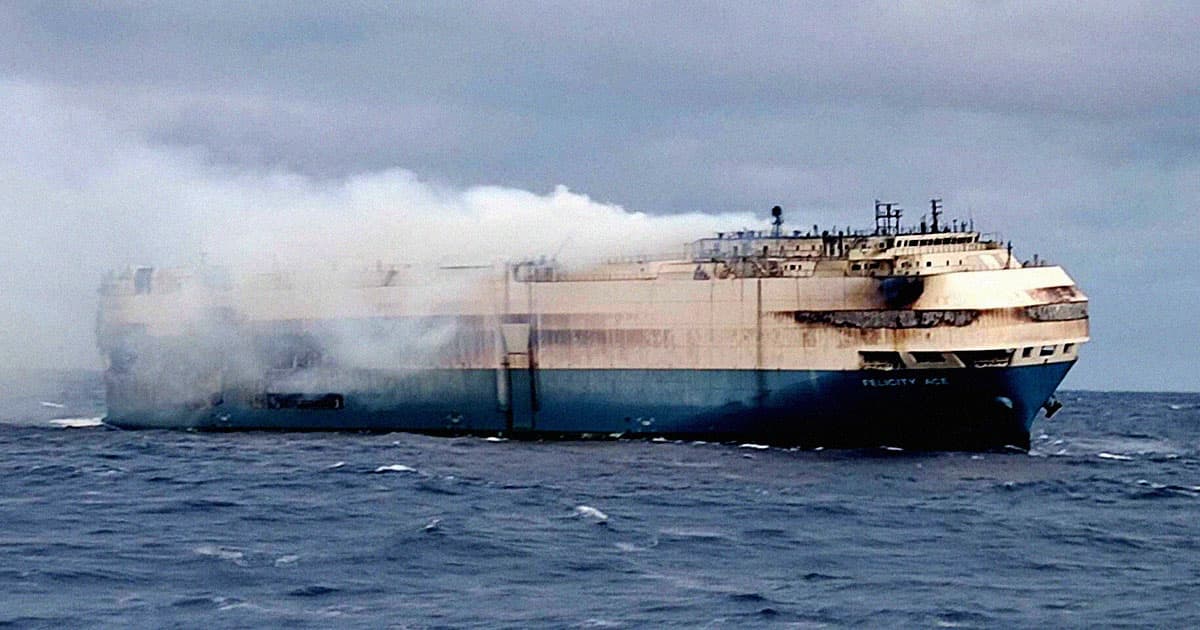
The ‘Felicity Ace’, was transporting roughly 4,000 cars, including 1,100 Porsches and 189 Bentleys,
by Victor Tangermann
“The cars are electric and part of the fire is the batteries that are still burning.”
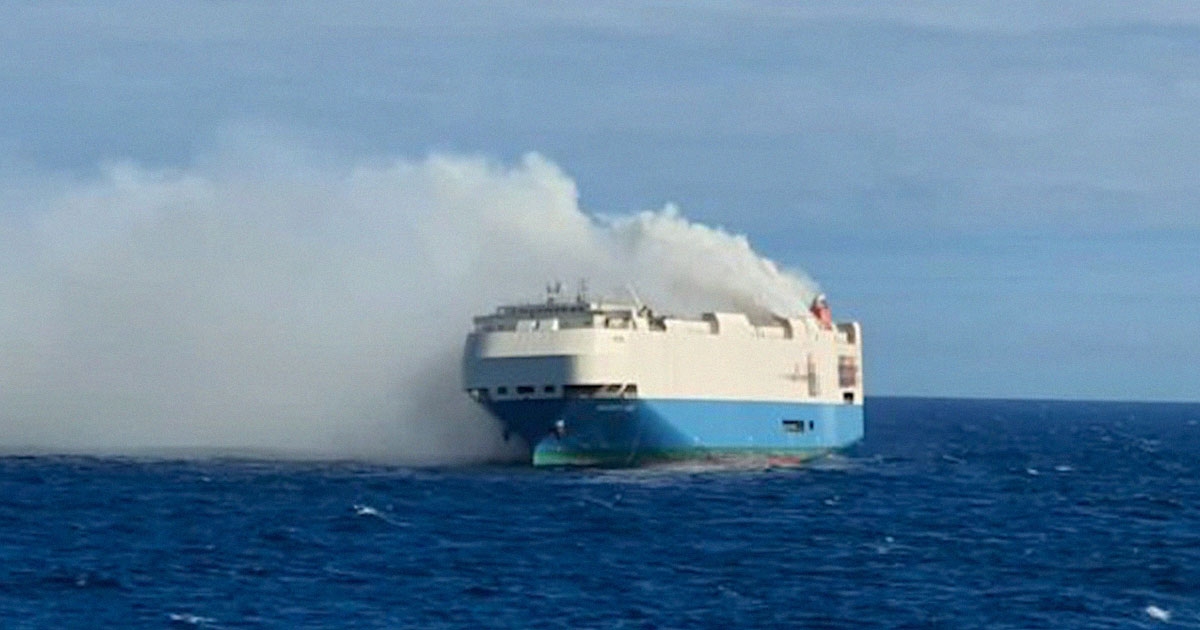
A giant cargo ship carrying luxury cars, including numerous Porsches, lit on fire last week and forced the crew of 22 members to evacuate in the Atlantic ocean.
And as it turns out, a “large number” of the cars are electric,which is greatly complicating firefighting efforts, The Wall Street Journal reports — though it’s still unclear if their lithium-ion batteries were the source of the fire.
“The cars are electric and part of the fire is the batteries that are still burning,” a spokesman for salvage company Royal Boskalis Westminster NV told the newspaper.
The news — yet another setback for the already ailing car industry — goes to show that transporting massive and highly flammable batteries…