Throughout the pandemic, the US Center for Disease Control (CDC) published numerous false and misleading studies that bolstered national and international political goals and guided social media censorship. Three recent examples illustrate the issue.
Malta vivió su mayor protesta hasta el momento contra las restricciones del COVID el domingo, con cientos de personas marchando en la capital La Valeta contra las nuevas medidas que exigen la presentación de un certificado COVID para ingresar a la mayoría de los lugares, incluidos restaurantes, gimnasios y bares. Malta ha visto una de…
Brazilian activist José Gómes with his family., Márcia and Joene and
The bodies of José Gomes, known as ‘Zé do Lago’, his wife, Márcia Nunes Lisboa, and their 14-year-old daughter Joane, were found on the family’s property in the rural area of Sao Félix do Xingu, in the south of the Brazilian state of Pará.
According to the first police investigations, the three were shot to death and the state of decomposition of the bodies indicated that the murders occurred three days before being found by the couple’s son.
Márcia’s body was near the river, while her father and the girl were near the house. The family lived by fishing and they had a turtle breeding project.
In a video circulating on social networks, ‘Zé do Lago’ appears on the banks of the river, releasing baby turtles and talking about the work they had been doing for two decades.
The authorities assure that it is still early to draw conclusions about the possible motivations of the crimes. “It is not an isolated case”
🚨A família de ambientalistas composta pelo pai Zé do Lago, a mãe Márcia e a filha Joene – menor de idade -, foi executada a tiros em São Félix do Xingu, Sul do Pará. Encontrada nesta segunda (10), a família foi assassinada dias antes, pelo estado de decomposição dos corpos(…)+ pic.twitter.com/q5jzhCJEFt
Meanwhile, in a statement, the Society for the Defense of Human Rights of Pará expressed concern about “another massacre” in the countryside and explained that the family carried out environmental protection activities and was known for its work with turtles.
Is privatization the only way to protect the environment and end Third World poverty? Most economists and development planners will answer “yes” — and for proof they will point to the most influential article ever written on those important questions.
Since its publication in Science in December 1968, “The Tragedy of the Commons” has been anthologized in at least 111 books, making it one of the most-reprinted articles ever to appear in any scientific journal. It is also one of the most-quoted: a recent Google search found “about 302,000” results for the phrase “tragedy of the commons.”
For 40 years it has been, in the words of a World Bank Discussion Paper, “the dominant paradigm within which social scientists assess natural resource issues.” (Bromley and Cernea 1989: 6) It has been used time and again to justify stealing indigenous peoples’ lands, privatizing health care and other social services, giving corporations ‘tradable permits’ to pollute the air and water, and much more.
Noted anthropologist Dr. G.N. Appell (1995) writes that the article “has been embraced as a sacred text by scholars and professionals in the practice of designing futures for others and imposing their own economic and environmental rationality on other social systems of which they have incomplete understanding and knowledge.”
Like most sacred texts, “The Tragedy of the Commons” is more often cited than read. As we will see, although its title sounds authoritative and scientific, it fell far short of science.
Garrett Hardin hatches a myth
The author of “The Tragedy of the Commons” was Garrett Hardin, a University of California professor who until then was best-known as the author of a biology textbook that argued for “control of breeding” of “genetically defective” people. (Hardin 1966: 707) In his 1968 essay he argued that communities that share resources inevitably pave the way for their own destruction; instead of wealth for all, there is wealth for none.
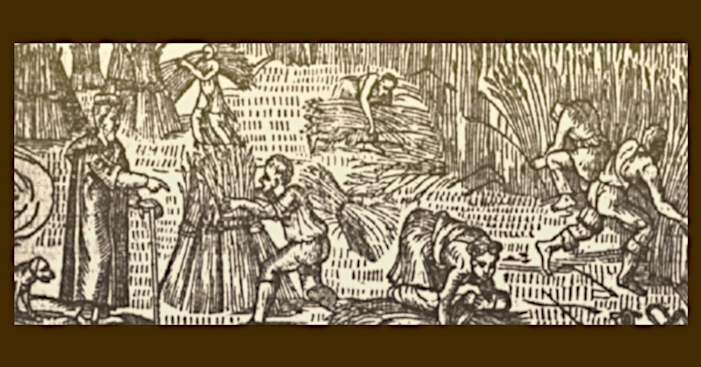
He based his argument on a story about the commons in rural England.
(The term “commons” was used in England to refer to the shared pastures, fields, forests, irrigation systems and other resources that were found in many rural areas until well into the 1800s. Similar communal farming arrangements existed in most of Europe, and they still exist today in various forms around the world, particularly in indigenous communities.)
“Picture a pasture open to all,” Hardin wrote. A herdsmen who wants to expand his personal herd will calculate that the cost of additional grazing (reduced food for all animals, rapid soil depletion) will be divided among all, but he alone will get the benefit of having more cattle to sell.
Inevitably, “the rational herdsman concludes that the only sensible course for him to pursue is to add another animal to his herd.” But every “rational herdsman” will do the same thing, so the commons is soon overstocked and overgrazed to the point where it supports no animals at all.
Hardin used the word “tragedy” as Aristotle did, to refer to a dramatic outcome that is the inevitable but unplanned result of a character’s actions. He called the destruction of the commons through overuse a tragedy not because it is sad, but because it is the inevitable result of shared use of the pasture. “Freedom in a commons brings ruin to all.”
Where’s the evidence?
Given the subsequent influence of Hardin’s essay, it’s shocking to realize that he provided no evidence at all to support his sweeping conclusions. He claimed that the “tragedy” was inevitable — but he didn’t show that it had happened even once.
Congratulations, conspiracy theorists, you’re proven right yet again.The passel of lies that have been packaged in the pandemic narrative are being exposed, much to the chagrin of public officials. Most everything we have been ordered to do because of “the science” is now at odds with the evidence unfolding before our eyes. Let’s take a look at the liars and the truth that can no longer be hidden.
Not all are covid deaths
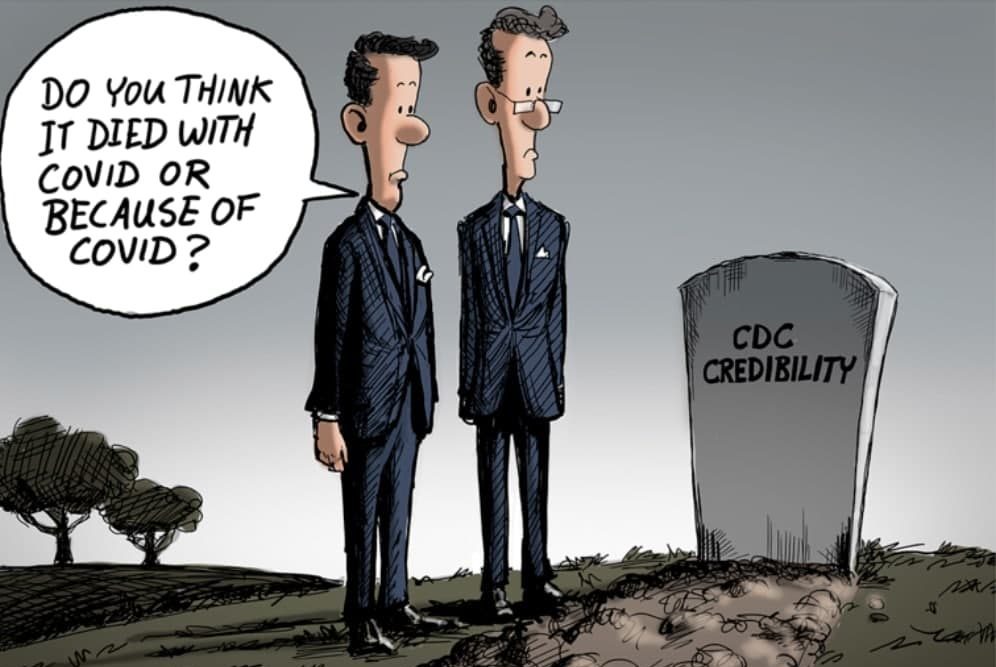
Dr. Rochelle Walensky, CDC Director, has admitted that covid deaths aren’t necessarily deaths from covid.Dr. Walensky said on Friday that more than 75 percent (it’s actually 77.8 percent) of vaccinated people who die from covid have four or more co-morbidities and are unwell to begin with. So claiming these people died from the virus alone…
EU drug regulators, World Health Organization experts and the former chairman of the UK’s COVID task force all cited mounting evidence mRNA COVID boosters aren’t working and the strategy should be dropped. By Megan Redshaw 86
Another great logical effort to show how the world could be organised. Perhaps Steady State will be more attractive than DeGrowth. However little attempt is made to suggest a practical way to divert the ‘Death Spiral’ to the Steady State. How to stop the runaway Capitalist/Military train. Little focus on bottom-up climate justice. Or how to subvert the GREAT RESET Campaign from converting all land, water, resilient communities and natural assets into their private property for Wall Street speculation!
A Steady State Economy is a mildly fluctuating economy that does not exceed ecological and planetary limits.
A Steady State Economy is not an alternative economic ideology that is centred on endless GDP growth. It is neither capitalism nor communism.
palm oil on fire
Economic growth, with all of its downsides, is clearly unsustainable in the 21st century. Long-term recession is no panacea either. A steady state economy is the sustainable alternative to perpetual economic growth.
Economic growth was never a magic bullet; it is simply an increase in the production and consumption of goods and services–it can’t possibly lead to a sustainable outcome. In contrast, the steady state economy provides the means for present and future generations to achieve a high quality of life.
In this interview, Palm Oil Detectives speaks with Martin Tye, a representative of the Center for the Advancement of the Steady State Economy (CASSE) in Regional Australia. Martin studies ecological economics and history and passionate about improving the quality of life for current and future generations and restoring wildlife.
How do we stop the world’s ecosystems from going into a death spiral? A #SteadyState Economy. An interview with @SteadyStateEcon’s Australasian leader @MartinRev21 Tweet
“Somehow, we have come to think the whole purpose of the economy is to grow, yet growth is not a goal or purpose. The pursuit of endless growth is suicidal.”
David Suzuki
The goal of Steady State Economics is to substitute the model of endless GDP growth with a stable and mildly fluctuating economy
The term often refers to a national economy, but ‘Steady State’ economics also be applied to a local, regional, or global economy.


 CDC: Science or Politics? (Pat Cross)