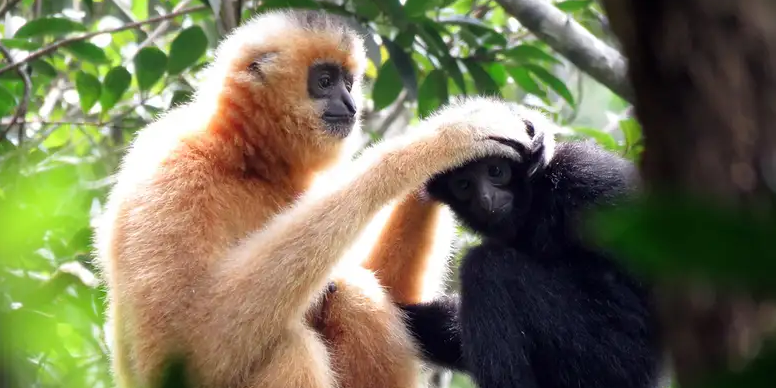
A crucial population of one of the rarest primates on the planet is holding its own in the face of multiple threats, according to the latest surveys conducted in northern Vietnam.
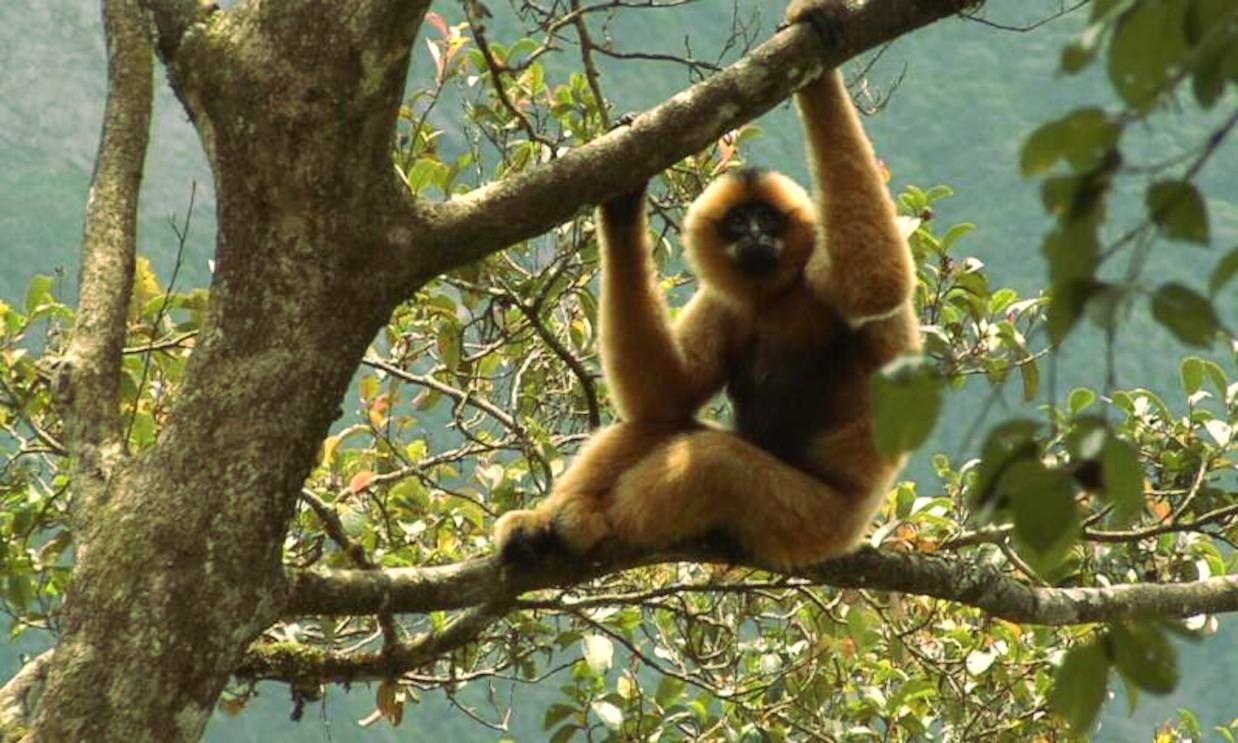
Survey teams recorded at least 20 groups of western black crested gibbon—totaling an estimated 64-79 individuals—in its only known Vietnamese haven, providing further confirmation that the population has stabilized in the 18 years since Fauna & Flora International (FFI) and our partners first intervened to reverse its steep decline.
The fact that the population appears to be stable may not sound like big news, but in the context of the severe and ongoing threats to the survival of this—and other—primate species in Vietnam, it constitutes a major victory. In a world where one million species are reported to be close to the brink as a result of human pressures, every example that bucks the trend is a cause for celebration.
All 18 of the world’s gibbon species are threatened with extinction, due primarily to hunting and habitat loss. Many of the forest landscapes where FFI works in Vietnam support important populations of these small apes. In fact, the country harbors all but one of the seven species known collectively as crested gibbons.
JBS, a giant company implicated in multiple cases of large-scale forest clearing in Brazil, recently made a commitment to achieve zero deforestation across its global supply chain by 2035. Environmentalists argue this pledge is grossly insufficient.
In a new Soy and Cattle Deforestation Tracker, JBS scores just a single point out of 100. Its nearest competitors, Minerva and Marfrig, have scores of 46/100 and 40/100 respectively.
Tagging and tracking systems to ensure transparency along the entire beef supply have long been proposed, but JBS has resisted disclosing its full list of suppliers.
Under present conditions, Brazil is losing forest cover at the fastest rate in more than a decade, and this deforestation is driven largely by the meatpacking industry.
Argentinian director Fernando Livschitz (previously), who helms Black Sheep Films, is back with a surreal short film that envisions everyday activities and scenes with a slightly unsettling spin.
Infused with Livschitz’s distinct penchant for humor and absurdity, “Anywhere Can Happen” is set to a rendition of “What a Wonderful World” by Reuben and the Dark and AG and descends into an uncanny universe […]
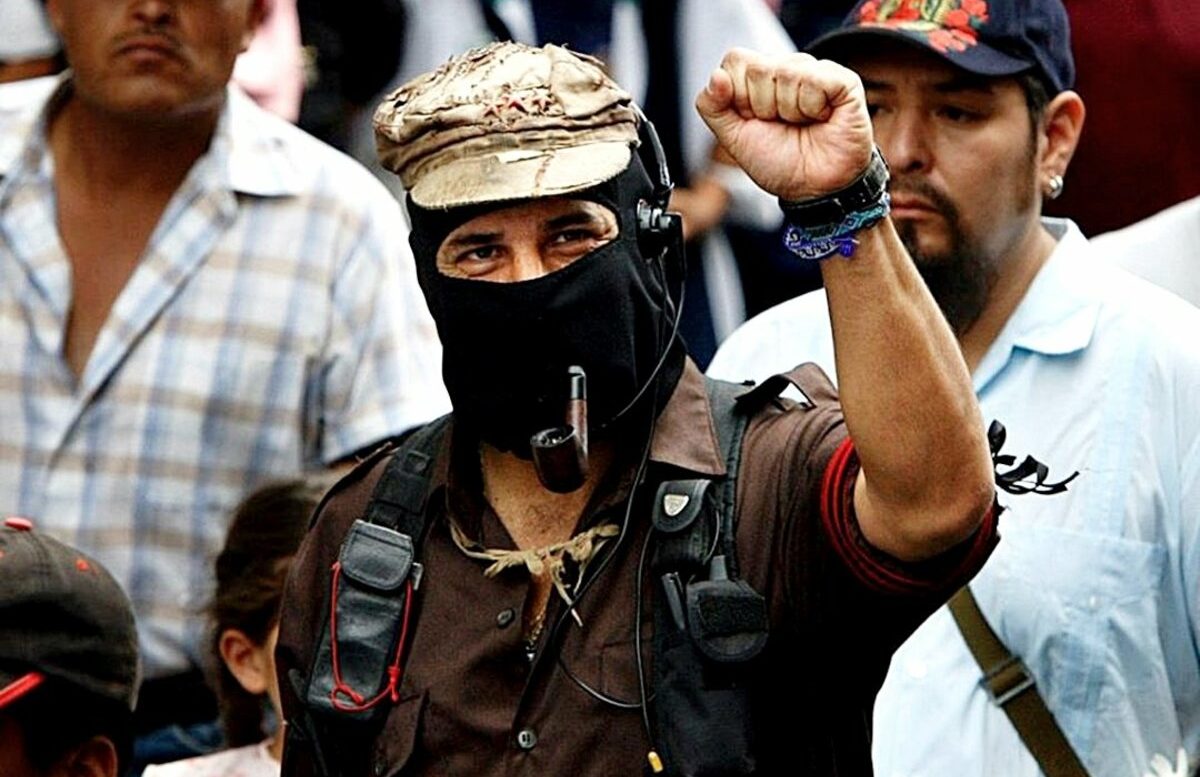
If there is one thing that Zapatismo cannot be accused of, it is not being coherent. A long time ago they designed a policy of alliance between those below, which they will now deploy during the tour that will begin in June in European lands.
Somehow it’s like on the one hand you have the podiums, the social networks and the “masses” all piled up; on the other, the articulation of collectives, which embody the most diverse oppressions around the world.
The Second Declaration of The Reality for Humanity against Neoliberalism, issued in August 1996, says this clearly and transparently: «That we will make a collective network of all our struggles and particular resistances. An intercontinental network of resistance against neoliberalism, an intercontinental network of resistance for humanity.
The objective of this network is to meet other resistances in the world, to support each other. And they clarify that the network “is not an organizational structure, it does not have a governing or decision-making center, it has no central command or hierarchies. The network is all of us who resist ».
In December 2020, Brazil had an auction, and Amazon lands were sold to the fossil fuel industry. Learn more about it and see how you can engage with us.
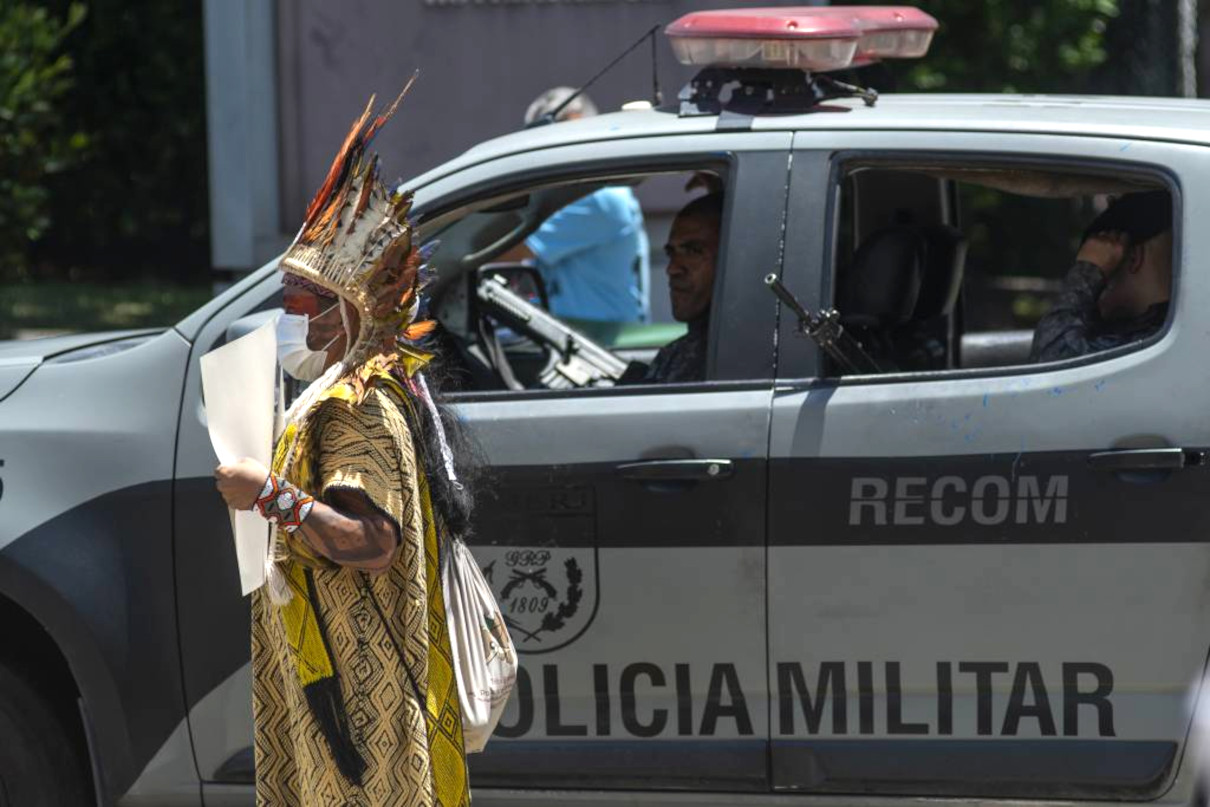
Deforestation and other threats faced by indigenous peoples in the Amazon region have increased dramatically in recent years. In all likelihood, those will increase even further due to the lack of regulation and the licensing of land for oil extraction and mining in territories held to be sacred.
350.org has been working to defend Amazon since 2015. That same year, we won a ban on oil and shale gas extraction in the Juruá Valley. At that point, Petrobrás could not carry out any activity related to the extraction, including flyovers or research.
A rebellion kicked off in the Minneapolis suburb of Brooklyn Center on Sunday, April 11th, after a police officer shot and killed Daunte Wright, a 20 year old African-American during a traffic stop.
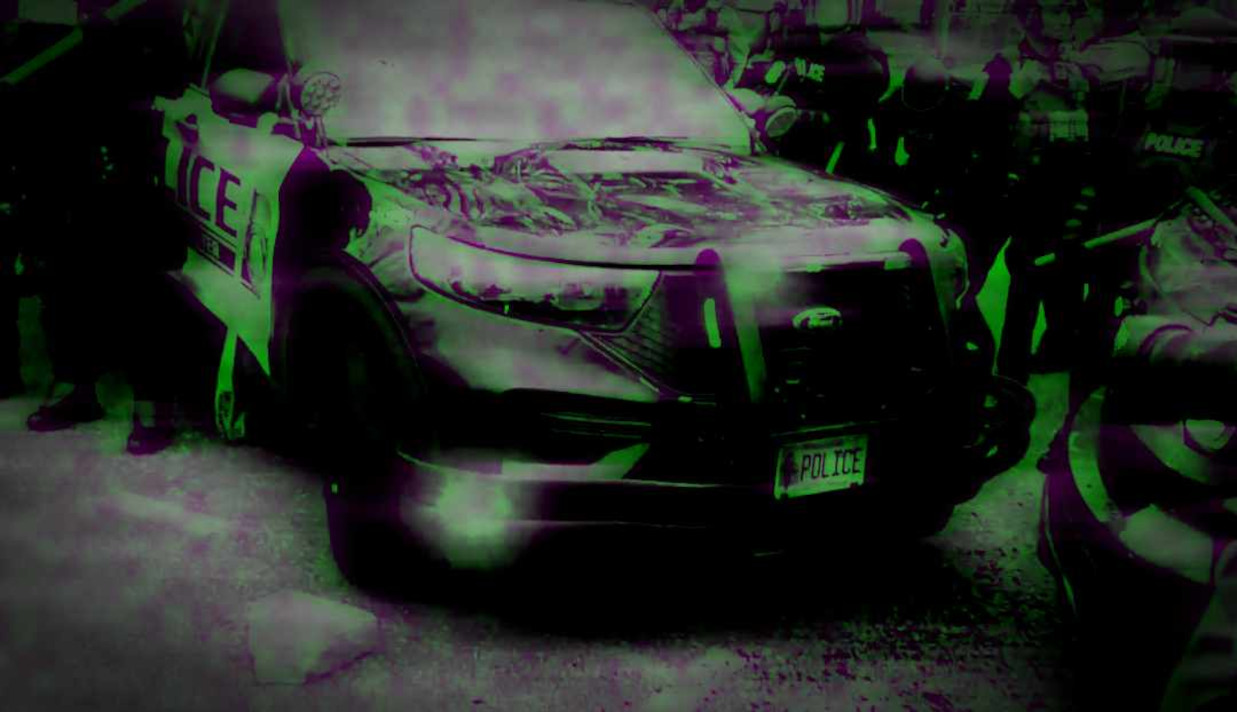
Local residents and friends and family of Daunte quickly converged on the area where he was killed, smashing police cruisers left in the streets as riot police assembled and shot pepper-balls into the crowd.
Hundreds then rallied in protest outside of the police department, only to be met with a volley of projectiles and “non-lethal” weapons.