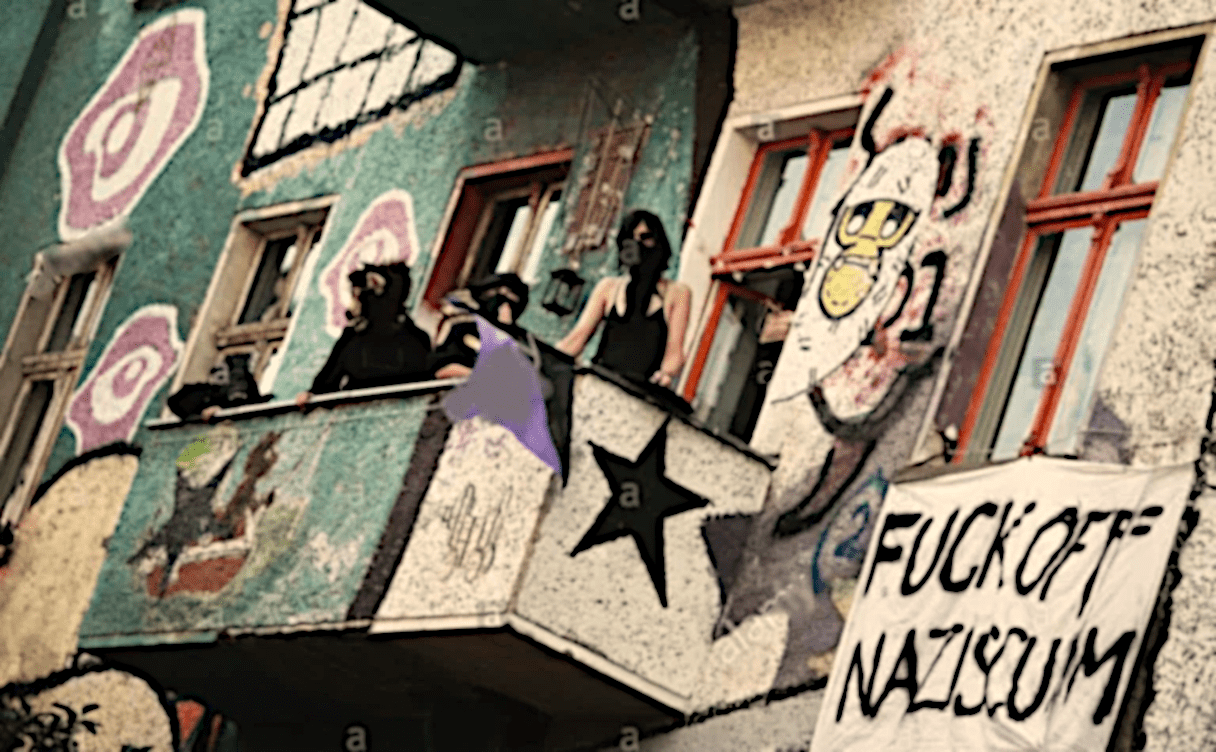
CALL FOR DEMO AGAINST EVICTION OF L34 ON THE 3RD – CHAOS INSTEAD OF EVICTION
DEMO October 3rd – Friedrichshain – 9pm
We are angry! Angry that Liebig34 is about to be taken away from us. Angry that every attempt at a self-determined life is being tried to be crushed. We are fed up with all the harassment by cops in the neighborhood and everywhere else.
We are fed up with their repression, the state and its servants, who make it impossible for people to shape the city they live in.
We shit on investors for whom Berlin is nothing more than a Monopoly board on which they can move their houses around. We don’t give a shit about the yuppies who, with their new buildings and condominiums, are displacing the people who spend their lives here, for whom the street and the Dorfplatz is more than just the way to the co-working space.
We demand a city from below. We want to occupy houses. We want to decide for ourselves how we want to live.
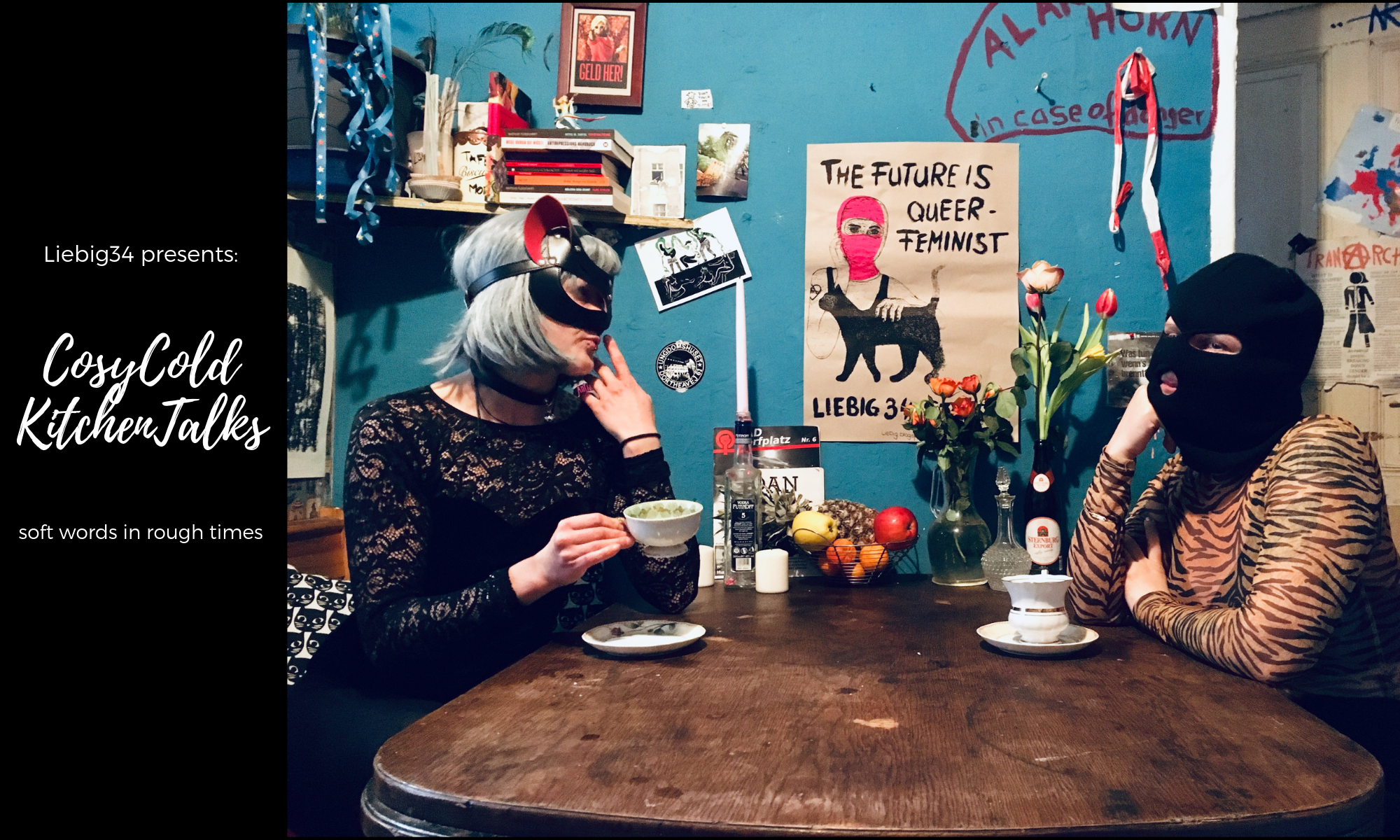
The Liebig34 must stay! Not only because it is the home of so many people. But above all because Liebig tells the story of a Berlin where not only people with capital and an SUV could meet for a beer. Because it is a place far away from consumerism. A place of lived solidarity and feminist utopia.
The neighborhood has changed so massively in recent years and decades that many old-established residents have had to leave. Spaces of the neighborhood have given way to yuppie cafés, and condominiums are displacing house projects.
When Liebig leaves, another ball of gentrification is set rolling. We don’t want to let that happen.
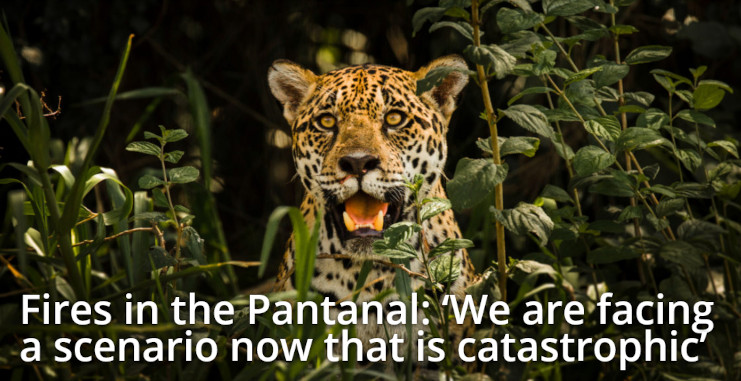
Jair Bolsonaro’s government says it has mobilized hundreds of federal agents and military service members to the region to douse the flames. However, all along the only highway through the northern Pantanal, dozens of people — firefighters, ranchers, tour guides and veterinarians — told The Associated Press that the government has exaggerated its response and there are few federal boots on the ground.
The world’s largest wetland is on fire: how can we save the Pantanal?
These are small outtakes of the devastating fires happening in the Pantanal, shared with us in late September 2020 by Reinaldo Nogales.
PORTO JOFRE, Brazil — After hours navigating Brazil’s Pantanal wetlands in search of jaguars earlier this month, Daniel Moura beached his boat to survey the fire damage. In every direction, he saw only devastation. No wildlife, and no support from federal authorities.
The covid-19 pandemic has disordered and accelerated processes that have been defining our lives for some time.
The confluence of a global health crisis with permanent economic and financial crises, the climate, energy and food crises that we have been observing for some time, and the crises of care, sovereignty and social reproduction that are embodied in our bodies and territories on a daily basis, they have modified our ways of living and inhabiting the planet.
Instability appears again as a constant adjective that describes our day to day.
It is in this context that we find ourselves in the end of 2020 full of uncertainties, doubts and tensions, seeing how monsters grow and old and usual economic recipes return and we we lose out.
Cutbacks, privatizations, bank bailouts announce more pressure, more precariousness, more anguish…
We are once again at a turning point.
But in this desperate trench of struggle for survival, there are opportunities to rethink ourselves, to rethink everything.
The youth climate movements have taken up the challenge and porganised on September 25 a mobilization of agitation on the need to transform a structural axis of our system: work.
Reviewing the notion of work
In general terms, classical political economy has defined the concept of work around views that only understand production, exchange values, wages and benefits, reducing their understanding to a commodity and forgetting the systemic link between the (re) production of goods and services and the (re) production of life (Pérez Orozco, 2006: 38).
It is a look at the uprooted, disembodied economy, which in the process of compartmentalizing and hierarchizing the realities and experiences that go through our daily lives has turned our backs on our own survival (Federici, 2010).
A specter is haunting the United States, the specter of anarchism. It lies on the edge of the political imagination as something unimaginably perverse. What could be scarier to a people whose self worth is tied to the supposed greatness of their nation-state tradition than people who question whether the state needs to exist at all? What could be more divergent from a society obsessed with partisan politics than to suggest that maybe instead of focusing our energy on getting the “right” leaders into political office we might need to abolish political leadership as a concept in order to create the world we want?
The anarchist is cast as a mad idealist or perhaps an angry disaffected youth who is always white and always male. The anarchist is always denying some fundamental facts about human nature and what we would really do when left to our own devices. The anarchist is an extremist, unreasonable, and demanding the impossible. A brick thrower. An arsonist. Egoist. The chaos he brings is all the proof we need to reject his so-called political beliefs, which are really just a license to do whatever he wants.
The Reality of Anarchism
Meanwhile, in Black neighborhoods around the country, people can’t name a single state system that is functioning how it’s supposed to. Getting by requires staying with friends or having our aunties watch our kids or borrowing our neighbor’s car.
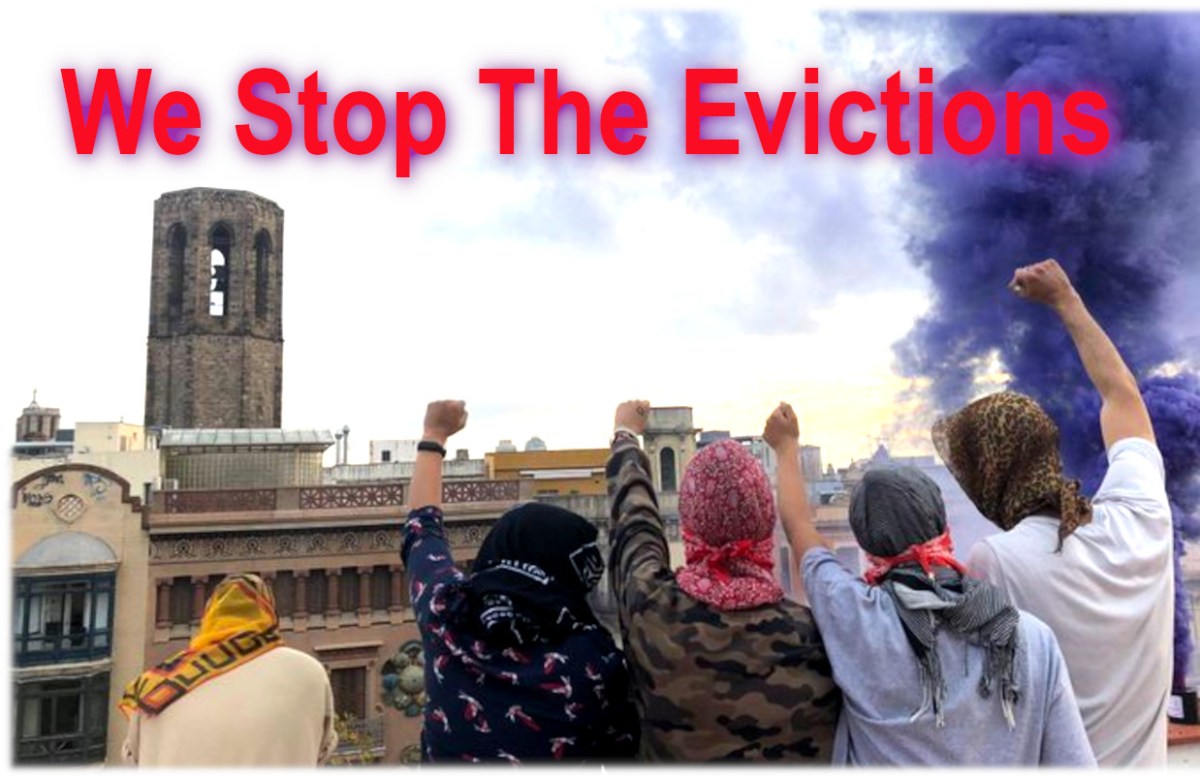
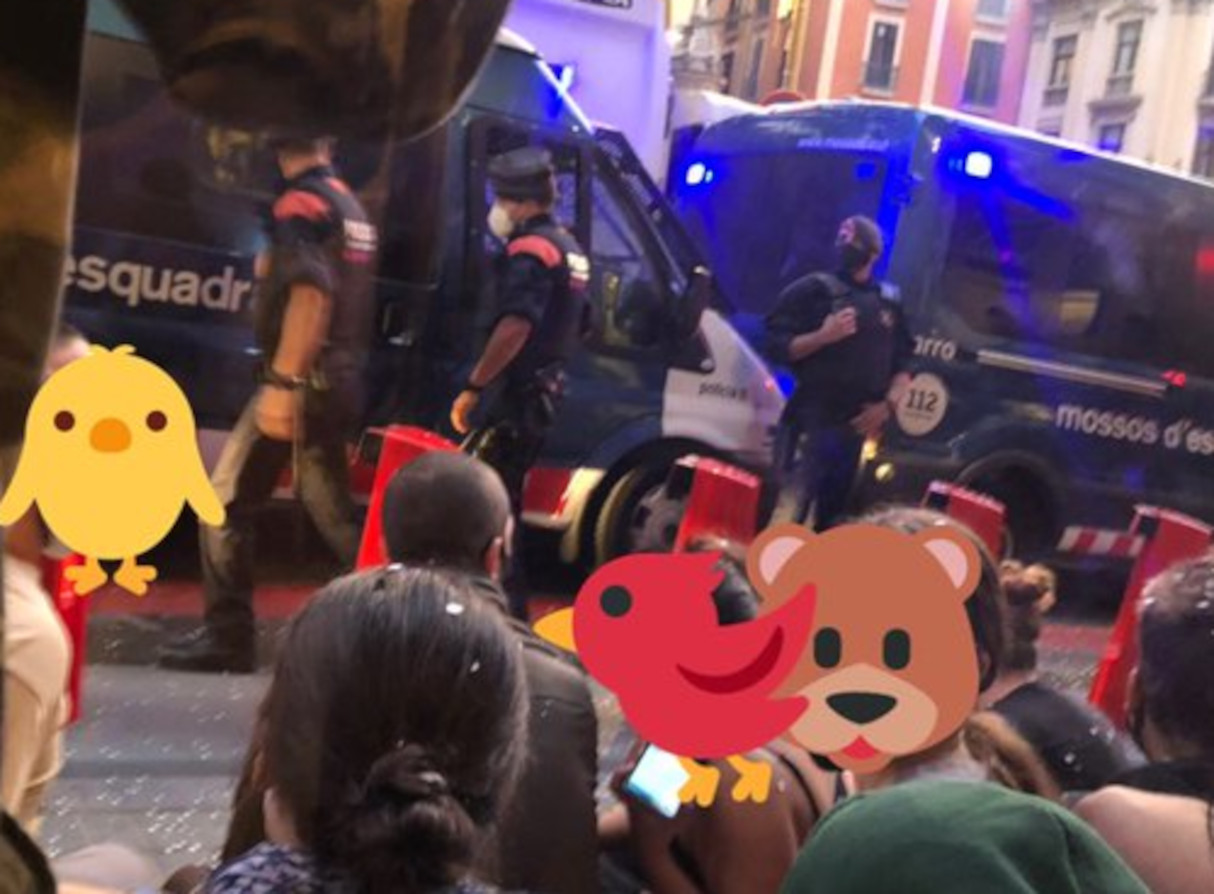
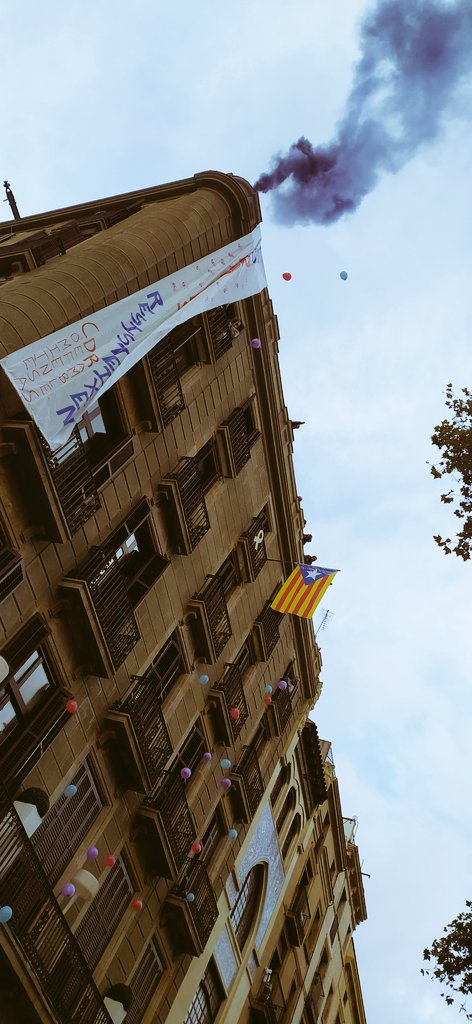
One of the last residents of La Rambla avoids eviction due to local pressure The large Mossos d’Esquadra police presence is forced to withdraw due to the resistence of hundreds of activists in front of the building.
by Andreu Merino, at @NaciónDigital La Rambla, Barcelona, October 1, 2020 at 12:40 pm |
Maite stays home, at least for now. The eviction of one of the last remaining residents on the Rambla de Barcelona, scheduled for this Thursday morning, has been postponed after dozens of people convened by the Raval and Resistim al Gòtic Housing Union have resisted at the front door the performance of the Mossos d’Esquadra.
Neighbors in front of the property to avoid eviction ACN
LIVE The neighborhood pressure prevents the eviction of the Rambla

Dozens of activists have stopped the eviction of one of the last residents of La Rambla. The Mossos d'Esquadra had deployed nine riot control units; inform @andreumerino https://t.co/Gdce9dYn2M pic.twitter.com/JqwzSdLj2u
- NacionDigital (@naciodigital) October 1, 2020
The arrival of the judicial entourage, which is in charge of executing the evictions, was scheduled for two-thirty in the morning. The court of first instance number 21 of Barcelona had ordered the police to facilitate the entrance to the procession and the Mossos have moved nine riot police units to the building where Maite lives, at number 75 of the promenade.
Initially about twenty residents offered resistance at the door of the estate but were evicted by the Mossos d’Esquadra. In parallel, agents have accessed the roof of the building through another portal.
Meanwhile, activists have thrown paint and some objects at riot police. In addition, neighbors have alerted firefighters for a suicide alert, after a neighbor suffered from anxiety.
When officers had already entered the roof, the Mossos backed away and withdrew from the Rambla, again in the middle of a rain of objects.
Official sources from the body consulted by NaciónDigital report that it was the court that ordered the withdrawal, after officers on the ground reported that there were dozens of residents on the promenade and also on the roof.
The same sources say that the police vehicles were damaged at the time they were removed and that three officers were injured.
Now, Maite is gaining four months to find an alternative home. This is the closed agreement with the property, with the mediation of Barcelona City Council. The Councilor for Housing, Lucía Martín, and the Councilor for Ciutat Vella, Jordi Rabassa, have personally negotiated with the entourage and the property.
The agreement includes that until four months from now the property will not resume the eviction lawsuit and that the City Council will assume part of the 6,000 euros of debt accumulated by the neighbor. The council is also committed to finding an emergency home for Maite, who has been waiting for one for two years.
Una de les últimes residents de la Rambla evita el desnonament per la pressió veïnal
L’ampli dispositiu dels Mossos d’Esquadra es veu obligat a retirar-se per la presència de desenes d’activistes davant l’edifici
per Andreu Merino , La Rambla, Barcelona, 1 d’octubre de 2020 a les 12:40 |
Veïns davant l’immoble per evitar el desnonament | ACN La Maite es queda a casa, almenys de moment. El desnonament d’una de les últimes veïnes que queden a la Rambla de Barcelona, previst per aquest dijous al matí, ha quedat ajornat després que desenes de persones convocades pel Sindicat d’Habitatge del Raval i Resistim al Gòtic hagin resistit a la porta davant l’actuació dels Mossos d’Esquadra.
EN DIRECTE La pressió veïnal evita el desnonament de la Rambla
A Spanish judge’s request to probe a Las Vegas Sands staffer’s apparent role in a criminal spying operation against Julian Assange indicates the investigation is homing in on US intelligence. Tellingly, the Department of Justice is stonewalling the application.
Colombia: Indígenas recuperan tierras despojadas por la industria de la caña
Fotos y texto por Santiago Navarro F
El pueblo Nasa es uno de los 110 pueblos indígenas de Colombia que fueron desplazados hacia las montañas tras la conquista europea y posteriormente con las plantaciones masivas de caña de azúcar. Desde el año 2015 han comenzado a realizar acciones directas derribando plantaciones de caña. Después, plantan alimentos orgánicos y dejan otras partes para que se cubra de nuevo con la vegetación nativa. A esta acción le llaman “la liberación de la madre tierra”, una iniciativa que ha cobrado por lo menos ocho muertos y aproximadamente 600 desalojos por parte de los elementos de seguridad del Estado colombiano entrenados por el Comando Sur de los Estados Unidos .
“Llegan como si fueran a una guerra, con fuerzas armadas del Estado. Nos han matado a ocho compañeros. Nos han reprimido fuertemente”, denuncia…








 per
per 


