Bolivia begins the week with a general strike against the postponement of the general elections
Posted on August 3, 2020 by the communist in LATIN AMERICA, THE COMMUNIST, THE MOST VALUED // 0 Comments
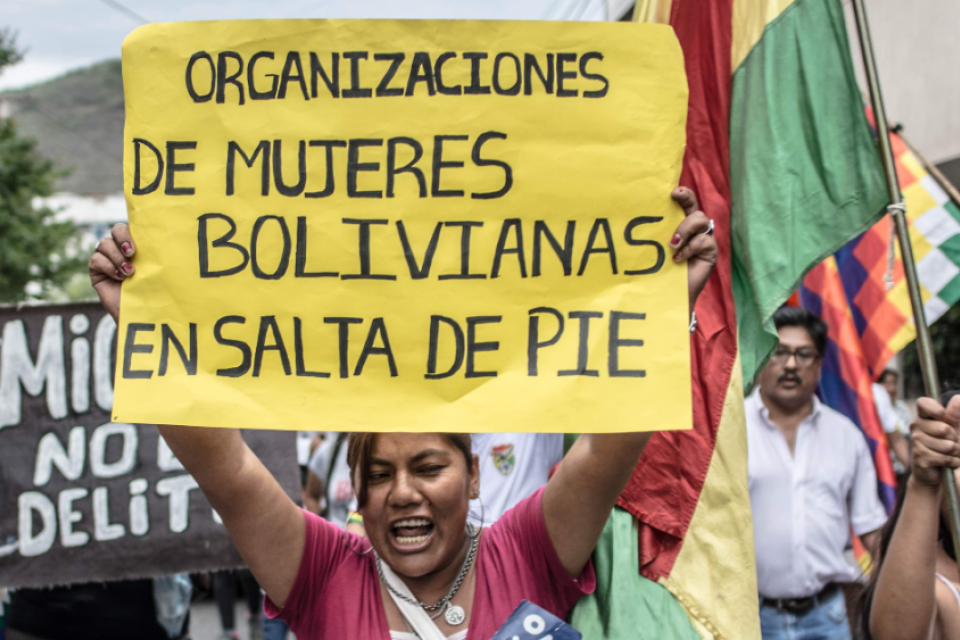
On Monday morning, the indefinite general strike and the blockade of roads throughout the Bolivian territory began, at the call of the Bolivian Central Workers (COB) and the organizations that make up the Unity Pact, which require the Supreme Electoral Tribunal respect for the election date established by law for next September 6.
These pressure measures were approved in the council held last Tuesday, July 28, in the city of El Alto, to the epilogue of a massive march that converged in La Ceja, in which, together with the COB, the National Confederation of Indigenous Women of Bolivia “Bartolina Sisa”, the Single Federation of Workers of La Paz “Tupac Katari” and other youth and neighborhood organizations.
The protests for democracy in Bolivia have a strength that was missing during the coup in November. This time, the national workers unions are formally mobilising their bases.
According to reports received from different sectors of the country, several strategic points, especially in the western region of the country and in the area of the valleys, have been taken over by social organizations, interrupting the circulation of motorized vehicles. It is estimated that in the course of the next few hours the blockade will be extended to most of the national territory.
The Bolivian Workers’ Center, by means of an instruction, called its affiliates and the Bolivian population to start with the blockade of highways nationwide and an indefinite general strike, starting at zero hours on Monday. The Red Ponchos of the Omasuyos province and its forty cantons announced the blocking of highways throughout its province and surrounding areas.
The Single Confederation of Peasant Workers of Bolivia (CSUTCB) reported that they join the mobilizations, as well as the FEJUVEs from the cities of El Alto and La Paz that asked the population to stock up on food because the blockade will be total.
The organizations of the city of El Alto announced for the first hours of this Monday, August 3, the blockade of the thousand corners, with which they intend to completely paralyze this city. Similar announcements have been made from the city of Cochabamba, where a radical compliance with the pressure measure is also expected.
SubMedia.Tv returns with a new episode of System Fail, which looks at the COVID-19 pandemic and features an interview with Peter Gelderloos.
A look at the social and economic devastation caused by the COVID-19 pandemic, with a specific focus on the incompetent state responses of the UK, Brazil and the United States.
U.S. Air Force Thunderbirds fly over the Hudson River during a military flyover as part of July 4th celebrations on July 04, 2020 in New York City. (Photo: Rob Kim/Getty Images)
Win Without War was among the anti-war voices on Friday issuing blistering condemnations of the passage in the U.S. House of a $740 billion defense bill as part of the 2021 Appropriations Minibus.
HungercouldkillmillionsmorethanCovid-19, warnsOxfam.. The UN World Food Programme, which estimates that the number of people facing severe hunger will increase by about 122 million this year as a result of the pandemic, cut food deliveries by almost half in northern Yemen. Oxfam said humanitarian assistance around the world had been curtailed by restrictions on movement and other precautions to prevent the virus spreading. The Oxfam report said only 9% of funding for tackling food security had been met under then UN’s global fund against Covid-19.
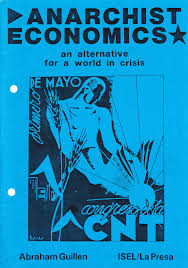
by Pablo Heraklio The anarchist militant and libertarian economist Abraham Guillén Sanz wasn born on March 9, 1913 in Corduente (Guadalajara, Spain), in a peasant family,
PDF book about the economics of the Spanish libertarian collectives 1936-1939.. An improved attempt at describing the possibilities of how production and distribution might be organised on libertarian communist linesfrom an anarcho-syndicalist perspective has been made by SolFed here: http://www.solfed.org.uk/solfed/the-economics-of-freedom
As a young man he did agricultural work and worked extracting resin. Then he studied in Madrid on a scholarship from the republican authorities. Affiliated with the Young Libertarian Youth, he was also a member of the National Confederation of Labor (CNT) and the Iberian Anarchist Federation (FAI).
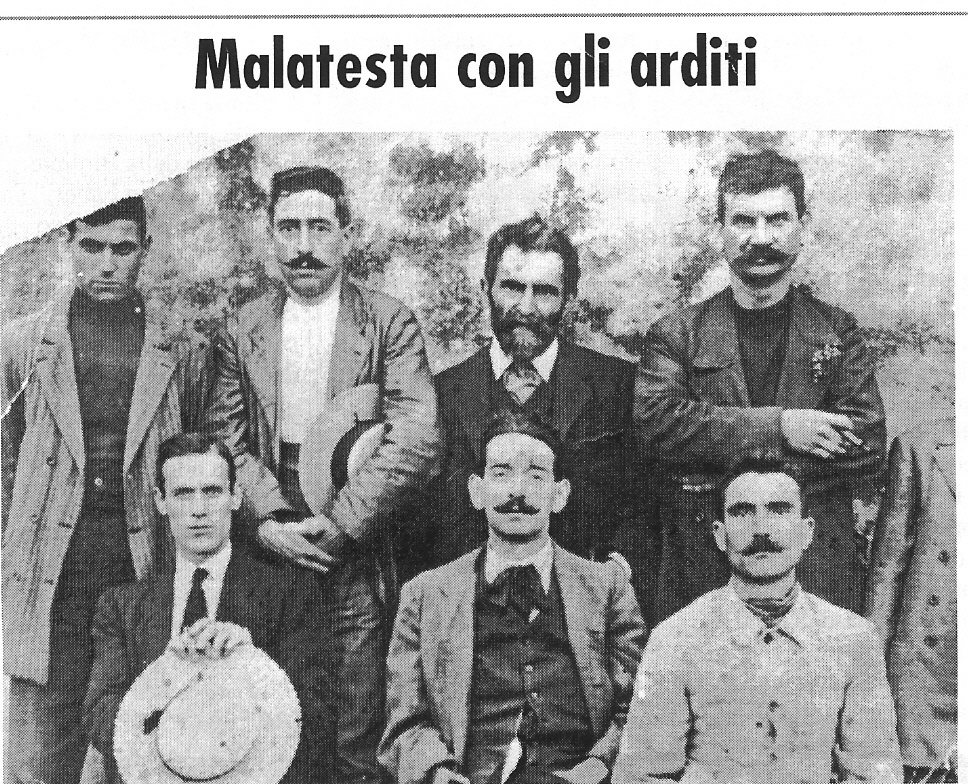
In 1884, cholera tore through Italy, claiming thousands of lives. Despite a three-year prison sentence hanging over his head, Errico Malatesta joined other revolutionary anarchists on a daring mission to Naples—the heart of the epidemic—to treat those suffering from the disease. In so doing, he and his comrades demonstrated an alternative to coercive state policies that remains relevant today in the age of COVID-19.
The following text recounts the story of the outbreak and Malatesta’s intervention, including all the available primary materials about the Italian anarchists’ participation, some of which have not previously appeared in English. Much of the historical background is drawn from Frank M. Snowden’s excellent Naples in the Time of Cholera, 1884-1911. Thanks to Davide Turcato, the editor of Malatesta’s complete works; the Centre International de Recherches sur l’Anarchisme in Lausanne; and radical archivists and librarians everywhere who preserve anarchist history, enabling us to learn from the past.
“In 1884, cholera blighted several parts of Italy, being especially virulent in Naples. According to the prefect’s statistics, cholera affected upwards of 14,000 people in the province, killing 8000 of them, of whom 7000 perished in the city of Naples alone. The state reacted by imposing a crackdown: the city was placed under martial law, restrictions on movements were imposed, using methods similar to those employed on the occasion of the Messina earthquake or the more recent quake in L’Aquila.
The volunteers from the White Cross, Red Cross, social democrats, republicans, and socialists adopted quite a different approach. Felice Cavallotti, Giovanni Bovio, Andrea Costa, and Errico Malatesta, no less, were active on the streets of Naples. And not without some risk to their own health: the socialist volunteers Massimiliano Boschi, Francesco Valdrè, and Rocco Lombardo caught cholera and perished.”
-Alessia Bruni Cavallazzi’s elegy for Florentine Lombard, an English anarchist who served in the Red Cross during the epidemic
Malatesta and other comrades from various parts of Italy went to Naples as medical volunteers to care for those stricken by a cholera epidemic. Two anarchists, Rocco Lombardo and Antonio Valdrè, died there, taken by the illness. The well-known anarchist Galileo Palla especially distinguished himself by his selflessness, energy, and spirit of sacrifice.
As a former medical student, Malatesta was entrusted with a section of sick people; they had a particularly high recovery rate because he knew how to force the city of Naples to turn over food and medicine in abundance, which he distributed liberally. He was offered an official decoration, the order of good merit, which he refused. When the epidemic ended, the anarchists left Naples and published a manifesto explaining that “the true cause of cholera is poverty, and the true medicine to prevent its return can be nothing less than social revolution.”
Cholera is an infectious bacterial disease, typically contracted from infected water supplies, that can cause vomiting and diarrhea to the point of death. Was “the true cause of cholera” indeed poverty, or was that just ideological rhetoric? Read on and decide for yourself.
The Origins of Italy—and Italian Anarchism
Italy was still a new country when the cholera epidemic struck in 1884. To understand why Naples was hit so hard and what it meant that anarchists traveled there from all around the country in solidarity, we have to back up two decades.
Until 1861, there was no such thing as Italy. The peninsula was divided up into various kingdoms and duchies under many different local rulers. The original proponents of Italian unification were nationalists like Giuseppe Mazzini, who called on revolutionary republicans around Europe to overthrow the old monarchs and establish new nations on the basis of shared language, geography, and “unity of purpose.” The idea was that rich and poor should work together in solidarity beneath the banner of the nation.
In fact, people on the Italian peninsula did not possess a common language or culture. Many of the dialects spoken on different parts of the peninsula were mutually unintelligible; there were massive cultural and economic differences between different regions. Mazzini was seeking to invent a common language and culture where none existed, in order to create the foundation for a competitive modern state.
Contrary to their intentions, those who sought to carry out Mazzini’s program of national liberation ultimately brought about the unification of Italy under a monarchy. Revolutionaries like Giuseppe Garibaldi risked their lives in guerrilla warfare to unify the peninsula as a republic, but whenever they succeeded in toppling one king, another simply assumed control of the area, until King Victor Emmanuel of Sardinia ruled all of Italy.
Once he came to power, King Victor Emmanuel did not work beneath the banner of the nation for the betterment of all Italians; rather, he immediately set about looting the southern part of the peninsula to enrich his own coffers. In imagining that all Italians could share a common interest, Mazzini had failed to apprehend the class conflict at the basis of capitalist society.
In exile in London in 1864, Mazzini participated in the founding of the International Workingmen’s Association, a worldwide federation of labor unions. Karl Marx forced Mazzini out early on, only to lose control of the International as workers gravitated to the ideas of anarchists like Mikhail Bakunin. Bakunin was himself a former participant in national liberation struggles who had become disillusioned with the shortfalls and betrayals of nationalism.
2019: El año con la cifra más alta de defensores de la tierra asesinados
2019: El año con la cifra más alta de defensores de la tierra asesinados
Un promedio de más de cuatro defensores de la tierra y el medio ambiente fueron asesinados por semana el año pasado.
Servindi, 29 de julio, 2020
El informe anual de la organización Global Witness (GW) acaba de revelar que el 2019 ha sido el año con el mayor número de personas defensoras de la tierra y el medioambiente asesinadas.
En total, la oenegé documentó 212 asesinatos de personas a consecuencia de su rol de la defensa de sus hogares y sus intentos de detener la destrucción de la naturaleza.
Con un incremento de 48 asesinatos a diferencia del año 2018 (164), los 212 homicidios registrados en 2019 representan un promedio de más de cuatro personas asesinadas por semana.
Según los resultados del informe, más de dos tercios de los asesinatos ocurrieron en América Latina, clasificada constantemente como la región más afectada desde que esta organización comenzó a publicar datos en 2012.
Los hallazgos también revelan que más de la mitad de todos los asesinatos reportados el año pasado ocurrieron solo en dos países: Colombia (64) y Filipinas (43).
Fuente: Informe anual 2019 de Global Witness
Industrias letales
Rachel Cox, encargada de campañas de GW, señaló que la agroindustria y el petróleo, el gas y la minería aparecen como los principales detonantes de los ataques contra personas defensoras de la tierra y el medio ambiente.
«Al mismo tiempo, son las industrias que propician el cambio climático a través de la deforestación y el aumento de las emisiones de carbono», agregó.
En efecto, el informe precisa que la minería fue el sector más letal a nivel mundial, con 50 defensores asesinados en 2019.
En tanto, revela que la tala fue el sector con el mayor aumento de asesinatos desde el 2018, con un 85% más de ataques registrados contra defensores que se oponen a dicha industria y 24 asesinatos en 2019.
Enseguida, aparece la agroindustria que, sigue siendo una amenaza, particularmente en Asia, donde el 80% de los ataques estuvo relacionado a este sector.
Minería es el sector más letal a nivel mundial con 50 defensores ambientales asesinados en el 2019. Foto: Infobae
Comunidades y mujeres atacadas
El informe también destaca la tendencia desproporcionada de comunidades indígenas atacadas por defender sus derechos y territorios.
Esto, a pesar de que sus tierras tienen menores tasas de deforestación y mejores niveles de conservación que zonas de protección que los excluyen.
«La desprotección en su tenencia de la tierra, las prácticas comerciales irresponsables y las políticas gubernamentales que priorizan las economías extractivas a costa de los derechos humanos, están poniendo en riesgo a estas personas y sus tierras», apunta GW.
De igual modo, la organización alerta que las cifras del 2019 exponen que más de una de cada 10 personas defensoras asesinadas eran mujeres.
Ellas, indican, «enfrentan amenazas específicas, incluidas campañas de desprestigio centradas a menudo en su vida privada, con contenido sexista o sexual explícito».
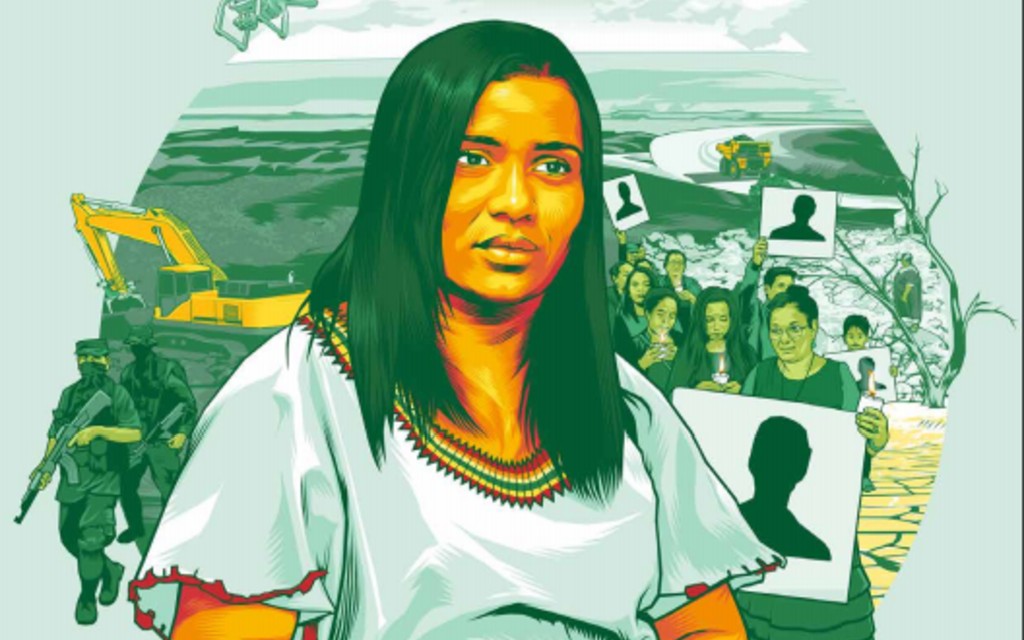
Las defensoras Janeth Pareja Ortiz y Angélica Ortiz del clan Ipuana en el cauce del arroyo Aguas Blancas. Ambas recibieron amenazas de muerte tras denunciar a compañías mineras que han contaminado las tierras de su comunidad y la violencia de los actores armados que controlan la región. Foto: Pablo Tosco / Oxfam Intermón
Hora de seguir su ejemplo
Para la organización GW, si realmente se busca hacer planes para una recuperación ecológica, es necesario abordar las causas fundamentales de los ataques contra las personas defensoras.
La oenegé destaca el importante rol que ocupan estas personas en la lucha contra el cambio climático, oponiéndose a las industrias intensivas en carbono que están acelerando el calentamiento global y el daño ambiental de manera insostenible.
«Muchos de los peores abusos contra el medio ambiente y los derechos humanos en el mundo son consecuencia de la explotación de los recursos naturales y la corrupción en el sistema político y económico mundial», señala Rachel Cox.
Enseguida, agrega que «las personas defensoras de la tierra y el medio ambiente son quienes se oponen a esto».
De anhelar un cambio, se debe «seguir su ejemplo para proteger el medio ambiente y detener el cambio climático», apunta la representante de GW.
2019: El año con la cifra más alta de defensores de la tierra asesinados
Un promedio de más de cuatro defensores de la tierra y el medio ambiente fueron asesinados por semana el año pasado.
Servindi, 29 de julio, 2020
Elinforme anualde la organización Global Witness (GW) acaba de revelar que el 2019 ha sido el año con el mayor número de personas defensoras de la tierra y el medioambiente asesinadas.
En total, la oenegé documentó 212 asesinatos de personas a consecuencia de su rol de la defensa de sus hogares y sus intentos de detener la destrucción de la naturaleza.
Con un incremento de 48 asesinatos a diferencia delaño 2018(164), los 212 homicidios registrados en 2019 representan un promedio de más de cuatro personas asesinadas por semana.
Según los resultados del informe, más de dos tercios de los asesinatos ocurrieron en…
published on Monday, July 27, 2020 by Nonprofit Quartely shared with thanks. Illustrations added
Transferring ownership to workers, communities, and/or the state allows for a shift in the entire focus of the economy from generating profit for the top one percent to serving all the people.byEmily Kawano, Julie Matthaei 2 Comments
Alternative finance for a solidarity economy. (Photo: CC)
The COVID-19 pandemic has upended our world. It has laid bare the inequity, the limits, and the failures of capitalism. The door to a better future beyond capitalism, already cracked open by the Great Recession, has been pushed open a little wider.
Things that seemed impossible a few months ago now seem both possible and necessary. This historic moment calls for us to push hard and through that door to build a world that centers people and planet. To do so, we need to be clear about what we’re trying to leave behind (capitalism) to have greater clarity about what it is that we’re moving towards (post-capitalism and solidarity economy).
And yet, there is a great deal of confusion about both what socialism and capitalism mean. Here we look at different systems or models of socialism, capitalism, and solidarity economy.
For those working for system change, clarity is imperative. In its absence, the default is likely to be to “reform” capitalism, without even considering the possibility of building an economy and world beyond it. We respect those who seek a just and sustainable world by reforming capitalism. We just disagree as to whether that is possible.
Table 1 provides a framework that distinguishes capitalism and post-capitalism. It identifies the main modern capitalist and post-capitalist economic systems, which we discuss below. Within post-capitalist systems, the solidarity economy, as detailed below, does not include undemocratic systems such as authoritarian state socialism.
One characteristic alone does not make an economy capitalist. For example, markets pre-date capitalism by thousands of years and can also exist in socialism. The same goes for commodity production—production for sale, rather than use.