Why are we squatting? We, women and queer people, feminists, precarious, exiled and marginalised on several levels, are occupying a building in Strasbourg that has been abandoned for several years. Since February 27th 2020, La Pigeonne has become a squat for housing and organization in a selected mix (without cisgender men*). Originally published by Squat Net. As…
Mutual aid initiatives have rapidly spread during the coronavirus pandemic. But as the crisis is only likely to change and not abate, can community-led action stay the course? Argentina may well have the answer.
Illustrations by Michelle Pereira, for The Correspondent
On a sunny Thursday afternoon in April, an estimated 500,000 senior citizens across Argentina opened their doors to receive a freshly prepared meal, delivered entirely free of charge. It was a simple, yet touching gesture that showed the recipients that their need to feed themselves despite living under compulsory isolation had not gone unnoticed.
This impressive logistical feat was not carried out by the government. Instead, the initiative, involving 2,000 community-run kitchens across the country and support and funding from small businesses from butchers to bakeries, was the brainchild of the Argentinian grassroots social movement, Barrios de Pie.
It is just one example among thousands of acts of compassion, solidarity and voluntary cooperation that have been making headlines around the world. This groundswell of activity – which falls under the banner of “mutual aid” because it comes from within communities themselves and is geared long-term, as Barrios de Pie put it, at social justice and societal transformation – has, in many instances, outpaced state-led attempts at volunteering.
Perhaps we shouldn’t be surprised that humans are kind. After all, this is the case Russian author, nobleman and anarchist Peter Kropotkin, who came up with the term, makes in his 1902 essay in which he writes: “Besides the law of mutual struggle there is in nature the law of mutual aid, which, for the success of the struggle for life, and especially for the progressive evolution of the species, is far more important than the law of mutual contest.”
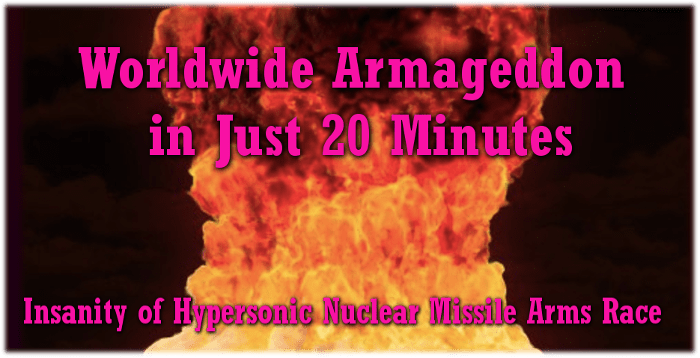
Hypersonic nuclear-capable missiles will return us to the madness of the Cold War
By Karl Grossman
The United States is seeking to acquire “volumes of hundreds or even thousands” of nuclear-capable hypersonic missiles that are “stealthy” and can fly undetected at 3,600 miles per hour, five times faster than the speed of sound. In unveiling the plan, Trump called the new weapon a ‘super-duper’ missile. But with even less time to respond to a potential threat, will this lead to a deadly misjudgment?
Why so many? A Pentagon official is quoted in the current issue of Aviation Week & Space Technology as saying “we have to be careful we’re not building boutique weapons. If we build boutique weapons, we won’t—we’ll be very reluctant to—use them.”
The article in the aerospace industry trade journal is headlined: “Hypersonic Mass Production.” A subhead reads: “Pentagon Forms Hypersonic Industry ‘War Room.’”
On March 19, 2020, the U.S. conducted its first hypersonic missile test from its Pacific Missile Range Facility on Kauai, Hawaii.
“Fast and Furiously Accurate” is the title of an article about hypersonic missiles written by a U.S. Navy officer which appeared last year on a U.S. Naval Institute website.
The piece declares that by “specifically integrating hypersonic weapons with U.S. Navy submarines, the United States may gain an edge in developing the fastest, most precise weapons the world has ever seen.”
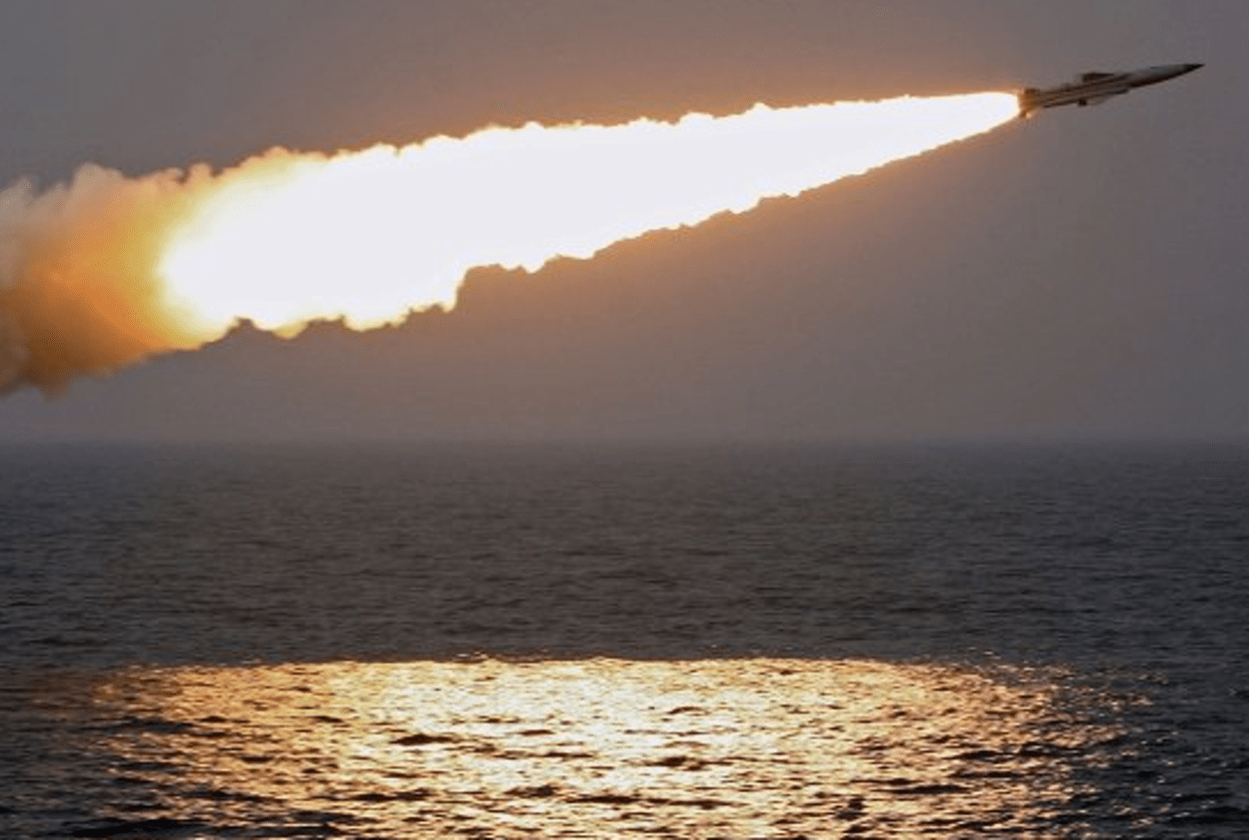
“Hypersonic weapons,” explains the article by U.S. Navy Lieutenant Andrea Howard, “travel faster than Mach 5—at least five times the speed of sound, around 3,600 mph, or one mile per second….They are similar to but faster than existing missiles, such as the subsonic U.S. Tomahawk missile, which maxes out around 550 mph.”
“While hypersonic weapons can carry conventional or nuclear warheads, they differ from existing technologies in three critical ways,” writes Howard. “First…a one-kilogram object delivered precisely and traveling multiples of the speed of sound can be more destructive than one kilogram of TNT. Second, the low-altitude path helps mask HCMs [Hypersonic Cruise Missiles] when coupled with the curvature of the Earth” and so “they are mostly invisible to early warning radars. And third…they can maneuver during flight; in contrast with the predictable ballistic-missile descend, they are more difficult to intercept, if even detected.”
An early hypersonic cruise missile engine, developed in 2002, traveled at Mach 6. (Photo courtesy DARPA/ONR/NASA Langley Research Center.)
“By offering the precision of near-zero-miss weapons, the speed of ballistic missiles, and the maneuverability of cruise missiles, hypersonic weapons are a disruptive technology capable of striking anywhere on the globe in less than an hour,” declares the Navy officer.
The article also notes that Russian “President Vladimir Putin unveiled six new” what he called “invincible” hypersonic missiles as part of a March 2018 “state of the nation” speech. “Russia has successfully tested the air-to-ground hypersonic missile” named Kinzhal for dagger, “multiple times using the MIG-31 fighter.” It’s “mounting the Kinzhal on its Tu-22M3 strategic bomber.” The article also says “China, too, is working on hypersonic technologies.”
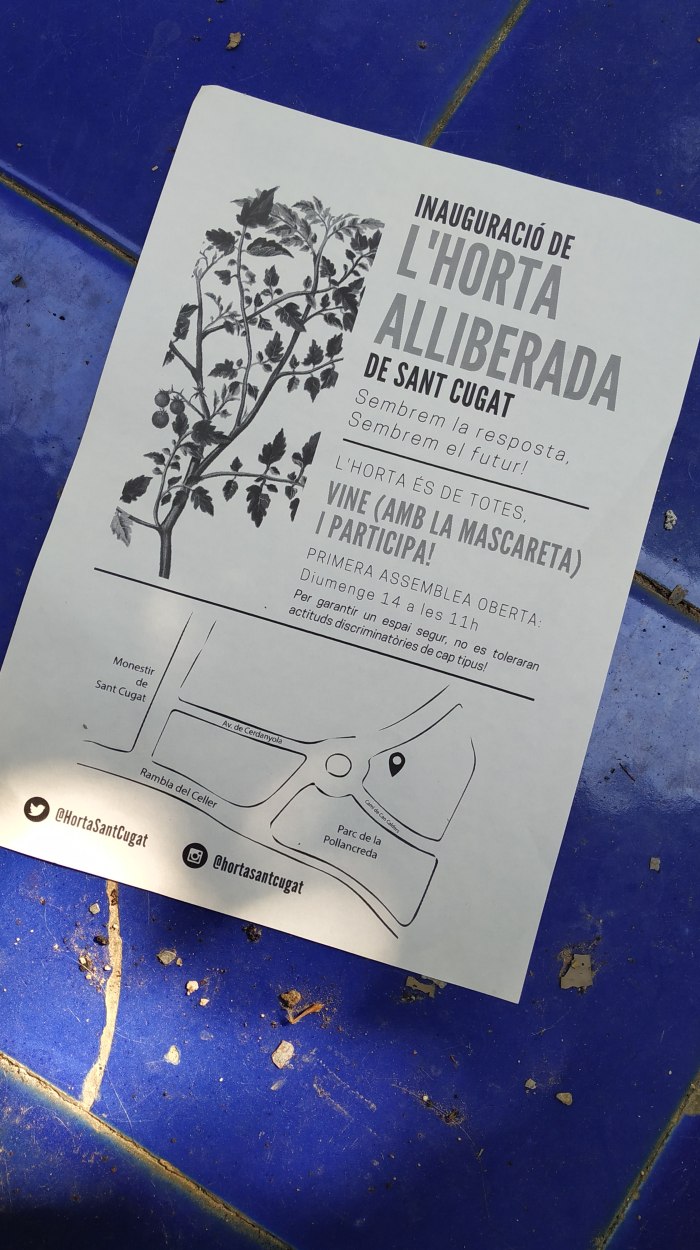
A group of activists and neighbors have made public the construction of a self-managed urban garden and a multipurpose popular space, available to the whole neighborhood. The almost ten thousand square meters of land belongs to CaixaBank and has been abandoned for more than twelve years
PUBLISHED: June 13, 2020 / Guillem Martí Guillem Martí guimmart
Located on the outskirts of the neighborhood of Sant Francesc, adjacent to the old town of Sant Cugat del Vallès, and at the beginning of the industrial estate of Can Magí, there is a plot of land that years ago had housed an old factory, according to aerial photographs of the Cartographic and Geological Institute of Catalonia, of which only the foundations remain.
They are 9,595 square meters in disuse, covered with tall grass and some trees, which, for more than twelve years, were hidden from view by sporadic pedestrians passing through the area by a long wall.
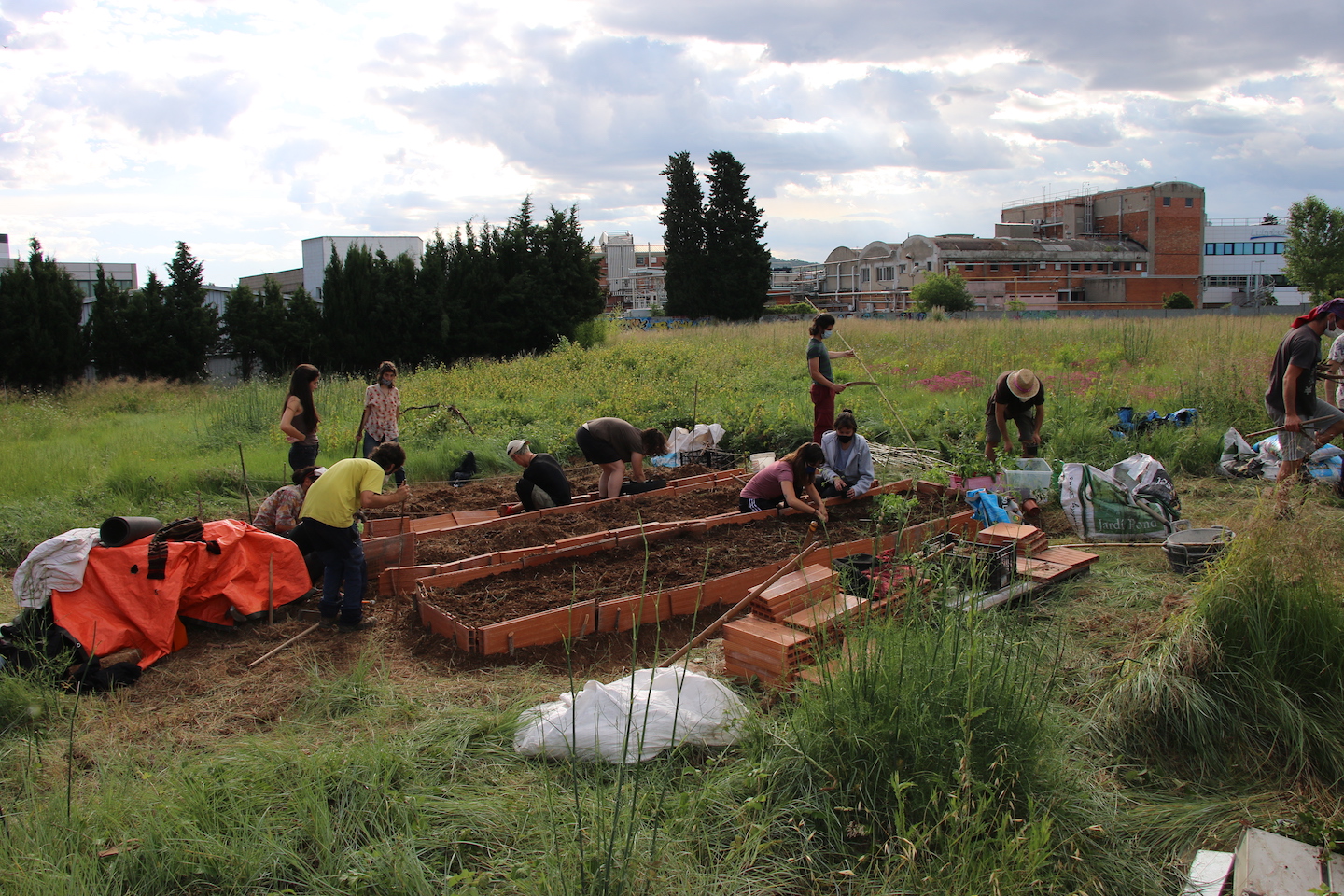
However, some neighbors say that the factory had been abandoned for more than fifteen years before going to the ground. Since 2012, the land has been owned by Servihabitat, CaixaBank’s real estate company, but for a few days now a group of activists has been working on it to build the Horta Alliberada de Sant Cugat, (Liberated Garden) which opened to the public on Saturday, June 13th.
The activists have been preparing the ground for a few days and creating the first terraces in the most fertile area, “to make it attractive to the neighborhood and to counter the pejorative image that can be had of the squatters,” says Pau, member of the garden assembly.
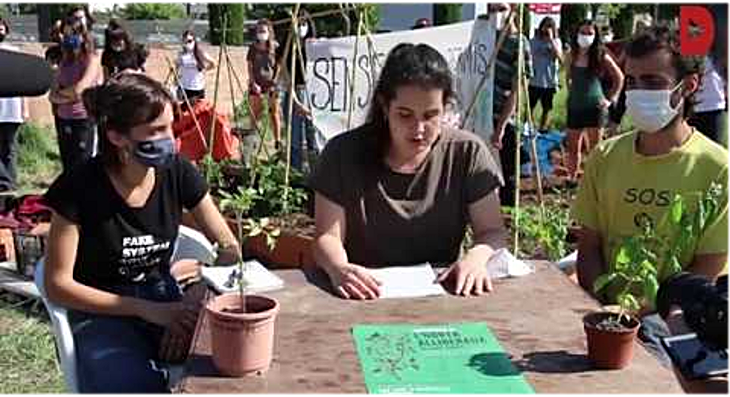
Supporters of the project and local entities have met in the early hours of Saturday morning to spread the project among the neighborhood, hang posters, hand out leaflets and make information pickets, and a press conference has been convened with local media where has read a manifesto. The first open assembly of the Garden will be held on Sunday, but always respecting the safety measures and restrictions imposed by phase two of decontamination.
“One of the goals of the garden that we have set ourselves from the beginning is to reach all sectors of the population,” explains Marta, also a member of the assembly.
“We have written the manifesto in three languages, including Arabic, to represent the cultural diversity of the neighborhood, unlike the City Council,” he added, referring to the segregation by cultural origin and origin that is it ends up generating among the users of other urban gardens of the municipality.
A Beginning Note–This post ought to keep the old farts busy for awhile slinging insults and spreading their manure……enjoy. The newest situation that has the lie machine working overtime is that of the Autonomous Zone in Seattle……a new way to protest….or is it?
Before let me give my reader a little context…..
The very term makes people with a history background think about 1871 and the Paris Commune….
The Paris Commune was a popular-led democratic government that ruled Paris from March 18 to May 28, 1871. Inspired by the Marxist politics and revolutionary goals of the International Workingmen’s Organization (also known as the First International), workers of Paris united to overthrow the existing French regime which had failed to protect the city from Prussian siege, and formed the first truly democratic government in the city and in all of France.
The elected council of the Commune passed socialist policies and oversaw city functions for just over two months, until the French army retook the city for the French government, slaughtering tens of thousands of working-class Parisians in order to do so.
Modelling suggests climate is considerably more sensitive to carbon emissions than thought
Experts say the projections have the potential to be ‘incredibly alarming’.
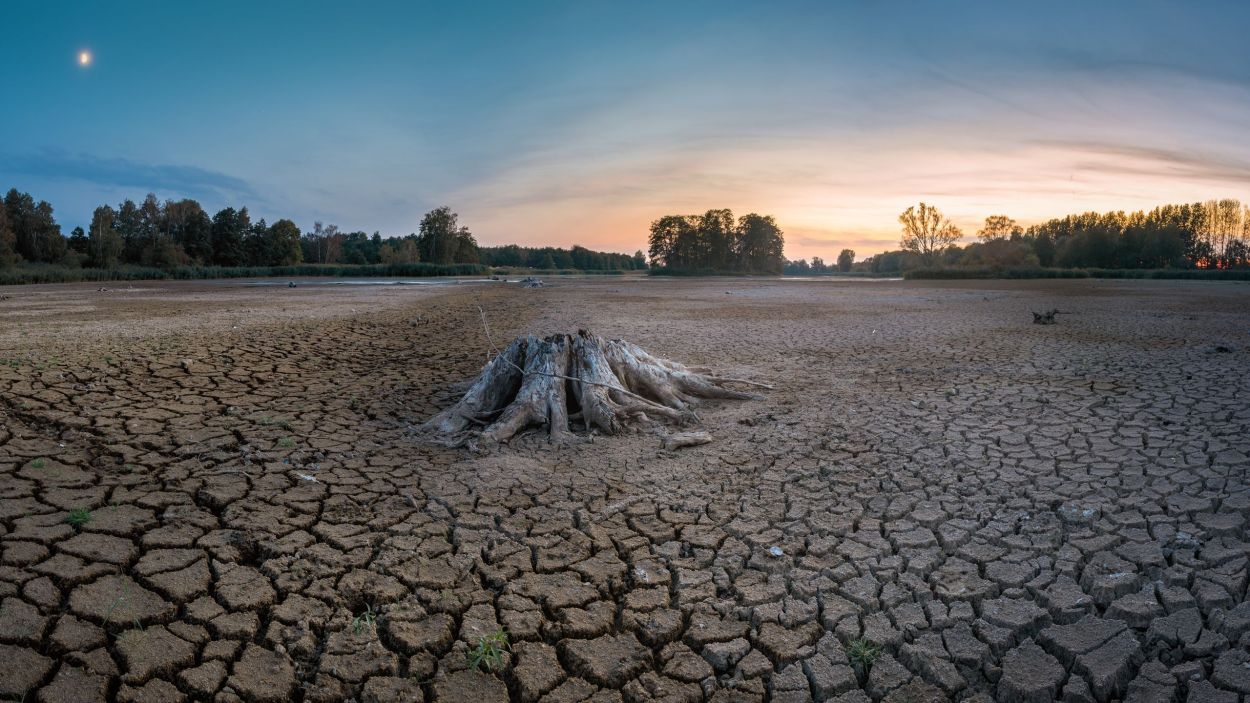
Worst-case global heating scenarios may need to be revised upwards in light of a better understanding of the role of clouds, scientists have said.
Recent modelling data suggests the climate is considerably more sensitive to carbon emissions than previously believed, and experts said the projections had the potential to be “incredibly alarming”, though they stressed further research would be needed to validate the new numbers.
Compared with the last assessment in 2014, 25% of them show a sharp upward shift from 3C to 5C in climate sensitivity – the amount of warming projected from a doubling of atmospheric carbon dioxide from the preindustrial level of 280 parts per million. This has shocked many veteran observers, because assumptions about climate sensitivity have been relatively unchanged since the 1980s.Advertisement
“That is a very deep concern,” Johan Rockström, the director of the Potsdam Institute for Climate Impact Research, said. “Climate sensitivity is the holy grail of climate science. It is the prime indicator of climate risk. For 40 years, it has been around 3C. Now, we are suddenly starting to see big climate models on the best supercomputers showing things could be worse than we thought.”
He said climate sensitivity above 5C would reduce the scope for human action to reduce the worst impacts of global heating. “We would have no more space for a soft landing of 1.5C [above preindustrial levels]. The best we could aim for is 2C,” he said.
Worst-case projections in excess of 5C have been generated by several of the world’s leading climate research bodies, including the UK Met Office’s Hadley Centre and the EU’s Community Earth System Model.
Timothy Palmer, a professor in climate physics at Oxford University and a member of the Met Office’s advisory board, said the high figure initially made scientists nervous. “It was way outside previous estimates. People asked whether there was a bug in the code,” he said. “But it boiled down to relatively small changes in the way clouds are represented in the models.”
The role of clouds is one of the most uncertain areas in climate science because they are hard to measure and, depending on altitude, droplet temperature and other factors, can play either a warming or a cooling role. For decades, this has been the focus of fierce academic disputes.
Previous IPCC reports tended to assume that clouds would have a neutral impact because the warming and cooling feedbacks would cancel each other out. But in the past year and a half, a body of evidence has been growing showing that the net effect will be warming. This is based on finer resolution computer models and advanced cloud microphysics.
“Clouds will determine humanity’s fate – whether climate is an existential threat or an inconvenience that we will learn to live with,” said Palmer. “Most recent models suggest clouds will make matters worse.”
In a recent paper in the journal Nature, Palmer explains how the new Hadley Centre model that produced the 5+C figure on climate sensitivity was tested by assessing its accuracy in forecasting short-term weather. This testing technique had exposed flaws in previous models, but in the latest case, the results reinforced the estimates. “The results are not reassuring – they support the estimates,” he wrote. He is calling for other models to be tested in a similar way.
“It’s really important. The message to the government and public is, you have to take this high climate sensitivity seriously. [We] must get emissions down as quickly as we can,” he said.
The IPCC is expected to include the 5+C climate sensitivity figure in its next report on the range of possible outcomes. Scientists caution that this is a work in progress and that doubts remain because such a high figure does not fit with historical records.
Catherine Senior, head of understanding climate change at the Met Office Hadley Centre, said more studies and more data were needed to fully understand the role of clouds and aerosols.
“This figure has the potential to be incredibly alarming if it is right,” she said. “But as a scientist, my first response is: why has the model done that? We are still in the stage of evaluating the processes driving the different response.”
While acknowledging the continued uncertainty, Rockström said climate models might still be underestimating the problem because they did not fully take into account tipping points in the biosphere.
“The more we learn, the more fragile the Earth system seems to be and the faster we need to move,” he said. “It gives even stronger argument to step out of this Covid-19 crisis and move full speed towards decarbonising the economy.”
https://quillette.com/2019/11/07/climate-change-assessing-the-worst-case-scenario/Few actual climate scientists would go to that level of doomsaying. But the tendency to fantasize about societal impacts is evident. One recent study suggests that sea level may (in the worstcase) rise up to 2 meters by 2100: Such big sea level rises so soon would lead to nightmarish impacts, says Jonathan Bamber of the University of Bristol.
https://psmag.com/environment/are-we-headed-toward-the-worst-case-climate-change-scenarioA record number of Americans say they accept that global warming is happening, according to a new survey from the Yale Program on Climate Change Communication and the George Mason University Center for Climate Change Communication, and nearly three-quarters of them now say it’s an issue that’s personally important to them. Both numbers have risen sharply over the last few years—a shift that ….
Worst-case global heating scenarios may need to be revised upwards in light of a better understanding of the role of clouds, scientists have said.
Recent modelling data suggests the climate is considerably more sensitive to carbon emissions than previously believed, and experts said the projections had the potential to be “incredibly alarming”, though they stressed further research would be needed to validate the new numbers.
Modelling results from more than 20 institutions are being compiled for the sixth assessment by the United Nations Intergovernmental Panel on Climate Change, which is due to be released next year.
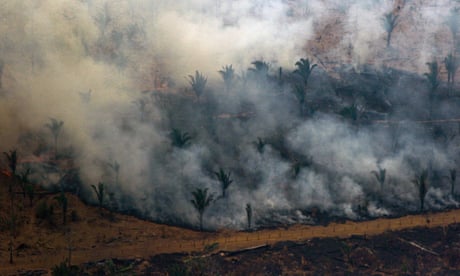
Football pitch-sized area of tropical rainforest lost every six seconds
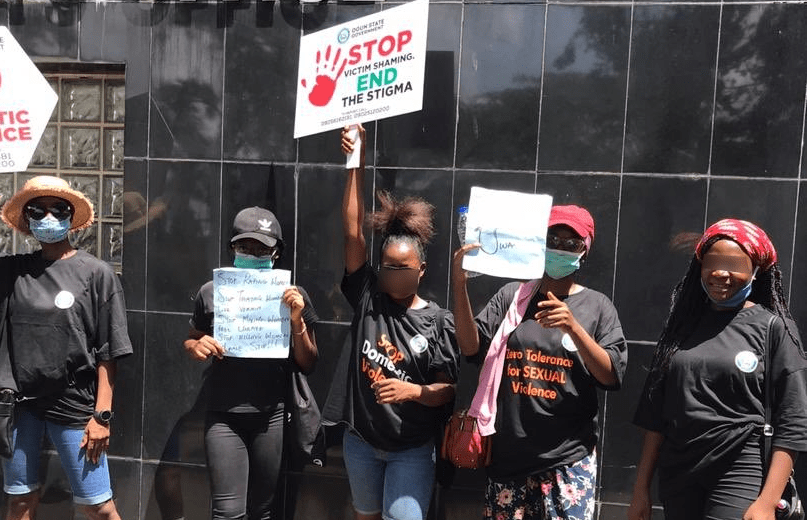
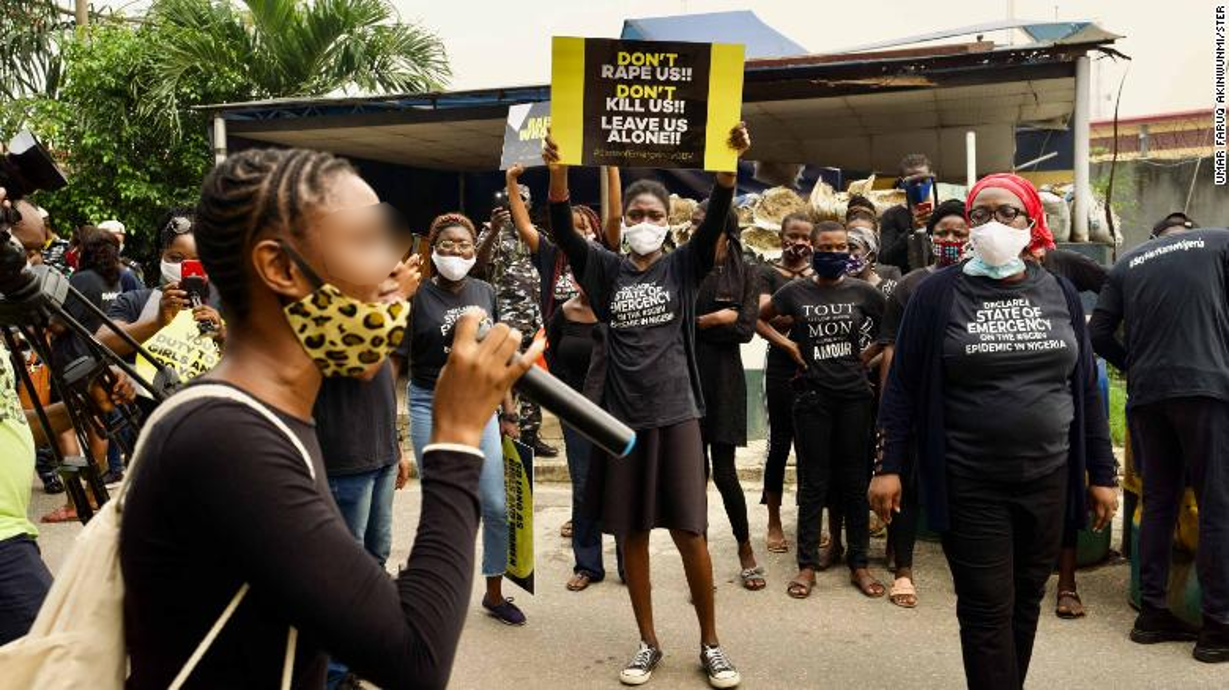
Lagos, Nigeria (CNN)Protesters have taken to the streets in cities across Nigeria to demand urgent action to combat rape and sexual violence against women.In Lagos on Monday a coalition of rights groups marched to the state parliament calling for it to declare a state of emergency on rape and sexual violence. The march followed the gruesome death of 22-year-old student Uwaila Vera Omozuwa — and the rape and killing less than a week later of another student, Barakat Bello.