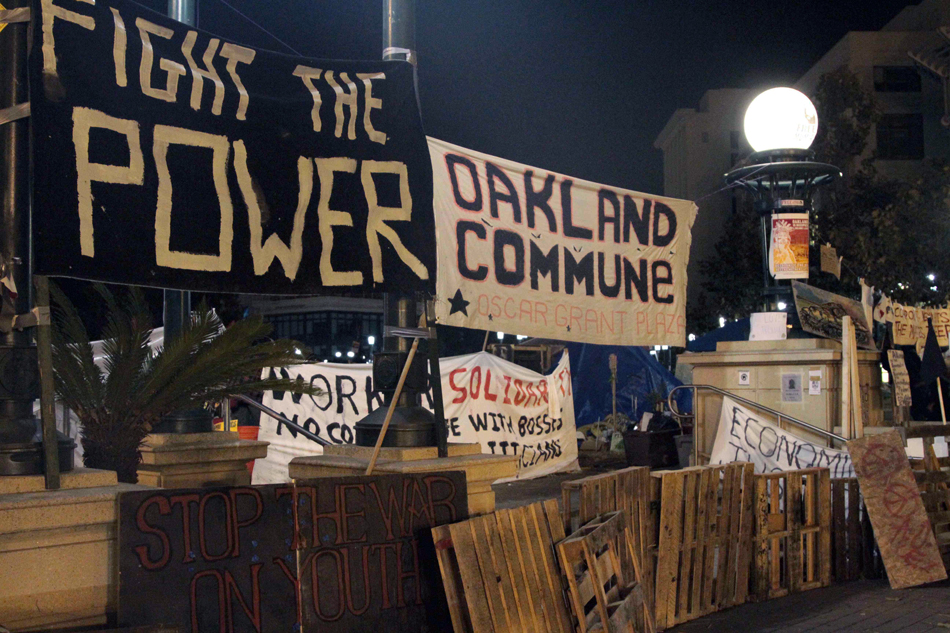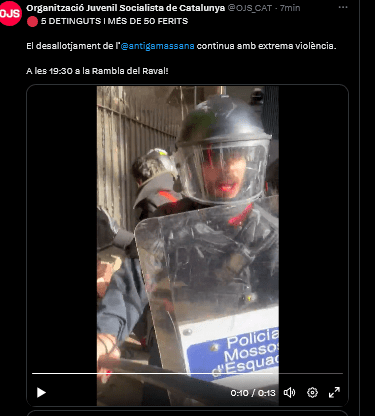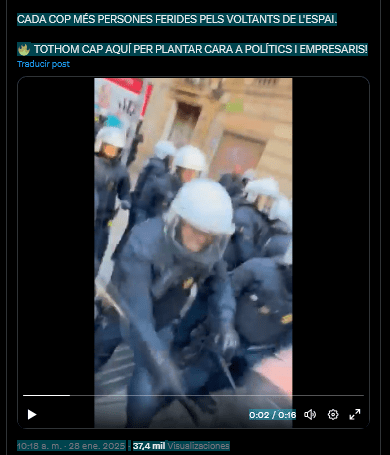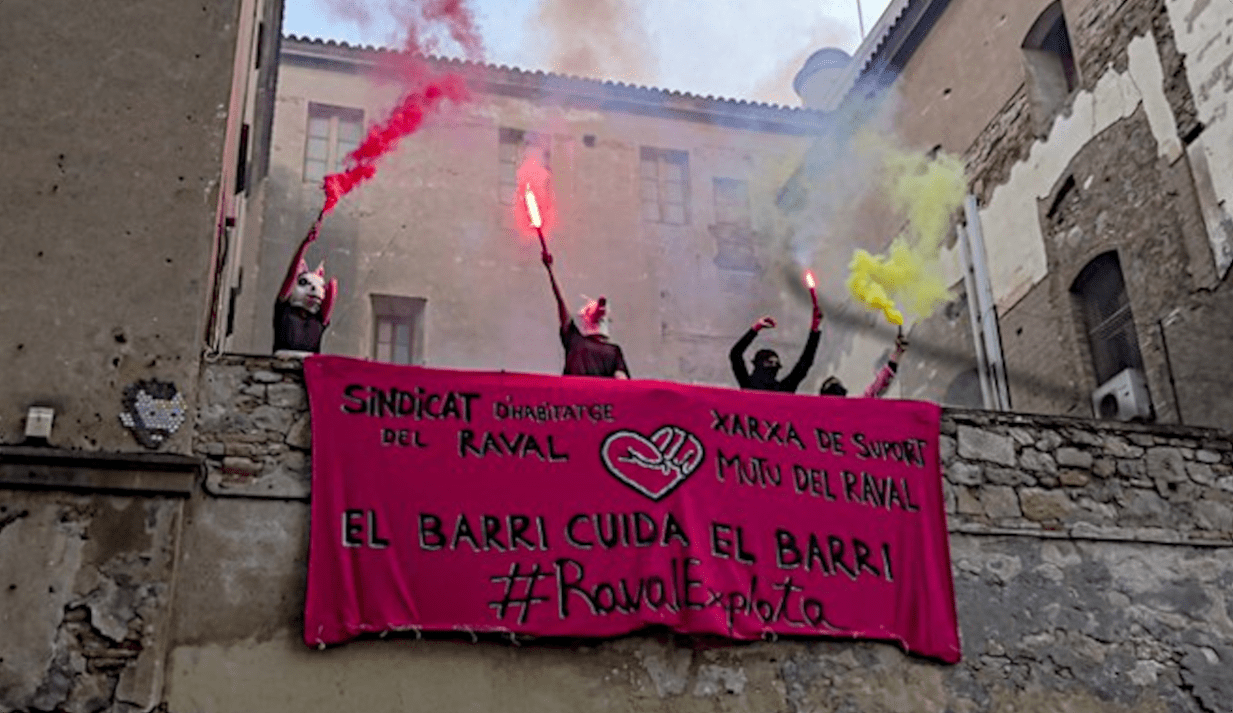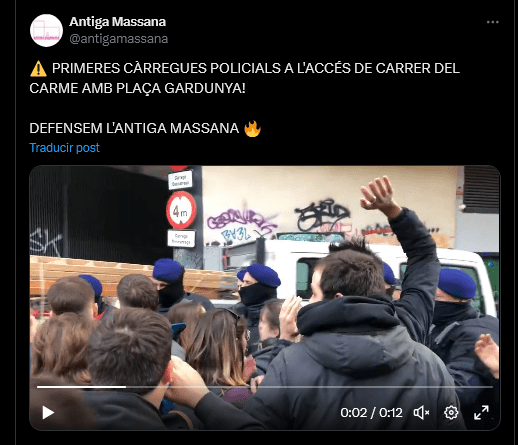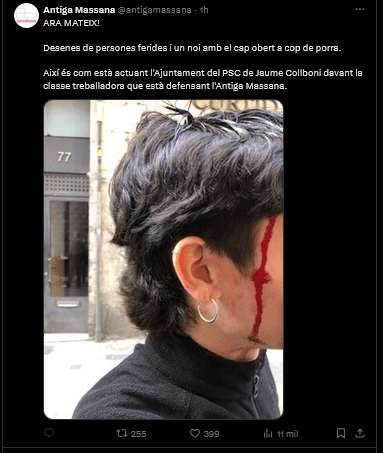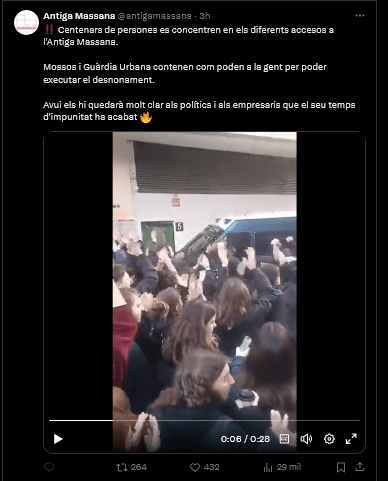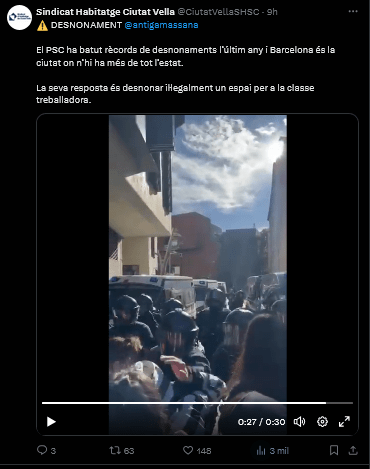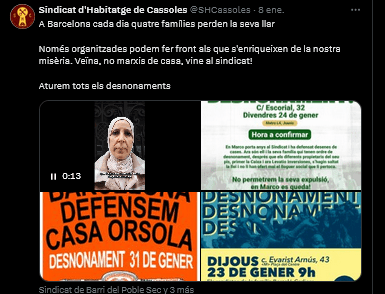
From Antiga Massana they have made an appeal through the social network X for people to gather in Plaça de la Gardunya to protest against the violent ongoing eviction of the Social Center.
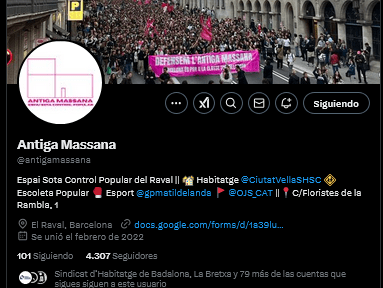
Antiga Massana is an occupied social Center in a long abandoned school belonging to the City Council. For 4 years a whole range of social projects have been using the building and it is vital for this neglected city center Raval area.
SOME ORGANISATIONS BASED IN ANTIGA MASSANA «#ConcessióAntigaMassana, Sindicat Habitatge Escoleta, 壘 Gimnas Popular, Esplai del Pi Papiro, Samidoun, OJS La Magrana, 徭 Makipomba»
The square is cordoned off and the gathering is taking place in adjacent streets, such as Carrer de l’Hospital. The police are attacking with extreme violence. “Today will be a very long day for all the politicians and businessmen who think they can impose capitalist misery without consequences,” they warn in a tweet.
“It is a completely illegal action”
Antiga Massana assures that the appeal they filed has not been resolved and that they have not been notified two weeks in advance, as is mandatory. “It is a completely illegal action”, Max Carbonell, from Antiga Massana, told Betevé tv.
He believes that the eviction was carried out without warning in the same week that the Casa Orsola eviction is also planned, to take advantage of the media hype and for this action to go unnoticed.
City Hall surrounded by fences
In parallel with the eviction of the Antiga Massana, fences have been placed around the entrance to Barcelona City Hall, in Plaça de Sant Jaume. There are also members of the Guàrdia Urbana guarding the entrance to the building.
.
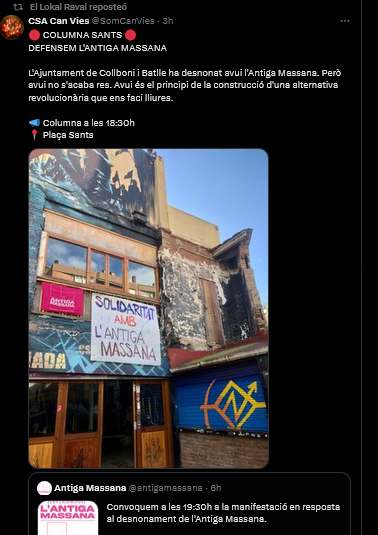
Antiga Massana @antigamassana We call for a demonstration at 7:30pm in response to the eviction of Antiga Massana. AGAINST THE DICTATORSHIP OF POLITICIANS AND BUSINESSMEN!
COLUMNA SANTS: -WE DEFEND THE OLD MASSANA-.
The Collboni i Batlle City Council has evicted the Old Massana today.
But today is not the end. Today is the beginning of the construction of a revolutionary alternative that will set us free. Column at 6:30 p.m. Plaça Sants
*********************
***************
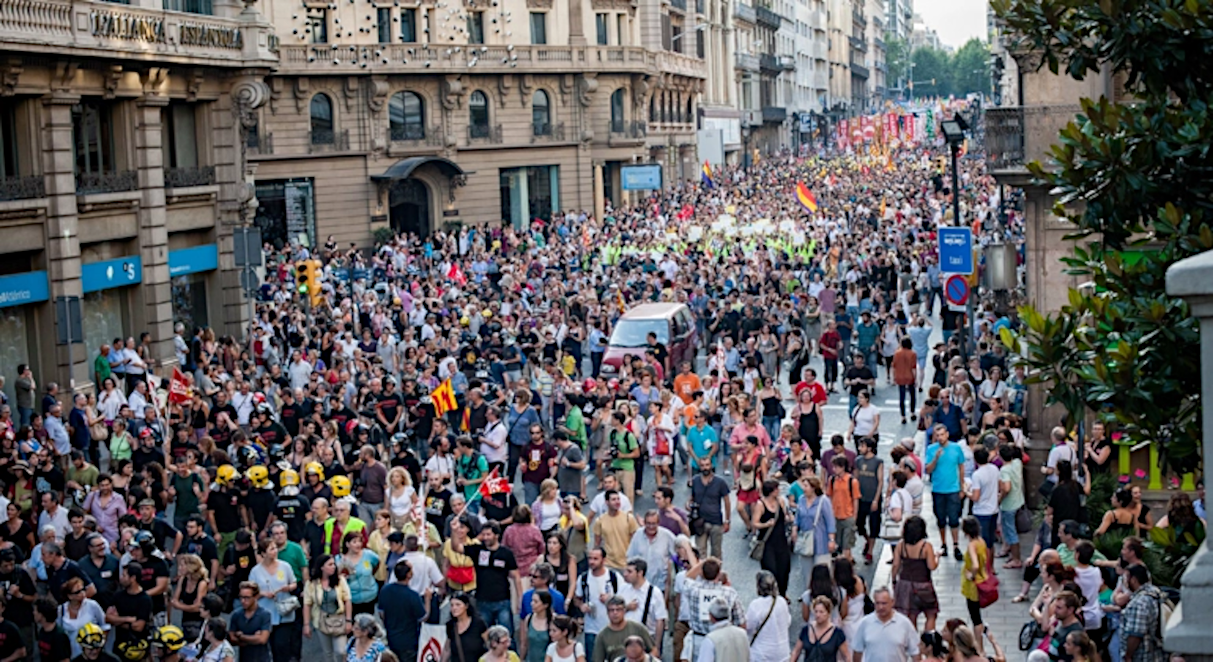
2000 protest 1st attempted eviction of 9 Collectives in the Old Massana School Occupation, Barcelona
20th October 2024..
This afternoon 1000’s of took to the streets of Barcelona to warn the PSC govt that if they evict Antiga Massana there will be riots in the Old City.
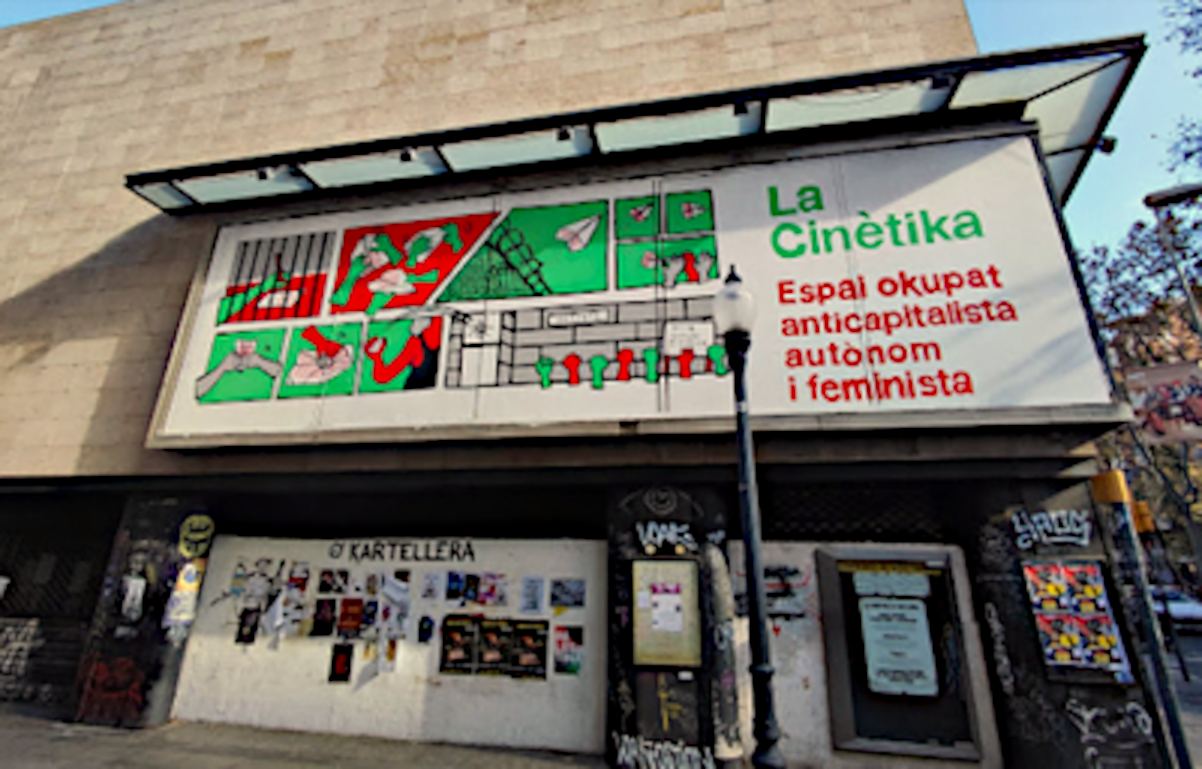
The squat took place in 2016. Since then we have worked to give life to a space that was abandoned and right now dozens of weekly activities are carried out, in addition, alternatives to consumerist leisure are generated through agreements that are made in the assemblies in a horizontal way.
We want to continue being autonomous, to expand participation and involvement, and to deepen our own self-management. The channels through which we promote our activities are the following:
The activities are open to everyone, we look forward to seeing you!
The operating bases of La Cinétika If you want to participate in the management of the space as an individual, or you want to develop a project within this space, these are the minimum bases on which we work:
– The space works on an anarchist basis: it is an autonomous space in the institutions (without subsidies, or agreements with the City Council), self-managed, assembly-based (functioning by consensus or adhesions, not by votes and majorities), horizontal, and to preserve its autonomy it vetoes the participation in the assembly of militants of political parties or people with institutional positions of political representation, not forming part of the assembly political groups, but individuals and projects.
– It is a feminist space, without any tolerance for any type of aggression, (especially sexist violence), which favors the creation of non-mixed groups, and which wants to pay maximum attention to the gender aspect in the relationships between the people who participate in the space.
A judge in Italy has declined to indict twelve anarchists associated with the insurrectionary magazine Vetriolo of various incitement and subversion charges.
Alfredo Cospito and Michele Fabiani, along with ten others, faced terrorism enhancements on almost all the charges sought by the public prosecutor.
Cospito and his partner Anna Beniamino have been imprisoned for years, along with other comrades accused of clandestine action.
In 2013 Cospito was sentenced to ten years and eight months in prison for having shot Roberto Adinolfi, a manager of engineering firm Ansaldo, in the leg.
Being already in jail, in June 2006 he was also convicted of having set two explosive devices in front of a Carabinieri police training college in northern Italy.
In 2022 he was moved to the Bancali prison in Sardinia, and subject to a restrictive 41 bis regime of isolation, which human rights organisations have
The prosecution of Vetriolo magazine began in November 2023. However, at the hearing on 15 January the judge announced that the indictment sought by the public prosecutor in Perugia would not go forward
During the hearing, the accused made spontaneous statements to clarify their positions on the entire case against them, as well as for the abolition of the 41 bis regime.
Cospito warned that his disturbing prosecution as supposedly having a “top role” in an anarchist organisation “opens wide the gates of 41 bis (a repressive prison regime) to anyone who disturbs power”, describing the case as “fundamentally an attack on freedom of thought and of the press”.
15 years ago, antifascist lawyer Stanislav Markelov and journalist Anastasia Baburova was murdered in Moscow. Their legacy tells us why anti-fascism remains vitally important in Russia today.
On January 20, we remember the Antifascists Stanislav Markelov and Anastasia Baburova, murdered in 2009 by Russian neo-Nazis in the center of Moscow. Today, St. Petersburg, Krasnoyarsk, Riga and Izhevsk, among many others, have woken up with improvised altars in their memory. To remember is to fight! No forgetting, no forgiveness!
19 de January del 2025 De parte de Sare Antifaxista 10 puntos de vista Los 19 de enero se recuerda a lxs Antifascistas Stanislav Markélov y Anastasia Babúrova asesinados en 2009 por neonazis rusos en el centro de Moscú. Hoy San Petersburgo, Krasnoyarsk, Riga o Ízhevsk entre otros muchos, han amanecido con improvisados altares en su memoria.¡ Recordar es luchar ! ¡ Ni olvido ni perdón !
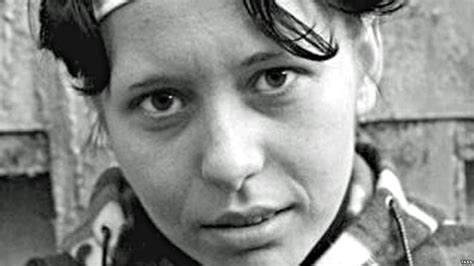
Anastasia Baburova
Baburova was active in the anarchist in environmentalist movement until her murder by nazis . She participated in the activities of ecological camps, in social fora, including the Fifth European Social Forum in Malmö 2008, organised the ‘Anti-capitalism 2008’ festival, demonstrated widely, and was involved in anti-fascist activities more generally.
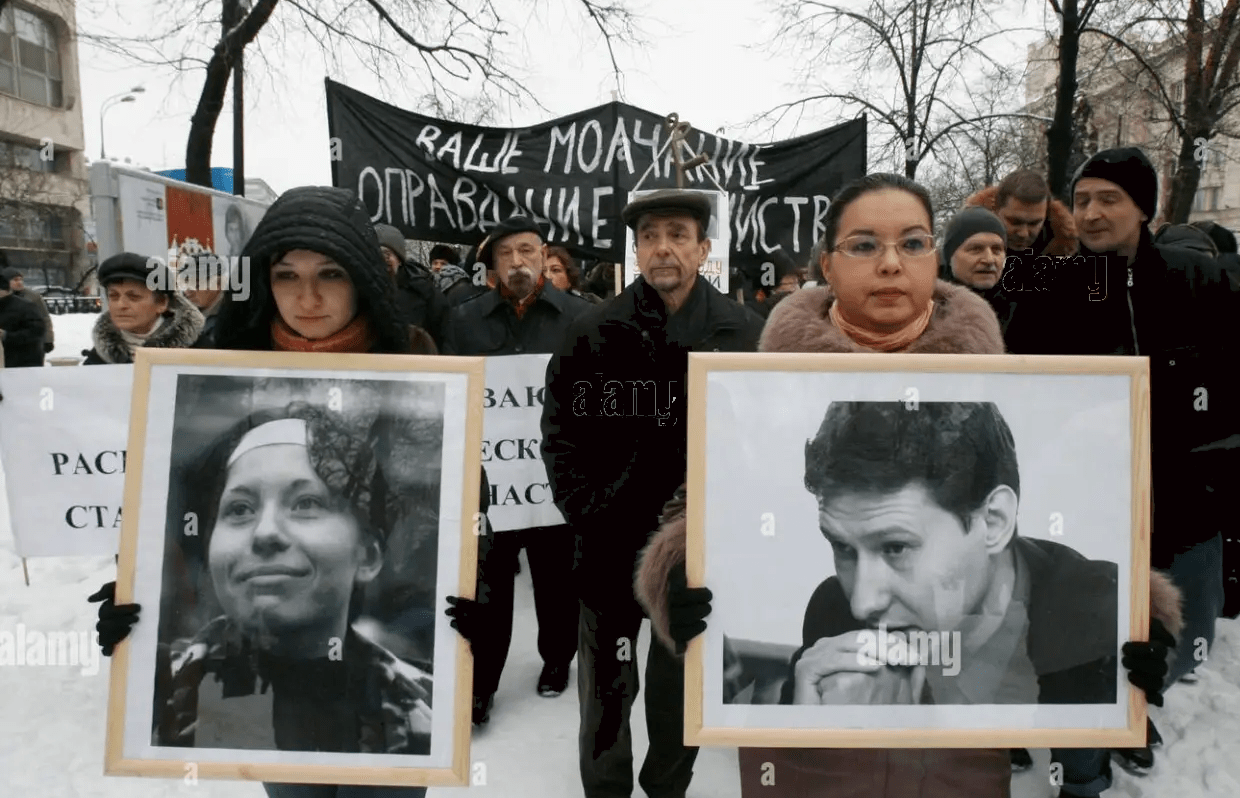
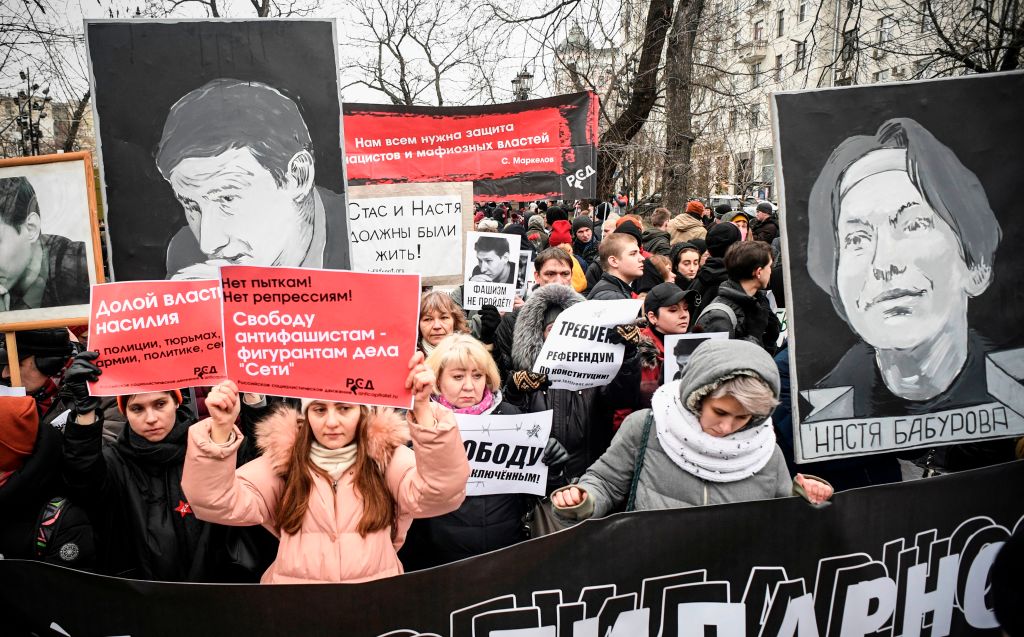
Russian opposition protestors march in central Moscow on January 19, 2020, carrying portraits of lawyer Stanislav Markelov and journalist Anastasia Baburova. – More than a thousand opposition activists of various stripes marched in central Moscow after President Vladimir Putin proposed re-drafting the constitution and unleashed a political upheaval. Protesters — mostly young anti-fascist activists — chanted “Revolution” and “No to dictatorship” and some carried copies of the constitution. The annual march was called to commemorate the memory of lawyer Stanislav Markelov and journalist Anastasia Baburova were gunned down in Moscow in 2009 by ultranationalists. (Photo by Alexander NEMENOV / AFP) (Photo by ALEXANDER NEMENOV/AFP via Getty Images)
In 2003, she married a fellow journalism student, Alexander Frolov, whom she met in 2000 during her studies in Sevastopol, they divorced in 2007.
In July 2008, Baburova participated in a demonstration against the felling of the Khimki Forest. Besides Russian and Ukrainian, which she considered her native languages, she also spoke English and French.[12]
The day before her murder, Anastasia appeared at the anarcho-communist unity event ‘Autonomous Action’.
Throughout 2008, Anastasia Baburova worked on the editorial team of the Russian newspaper, Izvestia, and had had dozens of articles published by both Izvestia and Financial News, particularly on finance.
Beginning in October 2008, she investigated (as a freelance-journalist) Russian neo-Nazi groups for Novaya Gazeta.[16][17] In December 2008, she resigned from this post over the political course of the newspaper.
At first it was reported that Baburova had been wounded in an attempt to detain Markelov’s killer, but later Russian law enforcement authorities declared that Baburova was shot in the back of the head. Baburova died a few hours after the attack at a Moscow hospital.[18
The Living Front of Stanislav Markelov
Ten years ago, activist lawyer Stanislav Markelov was murdered in Moscow. His legacy tells us why anti-fascism remains vitally important in Russia today.
On 19 January 2009, Stanislav Markelov and Anastasia Baburova were murdered. Every year since, Russian anti-fascists hold a march in their memory. Source: anatrrra / Livejournal.
Ten years ago, Stanislav Markelov was murdered in Moscow. He defended anti-fascists and ecologists, mothers trying to defend their sons serving in the army and citizens of Blagoveshchensk brutalised at the hands of the riot police, the relatives of Elza Kungayeva (murdered by a Russian soldier in Chechnya) and journalist Mikhail Beketov, who was brutally assaulted for covering the construction of a new highway near Moscow.
That day in January, the Neo-Nazis also killed his companion Anastasia Baburova, a like-minded journalist. The killers were eventually sentenced to long prison terms. Some of their friends and sympathisers are now working for government bodies or pro-regime mass media, whereas others have fought and still fight on both sides of the conflict in Ukraine. As a figure, Markelov feels so necessary in Russia today, yet so hard to imagine.
Starting in the hippie subculture of the perestroika era, Markelov went on to join the Student Defence trade union and Defenders of the Rainbow eco-movement. Later, he was a legal representative in some of the country’s most dangerous and high-profile cases — and a proponent of Russia’s new anti-fascism.
In the 1990s, Markelov was among those who appealed to the non-Bolshevik traditions of the Left, caught between aggressive free marketeers and Soviet revanchists. During the Constitutional Crisis in October 1993, he joined the Voloshin Medical Brigade, who helped everyone in need of medical assistance, no matter what side they took amidst the bloody conflict.
Looking back, this healing of wounds and applying of stitches on the streets of Moscow in 1993 feels like an attempt to symbolically unite two parts of a broken society. On the one hand, the enthusiasts of 1991, the people who, in 1993, still believed in the imminent triumph of liberal democracy. On the other, the people who believed that the near future would bring nothing good, but had no counter-agenda except a fanatical anti-liberalism and their memories of the USSR.
This rupture is yet to close, and Markelov — who mixed liberal human rights work with left-wing values — was the living embodiment of the attempt to overcome it. This combination is something very unusual in Russia. Ever since Soviet times, the majority of Russian liberals who have believed in human rights have shown skepticism towards any discussion of social justice and equality.
Leftists, on the contrary, often interpret the rhetoric of human rights as a cover for the economic aggression of neoliberalism. However, the fact remains that liberals in Russia cannot survive without a serious shift to the left (a truth that Alexey Navalny has understood all too well), while leftists, who easily turn to liberal human rights organisation for free assistance, and then brand them as enemies of the working class, look simply ridiculous in this instance.
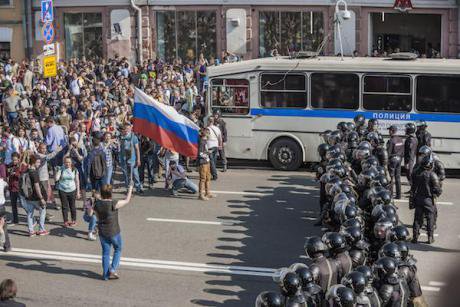
Riot police surround people during a demonstration against Vladimir Putin in Moscow, on 5 May 2018. Photo: NurPhoto / SIPA USA / PA Images. All rights reserved.
Laughing bitterly at this absurd situation, the unique nature of Markelov’s experience is clear. Markelov came to work as a lawyer through his political activism, and then, for the sake of defending the most vulnerable and powerless people in society, disdained both a steady professional career and every stereotype on why the personal, political and professional should not be mixed in legal work.
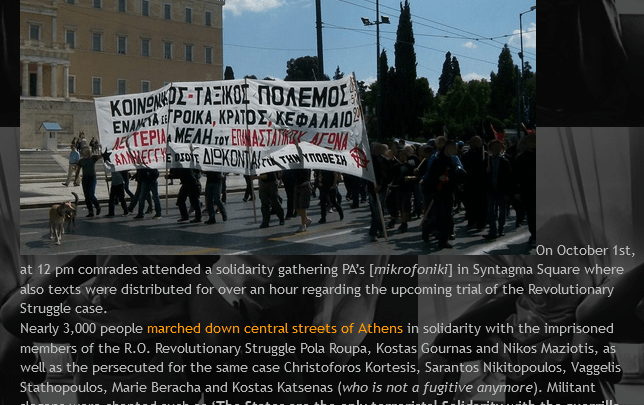
Practical solidarity: In the face of the world of the state, the bosses and the horrors of their wars, we stand in solidarity with the condemned comrades of Revolutionary Struggle, Pola Roupa and Nikos Maziotis, who through the ranks and action of the organization Revolutionary Struggle, fought steadfastly and uncompromisingly on the side of the class oppressed by the violence and terror of economic exploitation, poverty and political extermination in the sweatshops of wage slavery.
With consistency and dedication to the struggle for social revolution, the comrade and comrade took on the political responsibility of their participation in the organisation, as befits guerrilla dignity and revolutionary consistency.
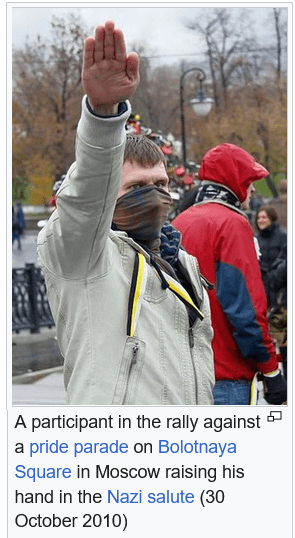
October 2010
They did not review and they defended politically, one by one, the 18 armed and bombing actions undertaken by the Revolutionary Struggle, one by one, on high-important symbols and infrastructures of the state and capital, from 2003 to 2018, achieving significant blows to the correlations of domination:
Ministries – of Economy and of Employment -, Evelpidon Courts, Police Departments, Police Officers and riot police, Minister of Public Order, US Embassy, Stock Exchange, Bank of Greece – branch of the European Central Bank – office of the International Monetary Fund in Greece, banks – Citibank, Eurobank -, up to the attempted escape of comrade Nikos Maziotis and other prisoners from the Korydallos prison by helicopter (hijacking), which was personally undertaken by comrade Pola Roupa.
Judicial Power – Repentance – Double Prison:The state bi-historically maintains to the end its practices of war of attrition and subversion, against its armed political enemy, the militant(s) who attacked it by all means, challenging and shaking its imperium in practice.
“Justice” as a pillar of state violence and terrorism, assumes the regime’s role of “punishing” not only the class oppressed and undisciplined, but also the execution of the total “punishment” of the armed political enemies of the state and capital, constantly upgrading the criminal arsenal and the “maximum security” prisons and imprisoning the struggling comrades with heavy sentences.
At the same time, it acquits cops/killers/nazis, child rapists, politicians, big businessmen-businessmen, etc.
And when the time comes for the release of the militants from the “penitentiaries of democracy”, the dirty role is taken over by the judicial councils which, in the case of political prisoners, are intended to damage their political choices and revolutionary conscience by extracting “statements of repentance”.
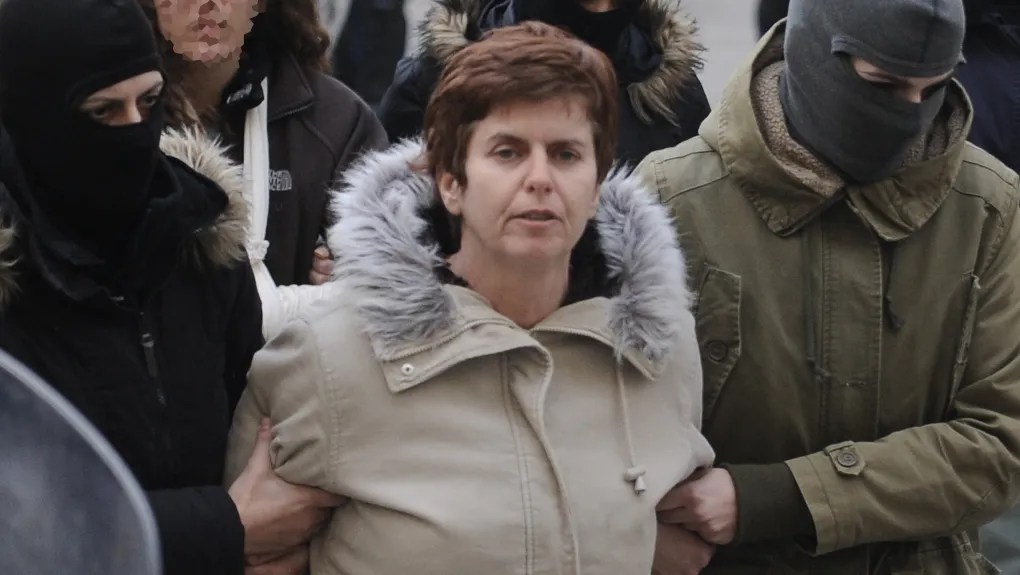
DEFINITIVE RELEASE OF COMRADE POLA ROUPA
On 17 November 2023, comrade Pola Roupa was released from prison with restrictions until 2032.
One month later, the mechanisms of the terrorist state, with an appeal by the deputy prosecutor of the Chalkida appeal court against her release, tried to put her back in prison.
Keeping the flame of anarchist agitation alive and spreading throughout the city, meetings between anti-authoritarian individuals and those eager for change, and distributing books and publications—we gathered in the hall of the Acadêmicos da Orgia Samba School
On the walls and outside of the hall in Porto Alegre, Brazil, banners and posters affirmed the love of freedom and the permanent revolt against everything that wants to dominate us and devastate the Earth.
On the stands of materials on display, anarchist messages blared through books, fanzines, magazines, posters, t-shirts, stickers, vegan food and other productions, making the presence of comrades from the region and from more distant latitudes felt.
Saturday 9 November
Together with the bookfair, the Solidarity on the Skin event took place once again, this one-day flash tattoo event in solidarity with our imprisoned comrades.
Scribbled on insubordinate bodies and accomplices with those who fight against the state/capital and are now kidnapped in prisons.
The two tattoo machines of @marceloarakno and @Juwtattoostudio ran non-stop throughout the day until the last moment when the salon closed. All the money raised (1,100 reais) from the tattoos and other contributions went to our comrades Mônica and Francisco imprisoned in Chile.
The fair opened its schedule of activities with the presentation of the zine Anarchists in Palestine and the stateless solution translated by Pandemia Distro, which presented the texts that make up the publication in an exchange of ideas.
Also in the morning, another compa from Rio de Janeiro led another presentation and debate titled “International Anarchism and the Anarchist Movement in Brazil”.
The anti-speciesist restaurant Aurora provided us with plentiful and well-seasoned vegan food, nourishing our bodies for the afternoon’s activities.
The hall and patio continued to welcome people who circulated among the stalls. Activities that began with the exchange of ideas titled “Acting Anarchically in Contexts of Crisis: Enhancing the Collapse of the Civilising Project”, together with the provocation “At Every Crossroads, Our Path is Anarchy!”, culminating in a participatory discussion in a circle.
Throughout the afternoon, the Giant Soap Bubbles Workshop enchanted all generations with the fleeting flight and explosions of the giant soap bubbles.
Following the initial incitement and debate, two more publications and two books were presented. Foda-se Black Friday translated and edited by Pandemia Distro, Esse ruptura não é de hoje by Dani Eizirik/Jambalú, from Editora Riacho and the books De Luto em Luta, an anthology of texts, poems and short stories by Louise Michel and Uma Casa Viva by Andrea Staid, published and presented by Barricada de Livros in Portugal. All presentations were accompanied by lively exchanges of ideas.
A fraternal and sharp environment against expressions of authoritarianism generated an afternoon of meetings and promotion of anarchist ideas and practices, with the fair itself being an embodiment of this disposition.
The day culminated with the exchange of ideas In order to create new worlds, it is necessary to abort unwanted worlds, bringing a look “from our wombs and our land” with the verve of a compa from Uruguay.
The last activity was a video debate The expansion of the digital frontier: Agribusiness and peasant resistance to the advance of surveillance capitalism. The activity began by stirring the memories of those who participated, jointly building a timeline of agriculture with various facts remembered. Then the video was shown, ending with a round table debate.
The capitalist system thrives on a fundamental lie: that work, and leisure are inherently distinct. Work, under this system, is framed as drudgery—a necessary evil performed to earn survival in a society where basic needs are commodified.
Leisure, meanwhile, is a fleeting escape from the grind, squeezed into evenings and weekends, or reserved for the lucky few who can afford it.
This dichotomy traps us in a life of alienation, where our labour serves not our communities or ourselves, but the relentless accumulation of capital by the ruling class.
But what if we could destroy this artificial division?
Anarcho-communism offers us a vision where labour and leisure are not opposing forces but intertwined aspects of a liberated existence. In a world free from hierarchies, exploitation, and scarcity, “work” would no longer be a compulsory exchange of time for money.
Instead, it would be a voluntary and creative expression of our collective humanity—something we choose to do, not because we must, but because it enriches our lives and the lives of others.
The Tyranny of Compulsory Work
Capitalism enforces the false dichotomy of work and leisure through systemic coercion.
For most, survival depends on selling their labour to a system that values profits over people. Jobs are rarely chosen freely. Instead, they are dictated by circumstances: the rent that’s due, the bills that pile up, the crushing weight of debt.
Whether it’s a gruelling factory shift, a monotonous office job, or precarious gig work, the purpose of labour under capitalism is clear: to generate wealth for those who already have too much.
This dynamic robs work of any intrinsic meaning or joy. Tasks that could be creative, fulfilling, or socially valuable are reduced to mere means to an end, alienating workers from the fruits of their labour.
The idea of leisure, then, emerges as a temporary reprieve—a fleeting reward for enduring the daily grind. This dynamic fosters resentment toward work, creating a cycle where people live for the weekend or the next brief holiday, only to be dragged back into the machinery of production.
Anarcho-Communism: A New Vision of Work
Imagine a world where the very concept of “having to work” no longer exists. In an anarcho-communist society, labour would be decoupled from survival. Everyone’s basic needs—housing, food, education, healthcare—would be guaranteed through collective effort and shared resources.
This isn’t utopian dreaming; it’s a practical vision rooted in mutual aid, direct democracy, and the elimination of capitalist hierarchies.
Under such a system, labour would serve the community and the individual rather than the accumulation of capital. Without bosses, landlords, or billionaires extracting value from our work, the purpose of labour would shift toward creating and sustaining systems that enrich everyone’s lives.